The short answer: If you drive under 150 miles per day, have depot or home Level 2 charging, and want to cut fuel and maintenance costs, a small electric van like the BrightDrop Zevo 400, Mercedes-Benz eSprinter (short wheelbase), or Ford E-Transit (low-roof, short wheelbase) will deliver 130–200 miles of real-world range, slash per-mile energy costs by 50–70% versus gas, and qualify for the up-to-$7,500 §30D federal tax credit (commercial or point-of-sale, subject to sourcing and income rules). If you regularly exceed 200 miles between charges, operate in extreme cold, or lack reliable charging access, a gas or hybrid van remains the pragmatic choice for now.
The Small Electric Van Landscape in 2026
The compact and mid-size electric commercial van segment has matured past early-adopter growing pains. Battery chemistries have shifted toward LFP (lithium iron phosphate) for fleet duty cycles, DC fast-charging peaks have climbed, and manufacturer software has improved route-planning integration. For urban delivery routes, tradespeople, and small fleet operators, the value proposition is now arithmetic, not aspiration.
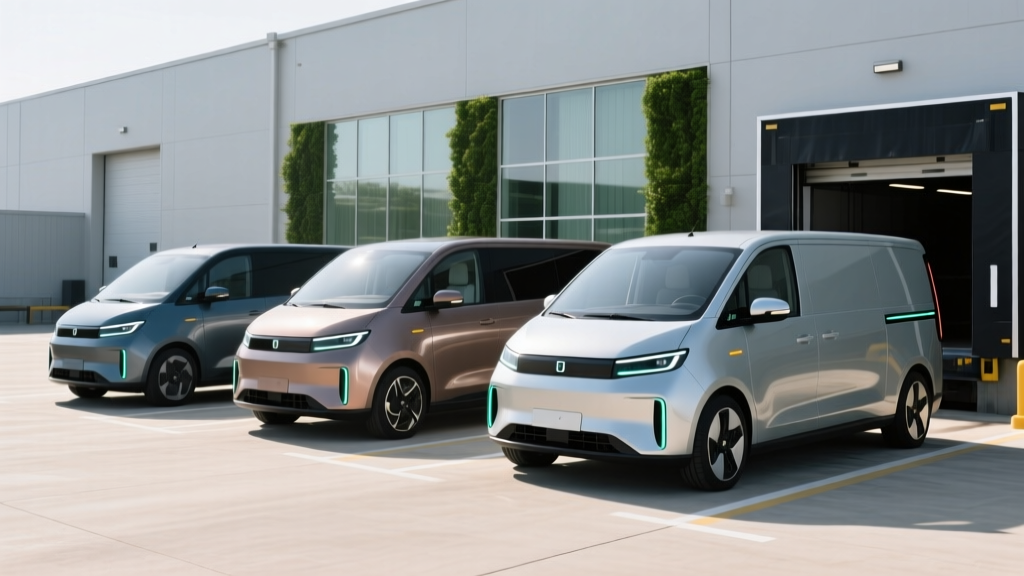
Three platforms dominate the U.S. market for buyers searching for small electric vans that balance cargo capacity with maneuverability:
- Ford E-Transit (short wheelbase, low roof) — the volume leader with broad dealer support
- Mercedes-Benz eSprinter (1500 / standard roof) — premium cabin, strong route-planning tech
- BrightDrop Zevo 400 — purpose-built last-mile delivery with a compact footprint
Below, we break down exact specifications, real-world range expectations, charging logistics, and total cost of ownership so you can determine whether a small electric van fits your operation.
Spec Comparison: Small Electric Vans Side by Side
Numbers matter more than marketing in the commercial van segment. Here is how the three leading small electric vans compare on the metrics that affect daily operations.
| Spec | Ford E-Transit (SWB Low Roof) | Mercedes-Benz eSprinter 1500 (Std Roof) | BrightDrop Zevo 400 |
|---|---|---|---|
| Battery (usable) | 68 kWh (NMC) | 113 kWh (NMC) | 65 kWh (LFP) |
| EPA Range | 126 mi | ~200 mi (est.) | ~160 mi (est.) |
| Real-World Range (loaded, mixed) | ~95–110 mi | ~150–175 mi | ~125–145 mi |
| Cold-Weather Range (20°F, loaded) | ~75–90 mi | ~110–135 mi | ~95–115 mi |
| Max DC Fast Charge | 115 kW | 115 kW | ~100 kW |
| 10–80% DC Charge Time | ~45 min | ~55 min | ~45 min |
| Level 2 Charge Rate | 10.5 kW | 11 kW | 11.5 kW |
| Cargo Volume | 246.7 cu ft | 273 cu ft | ~412 cu ft (Zevo 400) |
| Max Payload | 3,880 lbs | ~3,300 lbs | ~2,500 lbs |
| Motor Output | 266 hp / 317 lb-ft | 201 hp / 332 lb-ft | ~200 hp / ~295 lb-ft |
| Base MSRP (2026 est.) | ~$48,000 | ~$72,000 | ~$50,000 |
| Battery Warranty | 8 yr / 100,000 mi | 8 yr / 100,000 mi | 8 yr / 100,000 mi |
Sources: fueleconomy.gov, manufacturer specification sheets. Real-world and cold-weather ranges are AutoEdgeView estimates based on loaded fleet operation and published cold-loss data (typically 20–30% at 20°F for NMC packs without heat-pump preconditioning).
Real-world range reality check: The EPA sticker for the E-Transit is 126 miles, but fleet operators running loaded vans on stop-and-go urban routes should plan for 95–110 miles in mild weather and 75–90 miles in sub-freezing conditions. The eSprinter's larger battery provides a more comfortable buffer, but its higher MSRP reflects that capacity. Always spec your van against your longest typical route day, not your average.
Electric Van vs Gas Van: Operating Cost Breakdown
The purchase price of a small electric van is higher than a comparable gas model — but commercial vans are bought on total cost of ownership, not sticker price. Here is how a 5-year, 75,000-mile ownership cycle compares for the Ford E-Transit versus the gasoline Ford Transit T-150 (SWB, low roof, 3.5L V6).
| Cost Category | Ford E-Transit (EV) | Ford Transit T-150 (Gas) |
|---|---|---|
| Purchase Price (MSRP) | $48,000 | $42,000 |
| Federal Tax Credit (§30D, if eligible) | −$7,500 | $0 |
| Net Purchase (after credit) | $40,500 | $42,000 |
| Fuel/Energy (75,000 mi) | $3,750 (depot L2 @ $0.14/kWh) | $12,188 (gas @ $3.50/gal, 14 MPG) |
| Maintenance (5 yr) | $1,200 | $4,500 |
| Insurance (5 yr est.) | $9,500 | $8,000 |
| 5-Year Total Cost | $54,950 | $66,688 |
| Per-Mile Operating Cost | $0.07/mi (energy + maint) | $0.22/mi (fuel + maint) |
Assumptions: 15,000 mi/yr, electricity at $0.14/kWh (commercial depot rate), gas at $3.50/gal average, maintenance includes oil changes, brakes, filters for gas van. Insurance is higher for EVs due to repair-cost data. Tax credit eligibility per IRS §30D rules — commercial fleet buyers may qualify under §45W instead. Consult a tax professional.
Charging Logistics: What Fleet Buyers Must Plan For
The single biggest operational variable for small electric vans is not the vehicle — it is the charging infrastructure. Before ordering, you need answers to three questions:
1. Can you install Level 2 charging at your depot or home?
All three vans accept 10.5–11.5 kW on Level 2. A dedicated 60-amp circuit with a hardwired Level 2 EVSE delivers roughly 30–35 miles of range per hour of charging. An overnight 10-hour session fully replenishes any of these vans. Installation costs for a commercial depot charger range from $2,500 to $7,000 per stall (equipment, electrician, permitting), and may require a panel upgrade if your facility is near capacity.
2. Do your routes stay within DC fast-charger range?
DC fast charging at 115 kW gets the E-Transit from 10–80% in about 45 minutes. However, the charge curve tapers significantly above 80% SoC — charging from 80–100% can take nearly as long as 10–80%. Fleet operators should plan routes around 10–80% charging windows and avoid relying on topping off to 100% during midday stops.
3. What is your public-charging fallback?
If depot charging fails or routes extend unexpectedly, you need access to reliable DC fast-charging networks. Ford's partnership with Tesla Superchargers (via NACS adapter) and CCS networks like Electrify America and EVgo provides redundancy — but verify that chargers along your routes support commercial-vehicle physical access (many stalls are too tight for a van).
| Charging Level | Power (kW) | Miles Added/Hour | Typical Use Case |
|---|---|---|---|
| Level 1 (120V) | 1.4 kW | ~3–4 mi/hr | Emergency only — impractical for fleet |
| Level 2 (240V, 48A) | 10.5–11.5 kW | ~30–35 mi/hr | Overnight depot charging — primary method |
| DC Fast (CCS/NACS) | 100–115 kW peak | ~150–200 mi/hr (peak) | Midday top-up; 10–80% in 45–55 min |
Common Misconceptions About Small Electric Vans
| Myth | Fact |
|---|---|
| "Electric vans can't handle real payloads." | The E-Transit handles 3,880 lbs of payload. Battery weight reduces payload vs. gas variants, but for most parcel and trades use cases, capacity is sufficient. |
| "The battery will need replacing in 5 years." | NMC and LFP packs are warranted for 8 years/100,000 miles at ≥70% capacity retention. Real-world fleet data from early E-Transit deployments shows 5–8% degradation over 60,000 miles with proper charge management. |
| "You'll save $7,500 on every electric van." | The §30D credit has income caps, MSRP caps (vans: $80,000), and battery-sourcing requirements that change annually. Commercial fleets may use §45W instead. Always verify current-year eligibility on irs.gov. |
| "Electric vans don't work in cold climates." | Range drops 20–30% at 20°F, which is significant. But vans with heat pumps and battery preconditioning mitigate this. Route planning for winter means budgeting 70–80% of EPA range, not abandoning EVs entirely. |
| "Charging takes too long for commercial use." | Overnight Level 2 charging covers 95% of fleet needs. DC fast charging is for midday route extension, not daily primary charging. Most fleet vans charge while parked and unused (8–12 hours overnight). |
First-Time EV Van Buyer: What You Need to Know
If this is your fleet's first electric vehicle, prepare for these operational shifts:
- Route discipline matters more. Gas vans can deviate 200 miles off-route without consequence. Electric vans require route planning around range and charging. Ford Pro and Mercedes-Benz Pro Connect include EV-specific route optimization.
- Preconditioning is non-negotiable. Warming the battery before DC fast charging (via the van's app or scheduled departure) can reduce 10–80% charge time by 10–15 minutes in cold weather.
- Regenerative braking changes driving feel. One-pedal driving extends range by 5–10% in stop-and-go urban routes and reduces brake wear significantly — fleet drivers report brake pad life exceeding 100,000 miles.
- Insurance costs more. EV commercial insurance premiums run 15–25% higher than gas equivalents due to specialized repair requirements and higher parts costs. Get quotes before purchasing.
- Depreciation is uncertain. The used commercial EV market is still forming. Residual values for electric vans are less predictable than gas vans. Lease structures may reduce this risk for early adopters.
Decision Framework: Should You Buy a Small Electric Van?
Buy a small electric van if:
- Your longest daily route is under 150 miles (or under 110 miles in winter)
- You can install Level 2 charging at your depot, home, or garage
- Your operation is stop-and-go urban delivery (maximizes regen braking savings)
- You plan to keep the van 5+ years to capture operating-cost savings
- You qualify for the §30D credit or §45W commercial credit
Stick with gas or wait if:
- Your routes regularly exceed 180 miles without reliable midday charging
- You operate in extreme cold (sub-zero) without heated garage storage
- You cannot install or access Level 2 charging
- You need maximum payload capacity and cannot sacrifice 500–1,000 lbs to battery weight
- You turn over vehicles every 2–3 years (depreciation risk is too high)
Frequently Asked Questions
Do small electric vans qualify for the $7,500 federal tax credit?
Possibly. Under current IRS §30D rules, new clean vehicles must meet MSRP caps ($80,000 for vans/trucks), buyer income limits, and battery critical-mineral and component sourcing requirements that tighten annually. The credit can now be transferred at point of sale as a discount. Commercial fleet buyers who don't qualify under §30D may instead claim the §45W Commercial Clean Vehicle Credit (up to $7,500 for vehicles under 14,000 lbs GVWR). Consult a tax professional for your specific situation.
How long do electric van batteries last before replacement?
Current NMC and LFP batteries in commercial vans are engineered for 200,000+ miles before reaching the 70% capacity retention warranty threshold. Real-world fleet data suggests 8–12% degradation over 100,000 miles with proper charge management (avoiding chronic 100% SoC storage and using preconditioning). Full battery replacement costs range from $15,000 to $25,000 depending on the model, but few fleet vans will need this within a typical ownership cycle.
Can I charge a small electric van on a standard 120V outlet?
Technically yes, but practically no. Level 1 charging at 1.4 kW adds roughly 3–4 miles of range per hour — that is 30–40 miles over a 10-hour night. For a commercial van that needs 80–120 miles daily, Level 1 is an emergency fallback only. Budget for Level 2 installation as a mandatory cost of EV van ownership.
Are electric vans good for towing?
Most small electric vans are rated for 3,500–4,500 lbs of towing, but towing at capacity will reduce range by 30–50%. If your operation requires frequent towing over long distances, a gas van remains the more practical option. For light trailer work around a metro area, the E-Transit and eSprinter handle it within their range envelope.
Which small electric van has the best range?
Among currently available models, the Mercedes-Benz eSprinter with the 113 kWh battery offers the longest estimated range at approximately 200 miles EPA. However, it also carries the highest MSRP (~$72,000). For cost-per-mile-of-range, the Ford E-Transit at ~$48,000 for 126 EPA miles is the more economical entry point for routes that don't require the extra buffer.