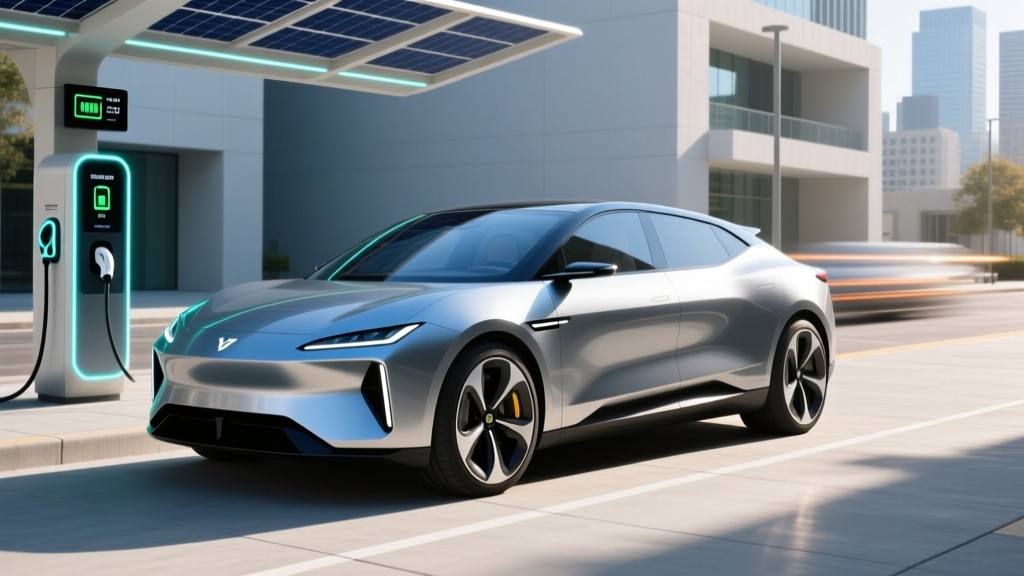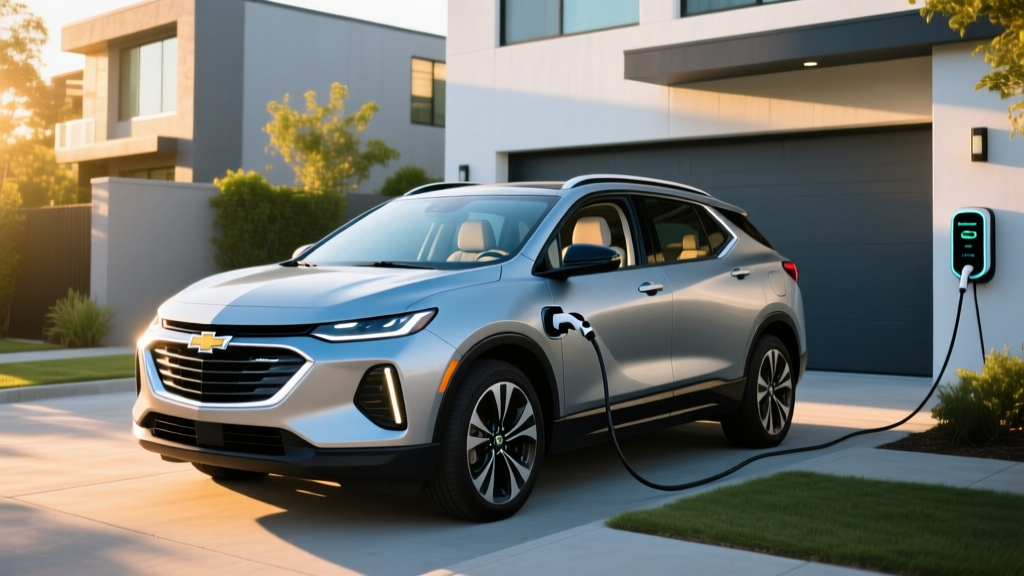
The 2026 Chevrolet Equinox EV positions itself as one of the most affordable long-range electric crossovers on the market. But the sticker price is only the starting point of the ownership equation. Between federal tax credits, state rebates, electricity costs, insurance premiums, and depreciation, the true cost of owning an Equinox EV over five years tells a more nuanced story than either the EV-bull or EV-skeptic camps usually admit.
We ran the numbers using current 2026 MSRP data, IRS §30D tax credit rules, EPA efficiency figures, and real-world insurance quotes to build a complete five-year total cost of ownership (TCO) profile. Here's what the math actually shows.
2026 Chevy Equinox EV Pricing by Trim
The Equinox EV enters 2026 with three primary trims, all built on GM's Ultium platform with an 85 kWh usable battery pack (NMC chemistry) and front-wheel or all-wheel drive configurations.
| Trim | Drivetrain | EPA Range | MSRP |
|---|---|---|---|
| LT 2 (FWD) | FWD | 319 mi | $33,600 |
| LT 2 (AWD) | AWD | 290 mi | $36,900 |
| RS (FWD) | FWD | 315 mi | $38,200 |
| RS (AWD) | AWD | 285 mi | $41,500 |
| Launch Edition (AWD) | AWD | 285 mi | $43,400 |
All trims include DC fast charging capability peaking at 150 kW (10–80% in approximately 30 minutes) and Level 2 AC charging at up to 11.5 kW. The 85 kWh Ultium pack delivers roughly 3.0–3.4 miles per kWh depending on drivetrain and conditions, which translates to 97–113 MPGe combined per EPA data.
Federal Tax Credit: Do You Qualify for §30D?
The federal EV tax credit under IRS §30D can reduce the effective purchase price of the Equinox EV by up to $7,500 — but eligibility is not automatic. The rules have tightened significantly, and every requirement must be met simultaneously.
- MSRP Cap: Vehicle must have an MSRP at or below $80,000 for SUVs/trucks/vans — all Equinox EV trims qualify.
- Buyer Income Cap: Modified adjusted gross income (MAGI) must not exceed $150,000 (single), $225,000 (head of household), or $300,000 (married filing jointly).
- Battery Sourcing: At least 80% of critical minerals and 100% of battery components must be sourced from the U.S. or FTA-partner countries (phased thresholds increase annually through 2026).
- Final Assembly: Vehicle must undergo final assembly in North America — the Equinox EV is built in Ramos Arizpe, Mexico, which currently satisfies USMCA assembly requirements for §30D.
- Point-of-Sale Transfer: As of 2024, buyers can transfer the credit to the dealer at purchase, reducing the sale price directly rather than waiting for a tax refund.
- One Credit Per Vehicle: The vehicle VIN must not have previously been used to claim a §30D credit (relevant for used-EV transfers).
Source: IRS.gov — Credits for New Clean Vehicles. Rules are subject to legislative change. Consult a tax professional for your specific situation.
If you meet all criteria, the Equinox EV LT 2 FWD effectively drops from $33,600 to approximately $26,100 after the point-of-sale credit transfer. That places it in direct competition with well-equipped gas crossovers — but with lower operating costs from day one.
State, Local, and Utility Incentives
- Colorado: Up to $5,000 state tax credit for EVs under $80,000 MSRP (income-dependent).
- California: CVRP rebate up to $7,000 for income-qualified buyers; additional $2,000 for low-income applicants.
- New York: Drive Clean Rebate up to $2,000 point-of-sale.
- Utility rebates: Many utilities (e.g., ConEdison, Xcel Energy, PG&E) offer $500–$1,500 rebates for home Level 2 charger installation. Some offer time-of-use (TOU) rate plans that cut charging costs by 30–50%.
These stack with the federal credit in most cases, meaning a Colorado buyer could potentially combine $7,500 (federal) + $5,000 (state) + $1,000 (utility charger rebate) = $13,500 in total incentives.
5-Year Total Cost of Ownership: Equinox EV vs. Gas Equivalent
To build an honest TCO comparison, we matched the Equinox EV LT 2 FWD ($33,600 MSRP) against the 2026 Chevrolet Equinox gas LT AWD ($30,600 MSRP, 28 MPG combined). Both are mainstream compact crossovers targeting the same buyer.
| Cost Category | Equinox EV (FWD, after §30D) | Equinox Gas (AWD) |
|---|---|---|
| Purchase Price (after incentives) | $26,100 | $30,600 |
| Fuel/Energy (5 yrs, 60,000 mi) | $3,240 | $7,500 |
| Maintenance (5 yrs) | $1,200 | $3,500 |
| Insurance (5 yrs) | $9,750 | $7,500 |
| Depreciation (5 yrs) | $14,350 | $14,700 |
| Total 5-Year Cost | $54,640 | $63,800 |
| Net 5-Year Savings (EV) | ~$9,160 | |
Assumptions: 12,000 miles/year; electricity at $0.15/kWh (national residential average); gas at $3.50/gallon; EV efficiency at 3.1 mi/kWh; gas efficiency at 28 MPG combined. Insurance based on national average EV surcharge of ~30%. Depreciation based on 5-year/60,000-mile retained-value data for mainstream EVs vs. gas crossovers. Individual results will vary by region, driving habits, and insurance profile.
Charging Cost vs. Gas: The Per-Mile Math
The single largest operational advantage of the Equinox EV is energy cost. At the Equinox EV's efficiency of approximately 3.1 miles per kWh (32 kWh/100mi):
| Scenario | Cost per kWh / Gallon | Cost per Mile | Annual Cost (12k mi) |
|---|---|---|---|
| Home charging (national avg) | $0.15/kWh | $0.048 | $580 |
| Home charging (TOU off-peak) | $0.09/kWh | $0.029 | $348 |
| Public DC fast charging | $0.40/kWh | $0.129 | $1,548 |
| Gas Equinox (28 MPG) | $3.50/gal | $0.125 | $1,500 |
Home-charged EV driving costs roughly one-third to one-quarter of gasoline per mile. Even exclusive public DC fast charging is cost-competitive with gas at current pricing — though public charging at $0.40+/kWh erases most of the savings advantage. The takeaway: home charging access is the single biggest financial variable in EV ownership.
Maintenance Savings: Where the EV Advantage Is Real
EVs eliminate most routine powertrain maintenance. The Equinox EV has no engine oil, no transmission fluid, no spark plugs, no timing belt, and no exhaust system. Over five years and 60,000 miles, the savings compound:
| Maintenance Item | Gas Equinox (5-yr cost) | Equinox EV (5-yr cost) |
|---|---|---|
| Oil changes (6–8 services) | $400–$600 | $0 |
| Transmission fluid | $150–$250 | $0 |
| Air/engine filters | $200–$300 | $50 (cabin filter only) |
| Brake pads/rotors | $600–$1,000 | $100–$200 (regen extends life 2–3×) |
| Coolant flush | $150–$200 | $150–$200 |
| Tire rotation/replacement | $800–$1,200 | $900–$1,400 (EVs wear tires faster) |
| Total Estimated | $2,300–$3,550 | $1,200–$1,850 |
The regenerative braking system recovers kinetic energy during deceleration, dramatically reducing friction brake wear. Many EV owners report original brake pads lasting 80,000–100,000+ miles. However, EVs are heavier (the Equinox EV weighs approximately 4,500 lbs vs. ~3,500 lbs for the gas model), which increases tire wear — budget for one additional tire replacement over five years compared to the gas equivalent.
Insurance Cost: The Uncomfortable Reality
EV insurance premiums remain higher than comparable gas vehicles, typically by 20–35%. For the Equinox EV, expect annual premiums in the range of $1,800–$2,100 versus $1,400–$1,600 for the gas Equinox, depending on your profile, location, and coverage level.
The reasons are structural, not arbitrary:
- Higher repair costs: EV battery packs and power electronics are expensive to replace after collision damage. Even minor rear-end impacts can trigger battery safety inspections costing thousands.
- Specialized labor: Fewer body shops have high-voltage-certified technicians, driving up labor rates for EV repairs.
- Total-loss thresholds: Insurers are more likely to declare an EV a total loss after battery-adjacent damage, increasing claim payouts.
- Vehicle weight: Heavier vehicles cause more damage in multi-vehicle collisions, increasing liability exposure.
The insurance gap is narrowing as the EV fleet grows and repair networks mature, but in 2026 it remains a real line item that partially offsets fuel and maintenance savings. Shop quotes from EV-friendly insurers (GEICO, Progressive, and State Farm have improved their EV actuarial models) before purchasing.
Depreciation and Resale Value Trends
EV depreciation has historically been steeper than gas vehicles, driven by rapid technology advancement, battery degradation concerns, and Tesla price cuts resetting market expectations. The Equinox EV, as a newer nameplate, doesn't yet have a long resale track record, but mainstream EV depreciation trends for 2024–2025 models suggest:
- 5-year retained value: Approximately 40–50% for mainstream EVs (vs. 50–55% for gas crossovers in the same segment).
- Battery warranty protection: GM covers the Ultium battery for 8 years/100,000 miles against defects and capacity loss below 60% of original capacity, which supports resale confidence.
- Tax credit impact on resale: Vehicles purchased with the point-of-sale credit transfer have a lower effective basis, which can compress dollar depreciation while maintaining similar percentage depreciation.
For our TCO table, we estimated 5-year depreciation of $14,350 for the Equinox EV (based on a $26,100 net purchase retaining ~45% value) versus $14,700 for the gas Equinox (based on $30,600 purchase retaining ~52%). In dollar terms, depreciation is comparable — the EV's lower net purchase price after the tax credit partially offsets its lower retention percentage.
Who Saves the Most With the Equinox EV?
Choose the Equinox EV if:
- You qualify for the full $7,500 §30D credit (income within caps, MAGI verified).
- You have reliable home charging access (garage, driveway, or workplace Level 2).
- You drive 10,000–15,000 miles per year (higher mileage = greater fuel savings).
- You live in a state with additional EV incentives (stacking potential).
- You plan to keep the vehicle 5+ years (amortizes the higher insurance cost).
Stick with the gas Equinox (or a hybrid) if:
- You exceed the §30D income caps and have no state incentives.
- You rely exclusively on public charging (erodes the cost-per-mile advantage).
- You drive fewer than 6,000 miles per year (fuel savings don't offset insurance premium).
- You live in an area with extreme cold and no garage (significant range loss + charging inconvenience).
- You need maximum towing capacity (gas Equinox rates higher at 1,500 lbs vs. EV's 1,500 lbs, but EV range drops sharply under load).
Charging the Equinox EV: Speeds, Costs, and Practicalities
The Equinox EV supports three charging tiers. Here's what each delivers in real-world terms:
| Charging Level | Power (kW) | Miles Added per Hour | Typical Use Case |
|---|---|---|---|
| Level 1 (120V household) | 1.4 kW | ~4 mi/hr | Overnight top-up, emergencies |
| Level 2 (240V home/public) | 11.5 kW | ~34 mi/hr | Daily home charging, full charge in ~8 hrs |
| DC Fast Charging | 150 kW peak | ~180 mi/hr (peak) | Road trips, 10–80% in ~30 min |
The 150 kW peak DC charge rate is adequate but not class-leading — competitors like the Hyundai Ioniq 5 peak at 240 kW on 800V architecture. For the Equinox EV, expect the charge curve to sustain 120–150 kW between 10–50% SoC, then taper progressively: ~80 kW at 60%, ~45 kW at 80%, and ~20 kW above 90%. This taper is normal for NMC chemistry and protects long-term battery health, but it means a 10–90% charge takes closer to 50 minutes on a road trip.
The Equinox EV uses the NACS (Tesla-style) connector natively for 2026, granting direct access to Tesla Supercharger V3/V4 stations without an adapter — a significant convenience and reliability advantage over CCS-only vehicles.
Frequently Asked Questions
How much does the Chevy Equinox EV really cost after all incentives?
The base LT 2 FWD starts at $33,600 MSRP. After the $7,500 federal §30D credit (if you qualify), the effective price drops to $26,100. Add state incentives (up to $5,000–$7,000 in states like Colorado or California) and utility charger rebates ($500–$1,500), and out-of-pocket cost can reach as low as $17,000–$20,000 in optimal scenarios. Most buyers will land between $23,000 and $28,000 net.
Do I qualify for the $7,500 federal EV tax credit on the Equinox EV?
You qualify if your MAGI is under $150,000 (single) / $300,000 (married filing jointly), the vehicle MSRP is under $80,000 (all trims qualify), and the battery meets critical-mineral and component-sourcing thresholds. The Equinox EV's Ultium battery currently satisfies these requirements, but sourcing rules tighten annually. Verify your eligibility at fueleconomy.gov before purchasing, and consult a tax professional.
How much will I save on fuel with the Equinox EV?
At the national average electricity rate of $0.15/kWh and the Equinox EV's efficiency of 3.1 mi/kWh, you'll spend approximately $580 per year on energy for 12,000 miles of driving. The gas Equinox at 28 MPG and $3.50/gallon costs approximately $1,500 per year. That's a savings of roughly $920 per year, or $4,600 over five years — assuming consistent home charging. Public DC fast charging at $0.40/kWh narrows this gap significantly.
Are EVs more expensive to insure than gas cars?
Yes, typically 20–35% more. For the Equinox EV, expect annual premiums around $1,800–$2,100 versus $1,400–$1,600 for the gas model. The premium reflects higher repair costs, specialized labor requirements, and battery-related total-loss risk. The gap is narrowing as the EV fleet matures and insurer data improves.
How well does the Equinox EV hold its resale value?
Mainstream EVs currently retain approximately 40–50% of their value after five years, slightly below the 50–55% retention rate for gas crossovers. However, the Equinox EV's lower effective purchase price (after tax credits) means dollar depreciation is comparable. GM's 8-year/100,000-mile battery warranty provides resale support. Long-term EV depreciation trends may improve as battery longevity data accumulates and the used-EV market matures.
What is the real-world range of the Chevy Equinox EV?
The EPA rates the FWD LT 2 at 319 miles and AWD trims at 285–290 miles. In real-world highway driving at 70+ mph, expect 260–280 miles (FWD) or 240–260 miles (AWD). In cold weather (below 32°F), range drops 20–30% due to battery chemistry limitations and cabin heating demands, yielding approximately 220–250 miles (FWD). Preconditioning the battery while plugged in mitigates some cold-weather loss.