The Quick Answer: Is a Small Electric Truck Right for You?
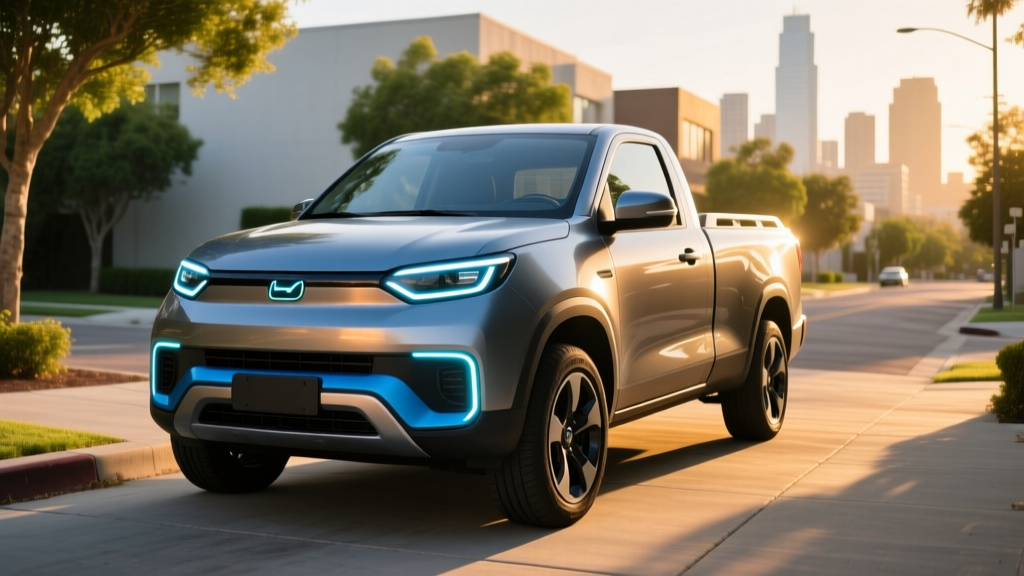
A small electric truck makes sense if you drive under 250 miles daily, have access to Level 2 home charging, and primarily use a truck for commuting, light hauling, or weekend projects — not frequent long-distance towing. In 2026, the segment includes the Ford Maverick EV (announced), the Hyundai Santa Cruz EV (rumored), and the compact-end Rivian R2T (announced). Expect real-world range of 230–290 miles, base pricing around $30,000–$42,000 before incentives, and fueling costs roughly 60–70% lower per mile than a gas midsize truck. If you regularly tow over 3,000 lbs or drive in extreme cold without garage charging, a hybrid or gas truck may still serve you better.
Small Electric Trucks Available or Coming in 2026
The "small electric truck" category is still emerging. Unlike full-size pickups like the Ford F-150 Lightning or Rivian R1T, compact and midsize electric trucks target buyers who want truck utility without full-size mass, price, or energy consumption. Here's what the market looks like as of early 2026:
| Model | Status | EPA Range (est.) | Battery / Chemistry | Peak DC Charge | Base MSRP |
|---|---|---|---|---|---|
| Ford Maverick EV | Announced (late 2026) | ~250–280 mi | ~75 kWh, NMC | ~150 kW | ~$30,000 (est.) |
| Rivian R2T (Compact) | Announced (2027 delivery) | ~270–310 mi | ~90 kWh, NMC | ~200 kW | ~$45,000 (est.) |
| Hyundai Santa Cruz EV | Rumored / Unconfirmed | TBD | TBD | TBD | TBD |
| Rivian R1T (Dual-Motor) | Available | 270–352 mi (EPA) | 106–149 kWh, NMC | 200 kW | $69,900 |
Note: Announced models carry preliminary specs that may change before delivery. Always verify with the manufacturer before placing a deposit.
The Maverick EV is the most anticipated entrant because it targets the $30K price point that has historically defined the small-truck buyer. The Rivian R1T, while technically a midsize truck, remains the only fully electric truck broadly available today that offers genuine off-road and towing capability — but it starts near $70K, far above what most "small truck" shoppers budget.
Small Electric Truck vs. Gas Truck: Real Cost Comparison
The sticker price of an electric truck is typically higher than its gas counterpart, but the five-year ownership picture tells a different story. Below is a comparison between a projected 2026 Ford Maverick EV (AWD, ~$34,000 mid-trim) and the 2026 Ford Maverick Hybrid AWD (~$28,500):
| Cost Factor (5 Years / 75,000 mi) | Maverick EV (Projected) | Maverick Hybrid AWD | Maverick Gas AWD (2.0T) |
|---|---|---|---|
| Purchase Price (MSRP) | $34,000 | $28,500 | $27,500 |
| Federal Tax Credit (§30D) | Up to $7,500* | $0 | $0 |
| Effective Purchase | $26,500 | $28,500 | $27,500 |
| Fuel / Energy Cost | ~$2,600 (home L2)** | ~$5,800 | ~$8,100 |
| Maintenance | ~$1,800 | ~$3,200 | ~$3,800 |
| Insurance (avg.) | ~$8,500 | ~$7,200 | ~$7,000 |
| Estimated Depreciation | ~$12,000 | ~$10,500 | ~$11,000 |
| Total 5-Year Cost | ~$51,400 | ~$55,200 | ~$57,400 |
*§30D eligibility depends on MSRP caps ($80,000 for trucks), buyer income limits ($150K single / $300K joint for new EVs), and battery mineral sourcing requirements. Verify current rules at IRS.gov. **Energy costs based on $0.14/kWh national average; public DC fast charging is 2–3× more expensive.
The EV wins on total cost primarily through fuel savings and reduced maintenance — no oil changes, no transmission fluid, fewer brake replacements thanks to regenerative braking. However, insurance premiums for EVs run 15–25% higher on average due to repair costs for battery and aluminum panels.
Range Reality: EPA Stickers vs. Real-World Miles
Small electric trucks share the same range challenges as all EVs, but their open beds and less aerodynamic profiles amplify losses at highway speeds and in cold weather.
Expect 15–30% range reduction from the EPA sticker depending on conditions:
- Highway driving (70+ mph): Lose ~15–20%. A truck rated at 270 miles EPA may deliver ~220 miles at sustained 75 mph.
- Cold weather (below 32°F): Lose ~20–30%. Battery chemistry slows, cabin heating draws energy. Expect ~190–210 miles from a 270-mile truck at 20°F.
- Towing (1,500–3,000 lbs): Lose ~30–50%. Towing a small trailer can cut range nearly in half.
- Combined worst case (cold + highway + loaded bed): Budget for ~55–65% of EPA range to be safe on long trips.
This is why a small electric truck excels as a daily driver and commuter but falls short for cross-country towing. If your typical drive is a 40-mile round-trip commute with weekend Home Depot runs, even the worst-case range scenario leaves you with a comfortable buffer. If you regularly drive 200+ miles one-way in winter, you'll need to plan DC fast-charging stops.
Charging: What You Need at Home and on the Road
Charging infrastructure access is the single biggest ownership variable for any EV, and small trucks are no exception.
| Level | Power | Miles Added per Hour | Typical Use | Cost to Install / Use |
|---|---|---|---|---|
| Level 1 (120V) | 1.4 kW | ~4–5 mi/hr | Overnight top-up, low-mileage days | $0 (included cord) |
| Level 2 (240V) | 7.2–11.5 kW | ~25–40 mi/hr | Daily home charging | $500–$2,000 install |
| DC Fast Charge | 50–200 kW | ~150–600 mi/hr | Road trips, quick top-ups | $0.30–$0.60/kWh public |
Home Level 2 charging is nearly essential for small electric truck ownership. A 75 kWh battery charging at 11.5 kW takes roughly 7 hours from empty — perfect for overnight replenishment. Level 1 alone adds only ~35 miles over an 8-hour night, which works for low-mileage commuters but not for drivers covering 60+ miles daily.
Home install costs vary widely. If your electrical panel has capacity and the charger mounts near the panel, expect $500–$800 total (hardware + electrician). If you need a panel upgrade from 100A to 200A, add $1,500–$3,000. Always get a quote from a licensed electrician before purchasing a charger.
On the road, a small truck with ~150 kW peak DC charging can add roughly 100 miles of range in 15–20 minutes (10–80% SoC). Remember that charging speed tapers significantly above 80% — the last 20% can take as long as the first 80%. For road trips, plan to charge from 10% to 80% and skip the slow top-off unless you're stopping for a meal.
Tax Credits and Incentives: What You Actually Qualify For
The federal §30D clean vehicle credit offers up to $7,500 for qualifying new EVs, but the rules are layered. Here's the eligibility checklist for 2026:
- Vehicle MSRP cap: Trucks must be under $80,000 MSRP. Most small electric trucks qualify easily.
- Buyer income cap: Modified AGI must not exceed $150,000 (single), $225,000 (head of household), or $300,000 (joint).
- Battery sourcing: A percentage of critical minerals and battery components must be sourced from the U.S. or free-trade-agreement countries. This threshold increases annually and disqualifies some models.
- Final assembly: Vehicle must be assembled in North America.
- Point-of-sale transfer: As of 2024, you can transfer the credit to the dealer at purchase, reducing your out-of-pocket cost immediately — even if you owe less than $7,500 in taxes.
Check the current qualified vehicle list at fueleconomy.gov before buying. State and local incentives (utility rebates, HOV lane access, state tax credits) stack on top but vary enormously — check your state energy office or AFDC for specifics.
Common Misconceptions About Small Electric Trucks
| Myth | Fact |
|---|---|
| "Electric trucks can't tow anything." | Most small EV trucks will tow 1,500–3,500 lbs — enough for a small utility trailer, jet ski, or bike rack. Range drops 30–50% while towing, so plan shorter legs. |
| "The battery will need replacing in 5 years." | Modern NMC and LFP batteries are warrantied for 8 years / 100,000 miles (minimum 70% capacity retention). Real-world data shows ~10–15% degradation at 150K miles for liquid-cooled packs. |
| "Charging takes hours on road trips." | At a 150 kW DC fast charger, 10–80% takes ~25–35 minutes. Combined with a meal or restroom break, it's comparable to a gas stop for many drivers. |
| "EVs are worse in winter." | Range drops are real (20–30%), but EVs start reliably in any cold, don't need warm-up idling, and use regenerative braking for better traction control on snow. Preconditioning while plugged in mitigates most range loss. |
| "I need a special electric panel." | Many homes with 200A service can add a Level 2 charger without a panel upgrade. A licensed electrician can confirm in a $100–$200 inspection. |
Decision Framework: Should You Buy a Small Electric Truck?
Buy a small electric truck if:
- Your daily driving is under 200 miles round-trip
- You have a garage or driveway where a Level 2 charger can be installed
- You want a truck for commuting, light hauling, and weekend use — not daily heavy towing
- You qualify for the §30D credit or state incentives that narrow the price gap
- You value instant torque, one-pedal driving, and near-silent operation
Stick with a gas or hybrid truck if:
- You regularly tow over 4,000 lbs or drive 300+ miles in a single day
- You live in an apartment or street-park with no charging access
- You operate in extreme cold (below 0°F regularly) without garage parking
- Your budget is strictly under $25,000 and you can't wait for the Maverick EV's pricing to settle
- You live in a rural area with no DC fast chargers within 50 miles
Consider a hybrid truck (like the Maverick Hybrid) if:
- You want truck utility and 40+ MPG without any charging dependency
- Your driving mix includes both city commuting and long highway hauls
- You're not ready to commit to full electric but want to reduce fuel costs
Frequently Asked Questions
What is the cheapest small electric truck available in 2026?
The Ford Maverick EV is expected to start around $30,000 when it arrives late in 2026, making it the most affordable entry point. Until then, the Rivian R1T starts near $69,900 — significantly more, but it's the only broadly available electric truck with serious off-road and towing capability.
Can I charge a small electric truck with a regular household outlet?
Yes, Level 1 (120V) charging works but adds only about 4–5 miles of range per hour. For a 75 kWh battery, a full charge from empty takes over 50 hours. Level 1 is viable only if you drive under 30 miles daily and can charge overnight. Most buyers will want a 240V Level 2 home charger.
How long do electric truck batteries last?
Federal regulations require EV battery warranties of at least 8 years / 100,000 miles. Most manufacturers guarantee 70% capacity retention within that period. Real-world data from Tesla, Hyundai, and Kia shows modern liquid-cooled NMC packs retaining 85–90% capacity at 100,000 miles. Full replacement (rare) costs $8,000–$18,000 depending on pack size.
Does a small electric truck qualify for the $7,500 tax credit?
It depends on the specific model's battery sourcing, your income, and the MSRP. Trucks must be under $80,000 MSRP (easily met by small trucks), and you must fall under the income caps. The battery minerals and components must meet escalating domestic-sourcing thresholds. Always check the latest qualified list at fueleconomy.gov and consult a tax professional.
How does towing affect electric truck range?
Towing is the biggest range killer for any EV. Expect a 30–50% reduction depending on trailer weight, aerodynamics, and speed. A small truck rated for 270 miles EPA might deliver only 140–180 miles while towing a 2,500-lb trailer at highway speeds. For frequent towing over long distances, a gas or diesel truck remains more practical today.
Is an electric truck good in snow and cold weather?
EVs start instantly in cold weather (no cranking a cold engine) and have precise traction control thanks to instant electric torque. However, battery range drops 20–30% in sub-freezing temperatures due to increased internal resistance and cabin heating demands. Preconditioning the battery and cabin while plugged in at home recovers much of that loss. Heated seats and steering wheels use far less energy than cabin air heating.