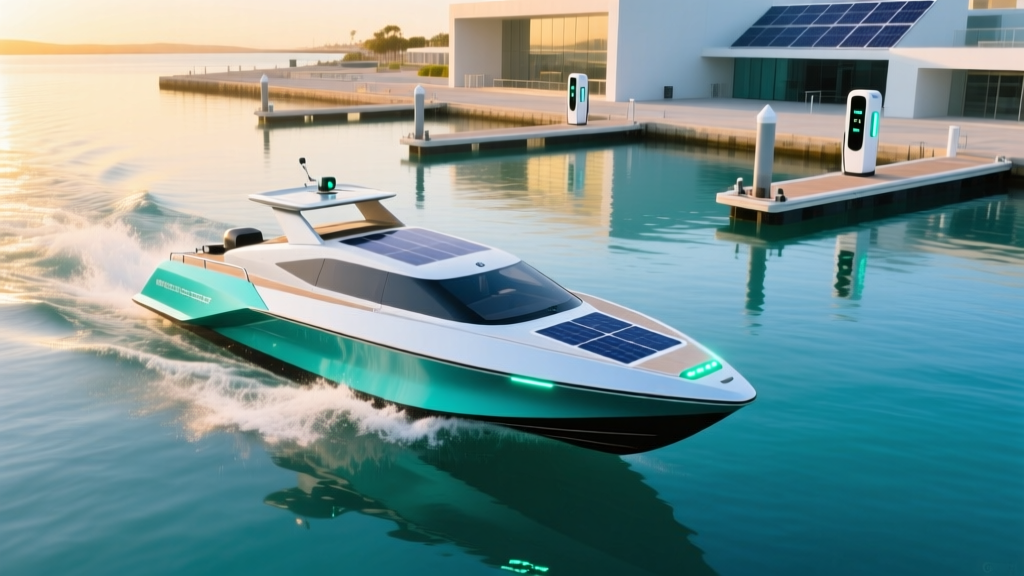
Quick Answer: Small electric jet boats—typically 10–16 feet with 20–60 kWh battery packs—deliver 45–90 minutes of continuous runtime at cruising speeds, cost $25,000–$85,000 depending on power and battery size, and recharge in 4–10 hours on Level 2 (240V). They eliminate fuel costs, oil changes, and exhaust fumes, but current models cannot match the 4–6 hour runtime of a comparable gas jet boat on a single tank. They work best for lake-day cruising, shallow-water fishing, and calm-water recreation where you can recharge at the dock.
Electric propulsion is expanding beyond cars and into recreational marine craft, and small electric jet boats are one of the most visible categories. Unlike propeller-driven electric boats, jet-drive models use an electric motor to spin an impeller that pushes water through a nozzle—giving them shallow-water capability, no exposed prop, and quick acceleration. But marine electrification faces physics challenges that EV cars solved years ago: water is roughly 800 times denser than air, battery weight directly increases hull drag, and there is no regenerative braking on a lake.
This guide breaks down what you can actually buy in 2026, what the real numbers look like, and whether an electric jet boat makes sense for your use case.
Current Small Electric Jet Boat Models & Specs
As of 2026, the small electric jet boat market is still niche but growing. A handful of manufacturers offer production models, and several startups have announced craft that are either in pre-order or early delivery. Below is a snapshot of representative models and their published specifications.
| Model | Length | Battery (kWh) | Motor (kW) | Top Speed | Runtime (cruise) | MSRP |
|---|---|---|---|---|---|---|
| Vision Marine E-Motion 130E (jet-drive conversion) | ~16 ft (varies by hull) | 40 kWh (NMC) | 130 kW (~175 HP) | ~45 mph | ~60 min at 25 mph | ~$65,000 (powertrain only) |
| Rand Sea Boats 520 Electric | 17 ft | 30 kWh (NMC) | 50 kW (~67 HP) | ~30 mph | ~90 min at 15 mph | ~$72,000 |
| X Shore Eelex 8000 (jet variant) | 26 ft (larger class) | 126 kWh (NMC) | 225 kW (~300 HP) | ~40 mph | ~3 hrs at 20 mph | ~$350,000 |
| Typical Chinese import (10–12 ft jet ski hull) | 10–12 ft | 10–20 kWh (LFP) | 15–30 kW | ~25 mph | ~45–60 min at 12 mph | ~$12,000–$25,000 |
Note: The electric jet boat market is fragmented. Many offerings are repowered hulls or semi-custom builds rather than mass-produced models like you'd find in the automotive EV space. Always verify current-year specs directly with the manufacturer.
Runtime vs. Range: Why Marine EV Math Is Different
In electric cars, we talk about EPA range in miles. In electric boats, the equivalent metric is runtime in hours at a given speed—because hull resistance scales non-linearly with speed, and a boat going 30 mph may consume 3–4× the energy per mile compared to 15 mph.
Real-World Runtime Reality: A 40 kWh battery pack in a 16-foot jet boat hull might deliver:
- ~2.5 hours at 8–10 mph (trolling/fishing speed)
- ~60–75 minutes at 20–25 mph (cruising)
- ~25–35 minutes at wide-open throttle (40+ mph)
Compare this to a gas-powered 16-foot jet boat with a 150 HP outboard and a 25-gallon tank, which can run 4–5 hours at cruising speed. The gap is significant and is the primary reason electric jet boats remain a niche product.
Energy consumption on the water is measured in kWh per hour (effectively kW draw). At cruising speeds, expect a small electric jet boat to draw 20–40 kW continuously. At wide-open throttle, that figure can spike to the motor's full rated output—meaning a 130 kW motor will drain a 40 kWh pack in under 20 minutes at full power.
Electric Jet Boat vs. Gas Jet Boat: Cost & Performance Comparison
The decision between electric and gas propulsion on the water comes down to usage patterns, budget, and what you value. Here's how the numbers compare for a typical 14–16 foot jet boat used recreationally.
| Factor | Electric Jet Boat (40 kWh) | Gas Jet Boat (150 HP outboard) |
|---|---|---|
| Purchase price (new, comparable hull) | $55,000–$85,000 | $30,000–$50,000 |
| Fuel/energy cost per hour (cruise) | ~$3–$6 (at $0.15/kWh) | ~$25–$40 (at $4.00/gal, 6–10 GPH) |
| Annual energy/fuel (100 hrs/yr) | ~$450–$600 | ~$3,000–$4,000 |
| Annual maintenance | ~$100–$200 (impeller inspection, electronics) | ~$500–$1,200 (oil, filters, winterization, fuel system) |
| Runtime per charge/tank | 1–2 hours (cruise) | 4–6 hours |
| "Refuel" time | 4–10 hours (Level 2, 240V) | 5 minutes |
| Noise at cruise | Near-silent (60–70 dB) | 75–85 dB |
| Shallow-water capability | Excellent (no lower unit) | Excellent (jet drive) |
| Weight (powertrain + energy) | ~700–1,200 lbs (batteries + motor) | ~500–700 lbs (engine + fuel) |
The fuel savings are real—roughly $2,500–$3,500 per year for a boater putting in 100 hours annually. But the upfront premium of $20,000–$40,000 means the payback period is 6–15 years on fuel savings alone, which exceeds the typical ownership cycle for a recreational boat.
Charging an Electric Jet Boat: What You Actually Need
Charging infrastructure for boats is far less developed than for EVs, and this is where many first-time electric boat buyers encounter friction. Here's what you need to know.
| Charging Level | Power (kW) | Voltage | Time to Full (40 kWh) | Availability |
|---|---|---|---|---|
| Level 1 (standard outlet) | 1.0–1.5 kW | 120V | 27–40 hours | Any dock or garage outlet |
| Level 2 (marine or EV charger) | 3.3–7.2 kW | 240V | 5.5–12 hours | Requires installed 240V circuit at dock/garage |
| DC Fast Charge (rare) | 20–50 kW | DC | ~1 hour | Very few marinas; mostly custom installs |
Home/Dock charging is essential. Unlike electric cars, which can rely on public charging networks, electric boats almost exclusively charge at their storage location—your dock, boat lift, or trailer in the garage. If your marina doesn't offer 240V shore power at your slip, you're limited to Level 1 charging, which may not fully replenish a depleted 40 kWh pack overnight.
Installation costs for a 240V/50A marine-grade shore power outlet typically run $2,000–$5,000, depending on the distance from your electrical panel and whether a panel upgrade is needed. For trailered boats charged at home, a standard NEMA 14-50 outlet installation (the same one used for EV home charging) costs $500–$1,500.
Battery Chemistry, Degradation & Replacement Costs
Most production electric jet boats use NMC (nickel manganese cobalt) lithium-ion cells, chosen for their higher energy density—critical when you're trying to fit enough battery into a hull that needs to stay light. Some smaller, lower-cost models from Asian manufacturers use LFP (lithium iron phosphate), which is heavier but offers longer cycle life and better thermal stability.
| Attribute | NMC (common in marine) | LFP (some budget models) |
|---|---|---|
| Energy density | ~200–260 Wh/kg | ~140–180 Wh/kg |
| Cycle life (to 80% capacity) | ~1,000–2,000 cycles | ~3,000–5,000 cycles |
| Thermal stability | Good (requires BMS monitoring) | Excellent |
| Weight for 40 kWh pack | ~155–200 kg (340–440 lbs) | ~220–285 kg (485–630 lbs) |
| Cost per kWh (2026) | ~$140–$180 | ~$100–$130 |
Battery replacement cost is the long-term ownership question that parallels EV car buyers' concerns. For a 40 kWh NMC marine pack, expect replacement costs of $8,000–$15,000 including labor, depending on the manufacturer and integration complexity. Marine-grade packs require waterproof housings, vibration dampening, and corrosion-resistant connections, which add cost compared to automotive packs.
Most manufacturers offer battery warranties of 2–5 years or 500–1,000 charge cycles, whichever comes first. This is notably shorter than the 8-year/100,000-mile warranties standard in the EV car market. Factor a potential battery replacement into your 10-year cost of ownership.
Real-World Ownership Considerations
Beyond the spec sheet, here are the practical realities that determine whether an electric jet boat works for you.
Water type matters. Saltwater use accelerates corrosion on electrical connections and motor housings. If you boat in saltwater, look for IP67+ rated motor housings and marine-grade stainless hardware. Freshwater lakes and rivers are far less demanding on electric drivetrains.
Temperature impacts runtime. Just like EVs, lithium-ion boat batteries lose capacity in cold water and cold air. Expect 15–25% runtime reduction when water temperatures drop below 50°F (10°C). Most marine packs lack the active thermal management systems found in EVs, making them more susceptible to temperature extremes.
Towing and transport. Electric jet boats are heavier than equivalent gas boats due to battery mass. A 16-foot electric jet boat may weigh 2,500–3,500 lbs on the trailer versus 1,800–2,500 lbs for a gas equivalent. Verify your tow vehicle's capacity and your trailer's axle rating.
Resale value is uncertain. The electric boat market is too young to establish reliable depreciation curves. Early adopters face the risk of rapid obsolescence as battery technology improves—similar to early Nissan Leaf owners who saw steep depreciation as range benchmarks advanced.
Decision Framework: Is an Electric Jet Boat Right for You?
Choose an electric jet boat if:
- You primarily boat on calm, freshwater lakes or slow-speed rivers
- Your typical outing is 1–2 hours of cruising, fishing, or swimming at anchor
- You have reliable 240V charging at your dock or home garage
- You value near-silent operation (wildlife observation, conversation, no fumes)
- You boat in areas with noise or emission restrictions (some lakes ban gas motors)
- Maintenance reduction is a priority (no winterization, no fuel stabilizer, no oil changes)
Stick with a gas jet boat if:
- You regularly boat for 3+ hours without returning to dock
- You need high-speed performance for water sports (wakeboarding, slalom skiing)
- You boat on large, open bodies of water where range is a safety concern
- Your marina lacks 240V shore power and upgrading isn't feasible
- Budget is a primary concern (gas boats cost 40–60% less upfront)
- You need the ability to refuel in minutes and keep going
Common Misconceptions About Electric Jet Boats
| Myth | Fact |
|---|---|
| "Electric boats are as fast as gas boats" | Electric motors deliver instant torque and competitive acceleration, but top speed is limited by battery discharge rates. Sustained high-speed runs drain the pack in 20–30 minutes. |
| "You can charge at any marina" | Most marinas only offer 120V shore power, which charges at ~1 kW. A depleted 40 kWh pack would take 40+ hours. You need dedicated 240V infrastructure. |
| "Electric boats need no maintenance" | No engine maintenance, but you still need impeller inspection, hull cleaning, battery terminal checks, bilge pump service, and trailer bearing maintenance. |
| "The battery will last forever" | NMC marine packs typically retain ~80% capacity after 1,000–2,000 full cycles. For a boater using 50 full cycles per year, that's 20–40 years of use—but calendar aging and heat also degrade cells. |
| "Electric boats qualify for EV tax credits" | The federal §30D tax credit applies to highway-capable motor vehicles. Boats do not qualify. Some states offer marine electrification rebates—check local programs. |
The Bottom Line: Total Cost of Ownership
| Cost Category | Electric Jet Boat (40 kWh) | Gas Jet Boat (150 HP) |
|---|---|---|
| Purchase price | $70,000 | $40,000 |
| Home/dock charger install | $2,500 | $0 |
| Energy/fuel (100 hrs/yr × 5 yrs) | $2,500 | $17,500 |
| Maintenance (5 years) | $750 | $4,500 |
| Insurance (5 years) | $4,500 | $3,500 |
| Estimated resale (year 5) | –$35,000 (est. 50%) | –$22,000 (est. 55%) |
| Net 5-year cost | ~$45,250 | ~$43,500 |
Over five years, the total cost of ownership is surprisingly close—within a few thousand dollars—despite the electric boat's much higher purchase price. The fuel and maintenance savings nearly close the gap. But this calculation assumes 100 hours per year of use; higher usage tilts the math further in favor of electric, while lower usage keeps the gas boat cheaper overall.
Electric jet boats in 2026 are a viable product for a specific buyer: someone with predictable, short-duration outings, access to 240V charging, and a willingness to pay an upfront premium for silent, emission-free operation. They are not yet a drop-in replacement for gas jet boats in all scenarios, and the runtime gap remains the fundamental limitation. As battery energy density improves and DC fast-charging infrastructure reaches more marinas, that gap will narrow—but for now, buy based on what these boats can do today, not what next-generation cells might deliver tomorrow.
Do small electric jet boats qualify for the federal EV tax credit?
No. The IRS §30D clean vehicle credit applies only to highway-capable motor vehicles (cars, trucks, SUVs, motorcycles). Boats, personal watercraft, and off-road vehicles are excluded. Some states and local utilities offer rebates for electric marine equipment—check with your state energy office.
How long does it take to charge an electric jet boat?
On a 240V Level 2 connection at 7.2 kW, a depleted 40 kWh battery takes approximately 5.5–6 hours to charge from 0–100%. On a standard 120V outlet at ~1.2 kW, expect 33+ hours. DC fast charging is available on very few models and requires specialized marine infrastructure.
Can I use an electric jet boat in saltwater?
Yes, but saltwater accelerates corrosion on all metal components. Look for models with IP67-rated motor housings, tinned marine-grade wiring, and sacrificial anodes. Rinse the entire drivetrain and hull with freshwater after every saltwater outing. Budget for more frequent hardware inspections compared to freshwater use.
What happens if the battery dies on the water?
Unlike a gas boat that can be refueled from a jerry can, a depleted electric boat must be towed back to a charger. Always monitor your state of charge, plan for a 20–30% reserve, and carry a marine VHF radio or phone for assistance. Some models offer a small auxiliary gas generator as a range extender—worth considering for open-water use.
Are electric jet boats safe? What about battery fires?
Lithium-ion battery fires in marine environments are rare but are taken seriously due to the difficulty of extinguishing them on water. Reputable manufacturers use marine-certified battery management systems (BMS) with thermal monitoring, automatic disconnects, and sealed housings. Look for ABYC (American Boat and Yacht Council) compliance and UL marine certification. The risk is low with quality equipment but higher with uncertified budget imports.