The Quick Answer: Small Electric Boats for EV Owners
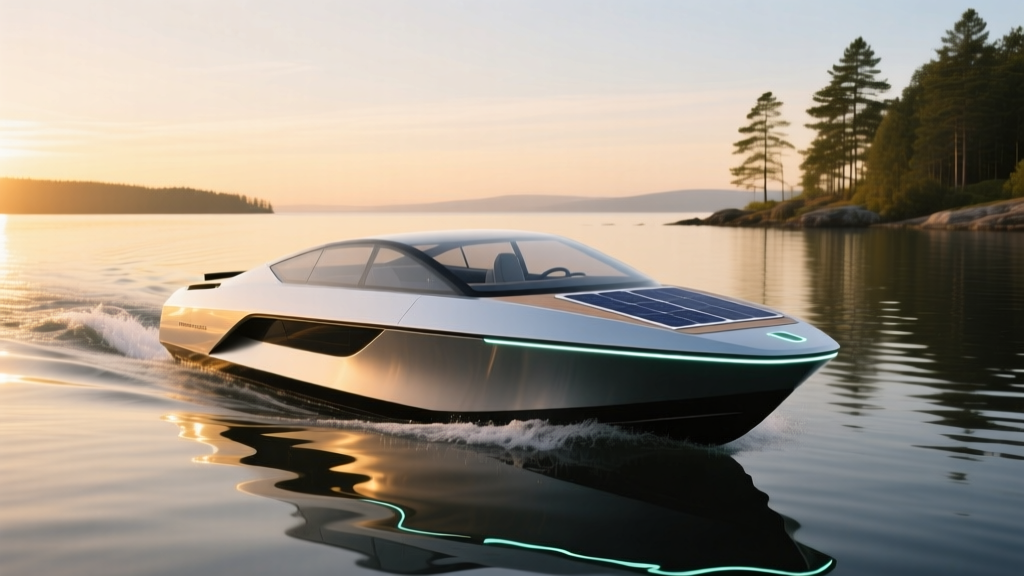
Small electric boats (under 20 feet) are the marine equivalent of the EVs you already drive — they use the same lithium-ion battery chemistries (LFP and NMC), the same kW/kWh principles, and increasingly, the same Level 2 charging infrastructure. In 2026, leading models like the X Shore Eelex 8000, the Candela C-8, and the ElectraCraft 162 offer 20–50 nautical miles of range on battery packs from 30 to 126 kWh, with prices spanning $35,000 to $350,000. If you already charge an EV at home on a 240V Level 2 circuit, you can often share that infrastructure with a small electric boat — making dockside charging as practical as your driveway.
For readers arriving from an EV purchase mindset, the parallel is direct: electric boats trade the combustion outboard or inboard engine for a battery pack, electric motor, and onboard charger. The decision framework — range versus battery size, charging speed versus cost, real-world efficiency versus sticker claims — is nearly identical to evaluating a Tesla Model Y or a Ford F-150 Lightning. The difference is the medium: water resistance, hull design, and marine-grade corrosion protection replace aerodynamics and tire rolling resistance.
Small Electric Boat Specs: What 2026 Models Actually Deliver
Just as with EVs, the spec sheet tells the real story. Here's a snapshot of three representative small electric boats currently on the market, presented the way we'd compare EVs — battery capacity in kWh, motor output in kW, real-world range, and charge time.
| Model | Battery (kWh) | Motor (kW) | Range (nautical mi) | Charge Time (0–100%) | Base Price (USD) |
|---|---|---|---|---|---|
| ElectraCraft 162 | 14.4 kWh (LFP) | 7 kW | 8–12 nm (cruising) | ~4 hrs (Level 2, 3.7 kW) | $35,900 |
| X Shore Eelex 8000 | 126 kWh (NMC) | 225 kW | 40–50 nm (eco speed) | ~5 hrs (DC fast, 40 kW); ~12 hrs (L2) | $329,000 |
| Candela C-8 (foiling) | 69 kWh (NMC) | 75 kW | 45–50 nm (at 22 knots) | ~2.5 hrs (DC, 30 kW) | $390,000 |
Real-world range caveat: Just as an EPA-rated 310-mile EV might deliver 250 miles on the highway, electric boat range drops sharply at higher speeds. Hull drag increases with the cube of velocity in displacement hulls, and even foiling hulls like the Candela lose roughly 20–30% of rated range in choppy water or headwinds. Plan on 70–80% of published range for realistic trip planning.
Electric Boat vs. Gas Outboard: The Cost and Efficiency Breakdown
For a fair comparison, we'll match the ElectraCraft 162 (a 16-foot electric pontoon) against a comparable gas-powered pontoon with a 25 HP outboard — the kind of boat used for lake cruising, fishing, and dock-hopping.
| Factor | Electric (ElectraCraft 162) | Gas (16' Pontoon + 25 HP Outboard) |
|---|---|---|
| Purchase Price | $35,900 | $18,000–$24,000 |
| Energy/Fuel Cost per Hour (cruising) | $0.80–$1.20 (at $0.13/kWh, ~7 kW draw) | $6.00–$10.00 (at ~1.5 gal/hr, $4.50/gal) |
| Annual Energy/Fuel (100 hrs use) | $80–$120 | $600–$1,000 |
| Annual Maintenance | $100–$300 (prop inspection, wiring check) | $500–$1,200 (oil, impeller, lower unit, winterization) |
| Noise at Cruising Speed | ~55 dB (conversation-level) | ~80–85 dB (shouting required) |
| Local Emissions | Zero at point of use | Unburned hydrocarbons in water; exhaust fumes |
| Estimated 5-Year Total Cost | $37,000–$39,500 | $24,000–$35,000 |
The math mirrors the EV-vs-gas-car equation: higher upfront cost, lower operating cost. For a lake-house owner who boats 100+ hours a year, the breakeven point arrives around year 6–8. For occasional users (20–30 hours/year), the gas boat remains cheaper in pure dollars — though the silence, zero wake turbulence, and absence of fuel handling may justify the premium.
Battery Chemistry in Small Electric Boats: LFP vs. NMC on the Water
EV buyers already know the LFP vs. NMC trade-off. In marine applications, the same physics apply — with a few water-specific twists.
| Attribute | LFP (Lithium Iron Phosphate) | NMC (Nickel Manganese Cobalt) |
|---|---|---|
| Energy Density | Lower (~150 Wh/kg) — heavier pack for same kWh | Higher (~250 Wh/kg) — lighter, more compact |
| Cycle Life | 3,000–5,000 cycles to 80% SoH | 1,000–2,000 cycles to 80% SoH |
| Thermal Stability | Excellent — less prone to thermal runaway | Good — requires active thermal management |
| Marine Suitability | Ideal for heavy displacement hulls (pontoon, barge) | Required for planing/foiling hulls (weight-sensitive) |
| Cost per kWh (2026) | ~$90–$110 | ~$130–$160 |
| Used By | ElectraCraft, Flux Marine (lower trims) | X Shore, Candela, high-performance models |
If you're choosing a small electric boat for calm lake cruising and don't mind a heavier hull, LFP is the pragmatic pick — you'll likely never need a battery replacement in the boat's lifetime. If you need speed, foiling efficiency, or a planing hull, NMC is mandatory to keep weight down, but expect a battery replacement consideration around year 10–15 depending on usage cycles.
Charging Your Small Electric Boat: Dock, Home, and Marina Infrastructure
This is where EV ownership experience pays off. Small electric boats typically charge via one of three pathways:
- Level 1 (120V, 1.4–1.9 kW): Trickle charging from a standard dock outlet. Adds roughly 2–4 nautical miles of range per hour. Suitable for small LFP packs (14–20 kWh) with overnight access. No electrician needed if a GFCI-protected marine outlet exists.
- Level 2 (240V, 3.7–7.4 kW): The same J1772-adjacent infrastructure you use for your EV. A marina-installed 240V/30A pedestal delivers ~5.5 kW, charging a 69 kWh Candela pack in roughly 12 hours. Installation at a private dock: $1,500–$4,000 including marine-grade conduit, GFCI breaker, and permitting.
- DC Fast Charging (15–40 kW): Available at select marinas and via the boat's built-in DC inlet (typically CCS or proprietary). A 40 kW DC connection charges the X Shore Eelex 8000 from 10–80% in approximately 2 hours. Still far slower than automotive DC fast charging (which routinely hits 150–350 kW) because marine battery thermal management is less aggressive and packs are more exposed to ambient water temperature.
| Charging Method | Power (kW) | Miles Added/Hour | Typical Install Cost | Best For |
|---|---|---|---|---|
| Level 1 (120V dock outlet) | 1.4–1.9 kW | 2–4 nm/hr | $0 (if outlet exists) | Small LFP boats, overnight top-ups |
| Level 2 (240V marina pedestal) | 3.7–7.4 kW | 6–12 nm/hr | $1,500–$4,000 (private dock) | Daily-use boats, mid-size packs |
| DC Fast (CCS/proprietary) | 15–40 kW | 20–40 nm/hr | $0 (marina-provided) | Large packs, quick turnaround |
Home charging access note: Not every boat owner has a private dock. If your boat lives at a shared marina, confirm with the harbormaster whether Level 2 pedestal access is included in your slip fee or metered separately. This is the marine equivalent of apartment-dweller EV charging — solvable, but requires advance planning.
Real-World Ownership Considerations: Climate, Usage, and the Range Reality
Electric boats share the same environmental sensitivities as EVs, amplified by the marine environment:
- Cold-water range loss: Battery efficiency drops 15–25% in water temperatures below 50°F, just as EV range drops in winter air. If you boat in northern lakes from April through October, plan for a 20% range buffer in shoulder-season months.
- Headwind and current: A 15-knot headwind or strong river current can reduce range by 30–40% — the marine equivalent of mountain driving in an EV. Always check conditions before departing, just as you'd check terrain on a road trip.
- Corrosion and IP ratings: Marine battery enclosures are rated IP67 or higher, but connectors, charge ports, and bilge-area wiring require annual inspection. Budget $200–$400/year for marine electrician checkups — a cost that gas-boat owners don't have, though they spend equivalently on fuel-system winterization.
- Insurance: Electric boat insurance premiums run 10–20% higher than comparable gas boats in 2026, reflecting insurer unfamiliarity with marine lithium packs and higher replacement values. Get quotes before purchasing — this is the marine analog to EV insurance premiums.
Tax Credits and Incentives: Do Electric Boats Qualify?
Here's where the EV comparison diverges sharply. The IRS §30D federal tax credit applies to on-road motor vehicles — cars, trucks, SUVs, and vans that meet MSRP, income, and battery-sourcing requirements. Boats do not qualify for §30D.
However, several 2026-era incentives do apply to electric boats:
- Clean Vessel Act (CVA) grants: Some state fish-and-wildlife agencies offer rebates for electric marine vessels, typically $2,000–$10,000 depending on the state. Check your state's boating authority.
- Utility company rebates: Electric utilities in states like California, New York, and Washington increasingly offer marine electrification rebates ($1,000–$5,000) as part of broader demand-management programs.
- Marina charging infrastructure grants: Federal and state programs (including EPA Clean Ports initiatives) fund marina-side charging equipment — which indirectly reduces your ownership cost by ensuring dock-side Level 2 or DC access.
- Business use (Section 179): If your electric boat is used for commercial purposes (charter, eco-tours, water taxi), it may qualify for accelerated depreciation under IRS Section 179 — consult a tax professional.
Common Misconceptions About Small Electric Boats
| Myth | Fact |
|---|---|
| "Electric boats can't go fast." | The Candela C-8 cruises at 22 knots (25 mph) and tops 27 knots using hydrofoils. The X Shore Eelex 8000 hits 35+ knots. Speed is a function of hull design, not just motor power. |
| "The battery will die and strand you." | Modern marine battery management systems (BMS) enforce reserve buffers (typically 10–15%), and most electric boats include a GPS-linked range estimator that accounts for speed, wind, and current — the marine equivalent of an EV's navigation-aware range prediction. |
| "Saltwater destroys electric motors." | Marine electric motors are fully sealed (IP68) and use corrosion-resistant materials. In fact, electric outboards have fewer saltwater-exposed components than gas outboards (no fuel lines, carburetors, or exhaust manifolds to corrode). |
| "You need a special marine charger." | Most small electric boats charge from standard Level 2 (240V) infrastructure. If you can charge an EV at your dock or marina, you can charge a boat — often with the same circuit. |
| "Electric boats are only for the wealthy." | Entry-level electric pontoons and fishing boats start at $15,000–$35,000 in 2026. The premium is real versus gas equivalents, but the 5-year operating savings partially close the gap. |
Decision Framework: Should You Buy a Small Electric Boat?
Choose a small electric boat if:
- You boat primarily on calm lakes, rivers, or protected coastal waters
- Your typical outing is under 30 nautical miles round-trip
- You have access to Level 2 (240V) charging at your dock or marina
- You value silence, zero wake, and zero local emissions (important for fishing and wildlife areas)
- You already own an EV and are comfortable with battery management, charging routines, and range planning
- You boat in areas with noise restrictions or no-wake zones where electric propulsion has regulatory advantages
Stick with a gas outboard if:
- You need 100+ nautical mile range without mid-trip charging
- You boat in remote areas with no shore-power infrastructure
- Your budget is under $15,000 and you need a functional boat now
- You trailer your boat to different bodies of water frequently (charging logistics become complex)
- You need high-speed offshore capability for fishing or safety in open water
Frequently Asked Questions
How long do electric boat batteries last?
LFP marine packs are rated for 3,000–5,000 charge cycles to 80% State of Health — that translates to 15–25+ years of recreational use (assuming 100–200 cycles per year). NMC packs are rated for 1,000–2,000 cycles, or roughly 8–15 years. Replacement costs in 2026 run $8,000–$25,000 depending on pack size, and are trending downward as marine battery production scales.
Can I charge my electric boat from my home EV charger?
If your EV charger is at your dock or within cable reach of your boat's slip, yes — most small electric boats accept standard Level 2 (240V, J1772-adjacent or marine-specific) charging. You may need a marine-rated adapter cable ($150–$400) and should confirm with your boat manufacturer that your specific EVSE is compatible. Never use an extension cord for marine charging.
Are electric boats safe in storms?
Electric boats carry the same storm risks as gas boats — lightning, flooding, and capsize. The battery pack is sealed and marine-rated, but you should not operate any small boat (electric or gas) in severe weather. Marine BMS systems include ground-fault and isolation monitoring that automatically disconnects the pack if water intrusion is detected.
Do electric boats qualify for the $7,500 federal EV tax credit?
No. The IRS §30D Clean Vehicle Credit applies only to on-road vehicles (cars, trucks, vans, SUVs). Electric boats may qualify for state-level clean vessel grants, utility rebates, or commercial-use depreciation — but not the federal auto tax credit.
What's the cheapest small electric boat I can buy in 2026?
Entry-level electric fishing boats and pontoons from brands like ElectraCraft and Navier start around $15,000–$35,000. These typically use smaller LFP packs (10–20 kWh), deliver 6–12 nautical miles of range, and top out at 5–8 knots — suitable for calm-lake fishing and leisurely cruising, not high-speed runs.