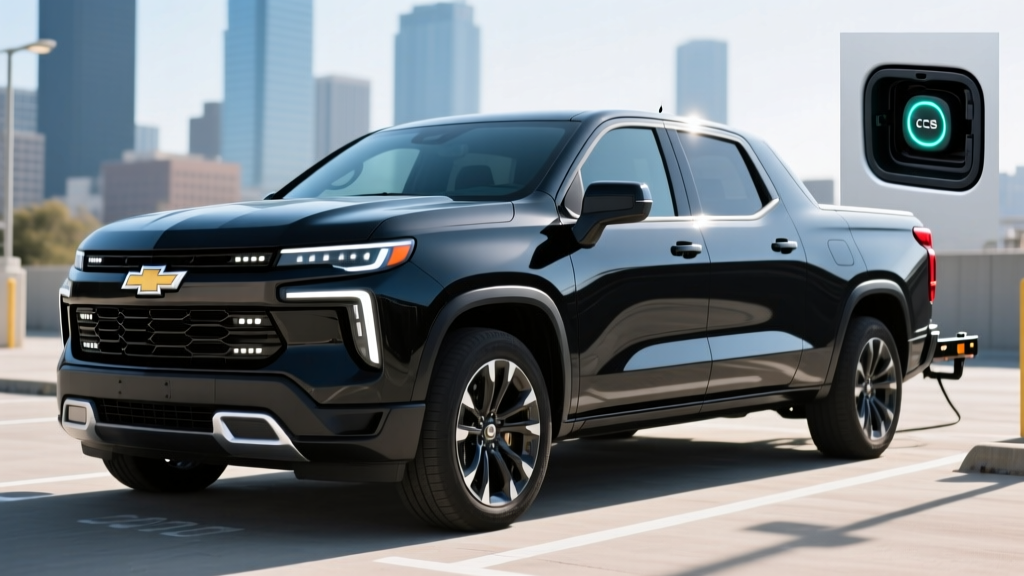
If you're cross-shopping the 2026 Chevrolet Silverado EV against the gas Silverado 1500, you've probably searched for the bolt pattern for Silverado 1500 wheels and wondered whether the EV variant shares it. The short answer: the Silverado EV rides on GM's dedicated BT1 electric truck platform (shared with the GMC Sierra EV and Hummer EV), not the body-on-frame T1 architecture under the ICE Silverado 1500. That means suspension geometry, hub bore, and wheel offset differ, even though both trucks share a 6-lug, 139.7 mm (5.5-inch) bolt circle. Always confirm fitment with your wheel supplier before swapping — the EV's heavier curb weight (over 8,800 lbs on some trims) demands wheels rated for the load.
But wheels are just the starting point. The 2026 Silverado EV is one of the longest-range electric vehicles on the U.S. market, a serious tow rig, and a technology showcase — with real-world trade-offs every buyer should understand before signing.
Range, Battery, and Real-World Efficiency
The headline number is massive: the Silverado EV 4WT Max Range achieves an EPA-estimated 492 miles of range, while the consumer-focused RST and Trail Boss trims with the available Max Range pack land around 460 miles EPA. The standard-range Work Truck and LT trims deliver approximately 393 miles EPA.
Powering these figures is a massive Ultium-format lithium-ion pack. The Max Range battery delivers approximately 200+ kWh of usable capacity using NCMA (nickel-cobalt-manganese-aluminum) cathode chemistry — a variant of NMC optimized for energy density and cycle life. The standard-range pack is approximately 165 kWh usable. Both packs use GM's wireless battery management system (wBMS), which reduces wiring harness weight and improves cell-level diagnostics.
Efficiency for the RST trim is rated at roughly 76 MPGe combined, translating to about 44 kWh per 100 miles. That's thirsty by passenger-car standards — physics demands it for a truck with this much frontal area and mass — but competitive with the Ford F-150 Lightning and Rivian R1T.
Charging Speed: DC Fast, Level 2, and Home Setup
GM equips the Silverado EV with an 800-volt architecture, enabling peak DC fast-charging rates up to 350 kW on compatible CCS or NACS chargers (GM has adopted the Tesla NACS port for 2025+ models). In practice, the charge curve peaks around 300–320 kW in the 10–30% state-of-charge window, then progressively tapers to protect the pack.
| Level | Power | Speed / Time | Connector |
|---|---|---|---|
| DC Fast Charge (peak) | 350 kW | 10–80% in ~37 min (Max Range) | NACS (CCS via adapter) |
| DC Fast Charge (50 kW station) | 50 kW | 10–80% in ~3.5 hours | NACS/CCS |
| Level 2 (home, 48A / 11.5 kW) | 11.5 kW | ~26 mi/hr added | NACS (J1772 adapter) |
| Level 2 (80A, hardwired) | 19.2 kW | ~43 mi/hr added | NACS |
| Level 1 (120V, 12A) | 1.4 kW | ~3 mi/hr added | Standard outlet |
A full 10–80% session on a 350 kW charger takes approximately 37–40 minutes for the Max Range pack. That's slower than a Hyundai Ioniq 5's 18-minute sprint because the Silverado's pack is roughly three times larger — total energy delivered matters more than peak speed. On a typical road trip, plan for one 25–30 minute stop every 250–300 highway miles.
At home, the Silverado EV's onboard charger accepts up to 19.2 kW on Level 2 when connected to an 80-amp hardwired EVSE. That means a full overnight recharge from 20% to 100% takes roughly 9–10 hours. Most owners installing a 48-amp Level 2 unit (the common residential setup on a 60-amp breaker) will see about 26 miles of range added per hour — sufficient for daily driving recovery but a two-night affair for a depleted Max Range pack. A panel upgrade to 200A service may be necessary; expect $1,500–$3,500 in total home-install costs including the EVSE, wiring, and permitting.
Performance, Drivetrain, and Towing
The Silverado EV is offered with dual-motor all-wheel drive across most trims. Output varies significantly:
- WT / LT (standard output): ~510 hp, 615 lb-ft torque
- RST: ~664 hp, 780 lb-ft torque (Wide Open Watts mode)
- Trail Boss: ~600 hp, off-road tuned with Adaptive Ride Control
- 4WT Max Range: ~754 hp, 785 lb-ft torque
Zero-to-60 mph times range from approximately 4.5 seconds (RST in WOW mode) to around 5.8 seconds for the heavier Max Range WT. Those are sports-sedan numbers in a truck that weighs over four tons — the instant torque delivery makes highway merging effortless even under load.
Maximum towing capacity is rated at 12,500 pounds on properly equipped WT and RST trims (with the Max Tow package). Real-world towing at that limit will cut range roughly in half. The available trailering tech suite includes Super Cruise with trailer integration, transparent trailer camera views, and a digital trailer hitch assist — genuinely useful for solo hookup.
Off-road, the Trail Boss trim adds a 2-inch factory lift, 35-inch all-terrain tires, underbody skid plates, and terrain-select drive modes. Ground clearance reaches approximately 11.2 inches. Approach, departure, and breakover angles are competitive with the Rivian R1T, though the Silverado's longer wheelbase limits tight-trail agility.
Pricing, Trims, and Federal Tax Credit Eligibility
The 2026 Silverado EV lineup spans work-truck basics to luxury-EV pricing:
| Trim | Base MSRP | Est. After §30D Credit | Notes |
|---|---|---|---|
| WT (Standard Range) | ~$55,000 | ~$47,500 | Fleet-oriented, vinyl seats, 8" screen |
| LT (Standard Range) | ~$63,000 | ~$55,500 | Consumer trim, cloth/leatherette |
| RST (Max Range) | ~$87,300 | ~$79,800 | Premium, Super Cruise included |
| Trail Boss (Max Range) | ~$78,000 | ~$70,500 | Off-road package |
| 4WT (Max Range) | ~$72,000 | ~$64,500 | Commercial/fleet focus |
Federal tax credit (IRS §30D) caveats: The up-to-$7,500 Clean Vehicle Credit is subject to multiple eligibility requirements for 2026. The Silverado EV qualifies as a light truck, so the MSRP cap is $80,000 — meaning the RST Max Range at ~$87,300 exceeds the cap and is ineligible for the full credit at base price (though optioned-down builds or dealer adjustments may change this). Buyer income caps apply: $300,000 joint / $225,000 head of household / $150,000 single filer (modified AGI). Battery critical-mineral and component sourcing requirements also apply and evolve annually. The credit can be transferred at the point of sale as a down-payment reduction. Always verify current eligibility on IRS.gov and consult a tax professional before purchase.
Cargo, Interior Space, and Utility
The Silverado EV's unibody-on-battery architecture enables a few packaging tricks the gas truck can't match:
- eTrunk (front trunk): ~10.7 cubic feet of lockable, weather-sealed storage — large enough for two carry-on bags plus charging cables. Includes a power-operated tonneau-style cover and available 120V/240V Pro Power outlets.
- Bed: 5'11" bed length (shorter than the gas Silverado's 6'6" standard box) with a Multi-Flex tailgate and available midgate that opens into the cabin for items up to ~10 feet long.
- Passenger space: Front legroom is generous at ~44.5 inches; rear legroom is approximately 43.4 inches — competitive with the crew-cab gas Silverado.
- Interior storage: The flat floor (no transmission tunnel) enables a wide center console and under-seat storage bins.
One drawback: the shorter bed is a genuine compromise for buyers who regularly haul 4x8 sheets of plywood or long lumber. The midgate solves length but eliminates rear-seat passenger use simultaneously.
Tech, Driver Assistance, and Software
The RST and LT trims feature a 17.7-inch diagonal infotainment screen running GM's Google-based infotainment system with native Google Maps, Google Assistant, and Play Store apps. An 11-inch digital driver cluster complements it. Wireless Apple CarPlay and Android Auto are standard.
Driver assistance is a highlight: Super Cruise (GM's Level 2 hands-free highway driving system) is available on over 750,000 miles of mapped roads in the U.S. and Canada, including trailer-towing mode. This is not autonomous driving — the driver must remain attentive and an infrared camera monitors eye gaze — but it dramatically reduces fatigue on long highway stretches. The NHTSA classifies this as SAE Level 2 automation.
Additional tech includes vehicle-to-load (V2L) power output up to 10.2 kW (enough to run power tools at a job site or essential home circuits during an outage with the proper transfer switch), over-the-air software updates, and a digital rearview camera mirror.
Warranty and Long-Term Ownership
GM backs the Silverado EV with:
- Battery pack: 8 years / 100,000 miles (whichever comes first), warrantied against capacity loss below 60% of original — though GM's internal testing suggests Ultium packs retain well over 80% capacity at 150,000 miles under normal use.
- Powertrain (motors, reducers): 5 years / 60,000 miles.
- Bumper-to-bumper: 3 years / 36,000 miles.
- Corrosion: 6 years / 100,000 miles.
Battery replacement cost, should it ever be needed out of warranty, is estimated at $25,000–$35,000 for the Max Range pack based on current Ultium module pricing — a significant sum, though module-level repair (replacing individual bad modules rather than the full pack) is supported by the wBMS architecture and should reduce costs over time.
Silverado EV vs. Key Competitors
| Spec | Chevy Silverado EV RST | Ford F-150 Lightning | Rivian R1T (Dual Max) |
|---|---|---|---|
| EPA Range (Max) | ~460 mi | ~320 mi | ~420 mi |
| Battery (usable) | ~200 kWh (NCMA) | ~131 kWh (NMC) | ~149 kWh (NMC/LFP options) |
| Peak DC Charge | 350 kW | 150 kW | 220 kW |
| 0–60 mph | ~4.5 sec | ~3.8 sec | ~3.5 sec |
| Max Towing | 12,500 lbs | 10,000 lbs | 11,000 lbs |
| Starting MSRP | ~$55,000 | ~$52,000 | ~$69,900 |
The Silverado EV wins on range and towing. The F-150 Lightning is lighter, quicker to charge (smaller pack), and currently has broader dealer service infrastructure. The Rivian R1T is more agile off-road and faster in a straight line, but costs more and has a smaller service network. Per fueleconomy.gov, the Silverado EV's efficiency is the lowest of the three — the trade-off for its range-dominating battery size.
Who Should Buy the Silverado EV?
- Class-leading EPA range (up to 492 miles)
- 12,500-lb towing capacity
- 350 kW DC fast charging on 800V architecture
- Massive eTrunk and midgate utility
- Super Cruise hands-free driving with trailer mode
- V2L up to 10.2 kW for job-site or backup power
- Very heavy — over 8,800 lbs curb weight
- Shorter 5'11" bed vs. gas Silverado
- RST Max Range exceeds §30D MSRP cap
- Efficiency of ~44 kWh/100mi raises home-charging costs
- Long home recharge times due to massive pack
- Bolt pattern shares 6x139.7mm with ICE Silverado 1500 but hub/offset/load differ — wheel swaps need verification
Choose the F-150 Lightning if: You prioritize faster home charging, a more familiar truck layout, and a lower entry price with broader dealer support.
Choose the Rivian R1T if: You value off-road agility, adventure-focused features (gear tunnel, camp kitchen), and don't need 400+ miles of range.
Frequently Asked Questions
What is the bolt pattern for the Silverado 1500, and does it fit the Silverado EV?
The conventional gas Chevrolet Silverado 1500 (2019–2026, T1 platform) uses a 6-lug, 139.7 mm (6x5.5") bolt pattern with an M14 x 1.5 thread pitch and approximately 78.1 mm hub bore. The Silverado EV shares the same 6x139.7 mm bolt circle, but rides on the BT1 platform with different hub bore, offset, and load requirements. The EV's 8,800+ lb curb weight demands wheels rated for higher load per corner. Always verify with the wheel manufacturer — do not assume gas-truck wheels will safely fit the EV.
What is the real-world range of the Silverado EV?
Expect approximately 380–420 miles highway (70 mph, 65°F), 340–380 miles in cold weather (below 30°F), and 200–240 miles when towing a 7,000-lb trailer. The 492-mile EPA combined figure is achievable on mixed suburban driving at moderate speeds and temperatures.
How fast does the Silverado EV charge?
On a 350 kW DC fast charger, the Max Range pack charges from 10% to 80% in approximately 37–40 minutes. At home on a 48-amp Level 2 charger (11.5 kW), you'll recover about 26 miles of range per hour. A full 19.2 kW Level 2 connection (80-amp circuit) roughly doubles that to 43 miles per hour.
Does the 2026 Silverado EV qualify for the $7,500 federal tax credit?
It depends on the trim and your income. Trims under the $80,000 MSRP cap (WT, LT, some Trail Boss builds) can qualify for up to $7,500 under IRS §30D, subject to buyer AGI limits ($150K single / $300K joint) and battery critical-mineral sourcing rules. The RST Max Range at ~$87,300 exceeds the MSRP cap. Verify at IRS.gov and with your tax professional.
Is the Silverado EV worth buying over the gas Silverado 1500?
If you drive 15,000+ miles per year, have home charging access, and your utility offers reasonable electricity rates (under $0.18/kWh), the EV's lower per-mile energy cost and minimal maintenance can offset the higher purchase price within 5–7 years. For low-mileage drivers, frequent heavy-towing users, or those without reliable home charging, the gas or diesel Silverado 1500 remains more practical today.
Can the Silverado EV power my home during an outage?
Yes, with the available V2L (vehicle-to-load) system and a properly installed home energy management system. The truck can output up to 10.2 kW, enough to run essential circuits (refrigerator, lights, HVAC fan, internet) for multiple days given the 200+ kWh battery. GM's Energy Assist program supports compatible home integration hardware.