Quick Verdict: A Workhorse With Staying Power
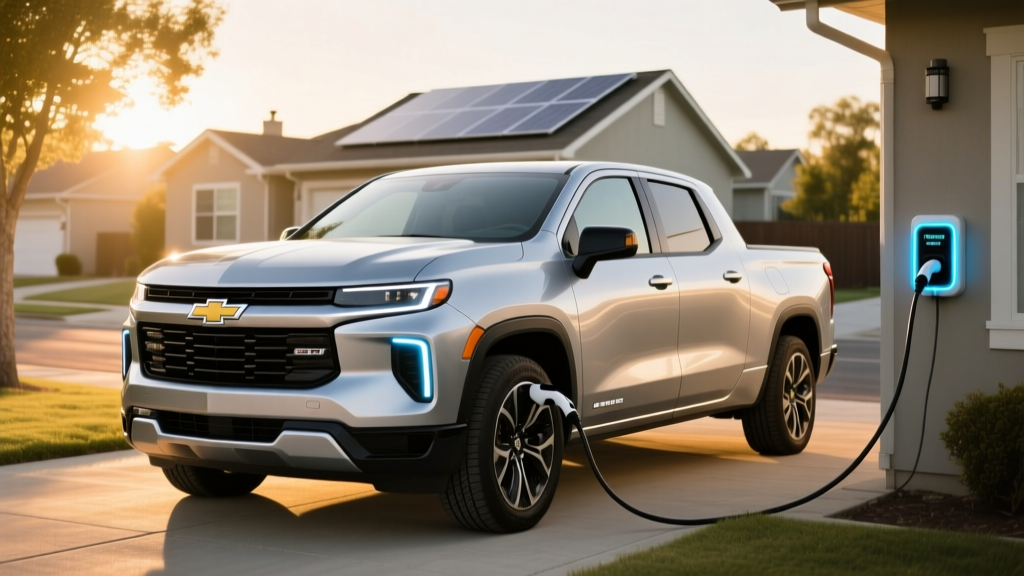
The Chevrolet Silverado EV LT sits in a crowded full-size electric truck segment, but it carves out a distinct identity: maximum range and practical towing without the RST's premium price tag. For 2026, the LT trim continues to offer the Ultium platform's largest battery option, a refined Super Cruise integration, and a Multi-Flex tailgate that actually earns its marketing name. If you need a daily-drivable electric truck that can handle a 300-mile highway run and still tow 10,000 pounds on the weekend, the Silverado EV LT is one of the few that does both without compromise.
That said, it's not a compact urban runabout. The LT's size, weight, and price put it squarely in the camp of truck buyers who need truck capabilities. Let's break down the numbers that matter.
Range and Efficiency: EPA Meets the Real World
The 2026 Silverado EV LT is available in two battery configurations. The standard-range LT ships with a 100 kWh (usable) NMC lithium-ion pack, while the extended-range option bumps that to a massive 200 kWh usable pack — one of the largest in any production vehicle. Here's what the EPA says and what you'll actually see:
EPA Estimated Range: Standard-range LT: 280 miles | Extended-range LT: 390 miles
Real-World Expectation: On a 70 mph highway loop with moderate temps (65–75°F), expect ~240–255 miles from the standard pack and ~330–350 miles from the extended pack. In cold weather (below 30°F), knock off an additional 15–25% due to battery resistance and cabin heating demands. City driving with regenerative braking can push range slightly above EPA figures.
The Silverado EV LT extended-range posts an EPA-rated 63 MPGe combined (approximately 53 kWh/100 mi). That efficiency figure is typical for a 9,000+ lb electric truck — it's less efficient per mile than a sedan, but it's moving far more mass and capability. For context, the Ford F-150 Lightning extended-range achieves a similar 66 MPGe combined.
Charging Speed: DC Fast and Home Level 2
Chevrolet equips the Silverado EV LT with a NACS (North American Charging Standard) native port, granting direct access to the Tesla Supercharger network — a significant practical advantage for road-trip charging. Here's the full charging profile:
| Charging Level | Power / Rate | Time / Miles Added |
|---|---|---|
| Level 1 (120V) | 1.4 kW | ~3 miles per hour |
| Level 2 (240V, 48A) | 11.5 kW | ~25 miles per hour; full charge in ~9 hr (100 kWh) or ~18 hr (200 kWh) |
| Level 2 (240V, 80A) | 19.2 kW | ~42 miles per hour; full charge in ~5.5 hr (100 kWh) or ~11 hr (200 kWh) |
| DC Fast Charge (peak) | 200 kW | 10–80% in ~35 min (100 kWh) / ~50 min (200 kWh) |
Charging-curve reality check: The Silverado EV LT's 200 kW peak rate is achieved between roughly 10–30% State of Charge (SoC). Above 50%, the curve tapers to ~120 kW, and above 80%, it drops to under 50 kW to protect battery longevity. This is standard behavior for NMC chemistry at this scale. Plan your road-trip stops around 10–80% windows for the fastest throughput — charging from 80–100% at a DC fast charger adds 20+ minutes for minimal range gain.
The onboard charger supports up to 19.2 kW on Level 2, which is among the best in the segment. If your home electrical panel can support a 100-amp dedicated circuit (requiring a 200-amp main panel minimum), you can install an 80A hardwired EVSE and wake up to a full standard-range battery every morning. The 200 kWh extended-range pack is best suited for owners who can charge at 19.2 kW overnight or who rely primarily on DC fast charging for top-ups.
Performance and Drivetrain
The Silverado EV LT comes exclusively with a dual-motor AWD configuration. Output varies by battery:
- Standard-range (100 kWh): 510 horsepower, 615 lb-ft torque
- Extended-range (200 kWh): 645 horsepower, 785 lb-ft torque
The extended-range LT hits 0–60 mph in approximately 4.5 seconds — genuinely quick for a truck this size, and noticeably faster than a gas Silverado 1500 with the 6.2L V8. The standard-range model clocks in around 5.2 seconds. Both feel effortless in daily driving, with instant torque making highway merging and passing a non-event.
| Spec | Standard-Range LT | Extended-Range LT |
|---|---|---|
| EPA Range | 280 mi | 390 mi |
| Battery (usable) | 100 kWh, NMC | 200 kWh, NMC |
| Horsepower | 510 hp | 645 hp |
| 0–60 mph | ~5.2 sec | ~4.5 sec |
| Max DC Fast Charge | 200 kW | 200 kW |
| 10–80% DC Time | ~35 min | ~50 min |
| Level 2 Onboard | 19.2 kW max | 19.2 kW max |
| Max Towing | 10,000 lbs | 10,000 lbs |
| MPGe (combined) | 65 MPGe | 63 MPGe |
Interior, Cargo, and Technology
The Silverado EV's skateboard platform (GM's BT1 architecture) enables a flat floor and a genuinely useful front trunk (frunk). Interior space is generous:
- Front legroom: 44.5 inches
- Rear legroom: 43.4 inches (crew cab)
- Frunk volume: 10.9 cu ft (lockable, with drain for use as a cooler)
- Bed length: 5 ft 11 in (standard), expandable to ~9 ft with the Multi-Flex midgate folded down
- Bed payload: Up to 1,800 lbs
The midgate is the Silverado EV's party trick. Fold it down, and you can haul lumber, kayaks, or a motorcycle while still keeping the rear seats usable (partially). It's a practical solution that the F-150 Lightning lacks.
Infotainment: A 17.7-inch diagonal touchscreen dominates the dash, running GM's latest Ultifi software platform. Wireless Apple CarPlay and Android Auto are standard, along with a built-in Wi-Fi hotspot. The instrument cluster is an 11-inch digital display. The system is responsive, though the sheer number of menu layers for climate and vehicle settings can require a learning curve.
Driver assistance: The LT trim includes Super Cruise — GM's hands-off-wheel Level 2 driver-assistance system — on over 400,000 miles of mapped highways. Super Cruise requires driver attention monitoring (eye-tracking via the steering column camera) and does not operate on unmapped roads or in construction zones. This is SAE Level 2 automation, not self-driving. You remain responsible for the vehicle at all times.
⚠️ Super Cruise Limitation: Super Cruise is a Level 2 system. It handles steering, acceleration, and braking on compatible divided highways, but you must remain attentive and ready to take over immediately. It does not navigate off-ramps, stoplights, or unmapped roads without driver input. For full details on SAE automation levels, see SAE International's J3016 standard.
Pricing, Trims, and Federal Tax Credit
The 2026 Silverado EV LT is positioned as the volume trim, below the RST and above the commercial-oriented WT (Work Truck). Here's the pricing breakdown:
| Trim | Base MSRP | Est. After §30D Credit |
|---|---|---|
| LT Standard-Range (100 kWh) | $59,900 | ~$52,400* |
| LT Extended-Range (200 kWh) | $72,400 | ~$64,900* |
*Price after potential $7,500 federal tax credit. Eligibility is not guaranteed — see below.
Destination charge: $1,995 (added to all trims)
Federal §30D EV Tax Credit — Eligibility Checklist (2026 Rules):
- MSRP cap: Trucks/vans/SUVs must have an MSRP at or below $80,000. Both LT trims qualify on MSRP alone.
- Buyer income cap: Modified AGI must not exceed $150,000 (single), $225,000 (head of household), or $300,000 (joint filers).
- Battery sourcing: A percentage of critical minerals and battery components must be sourced from the U.S. or free-trade-agreement countries. GM has been progressively reshoring Ultium supply chains, but final eligibility depends on the specific vehicle's build date and battery lot. Verify at fueleconomy.gov before purchase.
- Point-of-sale transfer: You can transfer the credit to the dealer at purchase, reducing your out-of-pocket cost immediately — even if you have no tax liability.
- Assembly: Must be assembled in North America. The Silverado EV is built at GM's Factory ZERO in Detroit-Hamtramck, MI.
Source: IRS.gov — Clean Vehicle Credits. Rules are subject to change. Consult a tax professional before relying on credit eligibility.
Warranty and Long-Term Ownership
Chevrolet backs the Silverado EV LT with competitive coverage:
- Battery & powertrain: 8 years / 100,000 miles (whichever comes first), with a guaranteed minimum 70% capacity retention over that period
- Bumper-to-bumper: 3 years / 36,000 miles
- Corrosion: 6 years / 100,000 miles
- Roadside assistance: 5 years / 100,000 miles
The 70% retention threshold is industry-standard (matching Ford, Hyundai, and Tesla). GM's Ultium packs use an advanced thermal management system with liquid cooling and preconditioning, which helps mitigate degradation. Early data from GM's commercial fleet vehicles suggests real-world degradation of approximately 5–8% over the first 100,000 miles for NMC packs — though long-term data for the 200 kWh pack specifically is still limited given its recent introduction.
Silverado EV LT vs. the Competition
The full-size electric truck segment has three main players. Here's how the LT stacks up:
| Attribute | Silverado EV LT (Ext-Range) | Ford F-150 Lightning (Ext-Range) | Rivian R1T Dual-Motor |
|---|---|---|---|
| EPA Range | 390 mi | 320 mi | 352 mi |
| Starting Price | $72,400 | $67,495 | $79,900 |
| Max DC Charge | 200 kW | 150 kW | 200 kW |
| Max Towing | 10,000 lbs | 10,000 lbs | 11,000 lbs |
| Native NACS | Yes | Yes (2025+) | Yes |
| Midgate/Pass-Through | Yes | No | Gear Tunnel (no midgate) |
Choose the Silverado EV LT if: Range is your top priority and you want the flexibility of a midgate for long cargo. The 390-mile EPA figure is the longest in the segment, and the 200 kW charging keeps road-trip stops reasonable.
Choose the F-150 Lightning if: You want a lower entry price, a more traditional truck layout, and Ford's Pro Power Onboard for job-site power. The Lightning's 150 kW DC charge rate is slower, but its lower price and strong dealer network are compelling.
Choose the Rivian R1T if: You prioritize off-road capability, premium interior quality, and a more compact footprint. The R1T's gear tunnel is clever, but it lacks a midgate and costs significantly more.
Pros and Cons
✅ Pros
- Best-in-class EPA range (390 mi extended-range)
- Native NACS — full Supercharger access without adapters
- Multi-Flex midgate for extended cargo
- Super Cruise hands-free highway driving included
- 19.2 kW Level 2 onboard charger (fastest home charging in segment)
- 10,000-lb towing with integrated trailer brake controller
❌ Cons
- Extended-range price climbs past $72K before options
- 200 kWh pack adds ~1,000 lbs, affecting efficiency and tire wear
- DC fast-charge taper above 50% SoC is noticeable on long trips
- No rear steering (unlike the GMC Sierra EV Denali)
- Infotainment menu depth requires a learning curve
- Cold-weather range loss of 20%+ is significant in northern climates
Who Should Buy the Silverado EV LT?
The Silverado EV LT is best suited for:
- Truck owners who commute long distances — the 390-mile range means most owners will charge only once or twice a week on a Level 2 home charger.
- Weekend tow-and-haul users — the 10,000-lb rating and midgate make it practical for boat trailers, campers, and building supplies.
- Fleet and small-business operators — the WT and LT trims offer strong total cost of ownership when fuel and maintenance savings are factored in, and the commercial tax credit (§45W) may apply separately.
- Road-trippers who want Supercharger access — native NACS means no CCS-adapter hassle at Tesla stations.
It's not ideal for urban apartment dwellers without home charging access, buyers on a tight budget (the F-150 Lightning XLT starts lower), or those who need a compact truck for tight city streets.
Frequently Asked Questions
What is the real-world range of the Silverado EV LT?
The EPA rates the extended-range LT at 390 miles. In real-world highway driving at 70 mph in moderate temperatures, expect approximately 330–350 miles. In cold weather (below 30°F), plan for 260–290 miles. The standard-range model delivers roughly 240–255 highway miles in fair conditions.
How fast does the Silverado EV LT charge?
On a DC fast charger, it peaks at 200 kW, reaching 10–80% in about 35 minutes (standard-range) or 50 minutes (extended-range). At home on a 19.2 kW Level 2 charger, the standard-range pack fills in roughly 5.5 hours; the extended-range pack takes about 11 hours. On a standard 48A Level 2 (11.5 kW), add about 25 miles of range per hour.
How much does the Silverado EV LT cost after tax credits?
The standard-range LT starts at $59,900 (plus $1,995 destination), dropping to approximately $52,400 if you qualify for the full $7,500 federal §30D credit. The extended-range LT starts at $72,400, or roughly $64,900 after credit. Eligibility depends on your income, the vehicle's battery sourcing, and current IRS rules. The credit can be transferred to the dealer at point of sale for an immediate price reduction.
Does the Silverado EV LT qualify for the $7,500 federal EV tax credit?
It qualifies on paper — MSRP is under the $80,000 truck cap, and it's assembled in North America. However, the final determination depends on battery critical-mineral and component sourcing requirements that vary by build date. Check the specific VIN at fueleconomy.gov before purchasing, and verify your income is within IRS limits ($150K single / $300K joint).
Is the Silverado EV LT worth buying over the F-150 Lightning?
If range is your priority, yes — the Silverado EV LT extended-range offers 70 more EPA miles than the Lightning's extended-range pack, plus faster DC charging (200 kW vs. 150 kW) and a midgate. If price is the deciding factor, the Lightning XLT starts several thousand dollars lower and offers a more familiar truck layout. Both are strong trucks; the choice comes down to which capabilities you value more.
Can the Silverado EV LT power my home or tools?
Yes. The Silverado EV LT supports V2L (vehicle-to-load) via bed outlets, providing up to 9.6 kW of continuous power through 120V and 240V outlets. This is enough to run power tools, a small welder, or essential home circuits during an outage (with a properly installed transfer switch and bidirectional charger, V2H capability is expected to expand with future software updates).