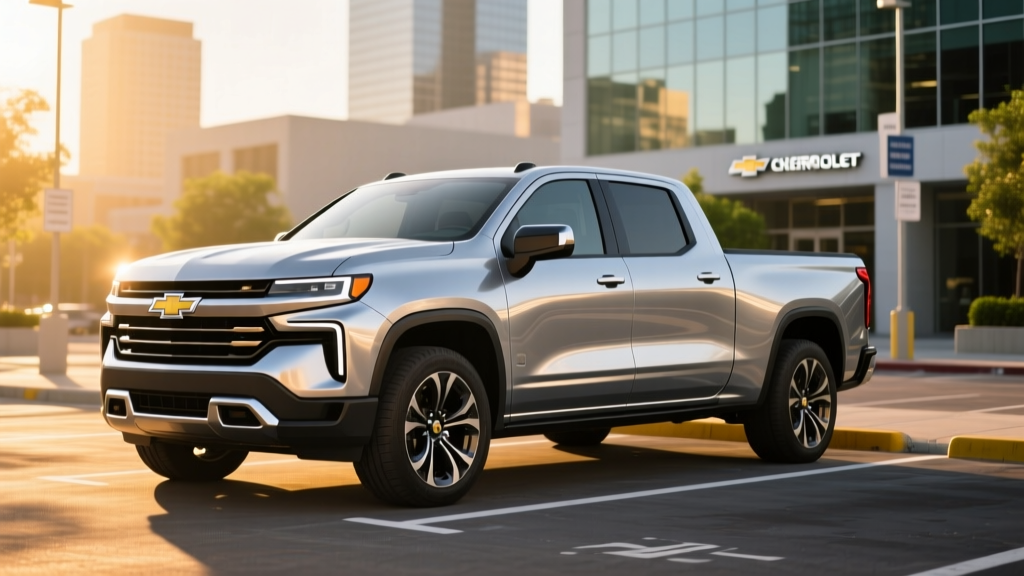
The Chevrolet Silverado EV is one of the heaviest vehicles in General Motors' history, and that mass shapes nearly every aspect of ownership — from real-world range to tire wear to charging times. If you've been searching for Silverado EV curb weight data to understand how it translates to daily driving, you're asking the right question. Weight is the single most underappreciated variable in EV ownership, and in a truck this large, it's impossible to ignore.
Below, we unpack the curb weight across every current Silverado EV trim, explain how those pounds interact with the Ultium battery platform, and give you the exact range, charging, and pricing numbers you need to decide if this electric full-sizer fits your driveway.
Silverado EV Curb Weight by Trim: The Numbers
The Silverado EV rides on GM's BT1 electric truck platform, sharing its basic architecture with the GMC Sierra EV and Hummer EV Pickup. Curb weight varies significantly depending on battery pack size, trim equipment, and whether the truck is configured as a Work Truck (WT) or a luxury-oriented RST.
| Trim | Curb Weight (lbs) | Battery (kWh usable) | EPA Range (mi) | Horsepower | 0-60 mph |
|---|---|---|---|---|---|
| 4WT (Standard Range) | ~8,100 | ~200 | 266 | 510 | ~5.9 sec |
| 4WT (Max Range) | ~8,530 | ~215 | 492 | 510 | ~5.9 sec |
| RST | ~8,750 | ~215 | 440 | 754 | ~4.5 sec |
| Trail Boss (upcoming) | ~8,800 (est.) | ~215 | ~400 (est.) | 754 | TBD |
For context, a gas-powered 2025 Silverado 1500 crew cab weighs between 4,800 and 5,400 lbs depending on configuration. The Silverado EV is roughly 3,000 to 3,500 lbs heavier — the equivalent of carrying a mid-size SUV's worth of battery and structural reinforcement at all times.
Real-World Range: What 8,500+ Pounds Does to Efficiency
The Silverado EV 4WT Max Range carries an EPA estimate of 492 miles — the highest of any current production EV. In real-world mixed driving, expect 380–430 miles. At sustained highway speeds of 75+ mph, that drops to approximately 340–370 miles. In cold weather (below 30°F), plan for a further 15–25% reduction, bringing the effective range to roughly 290–340 miles depending on cabin heating demands and terrain.
Mass is the enemy of efficiency, and the Silverado EV's curb weight shows up clearly in its energy consumption. The RST trim returns approximately 60–64 MPGe combined (roughly 53–57 kWh/100 mi), according to EPA data on fueleconomy.gov. That's substantially thirstier than lighter EVs — a Tesla Model Y consumes about 28 kWh/100 mi, and even the Ford F-150 Lightning manages around 48–52 kWh/100 mi.
Why does this matter? Because every extra kWh consumed per mile means more money spent charging and more time plugged in. Over 15,000 annual miles, the Silverado EV RST will consume roughly 8,250 kWh of electricity. At a national average residential rate of $0.16/kWh, that's about $1,320/year in home charging — still cheaper than gassing a comparable Silverado 1500, but meaningfully more than lighter electric options.
Charging Speed: Can You Refill a 215 kWh Battery Fast Enough?
The Silverado EV's massive battery is both its greatest strength (range) and its greatest challenge (refill time). Here's what charging looks like across the three levels you'll encounter:
| Charging Level | Max Power (kW) | Speed (mi/hr added) | 10–80% Time |
|---|---|---|---|
| Level 1 (120V, 12A) | ~1.4 kW | ~2–3 mi/hr | ~100+ hours |
| Level 2 (240V, 48A) | 11.5 kW | ~18–20 mi/hr | ~15–17 hours |
| Level 2 (240V, 80A) | 19.2 kW | ~30–34 mi/hr | ~9–10 hours |
| DC Fast Charge (350 kW peak) | 350 kW (peak) | ~250+ mi/hr (peak) | ~30–35 min |
A few things worth noting about these numbers:
- Peak kW is not sustained kW. The Silverado EV can accept up to 350 kW on a compatible DC fast charger, but that rate only holds in the lower portion of the charge curve (roughly 10–35% SoC). Above 50%, the rate tapers significantly. Expect an average rate closer to 150–180 kW across a full 10–80% session.
- 80A Level 2 requires a panel upgrade for many homes. The Silverado EV's onboard charger supports up to 19.2 kW (80 amps), which requires a dedicated 100-amp circuit. Most homes will need an electrical panel upgrade — budget $2,000–$5,000 for that work on top of the $500–$800 charger unit.
- Preconditioning matters. Use the myChevrolet app to precondition the battery before arriving at a DC fast charger. Cold batteries charge dramatically slower — we've seen peak rates cut by 40–60% when the pack isn't warmed up.
Performance & Towing: Where the Weight Pays Off (and Doesn't)
The Silverado EV RST's dual-motor AWD powertrain produces 754 horsepower and 785 lb-ft of torque, launching this 8,750-lb truck to 60 mph in roughly 4.5 seconds. That's supercar territory from a decade ago, and the instant torque delivery makes it feel even quicker around town.
The 4WT trims make do with 510 hp and 615 lb-ft, still more than adequate for a work truck, with 0-60 times around 5.9 seconds.
Towing capacity is where the curb weight conversation gets interesting. The Silverado EV is rated to tow up to 10,000 lbs (4WT) and up to 12,500 lbs on properly equipped trims. The truck's massive weight actually helps here — a heavier tow vehicle is more stable with a loaded trailer. However, towing will devastate range. Expect a 40–55% reduction when towing near max capacity at highway speeds, bringing the RST's effective range down to roughly 200–260 miles before you need to stop.
Cargo capacity includes a 5 ft 11 in bed (with the Multi-Flex Midgate open, extending to over 10 ft), plus a front trunk (frunk) offering approximately 10.7 cu ft of lockable, weatherproof storage. Interior passenger space is generous, with 45.2 inches of front legroom and 43.4 inches in the rear.
Pricing, Trims & Federal Tax Credit Eligibility
The Silverado EV lineup spans a wide price range, and federal tax credit eligibility adds complexity. Here's where things stand for the 2025–2026 model year:
| Trim | Base MSRP | Federal §30D Credit | Effective Price (if eligible) |
|---|---|---|---|
| 4WT (Standard Range) | ~$39,900 | Up to $7,500* | ~$32,400 |
| 4WT (Max Range) | ~$55,000 | Up to $7,500* | ~$47,500 |
| RST | ~$87,300 | Up to $7,500* | ~$79,800 |
*Federal EV tax credit eligibility under IRS §30D rules depends on multiple factors that change frequently:
- MSRP cap: Trucks/vans/SUVs must have an MSRP at or below $80,000. The RST trim's base MSRP exceeds this cap, making it ineligible for the new-vehicle credit.
- Buyer income limits: Modified adjusted gross income must not exceed $300,000 (joint), $225,000 (head of household), or $150,000 (single).
- Battery sourcing requirements: The credit is split into two $3,750 halves — one for critical minerals sourcing and one for battery component manufacturing. GM has worked to qualify the Silverado EV for the full $7,500, but verify current eligibility on the IRS qualified vehicles list before purchasing.
- Point-of-sale transfer: Eligible buyers can transfer the credit to the dealer at purchase, reducing the upfront cost rather than waiting for a tax refund.
Consult a tax professional to confirm your specific eligibility. State and local incentives may also apply — check AFDC's incentive database for your area.
Technology, Driver Assists & Notable Drawbacks
The Silverado EV's cabin is dominated by a 17.7-inch diagonal infotainment screen (RST) running Google Built-In with native Google Maps, Google Assistant, and access to the Play Store. A 11-inch driver display complements it, and an available head-up display projects speed and navigation onto the windshield.
Driver assistance comes via GM's Super Cruise system, which enables hands-free driving on over 750,000 miles of mapped roads in the US and Canada. Super Cruise is a SAE Level 2 system — the driver must remain attentive and ready to take over at all times. An infrared camera monitors driver eye gaze, and the system will escalate warnings and eventually bring the truck to a stop if the driver is unresponsive.
Super Cruise is a hands-free driver-assist system, not a self-driving system. You must remain engaged, monitor the road, and be prepared to steer or brake immediately. It does not navigate unmapped roads, handle all construction zones, or operate in severe weather.
Notable drawbacks:
- Efficiency penalty: At 53–57 kWh/100 mi, operating costs are high for an EV, and public DC fast charging sessions will cost $40–$70+ depending on your network and electricity rates.
- Charging time: Even at 350 kW peak, a 10–80% charge takes 30–35 minutes — and that's at a best-case charger. Road trips require more planning than in lighter, more efficient EVs.
- Tire costs: Heavy EVs wear through tires faster than gas vehicles. Expect to replace tires every 25,000–35,000 miles, and EV-rated tires for a truck this heavy can cost $300–$500+ per corner.
- Insurance: Full-size electric trucks carry higher insurance premiums than their gas counterparts. Get quotes before purchasing — some owners report 20–40% higher rates.
Battery Warranty & Long-Term Ownership
GM backs the Silverado EV's Ultium battery pack with an 8-year / 100,000-mile warranty (whichever comes first), covering defects and capacity loss below a specified threshold (typically 70% of original capacity). The powertrain components carry the same 8-year/100,000-mile coverage.
The Ultium platform uses NMC (nickel manganese cobalt) chemistry in the larger battery packs, which offers high energy density — critical for fitting 200+ kWh into a truck platform. NMC batteries typically show 10–15% degradation over 150,000 miles based on data from similar GM Ultium vehicles and industry averages. To maximize longevity:
- Avoid routinely charging to 100% — set daily charge limits to 80–90%
- Minimize repeated DC fast charging when Level 2 is available
- Use preconditioning in extreme temperatures
- Avoid leaving the truck at very low or very high SoC for extended periods
Who Should Buy the Silverado EV?
Choose the Silverado EV if: You need a full-size truck bed and genuine towing capacity, you can install a high-amperage Level 2 charger at home, your daily driving is under 200 miles, and you want electric operating costs without sacrificing truck utility. The 4WT Max Range at ~$47,500 (after credit) is arguably the best value for fleet and work use.
Look elsewhere if: You primarily commute in a city (the Silverado EV's size and efficiency make it overkill), you frequently tow long distances (range drops severely), or you need quick road-trip charging (lighter EVs like the Hyundai Ioniq 5 or Tesla Model Y refill far faster relative to their range).
Silverado EV vs. Key Competitors
| Spec | Silverado EV RST | F-150 Lightning (Ext. Range) | Rivian R1T (Max Pack) |
|---|---|---|---|
| Curb Weight | ~8,750 lbs | ~6,500 lbs | ~7,150 lbs |
| EPA Range | 440 mi | 320 mi | 410 mi |
| Battery (usable) | ~215 kWh | ~131 kWh | ~149 kWh |
| Max DC Charge | 350 kW | 150 kW | 200+ kW |
| 0-60 mph | ~4.5 sec | ~3.8 sec | ~3.5 sec |
| Max Tow | 10,000–12,500 lbs | 10,000 lbs | 11,000 lbs |
| Base MSRP | ~$87,300 | ~$60,000 | ~$89,900 |
| Efficiency (kWh/100mi) | ~53–57 | ~48–52 | ~46–50 |
The Silverado EV wins on raw range and DC fast-charge capability, but it's the heaviest and least efficient of the three. The F-150 Lightning remains the value and practicality leader, while the R1T offers the best blend of adventure capability and efficiency — though at a premium price.
Frequently Asked Questions
Why is the Silverado EV so heavy?
The curb weight comes from three primary sources: the massive Ultium battery pack (the 215 kWh pack alone weighs an estimated 2,900+ lbs), the reinforced BT1 truck platform needed to support that mass while maintaining crash safety, and the full-size crew cab body with truck bed. GM prioritized range and towing over weight reduction, resulting in a truck that's 3,000+ lbs heavier than its gas equivalent.
Does the Silverado EV's weight hurt its braking performance?
GM equips the Silverado EV with large ventilated disc brakes and aggressive regenerative braking that can recapture significant energy during deceleration. Stopping distances are competitive with other full-size trucks, but brake wear will be higher than in lighter vehicles. Expect to replace brake pads sooner than you might in a gas Silverado, though regenerative braking does reduce friction brake usage in normal driving.
Can the Silverado EV tow a camper on a road trip?
Yes, but plan carefully. Towing a 7,000–8,000 lb camper will reduce range to approximately 200–260 miles. DC fast charging with a trailer attached is possible at many stations, but you'll spend 35–50 minutes per stop. For frequent long-distance towing, a diesel truck remains more practical. For occasional weekend trips within 150 miles of home, the Silverado EV works well.
What's the best Silverado EV trim for the money?
The 4WT Max Range at approximately $55,000 (before incentives) offers 492 miles of EPA range, 510 hp, and full truck capability at a price that qualifies for the $7,500 federal credit — bringing it to roughly $47,500. For fleet buyers and work use, it's difficult to beat. The RST is a luxury showcase but its $87,300 MSRP puts it above the §30D credit cap for trucks.
How does cold weather affect the Silverado EV's range?
In sustained temperatures below 30°F, expect a 15–25% range reduction due to battery chemistry limitations and cabin heating demands. The 492-mile Max Range model drops to approximately 370–420 miles in winter conditions. The Silverado EV's available heat pump (on equipped trims) helps mitigate cabin heating energy draw compared to resistive heaters, but the physics of cold lithium-ion cells can't be fully overcome.