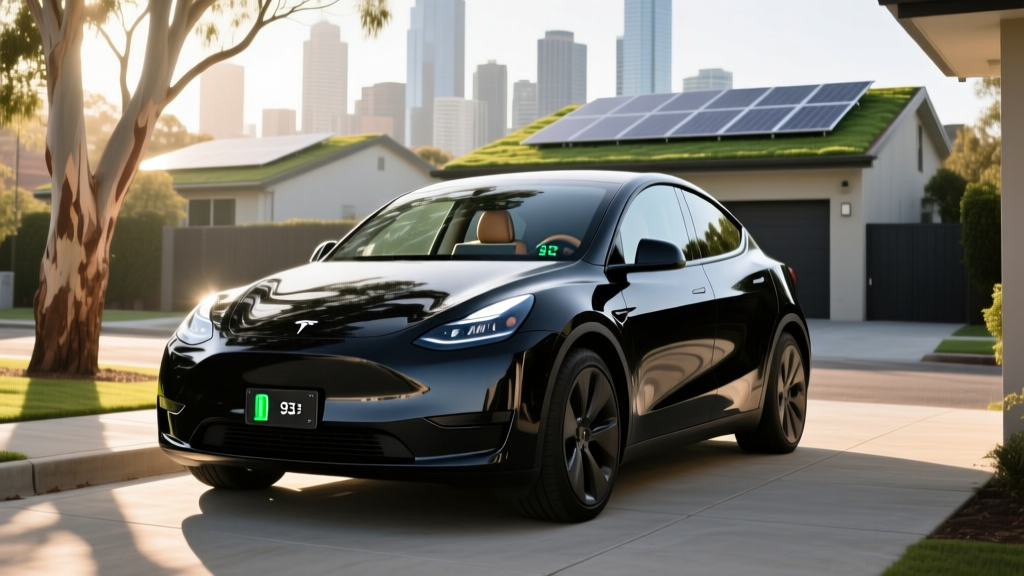
The used Tesla market has matured considerably. With hundreds of thousands of Model 3 and Model Y vehicles now cycling through second and third ownership, buyers have more data—and more leverage—than ever. But the question remains: should you buy a used Tesla, or does the rapid pace of new EV releases make a pre-owned example a risky proposition?
This guide cuts through the hype with hard numbers on battery health, real-world range, charging infrastructure, and the often-misunderstood federal tax credit rules that apply to used EVs. We'll focus on the two most accessible models: the used Tesla Model 3 and used Tesla Model Y.
Used Tesla Model 3: Specs and Real-World Range
The Model 3 remains Tesla's volume sedan and the most common used Tesla you'll encounter. Here's what the data shows across recent model years:
| Spec | Model 3 RWD (2022-2024) | Model 3 Long Range AWD (2022-2024) | Model 3 Performance (2022-2024) |
|---|---|---|---|
| EPA Range | 272 miles | 358 miles | 315 miles |
| Battery Capacity | 60 kWh (LFP) | 82 kWh (NMC) | 82 kWh (NMC) |
| 0-60 mph | 5.8 sec | 4.2 sec | 3.1 sec |
| Horsepower | 283 hp | 346 hp | 510 hp |
| Drivetrain | RWD | Dual-Motor AWD | Dual-Motor AWD |
| EPA Efficiency | 132 MPGe / 25 kWh/100mi | 131 MPGe / 26 kWh/100mi | 113 MPGe / 30 kWh/100mi |
Model 3 Charging Speeds
| Charging Level | Power | Speed | Time |
|---|---|---|---|
| Level 1 (120V) | 1.4 kW | ~3-4 mi/hr | Overnight: 30-40 miles |
| Level 2 (240V home) | 7.6-11.5 kW | ~30-44 mi/hr | Full charge: 7-10 hours |
| DC Fast Charge | Up to 170 kW (RWD) / 250 kW (LR/Perf) | Peak rate | 10-80%: ~25-30 min |
The charge curve tapers significantly above 80% state of charge. That 250 kW peak on Long Range and Performance models only sustains up to roughly 50% SoC before dropping to 100 kW and below. Plan your road trips around 10-80% charges for optimal speed.
Used Tesla Model Y: Specs and Real-World Range
The Model Y is the best-selling EV in America for good reason: crossover practicality with sedan-like efficiency. Used examples from 2021-2024 are abundant.
| Spec | Model Y Long Range AWD (2021-2024) | Model Y Performance (2021-2024) |
|---|---|---|
| EPA Range | 330 miles | 303 miles |
| Battery Capacity | 82 kWh (NMC) | 82 kWh (NMC) |
| 0-60 mph | 4.8 sec | 3.5 sec |
| Horsepower | 384 hp | 510 hp |
| Drivetrain | Dual-Motor AWD | Dual-Motor AWD |
| EPA Efficiency | 122 MPGe / 28 kWh/100mi | 111 MPGe / 30 kWh/100mi |
| Cargo Volume | 30.2 cu ft (rear seats up) / 76.2 cu ft (folded) | 30.2 cu ft / 76.2 cu ft |
| Legroom (front/rear) | 41.8 in / 39.4 in | 41.8 in / 39.4 in |
Model Y Charging Speeds
Both Model Y trims support up to 250 kW DC fast charging, achieving 10-80% in approximately 25-28 minutes under ideal conditions (warm battery, low state of charge at start). Home Level 2 charging at 11.5 kW adds about 44 miles per hour, making overnight charging trivial for daily commuting.
Battery Health: What to Check Before Buying
The battery is the single most expensive component in any EV. Tesla warranties the battery and drive unit for 8 years / 100,000 miles (RWD Model 3) or 8 years / 120,000 miles (Long Range and Performance variants). The warranty guarantees the battery will retain at least 70% of original capacity.
Degradation Data
Real-world data from Tesla's own fleet reports and third-party aggregators like owner surveys show:
- LFP batteries (Model 3 RWD): ~5-8% degradation after 100,000 miles
- NMC batteries (Long Range/Performance): ~8-12% degradation after 100,000 miles
- Calendar aging: Even low-mileage cars lose 1-2% capacity per year
Before purchasing, check the battery health via the Tesla app or in-car display. Navigate to Controls > Software > Battery Health (on newer software versions) or use third-party tools like TeslaLogger to pull detailed degradation curves from the vehicle's logs.
Federal Tax Credit for Used Teslas (IRS §30D Used Vehicle Credit)
Yes, you can get a federal tax credit on a used Tesla—but the rules are strict and often misunderstood. The IRS §25E credit (not §30D, which applies only to new vehicles) offers up to $4,000 or 30% of the sale price, whichever is lower.
| Requirement | Detail |
|---|---|
| Maximum Credit | $4,000 or 30% of sale price (whichever is less) |
| Vehicle Price Cap | Sale price must be $25,000 or less |
| Buyer Income Cap (MAGI) | $75,000 single / $112,500 head of household / $150,000 joint |
| Vehicle Age | Must be at least 2 model years old (2024 or older in 2026) |
| Dealer Requirement | Must be purchased from a licensed dealer (private sales excluded) |
| First Transfer Since New | Only the first resale qualifies—subsequent resales do not |
| Battery Capacity | Minimum 7 kWh (all Tesla models qualify) |
Practical example: A 2022 Model 3 RWD selling for $23,000 at a dealer would qualify for $4,000 off (30% of $23,000 = $6,900, but capped at $4,000). Your effective price: $19,000. But if you earn over the income cap or buy from a private party, you get nothing.
Autopilot, FSD, and What You're Actually Getting
Every used Tesla comes with Basic Autopilot: traffic-aware cruise control and autosteer within a single lane. This is SAE Level 2 driver assistance—you must remain engaged, hands on or near the wheel, eyes on the road.
Full Self-Driving (Supervised) is an optional $8,000-$12,000 add-on that enables automatic lane changes, navigate-on-autopilot, and traffic light/stop sign recognition. However, FSD is still Level 2. It is not autonomous driving. You are liable for all vehicle actions.
- Drive without your supervision
- Handle all weather conditions (heavy rain, snow, construction zones)
- Replace an attentive driver
- Transfer to a new owner automatically (FSD is tied to the original purchaser unless Tesla runs a transfer promotion)
Before buying used, verify whether FSD is included and whether it will transfer to you. Tesla's policy has changed multiple times—contact Tesla support with the VIN to confirm.
Pros and Cons of Buying a Used Tesla
Pros
- Supercharger network access: Still the most reliable DC fast-charging ecosystem in North America
- Over-the-air updates: Even 2018 Model 3s receive software improvements
- Low maintenance: No oil changes, minimal brake wear (regen braking), few moving parts
- Strong resale data: Depreciation curves are well-documented; you know what you're buying
- Performance value: A used Model 3 Performance hits 3.1s 0-60 for under $30k
Cons
- Panel gaps and build quality: Early Fremont-built cars (2018-2020) had inconsistent fit/finish
- Insurance costs: Teslas remain expensive to insure due to repair costs and parts pricing
- No Apple CarPlay/Android Auto: Tesla's proprietary infotainment is polarizing
- Phantom braking: Autopilot has documented issues with sudden deceleration (NHTSA investigation)
- Ride quality: Firm suspension, especially on Performance trims with low-profile tires
Should You Buy a Used Tesla vs. Competitors?
The used EV market now includes strong alternatives. Here's how the Model 3/Y stack up:
| Factor | Used Tesla Model 3/Y | Used Hyundai Ioniq 5 | Used Ford Mustang Mach-E | Used BMW i4 |
|---|---|---|---|---|
| Charging Speed | 250 kW peak | 233 kW peak (800V architecture) | 150 kW peak | 205 kW peak |
| Real-World Range | 270-310 mi | 240-270 mi | 230-270 mi | 250-280 mi |
| Charging Network | Supercharger (best reliability) | CCS networks (variable) | CCS networks (variable) | CCS networks (variable) |
| Infotainment | Tesla OS (no CarPlay) | Hyundai (CarPlay/AA) | Ford SYNC 4 (CarPlay/AA) | BMW iDrive (CarPlay/AA) |
| Build Quality | Average to good | Good | Good | Excellent |
| Used Price (2022 LR equivalent) | $28,000-$32,000 | $26,000-$30,000 | $25,000-$29,000 | $32,000-$38,000 |
Choose a used Tesla if: You prioritize charging infrastructure reliability, want access to the Supercharger network for road trips, and are comfortable with Tesla's minimalist interior and proprietary software.
Choose a competitor if: You need Apple CarPlay/Android Auto, prefer traditional build quality, want Hyundai's 10-year/100,000-mile battery warranty (transferable to second owner), or find a better deal on a lightly used Ioniq 5 or Mach-E.
Who Should Buy a Used Tesla?
A used Tesla Model 3 or Model Y makes sense for:
- Home chargers: If you can install Level 2 at home, a used Tesla is an excellent daily driver with minimal public charging dependency
- Tech-forward buyers: You value OTA updates, the Tesla app, and a software-first experience
- Road trippers: The Supercharger network remains unmatched for cross-country travel ease
- Performance seekers on a budget: A used Model 3 Performance offers supercar acceleration at sedan prices
- Families needing cargo space: The Model Y's 76 cu ft with seats folded rivals many SUVs
It's less ideal if you lack home charging access (public charging costs 2-3x more than home), need CarPlay integration, or prefer a traditional dealership service experience.
Frequently Asked Questions
What is the real-world range of a used Tesla Model 3?
The EPA rates the 2022-2024 Model 3 Long Range at 358 miles, but expect 290-310 miles highway and 220-250 miles in cold weather. The RWD model delivers roughly 220-240 miles in real-world highway driving.
How fast does a used Tesla charge at home and on the road?
Home Level 2 charging (240V, 48-amp circuit) adds about 30-44 miles per hour, fully recharging overnight. DC fast charging peaks at 170 kW (RWD) or 250 kW (Long Range/Performance), achieving 10-80% in 25-30 minutes under optimal conditions.
How much does a used Tesla cost after the federal tax credit?
If you qualify for the $4,000 used EV credit (income under $75k/$150k joint, buying from a dealer, vehicle under $25,000), a $23,000 Model 3 RWD drops to $19,000. If you exceed income limits or buy privately, you pay full price.
Is a used Tesla worth it compared to a new EV?
Yes, if you find a well-maintained example with under 60,000 miles and remaining battery warranty. You avoid the steepest depreciation (typically 30-40% in year one) while retaining Supercharger access and OTA updates. However, new EVs like the 2026 Hyundai Ioniq 5 or Chevrolet Equinox EV offer competitive range and full warranties for $35,000-$40,000 after credits.
What are the biggest problems with used Teslas?
Common issues include panel gaps (cosmetic, mostly on 2018-2020 cars), phantom braking on Autopilot, 12V battery failures (the small auxiliary battery, not the main traction pack), and suspension wear on high-mileage Performance models. The main battery and drive motors are generally robust.
Does a used Tesla qualify for the federal EV tax credit?
Yes, but only under the §25E used vehicle credit (up to $4,000), not the new-vehicle §30D credit. Requirements: vehicle under $25,000, buyer income under caps, purchased from a dealer, and it must be the first resale since new. Check IRS guidelines before committing.
The Bottom Line: Should You Buy a Used Tesla?
A used Tesla Model 3 or Model Y remains one of the smartest used EV purchases in 2026—if you can charge at home, find an example with documented battery health, and understand the tax credit limitations. The Supercharger network, performance-per-dollar, and ongoing software support are genuine advantages competitors haven't fully matched.
But go in with eyes open: verify battery degradation, confirm FSD transfer status, budget for higher insurance premiums, and test-drive for build quality issues. If the numbers work and the car checks out, a used Tesla delivers compelling value in the electrified-vehicle market.