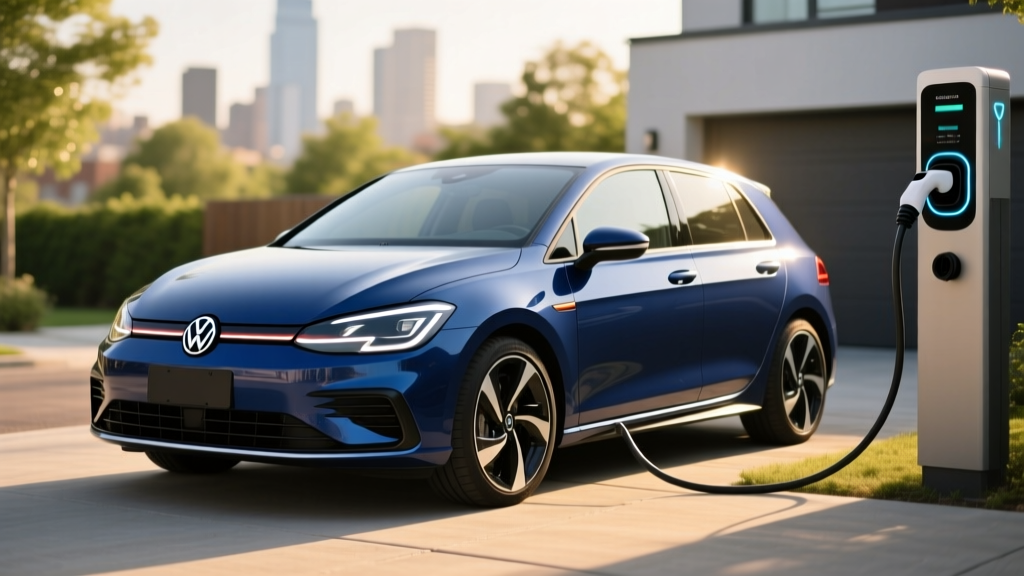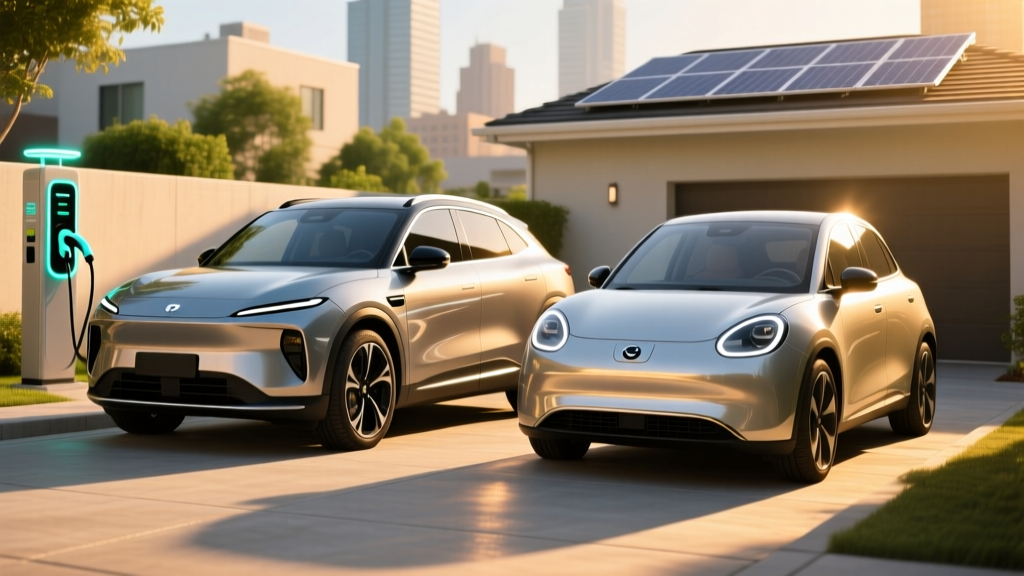
If you're asking "should I EV" — meaning, should your next car be electric — the honest answer depends on three concrete factors: whether you can charge at home, how far you drive daily, and whether you qualify for federal or state incentives. For most drivers with home charging access and a daily commute under 60 miles, a battery-electric vehicle (BEV) will save $3,000–$6,000 over five years compared to a comparable gas car, even accounting for higher upfront cost and insurance. If you lack reliable home or workplace charging, regularly drive in sub-20°F winters, or frequently tow heavy loads over long distances, a plug-in hybrid (PHEV) or efficient hybrid (HEV) may serve you better today.
Quick Answer: Should I Go EV?
Yes, if: You have Level 2 home charging access, drive under 250 miles/day, and qualify for at least part of the §30D tax credit.
Consider a PHEV or HEV instead if: You rely solely on street parking, live in an apartment without charging, or regularly tow 3,000+ lbs on highway trips exceeding 300 miles.
The Real Cost of Going Electric in 2026
The sticker price of an EV is still higher than a comparable gas car — but the gap has narrowed significantly. A 2026 Chevrolet Equinox EV starts around $33,400 MSRP, while the gas Equinox starts near $29,900. That $3,500 premium can be erased by the federal tax credit, fuel savings, and lower maintenance costs.
Here's what a realistic five-year ownership comparison looks like for a mid-size SUV, assuming 15,000 miles/year, home Level 2 charging at the national average electricity rate of $0.17/kWh, and gasoline at $3.40/gallon:
| Cost Category (5 Years / 75K Miles) | EV (e.g., Equinox EV 2LT) | Gas (e.g., Equinox 2LT AWD) |
|---|---|---|
| Purchase Price (MSRP) | $38,500 | $34,200 |
| Federal Tax Credit (§30D) | −$7,500 (if eligible) | $0 |
| Net Purchase Cost | $31,000 | $34,200 |
| Fuel / Electricity (5 yrs) | $4,100 | $7,800 |
| Maintenance (5 yrs) | $1,200 | $3,100 |
| Insurance (5 yrs, avg) | $7,500 | $6,200 |
| Total 5-Year Cost | $43,800 | $51,300 |
That's a $7,500 savings over five years for the EV — but notice insurance runs ~$1,300 more, and the credit is not guaranteed. The IRS §30D clean vehicle credit requires meeting income caps ($150K single / $300K joint), MSRP caps ($55K for cars, $80K for SUVs/trucks), and battery critical-mineral and component sourcing thresholds that change annually. Always verify current-year rules and consider consulting a tax professional.
EV vs Gas vs Hybrid: Which Powertrain Fits Your Life?
The "should I EV" question isn't binary. You have three electrified options, each with distinct trade-offs:
| Factor | BEV (Full Electric) | PHEV (Plug-In Hybrid) | HEV (Standard Hybrid) | Gas-Only |
|---|---|---|---|---|
| EPA Range / Efficiency | 250–370 mi / 100–130 MPGe | 28–45 mi electric, then 35–50 MPG | N/A / 40–57 MPG combined | N/A / 25–35 MPG combined |
| Home Charging Needed? | Essential for cost savings | Recommended; runs on gas if unplugged | No | No |
| Maintenance Cost | Lowest (no oil, fewer fluids) | Moderate (engine + electric systems) | Low-moderate | Highest |
| Cold-Weather Impact | 20–35% range loss at 20°F | 10–20% electric-range loss | Minimal | Minimal (slightly higher fuel use) |
| Best For | Home-charging owners, daily commutes | Apartment dwellers, mixed-use drivers | High-mileage drivers without charging | Low-mileage, budget-first buyers |
| Typical Base MSRP (2026) | $30,000–$55,000 | $35,000–$52,000 | $28,000–$42,000 | $25,000–$40,000 |
A PHEV like the 2026 Toyota RAV4 Prime (42 miles EPA electric-only, then 38 MPG combined on gas) is the pragmatic bridge for drivers who can't guarantee daily charging but want electric commuting on most days. According to fueleconomy.gov, the RAV4 Prime delivers 94 MPGe when running on its battery — making it one of the most efficient vehicles in its class when charged regularly.
What First-Time EV Buyers Must Know About Charging
The single biggest predictor of EV satisfaction is charging access. Here's the hierarchy:
Level 1 (120V standard outlet): Adds 3–5 miles of range per hour. Fine for PHEVs with small batteries or BEVs driven under 30 miles/day. A full charge of an 82 kWh battery from empty takes 40+ hours — not practical as a primary strategy for most BEV owners.
Level 2 (240V, home or workplace): Adds 20–44 miles per hour depending on the charger's kW output (typically 7.2 kW to 11.5 kW). This is the backbone of convenient EV ownership. A 2026 Tesla Model Y Long Range (75 kWh usable battery) charges from 10% to 80% overnight in about 6–7 hours on an 11.5 kW Level 2 unit. Professional installation of a Level 2 home charger averages $800–$2,500, depending on whether your electrical panel needs an upgrade from 100A to 200A service. Always get a quote from a licensed electrician before purchasing equipment.
DC Fast Charging (public, 50–350 kW): Adds 150–300+ miles in 15–30 minutes (10–80% SoC). But here's the reality most marketing glosses over: peak kW rates are sustained only briefly. A vehicle rated for 250 kW peak charging may average 130–150 kW across the 10–80% session due to the charge curve — charging slows significantly above 80% to protect battery health. On a road trip, plan for 20–30 minute stops at 150+ kW stations, not the "15 minutes!" headline number.
Connector compatibility matters in 2026: The industry has largely standardized on NACS (Tesla's connector, now adopted by Ford, GM, Hyundai, Rivian, and most major automakers). CCS1 remains on some 2024–2025 models still on dealer lots. CHAdeMO is effectively legacy. If you're buying new, confirm the vehicle has a NACS port or comes with a CCS-to-NACS adapter for Supercharger access.
Real-World Range vs. EPA Stickers: What You'll Actually Get
EPA range estimates are tested under controlled conditions that don't fully account for highway speeds, cold weather, or terrain. Here's what to expect in practice:
- Mixed driving (city + highway, 65–75°F): Expect 85–95% of EPA range. A vehicle rated at 310 miles will deliver roughly 265–295 miles.
- Sustained highway (70–80 mph, 65–75°F): Expect 75–85% of EPA range. Aerodynamic drag dominates at speed. That 310-mile vehicle yields ~235–265 miles.
- Cold weather (20°F, highway + city): Expect 60–75% of EPA range. Battery chemistry slows, cabin heating draws significant energy (even with a heat pump). That 310-mile vehicle may deliver 185–230 miles.
- Cold + highway + towing: Expect 45–60% of EPA range. This is where EVs still struggle vs. gas vehicles.
Preconditioning — warming the battery before fast charging or departure — can recover 5–10% of cold-weather range and significantly improve DC charging speeds. Most modern EVs do this automatically when you set a departure time or navigate to a charger.
Common EV Myths, Addressed with Data
| Myth | Fact |
|---|---|
| "EV batteries need replacing every few years." | Federal law mandates battery warranties of at least 8 years / 100,000 miles (10 years / 150,000 miles in CARB states). Real-world data from sources like NHTSA and fleet operators show most NMC and LFP batteries retain 85–92% capacity after 100K miles. Replacement costs range from $5,000 to $20,000 depending on the model, but are rarely needed within the vehicle's useful life. |
| "EVs are worse for the environment because of electricity generation." | Even on a coal-heavy grid, an EV produces 50–60% fewer lifecycle emissions than a comparable gas car over 150K miles, per Union of Concerned Scientists analysis. On a grid with significant renewables (like most of the US West and Northeast), the advantage is 65–80%. |
| "Charging takes too long for road trips." | On a 350-mile trip in a 300-mile-range EV with 250 kW DC fast charging capability, you'll add one 20–25 minute stop — roughly the time it takes to eat, use the restroom, and stretch. The total trip adds ~25 minutes vs. gas. |
| "I can't take an EV on a road trip — chargers are unreliable." | Reliability has improved significantly. Tesla's Supercharger network (now open to NACS-equipped non-Tesla EVs) consistently reports 99%+ uptime. Electrify America and EVgo have improved but still average ~90–95% uptime. Plan routes using A Better Routeplanner or PlugShare and keep a backup charging stop in mind. |
| "EVs are all luxury cars costing $60K+." | Multiple 2026 BEVs start under $35K: Chevrolet Equinox EV (~$33,400), Nissan LEAF (~$30,000), Hyundai Kona Electric (~$33,500). After the $7,500 §30D credit (where eligible), effective prices drop below $26,000 for some models. |
Your Decision Framework: Should I EV?
If-Then EV Decision Guide
- If you have a garage or driveway with a 240V outlet (or can install one) → A BEV is likely your best choice. Proceed to evaluate range needs.
- If you rent an apartment with no charging → Check workplace charging or public Level 2 options within 0.5 miles. If neither exists, a PHEV or HEV is more practical today.
- If your daily round-trip commute is under 60 miles → Nearly any current BEV (250+ mi EPA) will handle your week with one overnight charge. A PHEV's 30–45 mile electric range may also suffice.
- If you drive 200+ miles daily for work → A BEV with 320+ mile EPA range and 200+ kW DC fast charging can work, but you'll rely on public fast charging. Verify corridor coverage first. A diesel or HEV may still be more efficient for high-mileage sales/fleet use.
- If winters regularly drop below 20°F where you live → Budget for 25–35% range loss. Choose a BEV with at least 320 miles EPA and a heat pump (standard on most 2026 models). Preconditioning is essential.
- If you frequently tow a trailer (boat, camper, 3,000+ lbs) → Towing can cut EV range by 40–55%. A PHEV or gas truck may be more practical unless your tow trips are under 100 miles round-trip.
- If total cost of ownership matters most → Run the numbers for your specific electricity rate, annual mileage, and tax-credit eligibility. At 15K miles/year with home charging, most BEVs break even with gas equivalents within 2–4 years.
Frequently Asked Questions
Is an EV worth it if I only drive 8,000 miles a year?
At lower annual mileage, fuel savings shrink. You'll save roughly $500–$700/year on fuel vs. a 28 MPG gas car, meaning the break-even point stretches to 5–7 years after the tax credit. An HEV (like a Toyota Prius at 57 MPG combined, starting ~$29,500) may offer faster payback for low-mileage drivers since there's no upfront EV premium and no charging infrastructure needed.
What happens if I can't charge at home but want an EV?
Public Level 2 charging (at grocery stores, gyms, workplaces) costs $0.15–$0.30/kWh — still cheaper than gas per mile — but DC fast charging costs $0.35–$0.55/kWh at networks like Electrify America, which can erode or eliminate the fuel-cost advantage entirely. If you'd rely on DC fast charging for more than 30% of your charging, a PHEV is almost certainly the smarter financial choice.
Do I qualify for the $7,500 federal EV tax credit?
Eligibility under IRS §30D depends on multiple factors: your modified adjusted gross income must fall below caps ($150K single, $225K head of household, $300K joint filing), the vehicle MSRP must be under $55K (cars) or $80K (SUVs, trucks, vans), and the battery must meet critical-mineral and component sourcing requirements that tighten each year. As of 2026, many popular models qualify for the full $7,500, but some qualify for $3,750 or nothing depending on battery sourcing. The credit can now be transferred to the dealer at point of sale, reducing your purchase price directly. Always verify eligibility on the IRS website or with a tax professional before relying on the credit in your budget.
How long do EV batteries actually last?
Most modern NMC and LFP batteries are engineered for 1,500–3,000 full charge cycles before reaching 70–80% state of health (SoH). For a 300-mile-range EV, that translates to 450,000–900,000 miles of total battery life before significant degradation. In practice, most owners will sell or retire the vehicle long before the battery needs replacement. The federal minimum warranty of 8 years / 100,000 miles (covering capacity loss below 70%) provides a strong backstop. LFP chemistry (used in standard-range Teslas, some Ford and Hyundai models) offers even longer cycle life and can be charged to 100% daily without accelerated degradation, unlike NMC which benefits from staying between 20–80% SoC for daily use.
Should I buy a used EV instead?
Used EVs can offer excellent value, especially 2–3 year-old models that have already absorbed initial depreciation. The federal used-EV credit (§25E) provides up to $4,000 or 30% of the sale price (whichever is less) for vehicles priced at $25,000 or below, with income caps. Key checks: verify battery SoH via the vehicle's onboard diagnostic or a third-party scan, confirm remaining powertrain warranty, and check whether the model's charging connector (CCS vs NACS) will limit your charging network access going forward.
The "should I EV" question ultimately comes down to your specific charging situation, driving patterns, and budget. For the majority of US drivers with home charging access, the math now favors electric — but it's not universally true yet, and there's no shame in choosing a PHEV or HEV as a bridge. Run the numbers for your situation, test-drive with your actual commute in mind, and make the decision on data, not hype.