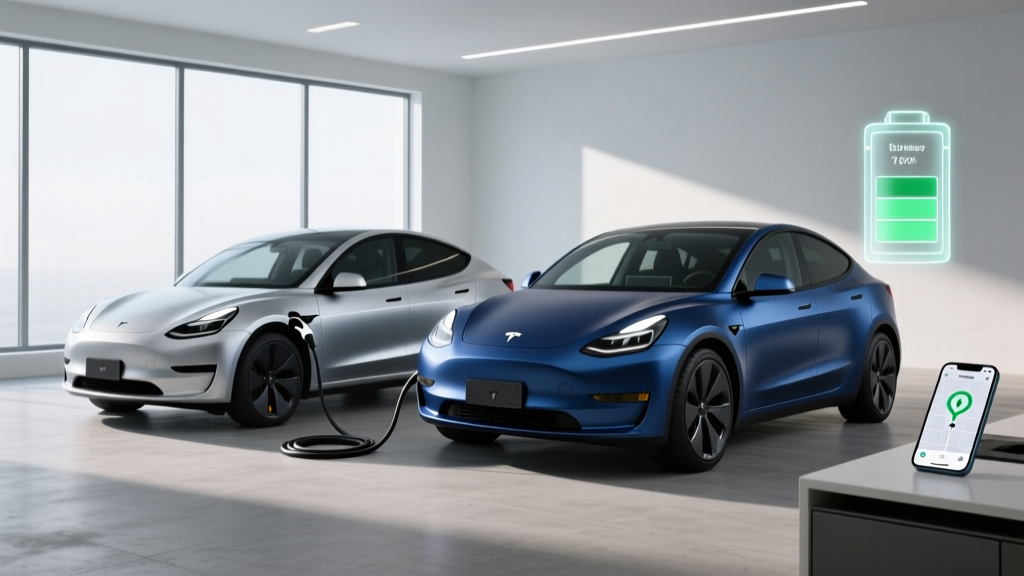
Tesla still defines the mainstream EV experience for most American buyers. But with the 2026 lineup facing stiffer competition than ever — from the Hyundai Ioniq 6, Ford Mustang Mach-E, Chevrolet Equinox EV, and BMW iX — the question isn't just "is Tesla good?" It's "is Tesla still the best choice for you?" This guide cuts through the noise with exact specs, real-world ownership data, and a clear decision framework so you can answer: should I buy a Tesla?
We focus on Tesla's two volume models — the Model 3 sedan and Model Y crossover — since these represent over 90% of Tesla purchases and cover most buyer use cases. We'll cover the Model S and X briefly for luxury shoppers.
2026 Tesla Lineup at a Glance
| Spec | Model 3 RWD | Model 3 Long Range AWD | Model Y Long Range AWD | Model Y Performance |
|---|---|---|---|---|
| EPA Range | 272 mi | 363 mi | 320 mi | 293 mi |
| Battery (usable kWh) | ~57.5 (LFP) | ~75 (NMC) | ~75 (NMC) | ~75 (NMC) |
| Horsepower | 271 hp | 346 hp | 384 hp | 455 hp |
| 0–60 mph | 5.8 sec | 4.2 sec | 4.8 sec | 3.5 sec |
| Drivetrain | RWD | Dual-Motor AWD | Dual-Motor AWD | Dual-Motor AWD |
| MPGe (combined) | 132 MPGe | 125 MPGe | 117 MPGe | 111 MPGe |
| Peak DC Charge Rate | 170 kW | 250 kW | 250 kW | 250 kW |
| 10–80% DCFC Time | ~25 min | ~22 min | ~24 min | ~24 min |
| Level 2 (11.5 kW) | ~30 mi/hr | ~44 mi/hr | ~44 mi/hr | ~44 mi/hr |
| Base MSRP | $38,990 | $47,740 | $44,990 | $52,490 |
| Federal Tax Credit (§30D) | Eligible (up to $7,500) | Eligible (up to $7,500) | Eligible (up to $7,500) | Eligible (up to $7,500) |
Sources: EPA / fueleconomy.gov, Tesla.com. Pricing reflects 2026 model year MSRP before destination. Tax credit eligibility subject to IRS §30D rules — see section below.
Real-World Range: What the EPA Numbers Don't Tell You
EPA estimates: Model 3 LR AWD = 363 mi | Model Y LR AWD = 320 mi
Expect in reality: Highway cruising at 70–80 mph reduces range by ~10–15%. Cold weather (below 32°F) can reduce range by 20–30% due to cabin heating and battery chemistry limitations. A Model 3 LR driven 300 highway miles in 25°F weather may deliver as little as 220–250 usable miles before needing a charge.
Tesla's EPA range figures are among the most optimistic in the industry. Independent highway-range tests consistently show Tesla models achieving 85–92% of their EPA sticker at sustained 70 mph speeds in moderate temperatures. The Model 3 Long Range AWD, for example, typically delivers 310–330 miles on a warm-weather highway drive — genuinely excellent for a sedan in this price class.
The RWD Model 3 with its smaller LFP (lithium iron phosphate) battery is the most range-sensitive trim. Expect 220–240 highway miles in fair weather and potentially under 200 miles in freezing conditions. If your commute exceeds 60 miles round-trip or you road-trip more than twice a year, the Long Range is worth the $8,750 premium.
The Model Y's taller, less aerodynamic profile costs it efficiency versus the Model 3. The gap narrows in city driving where aero matters less, but highway road-trippers will notice more Supercharger stops in the Y.
Charging Speed & the Supercharger Advantage
Charging speed is where Tesla still holds a structural edge — not because of peak kW numbers alone, but because of the Supercharger network. With over 25,000 V3 and V4 stalls across North America, Tesla owners experience dramatically lower charging failure rates than CCS-network users.
| Charging Level | Power (kW) | Model 3 LR (mi/hr added) | Model Y LR (mi/hr added) | Notes |
|---|---|---|---|---|
| Level 1 (120V) | ~1.4 kW | ~3–4 mi/hr | ~3–4 mi/hr | Emergency/trickle only |
| Level 2 (240V, 48A) | 11.5 kW | ~44 mi/hr | ~44 mi/hr | Home daily charging — overnight full charge |
| DC Fast (V3 Supercharger) | Peak 250 kW | 10–80% in ~22 min | 10–80% in ~24 min | Sustained rate tapers above 60% SoC |
| DC Fast (V4 Supercharger) | Peak 325 kW* | Future rollout | Future rollout | *Requires compatible vehicle firmware/hardware |
Charging curve reality: The 250 kW peak rate on Long Range and Performance models is only sustained between roughly 10–35% state of charge. From 35–60%, expect ~150–180 kW. Above 80%, charging drops sharply to protect battery health — a 60–100% session can take as long as 10–80%. For road trips, the optimal strategy is short 10–80% stops (20–25 minutes), not full charges.
The RWD Model 3 peaks at 170 kW — adequate but noticeably slower on long road trips. Plan for 25–30 minute stops versus 20–22 for the Long Range.
One critical development: Tesla has opened the Supercharger network to non-Tesla EVs (via NACS adapters and built-in NACS ports on newer Ford, GM, and Rivian vehicles). This means the network is getting busier — but Tesla's own vehicles still benefit from seamless plug-and-charge integration and built-in route preconditioning that warms the battery for optimal charge speed upon arrival.
Performance, Efficiency & What It's Like to Drive
Even the base Model 3 RWD hits 60 mph in 5.8 seconds — quicker than most gas-powered sport sedans. The Model Y Performance's 3.5-second sprint rivals a Porsche Macan Turbo. But straight-line speed isn't Tesla's best driving attribute.
The Highland refresh (introduced late 2023, carried through 2026) transformed the Model 3's ride quality. The updated suspension, improved sound insulation, and ventilated seats brought it from "acceptable" to "genuinely comfortable" for long drives. The Model Y received its analogous Juniper refresh for 2025–2026, adding a similar ride refinement, ambient lighting, rear-seat touchscreen, and a power-folding second row.
Efficiency is where Tesla engineering shines. The Model 3 RWD achieves 132 MPGe combined (~25 kWh/100 mi) — among the most efficient EVs on sale. For context, the Hyundai Ioniq 6 SE LR achieves 140 MPGe, and the BMW i4 eDrive40 achieves 109 MPGe. Tesla's heat pump (standard on all trims) significantly reduces cold-weather efficiency losses versus older resistive-heating EVs.
Cargo space:
- Model 3: 23 cu ft trunk + rear frunk (adequate for two large suitcases)
- Model Y: 30 cu ft behind second row / 72 cu ft folded + frunk (competitive with compact SUVs like the Honda CR-V)
- Model Y rear legroom: 41.6 inches (generous for adults)
- Model 3 rear legroom: 35.2 inches (tight for tall passengers on long drives)
Pricing, Tax Credits & Total Cost
| Trim | Base MSRP | Destination | Federal Credit (§30D) | Effective Price* |
|---|---|---|---|---|
| Model 3 RWD | $38,990 | $1,390 | Up to $7,500 | ~$32,880 |
| Model 3 Long Range AWD | $47,740 | $1,390 | Up to $7,500 | ~$41,630 |
| Model Y Long Range AWD | $44,990 | $1,390 | Up to $7,500 | ~$38,880 |
| Model Y Performance | $52,490 | $1,390 | Up to $7,500 | ~$46,380 |
*Effective price assumes full $7,500 credit eligibility. Your actual credit may be lower or $0 depending on income, tax liability, and battery sourcing compliance.
- Income caps: Modified AGI ≤ $150,000 (single) / $225,000 (head of household) / $300,000 (joint)
- MSRP caps: ≤ $55,000 for sedans (Model 3) / ≤ $80,000 for SUVs/trucks (Model Y, S, X)
- Battery sourcing: Critical minerals and battery components must meet escalating domestic-content thresholds. As of 2026, Tesla's US-built vehicles generally qualify, but verify at fueleconomy.gov before purchase.
- Point-of-sale transfer: You can transfer the credit to the dealer at purchase for an immediate price reduction — no need to wait for tax filing.
- Tax liability: The credit is non-refundable. You must owe at least $7,500 in federal tax to claim the full amount.
Source: IRS.gov — Clean Vehicle Credits. Consult a tax professional for your specific situation.
5-year ownership cost advantage: Tesla owners benefit from minimal maintenance (no oil changes, no transmission fluid, brake pad life extended by regen braking), lower "fuel" costs (home charging at $0.12–0.16/kWh costs roughly $0.04–0.05/mile versus $0.12–0.15/mile for a 30 MPG gas car), and strong resale values. However, insurance premiums for Teslas run 15–30% higher than comparable gas vehicles in most states — get quotes before committing.
Tech, Autopilot & What Tesla Does Differently
Tesla's software-first approach creates a fundamentally different ownership experience:
- Over-the-air updates: New features, UI improvements, and even performance boosts arrive wirelessly — no dealer visits required.
- 15.4" center touchscreen: Controls virtually everything — HVAC, mirrors, glovebox. No physical instrument cluster (Model 3/Y). This is polarizing: some love the minimalism, others miss physical buttons for volume and climate.
- Tesla app: Best-in-class for remote preconditioning, location tracking, Sentry Mode clips, and service scheduling.
- Sentry Mode / Dashcam: Built-in camera recording when parked — a genuine security feature competitors still can't match.
- Frunk + trunk: Dual cargo areas add practicality.
Tesla's Autopilot (standard) and Full Self-Driving Supervised ($8,000 option) are both SAE Level 2 driver-assistance systems. You must remain alert, keep your hands on or near the wheel, and be ready to take over at any moment. These are not self-driving systems. Only Level 4 services like Waymo operate without a human driver. Tesla's camera-only "Tesla Vision" approach has drawn scrutiny from NHTSA regarding phantom braking events and intersection behavior. FSD has improved significantly but still requires active supervision — treat it as an advanced cruise control, not a chauffeur.
Notable drawbacks:
- No physical buttons for critical functions (wipers, climate) — all screen-based
- No Apple CarPlay or Android Auto — Tesla's proprietary infotainment only
- Rear-seat visibility is limited in the Model 3 (thick C-pillars)
- Panel gap quality has improved but still trails BMW/Mercedes fit and finish
- Service center wait times in high-growth metro areas can stretch to 2–4 weeks for non-emergency repairs
Warranty Coverage
Tesla's warranty is competitive but not class-leading:
- Basic vehicle: 4 years / 50,000 miles
- Battery & drive unit (RWD/LFP): 8 years / 100,000 miles
- Battery & drive unit (Long Range/Performance/NMC): 8 years / 120,000 miles
- Capacity retention guarantee: Tesla warrants a minimum of 70% battery capacity during the warranty period
For context, Hyundai offers 10 years / 100,000 miles on its EV batteries. Tesla's real-world battery degradation data is encouraging — fleet data shows Model 3/Y NMC packs retaining ~90% capacity at 100,000 miles with typical charging habits (80% daily limit, occasional 100% for trips). LFP batteries in the RWD model can be charged to 100% regularly without degradation concerns, which is a genuine daily-use advantage.
Should I Buy a Tesla vs. the Competition?
✅ Pros
- Supercharger network reliability (best public charging experience)
- Class-leading efficiency (kWh/100mi)
- OTA updates add real value over time
- Strong resale value vs. most EV competitors
- Low running costs (maintenance + energy)
- Best-in-class app and remote features
- Model Y cargo space rivals gas SUVs
❌ Cons
- No CarPlay/Android Auto
- Screen-only controls frustrate some drivers
- FSD is expensive ($8K) and still Level 2
- Insurance costs above segment average
- RWD range is modest for road trips
- Service center availability varies by region
- Increasing competition offers more luxury/features at similar prices
Buy a Model 3 if: You want the most efficient, affordable long-range EV sedan, you value Supercharger access for road trips, and you're comfortable with a minimalist, screen-centric interior.
Buy a Model Y if: You need SUV cargo space and rear-seat room for a family, you want AWD capability, and you road-trip enough that Supercharger reliability matters.
Look elsewhere if: You need Apple CarPlay, you want physical buttons and a traditional instrument cluster, you prioritize luxury interior materials (consider BMW i4/iX), or you want a longer battery warranty (consider Hyundai/Kia).
Frequently Asked Questions
What is the real-world range of a Tesla?
The Model 3 Long Range AWD delivers 310–330 miles on a warm-weather highway drive (EPA: 363 mi). The Model Y Long Range delivers 270–290 highway miles (EPA: 320 mi). In freezing weather, reduce these figures by 20–30%. The RWD Model 3 is the least forgiving — expect 220–240 highway miles in fair conditions.
How fast does a Tesla charge at home and on the road?
At home on a Level 2 (240V, 48A) charger, Long Range models add ~44 miles per hour — a full overnight charge from 20–80% takes about 5–6 hours. On a V3 Supercharger (250 kW DC), a 10–80% charge takes 22–25 minutes depending on the trim. The RWD model charges slower at 170 kW peak.
How much does a Tesla cost after the federal tax credit?
The Model 3 RWD starts at ~$32,880 after the full $7,500 federal credit. The Model Y Long Range drops to ~$38,880. However, eligibility depends on your income (≤$150K single / ≤$300K joint), tax liability, and current battery-sourcing rules. Verify your eligibility on fueleconomy.gov and with a tax professional before purchasing.
Is a Tesla worth buying vs. Hyundai, Ford, or BMW?
Tesla wins on Supercharger access, efficiency, and software. Hyundai (Ioniq 5/6) wins on charging speed (800V architecture, 10–80% in ~18 min), warranty length, and CarPlay support. BMW (i4/iX) wins on interior luxury and driving refinement. Ford (Mach-E) offers competitive range and a more traditional interior layout. Your priority list — charging network vs. interior quality vs. warranty — determines the winner.
Does the Tesla Model 3 and Model Y qualify for the $7,500 federal tax credit?
As of 2026, both the Model 3 and Model Y qualify for up to $7,500 under IRS §30D, provided you meet income caps and the vehicle's battery sourcing meets current-year critical-mineral and component requirements. The credit can be transferred to the dealer at point of sale for an immediate price reduction. Rules change annually — always verify on IRS.gov before finalizing your purchase.
How long do Tesla batteries last?
Fleet data suggests Model 3/Y NMC batteries retain ~90% capacity at 100,000 miles and ~80–85% at 200,000 miles with normal charging habits. LFP batteries in the RWD model show even slower degradation and can be charged to 100% daily. Tesla warrants 70% minimum capacity for 8 years / 100,000–120,000 miles depending on trim. Full battery replacement (rare) costs $12,000–$16,000 out of warranty.
Ready to decide? Test-drive both the Model 3 and Model Y back-to-back with a competitor (we recommend the Ioniq 5 or BMW i4) on the same day. The contrast in interior philosophy, ride quality, and tech approach will make your preference clear within 20 minutes behind the wheel.