The Short Answer on All-Electric RVs in 2026
If you're searching for an all-electric RV for sale right now, the honest reality is this: the market is extremely limited, expensive, and mostly focused on towable trailers with self-propulsion assist rather than full Class A/B/C motorhomes. The Winnebago e-RV (Class C, ~$300,000+) remains the only fully self-contained electric motorhome in limited production, while the Lightship L1 travel trailer (starting ~$125,000) and the Airstream e-stream concept are the most talked-about towables. Expect 80–150 miles of highway range when towed, battery packs from 80–140 kWh, and charging on CCS or NACS connectors at 50–150 kW DC. For most buyers, an electric RV today is a lifestyle purchase, not a budget optimization.
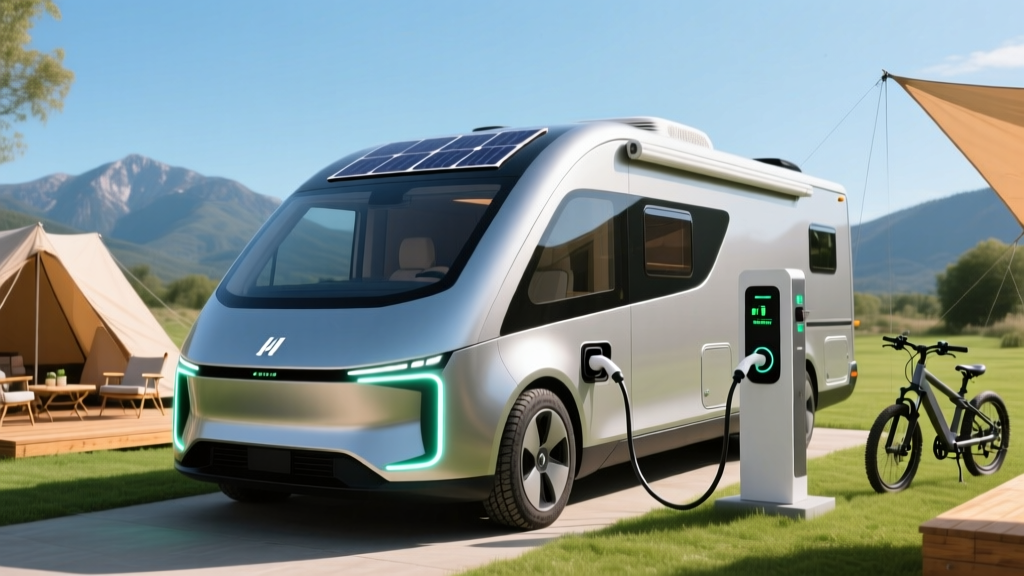
What "All-Electric RV" Actually Means Today
The term "electric RV" covers three very different product categories, and conflating them is the single biggest mistake first-time shoppers make:
- Electric motorhomes (Class B/C): Self-propelled vehicles with a battery-electric drivetrain. Example: Winnebago e-RV, built on the Ford E-Transit chassis.
- Self-propelling electric trailers: Towables with their own battery and motors that assist the tow vehicle, extending its range. Example: Lightship L1.
- Electric trailers (conventional tow): Standard trailers with electric appliances (induction cooktop, heat pump) but no drivetrain assist. These don't extend range — they just use shore power or a battery bank for camping.
When buyers search for an "all-electric RV for sale," most are picturing a self-driving electric motorhome. What they'll actually find on dealer lots in 2026 falls overwhelmingly into category two: smart trailers that help your EV tow farther.
The Current Lineup: Specs, Pricing, and Availability
| Model | Type | Battery (kWh) | Range (mi) | DC Charge (kW) | 10–80% Time | MSRP | Status |
|---|---|---|---|---|---|---|---|
| Winnebago e-RV | Class C Motorhome | 68 kWh (NMC) | ~108 (EPA est.) | 115 kW peak | ~45 min | ~$300,000+ | Limited production |
| Lightship L1 | Self-propelling trailer | 80 kWh (LFP) | ~150 (range-neutral tow) | ~150 kW peak | ~30 min | $125,000 | Pre-order / early delivery |
| Airstream e-stream | Concept trailer | ~140 kWh (est.) | ~150 (target) | TBD | TBD | TBD | Announced / prototype |
| Thor Project e-RV | Concept motorhome | TBD | TBD | TBD | TBD | TBD | Concept only |
Key spec note: kW (kilowatts) measures power — how fast you charge. kWh (kilowatt-hours) measures energy — how big the battery is. A 68 kWh battery charged at 115 kW will refill faster than one charged at 50 kW, but battery size determines how far you go between stops.
Real-World Range Reality Check
The Winnebago e-RV's ~108-mile EPA-estimated range is based on the Ford E-Transit cargo van chassis. In real-world motorhome use — with a loaded living space, highway speeds of 65–70 mph, and moderate climate control — expect 70–90 miles before needing a charge. In cold weather (below 40°F), that drops to 55–75 miles. The Lightship L1's "range-neutral tow" claim means its onboard motors offset aerodynamic drag so your tow vehicle (e.g., Ford F-150 Lightning, Rivian R1T) loses minimal range — but the trailer itself doesn't travel independently.
Electric RV vs. Gas RV: Cost & Practicality Comparison
| Factor | Electric RV (Lightship L1 + F-150 Lightning) | Gas RV (Conventional 27-ft Travel Trailer + F-150 3.5L EcoBoost) |
|---|---|---|
| Trailer MSRP | $125,000 | $35,000–$55,000 |
| Tow vehicle MSRP | $55,000–$80,000 (F-150 Lightning) | $55,000–$70,000 (F-150 gas) |
| Combined purchase | $180,000–$205,000 | $90,000–$125,000 |
| Fuel/energy cost per mile (towing) | $0.12–$0.18/mi (at $0.35/kWh public DC) | $0.35–$0.50/mi (at 8–10 MPG, $3.50/gal) |
| Annual fuel cost (5,000 towed miles) | $600–$900 | $1,750–$2,500 |
| Maintenance (annual) | ~$200–$400 (no engine oil, fewer moving parts) | ~$800–$1,200 (oil, filters, transmission) |
| Range per stop | 150–250 mi (trailer-assisted) | 300–400 mi |
| Refuel/recharge time | 30–45 min (DC fast charge) | 5–10 min (gas station) |
| Boondocking power | Built-in 80 kWh battery = days of AC/fridge | Requires generator or solar add-on |
The per-mile energy savings are real — roughly 60–65% lower fuel cost when towing electric. But the upfront premium of $55,000–$80,000 means it takes 15–25+ years of typical RV use (3,000–5,000 miles/year) to break even on energy alone. Electric RVs today are not a financial optimization. They're a technology and lifestyle choice.
Real Ownership Considerations Before You Buy
Home Charging Access Is Non-Negotiable
An 80 kWh trailer battery or a 68 kWh motorhome battery cannot be practically charged on a standard 120V outlet (Level 1). You'll need a Level 2 home charger — ideally a 48-amp (11.5 kW) hardwired unit on a dedicated 60-amp circuit. Installation costs range from $800–$2,500 depending on your electrical panel capacity. If your home has a 100-amp main panel, you'll likely need a $2,000–$4,000 panel upgrade to 200 amps. Without reliable home charging, an electric RV is impractical for most owners.
Charging Infrastructure on the Road
DC fast charging for RVs is a genuine pain point. Most Electrify America, EVgo, and Tesla Supercharger stalls are designed for passenger cars — tight pull-through lanes, low canopies, and no room for a 27-foot trailer. The Lightship L1's NACS connector gives it access to the Tesla Supercharger network (now the dominant US standard), but you'll still need to unhitch at many stations or seek out RV-friendly charging locations. Apps like A Better Routeplanner and PlugShare can filter for pull-through and high-clearance stalls, but availability remains sparse in rural and mountain corridors.
Cold-Weather and Mountain Driving
Battery chemistry matters here. The Lightship L1 uses LFP (lithium iron phosphate) cells, which offer excellent cycle life and safety but suffer greater cold-weather range loss — up to 30–40% below freezing — compared to NMC chemistry used in the Winnebago e-RV. If you camp in Colorado winters or tow over mountain passes, plan for 30–50% range reduction and add a charging stop to every route. Preconditioning the battery (warming it before fast charging) is critical; both Lightship and Winnebago include thermal management systems, but preconditioning adds 15–30 minutes to departure time.
Federal Tax Credits and Incentives: What Applies
§30D Federal EV Tax Credit — Does It Apply to RVs?
- Lightship L1 (trailer): Not eligible. The §30D credit applies to self-propelled highway vehicles, not towable trailers.
- Winnebago e-RV (motorhome): Potentially eligible, but subject to MSRP cap ($80,000 for vans/SUVs/pickups — the e-RV's Class C body on an E-Transit chassis likely falls under the van cap, making its ~$300,000 price ineligible).
- Tow vehicle (e.g., F-150 Lightning, Rivian R1T): Eligible if MSRP is under $80,000 (pickup cap), buyer income is under $150K single / $300K joint, and battery sourcing meets critical-mineral requirements. Verify current-year rules at IRS.gov §30D.
- Commercial clean vehicle credit (§45W): If you use the RV for a rental business, the Lightship L1 or e-RV may qualify under different rules. Consult a tax professional.
Tax credit rules change frequently. Always verify current-year eligibility on irs.gov before purchasing.
Common Misconceptions About Electric RVs
| Myth | Fact |
|---|---|
| "I can tow an electric RV 300 miles like a gas rig." | Current electric RVs offer 80–150 miles of effective range. Even with trailer propulsion assist, plan charging stops every 120–150 highway miles. |
| "Electric RVs are cheaper to own." | Lower per-mile energy cost is real, but the $55,000–$175,000 upfront premium means decades to break even at typical RV mileage. |
| "I can charge at any RV park." | Most RV parks offer 30-amp or 50-amp shore power (3.6–12 kW). That's enough for overnight L2 charging (8–20 hours for a full battery) but not fast enough for quick top-ups. |
| "The battery will need replacing in 5 years." | Modern LFP and NMC packs are warrantied for 8–10 years / 100,000+ miles with ≥70% capacity retention. Degradation data from fueleconomy.gov and manufacturer testing shows 10–15% loss over 10 years under normal use. |
| "Solar panels on the roof will keep it charged." | Typical RV roof solar (400–800W) adds roughly 2–4 kWh per day of usable energy — enough to run lights and a fridge, not to meaningfully recharge an 80 kWh battery. |
Decision Framework: Should You Buy an Electric RV?
If X, Then Y
If you tow fewer than 3,000 miles/year and mostly camp within 100 miles of home → An electric trailer like the Lightship L1 paired with an EV tow vehicle is viable today. Your home charger handles overnight refills, and the short range isn't a constraint.
If you take long cross-country trips (500+ miles in a day) → Wait. Current charging infrastructure and range make multi-state electric RV trips possible but stressful, with 2–4 extra hours of charging per travel day.
If you boondock (camp off-grid) frequently → An electric RV's large battery is a genuine advantage. The Lightship L1's 80 kWh pack can power a refrigerator, lights, and climate control for 2–4 days without shore power or a generator — far longer than a typical 2–4 kWh house battery in a gas RV.
If budget is a primary concern → A conventional gas travel trailer with a gas tow vehicle costs 50–65% less upfront. Add a portable solar panel and a lithium house battery upgrade (~$2,000) for a fraction of the electric RV premium.
If you want to tow with your existing EV (F-150 Lightning, Rivian R1T, Tesla Cybertruck) → A self-propelling trailer like the L1 is the strongest match. It preserves your truck's range rather than cutting it in half, which is what happens with a conventional trailer.
What to Know About Charging an Electric RV
| Charging Level | Power (kW) | Miles Added/Hour | Full Charge Time (80 kWh) | Where |
|---|---|---|---|---|
| Level 1 (120V outlet) | 1.2–1.4 kW | ~2–3 mi/hr | 60+ hours | Standard household outlet |
| Level 2 (240V, 48A) | 11.5 kW | ~20–25 mi/hr | ~7 hours | Home charger, RV park 50-amp |
| DC Fast Charge | 50–150 kW | ~100–250 mi/hr | 30–45 min (10–80%) | Public stations (Electrify America, EVgo, Superchargers) |
Charge-curve reality: DC fast charging doesn't sustain peak speed. A 150 kW peak rate typically drops to 80–100 kW above 50% state of charge, then tapers sharply above 80%. The "10–80% in 30 minutes" spec is the useful number; charging from 80–100% can add another 20–30 minutes. Plan your stops around 80% and move on.
Frequently Asked Questions
Can I tow an electric trailer with a gas truck?
Yes. The Lightship L1 and similar trailers work with any tow vehicle rated for their weight (~4,500–5,500 lbs loaded). However, the range-extension benefit is most meaningful when paired with an EV tow vehicle. With a gas truck, you'll still get improved fuel economy from the trailer's propulsion assist — roughly 1–2 MPG better than an equivalent conventional trailer — but the dollar savings are smaller.
What happens if the RV battery runs out on the road?
For self-propelling trailers like the L1, the trailer's motors disengage when the battery is depleted, and it becomes a conventional (heavier) trailer. Your tow vehicle must still be rated to tow the dead-weight load. For the Winnebago e-RV motorhome, a depleted battery means a flatbed tow — same as any EV. Roadside assistance coverage that includes EV towing is essential.
How long do electric RV batteries last?
LFP batteries (Lightship L1) are rated for 3,000–5,000 charge cycles before reaching 80% capacity — that's 240,000–400,000 miles of equivalent use. NMC batteries (Winnebago e-RV) are rated for 1,500–2,500 cycles. Given that most RVs travel 3,000–6,000 miles per year, the battery will almost certainly outlast the vehicle's useful life. Manufacturer warranties typically cover 8 years / 100,000 miles at ≥70% capacity retention.
Are there any all-electric Class A motorhomes for sale?
Not in production as of 2026. Thor Industries has shown concepts (Project e-RV), and smaller startups have announced plans, but no Class A electric motorhome is currently available for retail purchase. The weight and energy requirements of a 30–40 foot Class A (15,000–30,000 lbs) make it a significant engineering challenge with current battery energy density.
Where can I find an all-electric RV for sale near me?
The Winnebago e-RV is available through select Winnebago dealerships, primarily by order. The Lightship L1 is in pre-order with deliveries beginning in limited volumes. Check Lightship.com or your local Winnebago dealer for availability. The used market is essentially nonexistent given the newness of these products.
Bottom Line: Who Should Buy an Electric RV in 2026?
The all-electric RV market is real but narrow. If you own an EV truck, camp within a 150-mile radius, have Level 2 home charging, and can absorb a $125,000+ trailer price, the Lightship L1 is a compelling product that solves the EV-towing range problem elegantly. If you want a self-contained electric motorhome, the Winnebago e-RV exists but costs as much as a house and can't travel more than 100 miles without stopping. For everyone else — the majority of RV buyers who travel long distances, camp off-grid in remote areas, or have budgets under $80,000 — a conventional gas RV with a lithium house-battery upgrade remains the practical choice. The electric RV space will mature as battery energy density improves and the Supercharger network adds more pull-through stalls, but that timeline is measured in years, not months.