Quick Verdict: The Shelby Mach-E Brings Mustang Heritage to Electrified Performance
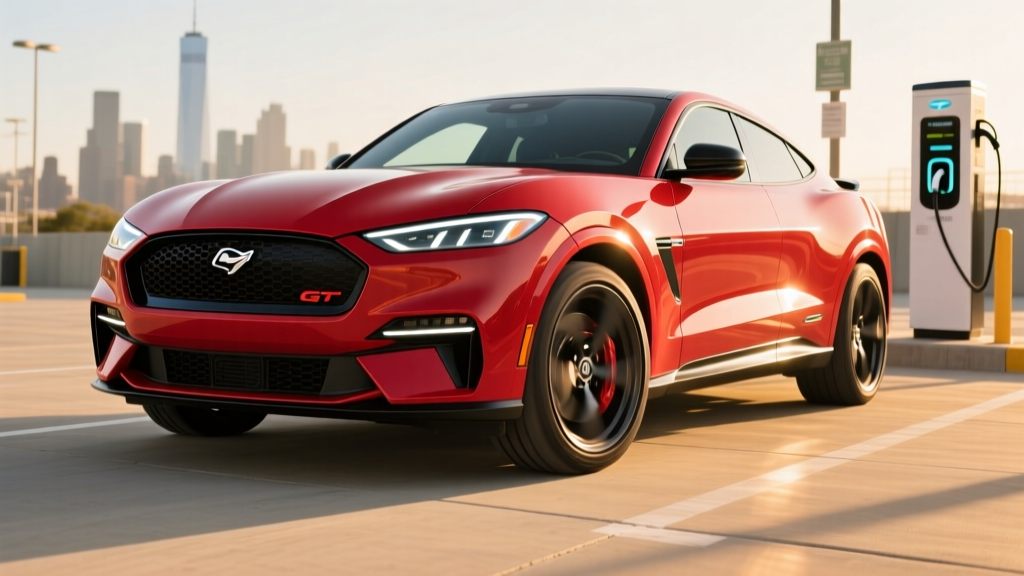
The Shelby Mustang Mach-E GT is Ford's answer to enthusiasts who want Mustang-badged performance without a V8. Built in collaboration with Shelby American, this limited-edition variant takes the already potent Mustang Mach-E GT platform and adds track-tuned suspension, Shelby-specific styling cues, and the same dual-motor all-wheel-drive powertrain that makes the standard GT one of the quickest SUVs in its class. The result is an electric crossover that hits 60 mph in approximately 3.5 seconds while still delivering practical daily-driver range and charging capability.
But performance credentials only matter if the rest of the EV equation works. Below, we break down the real-world range you can expect, actual charging speeds on DC fast chargers and Level 2 home units, total pricing after federal tax credits, and whether this Shelby-badged Mach-E justifies its premium over the standard GT and key rivals like the Tesla Model Y Performance and Hyundai Ioniq 5 N.
0-60, Horsepower, and Drivetrain: The Shelby Mach-E Performance Numbers
The Shelby Mustang Mach-E GT retains the GT Performance Edition's dual-motor all-wheel-drive layout, producing 480 horsepower and 634 lb-ft of torque in its standard GT tune. The Shelby package adds revised damper tuning, a lowered ride height, and specific drive-mode calibration, but does not alter the peak output figures. Ford quotes a 0-60 mph time of 3.5 seconds for the GT with the Performance Upgrade — the same hardware that underpins the Shelby edition.
| Spec | Value |
|---|---|
| Drivetrain | Dual-motor AWD |
| Horsepower | 480 hp |
| Torque | 634 lb-ft |
| 0-60 mph | ~3.5 seconds |
| Top Speed | 130 mph (electronically limited) |
| Battery Capacity (usable) | 91 kWh (extended-range) |
| Battery Chemistry | NMC (nickel manganese cobalt) |
| EPA Estimated Range | 260 miles (GT Perf. Upgrade) |
| EPA Efficiency | 84 MPGe / 40 kWh/100 mi |
On the road, the Shelby's launch is ferocious — the instant torque delivery from both axles means there is no waiting for downshifts or boost. The Shelby-specific suspension tuning reduces body roll noticeably in cornering compared to the standard GT, and the MagneRide adaptive dampers (included on the Performance Upgrade) adjust in real time. The trade-off is a firmer ride quality that transmits more road imperfections into the cabin, particularly on 20-inch wheels.
Real-World Range vs. EPA Estimate: What Owners Actually See
EPA Estimated Range: 260 miles (GT with Performance Upgrade / Shelby variant)
Real-World Expectation: Expect roughly 230–245 miles in mixed city/highway driving at moderate temperatures. Sustained highway speeds above 70 mph will drop that to approximately 210–225 miles. In cold weather (below 32°F), plan for 185–210 miles depending on cabin heating usage and whether the battery is preconditioned.
The Mach-E GT's 91-kWh usable battery (NMC chemistry) provides a solid energy reserve, but the GT's performance tuning, heavier dual-motor setup, and wider tires all work against efficiency. According to fueleconomy.gov, the Mach-E GT with the Performance Upgrade is rated at 84 MPGe combined, or roughly 40 kWh per 100 miles. That is noticeably thirstier than the Select or Premium RWD trims, which achieve up to 104 MPGe combined.
Cold-weather range loss is a reality for all EVs, and the Mach-E is no exception. Ford includes a heat pump on extended-range models, which helps mitigate cabin-heating energy draw, but battery chemistry itself becomes less efficient in freezing temperatures. Preconditioning the battery while plugged in — using the FordPass app to set a departure time — is essential for maximizing winter range and enabling faster DC charging.
Charging Speeds: DC Fast Charging and Home Level 2
The Shelby Mustang Mach-E GT supports a maximum DC fast-charge rate of 150 kW via its CCS1 connector. On a compatible 150 kW or higher station (such as Electrify America or EVgo), you can expect the following charge curve behavior:
| Charging Level | Power / Rate | Speed | Notes |
|---|---|---|---|
| Level 1 (120V household) | ~1.4 kW | ~3 mi/hr | Emergency/trickle only |
| Level 2 (240V home) | 10.5 kW (48A) | ~26 mi/hr | Full charge in ~10 hours |
| DC Fast Charge | Peak 150 kW | 10–80% in ~45 min | Tapers significantly above 80% |
The 150-kW peak charge rate is the Mach-E GT's most notable charging limitation compared to newer competitors. The Hyundai Ioniq 5, for example, uses an 800-volt architecture enabling peak rates of 240 kW, achieving a 10–80% charge in approximately 18 minutes. The Mach-E's 400-volt architecture means the charge curve tapers earlier — you will see peak rates only between roughly 10% and 50% state of charge, after which the rate steadily declines. Charging from 80% to 100% on DC is slow enough that it is only practical for overnight Level 2 sessions.
For home charging, the onboard 10.5-kW charger is adequate. Using a 48-amp Level 2 wall connector (such as the Ford Connected Charge Station or a third-party unit like the ChargePoint Home Flex), you will add approximately 26 miles of range per hour, or fully replenish the 91-kWh battery in about 10 hours. This works well for overnight charging but means a depleted battery cannot be fully restored during a short evening stop.
Pricing, Trims, and Federal Tax Credit Eligibility
The Shelby Mustang Mach-E GT is positioned as a limited-production, enthusiast-tier model. Pricing reflects that positioning:
| Item | Amount |
|---|---|
| Base MSRP (Mach-E GT Perf. Upgrade) | ~$65,995 |
| Shelby Package Add-On | ~$10,000–$15,000 (varies by year/allocation) |
| Estimated Shelby Total MSRP | ~$76,000–$81,000 |
| Federal §30D Tax Credit | Up to $7,500 (if eligible) |
| Effective Price After Max Credit | ~$68,500–$73,500 |
Federal tax credit eligibility requires meeting several conditions under IRS §30D rules, which remain subject to change. Per IRS guidance, the key requirements include:
- MSRP cap: SUVs and trucks must have an MSRP at or below $80,000. The Shelby Mach-E GT may push right up against this ceiling depending on options — verify the final MSRP on the window sticker.
- Buyer income cap: Modified adjusted gross income (MAGI) must not exceed $150,000 (single), $225,000 (head of household), or $300,000 (joint filers).
- Battery sourcing: A percentage of critical minerals and battery components must be sourced from the U.S. or free-trade-agreement partners. The Mach-E's battery supply chain has been evolving — confirm current-year eligibility on the IRS clean vehicle credit page or with your dealer at point of sale.
- Point-of-sale transfer: As of 2024, eligible buyers can transfer the credit to the dealer at purchase, reducing the purchase price directly rather than waiting for a tax refund.
Consult a tax professional to confirm your personal eligibility before relying on the credit in your purchase calculation.
Interior Space, Cargo, and Daily Practicality
Despite its performance focus, the Shelby Mach-E retains the standard Mach-E's practical interior dimensions. The GT platform does not compromise passenger or cargo space:
- Front legroom: 43.3 inches
- Rear legroom: 38.1 inches
- Cargo volume (rear seats up): 29.7 cu ft
- Cargo volume (rear seats folded): 59.7 cu ft
- Front trunk (frunk): 4.7 cu ft (drainable, useful for wet gear or charging cables)
The cabin features a 15.5-inch vertical touchscreen running Ford's SYNC 4A system, which supports wireless Apple CarPlay and Android Auto, over-the-air updates, and Ford Power-Up software enhancements. The Shelby variant adds specific interior trim, Shelby-branded door sills, and unique seat embroidery. BlueCruise, Ford's Level 2 hands-free highway driving system, is available on compatible divided highways — but remember, this is not autonomous driving; the driver must remain attentive at all times.
Notable drawbacks include the absence of a traditional instrument cluster (all information routes through the center screen or a small secondary display), and the firm ride quality from the Shelby's sport-tuned suspension, which may fatigue passengers on long highway drives over rough pavement.
Warranty Coverage and Battery Longevity
Ford backs the Mustang Mach-E lineup — including the Shelby variant — with competitive warranty coverage:
- Battery warranty: 8 years / 100,000 miles (retains at least 70% of original capacity)
- Electric powertrain: 8 years / 100,000 miles
- Bumper-to-bumper: 3 years / 36,000 miles
- Corrosion perforation: 5 years / unlimited miles
The 91-kWh NMC battery has demonstrated reasonable degradation curves in real-world fleet data from earlier Mach-E model years, with most owners reporting less than 5% capacity loss over the first 30,000–50,000 miles. NMC chemistry generally offers higher energy density than LFP (lithium iron phosphate) but is more sensitive to sustained high state-of-charge storage and frequent DC fast charging. For maximum longevity, Ford recommends setting a daily charge limit of 80–90% and reserving 100% charges for road trips.
Pros, Cons, and Competitor Comparison
Pros
- 3.5-second 0-60 mph with instant electric torque delivery
- Shelby heritage branding and exclusive styling elements
- 29.7 cu ft cargo space with usable frunk
- BlueCruise hands-free highway driving available
- Heat pump included for better cold-weather efficiency
- Strong 8-year/100,000-mile battery warranty
Cons
- 150-kW peak DC charging lags behind 800V competitors
- 260-mile EPA range is modest for a ~$75,000 EV
- Firm ride quality from Shelby sport suspension
- MSRP may approach or exceed the $80,000 §30D SUV cap
- Limited production — availability is constrained
- 400V architecture means longer road-trip charge stops
Against the Tesla Model Y Performance ($52,490, 3.5-sec 0-60, 277-mile EPA range, 250-kW DC charging via NACS/Supercharger network), the Shelby Mach-E commands a significant price premium for its exclusivity and Mustang branding. The Model Y charges faster and accesses Tesla's Supercharger network, which remains the most reliable public charging infrastructure in the U.S.
The Hyundai Ioniq 5 N ($66,110, 3.4-sec 0-60, 221-mile EPA range, 240-kW peak DC charging via 800V architecture) is the closest performance rival. It charges substantially faster and offers a more engaging driver experience with simulated gear shifts, but sacrifices range and cargo space.
Choose the Shelby Mach-E GT if: You want Mustang heritage and Shelby exclusivity in an EV, prioritize straight-line performance and AWD grip, and have reliable home Level 2 charging to offset the modest DC fast-charge speed.
Look elsewhere if: You road-trip frequently and need faster DC charging (Ioniq 5 N or Model Y), want maximum range per dollar, or need guaranteed federal tax credit eligibility without MSRP-cap concerns.
Who the Shelby Mustang Mach-E GT Is For
This EV is best suited for the performance-oriented enthusiast who wants a daily-drivable electric SUV with Mustang and Shelby cachet. It works well as a commuter car with home charging, weekend canyon-carver, and occasional road-trip vehicle — provided you plan charging stops around its 150-kW peak rate and 260-mile range envelope.
It is less ideal for buyers who prioritize maximum range, the fastest possible road-trip charging, or the lowest cost per mile. Families needing three-row seating or buyers in areas with sparse DC fast-charging infrastructure should look at the standard Mach-E Premium, the Ford Explorer EV, or a three-row SUV like the Kia EV9.
Frequently Asked Questions
What is the Shelby Mustang Mach-E GT 0-60 time?
The Shelby Mustang Mach-E GT, equipped with the GT Performance Upgrade dual-motor AWD powertrain, achieves 0-60 mph in approximately 3.5 seconds. This matches the standard Mach-E GT with the Performance Upgrade, as the Shelby package focuses on suspension tuning, styling, and chassis calibration rather than peak power output.
What is the real-world range of the Shelby Mach-E?
The EPA rates the Mach-E GT Performance Upgrade at 260 miles. In real-world mixed driving, expect 230–245 miles. Highway-heavy driving at 75+ mph drops that to roughly 210–225 miles, and freezing temperatures can reduce range to 185–210 miles without preconditioning.
How fast does the Shelby Mach-E charge on DC fast chargers?
Peak DC fast-charge rate is 150 kW, yielding a 10–80% charge in approximately 45 minutes. The 400-volt architecture means the charge curve tapers earlier than 800V competitors like the Ioniq 5 N (which achieves 10–80% in about 18 minutes at 240 kW peak).
Does the Shelby Mustang Mach-E qualify for the $7,500 federal tax credit?
It may, but eligibility depends on several factors: the vehicle's final MSRP must not exceed $80,000 (the SUV cap under §30D), your income must fall below IRS thresholds, and the battery must meet critical-mineral and component sourcing requirements. Verify current-year eligibility on IRS.gov and with your dealer before purchase.
Is the Shelby Mach-E worth buying over the standard GT?
If you value Shelby exclusivity, unique suspension tuning, and collector-style limited production, the premium may be justified. If you care primarily about performance-per-dollar, the standard Mach-E GT with the Performance Upgrade delivers the same 3.5-second 0-60 and 480 hp for roughly $10,000–$15,000 less.
What battery chemistry does the Mach-E GT use?
The extended-range Mach-E GT uses NMC (nickel manganese cobalt) chemistry in its 91-kWh usable battery pack. NMC offers higher energy density than LFP but benefits from daily charge limits of 80–90% for long-term health.