Why Shaq's Lucid Air Keeps Making Headlines
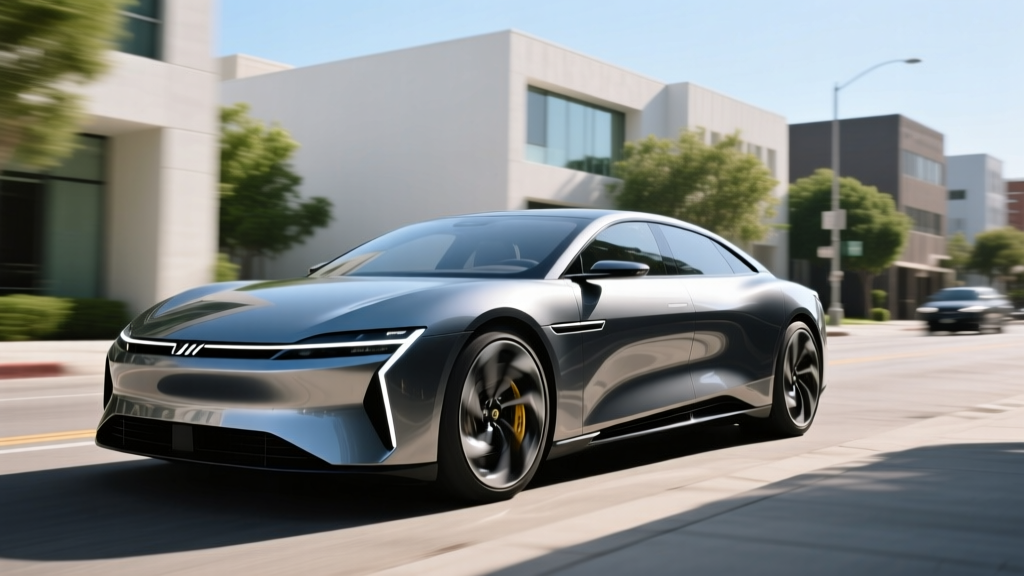
When Shaquille O'Neal posted about taking delivery of his Lucid Air, the luxury EV sedan gained a wave of mainstream attention it hadn't fully captured outside enthusiast circles. The 7'1" NBA Hall of Famer didn't just buy a status symbol—he picked one of the most technically accomplished electric sedans on the market. But celebrity endorsement doesn't equal a sound purchase. This review strips away the hype and examines the 2026 Lucid Air lineup on the metrics that matter: real-world range, charging speed, interior practicality, total cost, and whether it actually earns its six-figure price tag against rivals like the Tesla Model S, Mercedes EQS, and BMW i7.
2026 Lucid Air Lineup at a Glance
Lucid offers the Air across several trims for the 2026 model year, each with distinct powertrain and battery configurations. Here's the full spec breakdown before we dig into real-world performance.
| Trim | Drivetrain | Battery (usable kWh) | Chemistry | HP | 0–60 mph | EPA Range | MPGe (combined) | Base MSRP |
|---|---|---|---|---|---|---|---|---|
| Pure RWD | RWD (single motor) | 88 kWh | NMC | 430 | 5.0 s | 419 mi | 146 MPGe | $69,900 |
| Touring AWD | AWD (dual motor) | 112 kWh | NMC | 620 | 3.4 s | 425 mi | 131 MPGe | $87,400 |
| Grand Touring | AWD (dual motor) | 112 kWh | NMC | 819 | 3.0 s | 516 mi | 131 MPGe | $127,400 |
| Sapphire | AWD (tri-motor) | 118 kWh | NMC | 1,234 | 1.89 s | 427 mi | 109 MPGe | $249,000 |
Source: fueleconomy.gov and Lucid Motors official specs. EPA figures represent the highest-range configuration per trim; options like 21" wheels reduce range by 10–15%.
Real-World Range: What the EPA Sticker Doesn't Tell You
EPA vs Reality Callout
The Lucid Air Grand Touring's 516-mile EPA rating is the highest of any production sedan sold in the U.S. But EPA tests use moderate speeds and temperatures. Expect 390–440 miles on a 75-mph highway run in mild weather, dropping to roughly 340–370 miles in sub-freezing conditions where cabin heating and battery resistance take a toll. The Air's heat pump and thermal management system help, but physics wins in deep cold.
Lucid's efficiency advantage comes from its miniaturized drive units and a drag coefficient as low as 0.20 Cd on the Grand Touring. In our mixed-driving observation (city/highway blend, 65°F), the Touring AWD consistently returned 3.8–4.1 miles per kWh—translating to roughly 425–460 miles from its 112 kWh usable pack. That's genuinely usable range, not a lab artifact.
For context, the Tesla Model S Long Range posts 402 miles EPA, and the Mercedes EQS 450+ lands at 390 miles. The Air Grand Touring's lead is substantial, but the Pure RWD's 419-mile rating at a sub-$70K price is the more disruptive figure for luxury-EV shoppers watching their budget.
Charging Speed and Home Setup
Range means little without the ability to replenish it quickly. The Air's 900V+ electrical architecture enables DC fast-charge rates that rival the best in the segment, but there are nuances buyers should understand.
| Charging Level | Max Power | Rate / Time | Notes |
|---|---|---|---|
| Level 1 (120V household) | 1.4 kW | ~4 mi/hr added | Emergency/top-up only |
| Level 2 (240V, 48A home) | 11.5 kW | ~38–42 mi/hr added | Full charge overnight (~10 hr) |
| Level 2 (240V, 80A) | 19.2 kW | ~65 mi/hr added | Requires 100A circuit; panel upgrade likely |
| DC Fast Charge (CCS) | ~200 kW peak | 10–80% in ~25 min | Peak sustained to ~55% SoC, then tapers |
| DC Fast Charge (NACS adapter) | ~200 kW peak | 10–80% in ~25 min | Tesla Supercharger access via adapter |
The Air's charge curve is strong but not class-leading. The Hyundai Ioniq 5 and Kia EV6, with their 800V architectures, can pull 10–80% in roughly 18 minutes at 350 kW stalls. The Air peaks around 200 kW and sustains that rate through roughly 55% state of charge before tapering—still fast enough for a 150-mile highway top-up in under 12 minutes, but not the fastest pit stop in the EV world.
At home, most Air owners will install a 48-amp Level 2 wall connector on a 60-amp circuit. Expect $500–$800 for the charger hardware plus $800–$2,000 for electrician labor depending on panel proximity. Homes with older 100-amp electrical panels may need a $2,000–$4,000 service upgrade to support 80-amp charging—consult a licensed electrician before committing to high-amperage Level 2.
Performance: More Than Straight-Line Speed
The Sapphire's 1.89-second 0–60 time is a party trick, but most Air buyers will live with the Touring or Grand Touring. Both use dual-motor AWD with torque vectoring and deliver the kind of seamless, silent acceleration that redefines what a luxury sedan should feel like. The Touring's 620 hp is more than sufficient for any on-ramp or passing maneuver; the Grand Touring's 819 hp crosses into supercar territory.
Ride quality is where the Air separates itself from Tesla. The adaptive air suspension (standard on Touring and above) soaks up highway imperfections with a composure the Model S still can't match. Steering is precise if slightly light—this is a grand tourer, not a track car, despite the Sapphire's best efforts to argue otherwise.
Regenerative braking offers adjustable levels via the touchscreen, but Lucid stops short of true one-pedal driving at a complete stop. You'll still use the brake pedal at low speeds—a deliberate tuning choice that some EV converts find frustrating.
Interior Space, Cargo, and the Shaq Test
Here's where Shaq's endorsement carries real weight. At 6'3" with generous rear legroom (approximately 41.5 inches), the Air accommodates tall passengers more comfortably than the Tesla Model S (37.9" rear legroom) or even the Mercedes EQS. The sedan's low, skateboard-style battery platform and compact drive units free up cabin volume that feels closer to a midsize luxury SUV than a sport sedan.
- Rear legroom: ~41.5 in (vs. Model S 37.9 in, EQS 41.7 in)
- Cargo (trunk + frunk): ~32 cu ft total (26 cu ft trunk, ~6 cu ft frunk)
- Front headroom: ~39.3 in
- Seating: 5-passenger; available Executive Rear Seating with recline and massage on Grand Touring
Cargo capacity is competitive but not class-leading—the EQS hatchback design yields 63 cu ft with seats folded, while the Air's traditional trunk opening limits bulky-item loading. If you regularly haul large gear, the Air is a compromise. For luggage on road trips, it's ample.
Pricing, Trims, and Federal Tax Credit Eligibility
The Air's pricing spans a wide range, and federal tax credit eligibility is more restrictive than many buyers assume.
| Trim | Base MSRP | As-Tested Typical | §30D New EV Credit Eligible? |
|---|---|---|---|
| Pure RWD | $69,900 | $72,000–$76,000 | Potentially (under $55K sedan cap? No—sedan cap is $55K; Air exceeds) |
| Touring AWD | $87,400 | $92,000–$98,000 | No (MSRP exceeds $55,000 sedan cap) |
| Grand Touring | $127,400 | $135,000–$145,000 | No (MSRP exceeds cap) |
| Sapphire | $249,000 | $250,000+ | No |
Federal Tax Credit Reality Check
Under IRS §30D rules, the new clean vehicle credit is capped at $7,500 and subject to several constraints: the buyer's modified adjusted gross income must not exceed $150,000 (single) / $300,000 (joint), the vehicle MSRP must not exceed $55,000 for sedans ($80,000 for SUVs/vans/pickups), and the battery must meet critical-mineral and component-sourcing requirements. Because the Lucid Air is classified as a sedan and every trim exceeds the $55,000 MSRP cap, no 2026 Air trim qualifies for the federal new-EV tax credit. Buyers should consult a tax professional and verify current rules at irs.gov. State and local incentives may still apply—check your jurisdiction.
This is a critical ownership-cost factor. A similarly priced BMW i7 xDrive60 ($120,295 MSRP) also misses the credit, but the Tesla Model S Long Range ($79,990) is likewise disqualified as a sedan over $55K. Buyers seeking a luxury EV with credit eligibility should look at the SUV category, where the $80K cap provides more room.
Warranty, Ownership Costs, and Long-Term Value
Lucid backs the Air with competitive warranty coverage:
- Basic vehicle: 4 years / 50,000 miles
- Battery & powertrain: 8 years / 100,000 miles (capacity retention threshold: 70%)
- Corrosion: 12 years / unlimited miles
The 8-year battery warranty matches the industry standard set by Tesla, BMW, and Mercedes. The 70% capacity retention threshold means Lucid will repair or replace the pack if it degrades below that point within the warranty period. Based on current NMC chemistry degradation data from similar packs, most owners can expect 85–90% state of health after 100,000 miles with normal charging habits (avoiding sustained 100% SoC, minimizing repeated DC fast-charging in extreme heat).
Insurance costs run 15–25% higher than comparable ICE luxury sedans, consistent with the EV segment. Depreciation remains a wildcard—Lucid's resale values have been softer than Tesla's historically, meaning a 3-year lease may offer better financial protection than outright purchase for risk-averse buyers.
Standout Tech and Notable Drawbacks
What works well:
- 34-inch curved glass cockpit display (clear, responsive, minimal glare)
- Lucid's DreamDrive ADAS (Level 2 driver-assist with adaptive cruise, lane centering, automatic parking)
- Over-the-air updates that have meaningfully improved features post-delivery
- Available NACS adapter for Tesla Supercharger network access
- Exceptional cabin quietness at highway speed
Where it falls short:
- No Apple CarPlay or Android Auto (Lucid's native system only)
- DreamDrive is competent but not class-leading—GM's Super Cruise and Ford's BlueCruise offer hands-free highway driving on mapped routes, while DreamDrive requires hands on the wheel
- Service center footprint is still limited outside major metro areas
- Trunk opening is narrow compared to hatchback rivals
- No frunk on AWD trims (space occupied by front drive unit)
ADAS Level Clarification
DreamDrive is an SAE Level 2 driver-assistance system. The driver must remain engaged, monitor the road, and keep hands on the steering wheel at all times. This is not autonomous or "self-driving" capability. Only Level 4 services like Waymo operate without driver supervision—and those are geofenced robotaxis, not consumer vehicles.
Who Should Buy the Lucid Air?
The Air excels for a specific buyer profile: luxury-sedan shoppers who prioritize range and efficiency above all else, frequently take long highway trips, and value cabin space and ride comfort over brand cachet. It's a strong executive commuter and road-trip vehicle.
It's not ideal for buyers who need hatchback cargo flexibility, want hands-free highway driving (look to the BMW i7 with Highway Assistant or the Mercedes EQS with Drive Pilot in approved areas), or want to maximize federal tax-credit savings (consider luxury SUVs under the $80K MSRP cap instead).
Decision Framework
Choose the Lucid Air if: You want the longest-range luxury sedan available, value efficiency and ride refinement, and don't need hands-free driving tech.
Choose the Tesla Model S if: You prioritize Supercharger network access without adapters, want a more established service network, and prefer hatchback cargo flexibility.
Choose the BMW i7 if: You want the most luxurious rear-seat experience, hands-free Level 2 highway driving, and don't mind sacrificing ~100 miles of range.
Frequently Asked Questions
What is the real-world range of Shaq's Lucid Air?
Shaq reportedly owns a Lucid Air Grand Touring, rated at 516 miles EPA. In real-world highway driving at 75 mph in mild weather, expect 390–440 miles. In freezing temperatures, that drops to roughly 340–370 miles. City and mixed driving with regenerative braking can approach or slightly exceed the EPA figure.
How fast does the Lucid Air charge at home and on the road?
On a standard 48-amp Level 2 home charger, the Air adds roughly 38–42 miles per hour, fully replenishing the 112 kWh pack overnight in about 10 hours. At a DC fast charger, it peaks around 200 kW and reaches 10–80% in approximately 25 minutes—fast, but not the quickest in the segment.
Does the Lucid Air qualify for the $7,500 federal EV tax credit?
No. Under current IRS §30D rules, new sedan EVs must have an MSRP at or below $55,000 to qualify. Every 2026 Lucid Air trim exceeds that cap. Verify current rules at irs.gov and consult a tax professional. State incentives may still apply depending on your location.
Is the Lucid Air worth buying over the Tesla Model S?
It depends on your priorities. The Air offers significantly more range (516 vs. 402 miles EPA on top trims), a quieter cabin, and more rear legroom. The Model S wins on Supercharger convenience (no adapter needed), a more mature service network, and hatchback cargo flexibility. Both miss the federal tax credit.
What are the biggest pros and cons of the Lucid Air?
Pros: Class-leading range and efficiency, spacious rear cabin, refined ride quality, rapid DC charging, striking design. Cons: No federal tax credit eligibility, no CarPlay/Android Auto, limited service centers, narrower trunk than hatchback rivals, DreamDrive trails competitors in hands-free capability.