The Performance EV That Makes You Feel Something
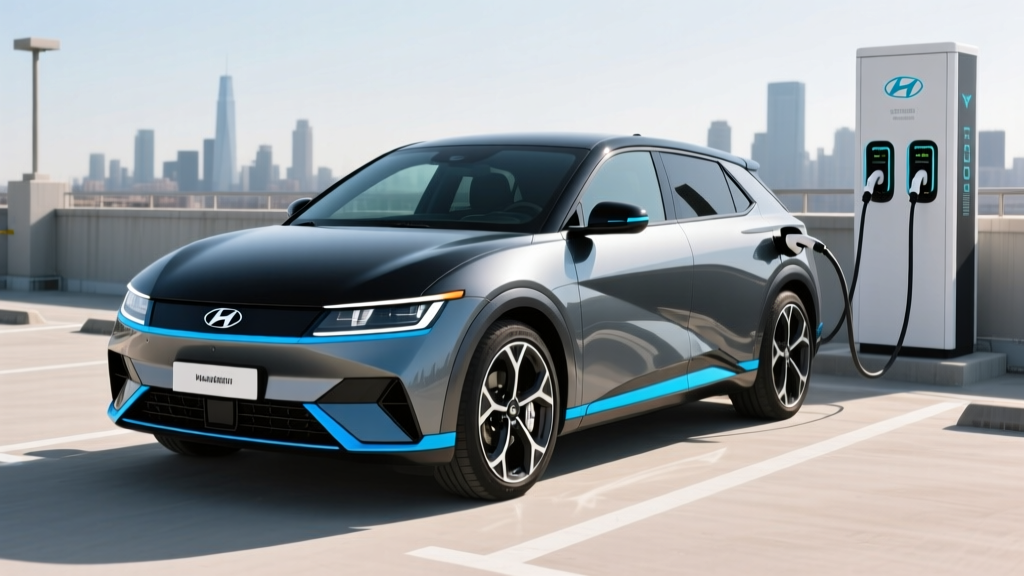
If most electric vehicles feel like exceptionally competent appliances, the Hyundai Ioniq 5 N exists to dismantle that assumption. Built on Hyundai's E-GMP platform but extensively reworked by the N performance division, this hot hatch–meets–crossover delivers 640 horsepower, simulated gear shifts that actually fool your nervous system, and a chassis tuned for track abuse — all while functioning as a daily driver. For buyers researching a Hyundai Ioniq 5 N lease, the calculus is different from a standard EV purchase: you're paying a premium for emotion, not efficiency, and understanding the real numbers behind this machine is essential before signing any agreement.
This review covers the 2026 model year with current EPA data, real-world range observations, charging behavior, federal tax credit implications under IRS §30D rules, and whether leasing makes more financial sense than buying for this particular vehicle.
Range and Efficiency: The Trade-Off for Performance
Real-World Expectation: 185–200 miles highway at 70+ mph; 150–170 miles in cold weather (below 32°F) with climate control active. Track use will drastically reduce this figure.
The Ioniq 5 N carries an 84.0 kWh usable battery pack using NMC (nickel manganese cobalt) chemistry — chosen for its higher energy density and power delivery characteristics over LFP. That battery is identical in architecture to the standard Ioniq 5 Long Range AWD, but the N's additional weight (approximately 4,860 lbs), stickier Pirelli P Zero tires, and performance-oriented powertrain calibration reduce efficiency considerably.
The EPA rates the Ioniq 5 N at 79 MPGe combined, translating to roughly 42 kWh per 100 miles driven. For context, the standard Ioniq 5 AWD achieves 110 MPGe combined with the same battery. That 30-percent efficiency penalty is the direct cost of 640 horsepower, a stiffer suspension, and an active rear spoiler generating downforce.
In mixed driving during temperate conditions (55–75°F), expect 195–210 miles before needing a charge. Sustained highway driving at 75–80 mph drops that to 175–190 miles. Cold weather (below freezing) compounds the loss — battery heating, cabin climate demand, and denser air can push real-world range to 150–170 miles. This is a performance vehicle first; range is a secondary concern.
Charging Speed: Among the Fastest in Production
| Charging Level | Power / Rate | Speed (Miles Added) | Time |
|---|---|---|---|
| Level 1 (120V household) | 1.4 kW | ~3 miles/hour | Full charge: 60+ hours |
| Level 2 (240V home/public) | 10.9 kW | ~30 miles/hour | 10–80% in ~6 hours |
| DC Fast Charge (350 kW station) | Peak 240 kW | ~180 miles in 10 min | 10–80% in ~18 minutes |
Hyundai's E-GMP 800-volt architecture remains one of the fastest-charging platforms available. The Ioniq 5 N peaks at approximately 240 kW on a capable 350 kW DC fast charger, though sustained rates taper as state of charge climbs. Expect 200+ kW through 50% SoC, dropping to roughly 150 kW by 70%, and further declining above 80%. This charge-curve taper is normal lithium-ion behavior designed to protect cell longevity.
Preconditioning is critical here. The Ioniq 5 N includes battery preconditioning when a DC fast charger is entered in the navigation system — this warms the pack to optimal temperature and can shave 3–5 minutes off a 10–80% session in cool weather. Without preconditioning, cold-soak charging sessions (below 50°F) may peak at only 150–180 kW initially.
For home charging, the 10.9 kW onboard charger adds roughly 30 miles of range per hour. A full overnight session (8–10 hours on Level 2) replenishes the entire battery. Most Ioniq 5 N owners will rely on home Level 2 charging for daily use, reserving DC fast charging for road trips.
Performance: The N Division's Electric Statement
| Specification | 2026 Hyundai Ioniq 5 N |
|---|---|
| Powertrain | Dual-motor AWD |
| Horsepower (N Grin Boost) | 640 HP |
| Torque | 568 lb-ft |
| 0–60 mph | 3.25 seconds |
| Top Speed | 161 mph (electronically limited) |
| Battery Capacity | 84.0 kWh usable (NMC) |
| EPA Range | 221 miles |
| EPA Efficiency | 79 MPGe / 42 kWh/100 mi |
| Curb Weight | ~4,860 lbs |
| Towing Capacity | Not rated for towing |
The Ioniq 5 N produces 601 HP in standard mode, rising to 640 HP with N Grin Boost engaged (a 10-second burst activated by the steering-wheel button). The dual-motor all-wheel-drive system features an electronically controlled limited-slip differential on the rear axle, torque vectoring, and an N-specific drift optimizer for those inclined to oversteer on closed courses.
The headline feature is N e-Shift, which simulates an 8-speed dual-clutch transmission with synthetic shift shock, rev-matching, and even a simulated redline. It sounds gimmicky until you drive it: the haptic and auditory feedback creates engagement that most single-speed EVs lack entirely. You can disable it for seamless EV acceleration, but most owners leave it active because it transforms the driving experience.
Braking is handled by enlarged ventilated discs with N-specific calipers, supplemented by aggressive regenerative braking (up to 0.65g of regen deceleration in N Pedal mode). Track-oriented brake cooling ducts help manage fade during repeated hot laps, though the vehicle's 4,860-pound mass is a physics challenge no amount of engineering fully solves.
Interior Space, Tech, and Daily Livability
The Ioniq 5 N retains the standard model's interior dimensions, which remain generous for a performance crossover:
- Front legroom: 41.7 inches
- Rear legroom: 39.4 inches
- Cargo volume (rear seats up): 27.2 cu ft
- Cargo volume (rear seats folded): 59.3 cu ft
- Front trunk (frunk): 0.85 cu ft (minimal — houses electronics)
The N-specific interior adds heavily bolstered sport seats with integrated headrests, a thicker N steering wheel with dedicated drive-mode buttons, aluminum pedals, and N-branded trim. The dual 12.3-inch displays run Hyundai's latest infotainment software with wireless Apple CarPlay and Android Auto, over-the-air updates, and the Bluelink connected-services platform.
Driver-assistance technology includes Hyundai SmartSense: adaptive cruise control with stop-and-go, lane-keeping assist, blind-spot monitoring, rear cross-traffic alert, and highway driving assist. These are SAE Level 2 systems requiring continuous driver engagement — not autonomous driving. The system is competent for highway commuting but does not offer hands-free operation like GM's Super Cruise or Ford's BlueCruise.
Notable drawbacks: the sport seats, while excellent for lateral support, are firmer than the standard Ioniq 5's and may fatigue some drivers on long commutes. Road noise from the P Zero summer tires is noticeably higher than the standard model, especially on coarse pavement. The frunk is effectively useless for storage.
Pricing, Lease Considerations, and Tax Credit Eligibility
| Item | Amount |
|---|---|
| Base MSRP (Ioniq 5 N, single trim) | $69,485 |
| Destination charge | $1,495 |
| Total starting price | $70,980 |
| Federal tax credit (§30D, if eligible) | Up to $7,500 (see rules below) |
| Effective price after max credit | ~$63,480 |
The Ioniq 5 N comes in a single, fully equipped trim — no options packages beyond paint color. The $70,980 starting price positions it against the Tesla Model 3 Performance ($54,990), BMW i4 M50 ($70,700), and Porsche Taycan (significantly higher).
Federal Tax Credit Eligibility (IRS §30D)
The Ioniq 5 N's eligibility for the $7,500 federal EV tax credit under IRS §30D rules requires careful verification:
- MSRP cap: The Ioniq 5 N at ~$71,000 falls under the $80,000 SUV/truck cap and the $55,000 sedan cap. Because Hyundai classifies it as a crossover/SUV, it qualifies under the higher $80,000 threshold.
- Buyer income limits: Modified AGI must not exceed $150,000 (single), $225,000 (head of household), or $300,000 (joint filers).
- Battery sourcing requirements: The critical-minerals and battery-component sourcing rules phase in stricter thresholds annually. Hyundai has worked to qualify multiple Ioniq 5 variants, but eligibility can change based on supply-chain shifts. Verify current status on fueleconomy.gov before purchase.
- Point-of-sale transfer: As of 2024+, buyers can transfer the credit to the dealer at point of sale, reducing the purchase price directly rather than waiting for a tax refund.
Lease-specific note: If you lease rather than purchase, the §30D credit technically goes to the lessor (the leasing company), not to you. However, most manufacturers pass this savings through as a "lease cash" incentive that reduces monthly payments. Hyundai has historically offered competitive lease cash on Ioniq 5 models. Always confirm the current lease incentive structure with the dealer — do not assume the $7,500 credit automatically applies to your lease payment.
Who Should Lease the Ioniq 5 N?
- You want a performance EV that delivers genuine driving engagement without the long-term commitment of ownership
- You have home Level 2 charging and a commute under 150 miles round-trip
- You plan occasional track days and want a vehicle that can handle them without modification
- You want to experience N e-Shift and performance EV technology before the next generation arrives
- Range is your primary concern — the standard Ioniq 5 AWD (290+ miles EPA) or Hyundai Ioniq 6 (361 miles) serve better
- You need to tow — the Ioniq 5 N is not rated for towing
- You frequently drive in freezing conditions where range drops to 150 miles
- You prioritize luxury over engagement — the BMW i4 M50 or Audi RS e-tron GT offer more premium interiors
Leasing the Ioniq 5 N makes particular sense for buyers who want to experience peak performance-EV technology without assuming long-term battery-degradation risk. Hyundai's battery warranty covers 10 years or 100,000 miles (whichever comes first) with a capacity-retention threshold of 70%, but a 36-month lease sidesteps that concern entirely. You'll also benefit from any lease-cash incentives Hyundai offers, which can meaningfully reduce monthly costs compared to financing a purchase.
Pros, Cons, and the Competition
- 640 HP and 3.25-second 0–60 make it one of the quickest vehicles under $100,000
- N e-Shift creates genuine driver engagement rare in EVs
- 240 kW DC fast charging minimizes road-trip downtime
- Track-capable chassis with daily-driver comfort
- Generous rear-seat and cargo space for a performance vehicle
- 10-year/100,000-mile battery and powertrain warranty
- 221-mile EPA range is the lowest in the Ioniq 5 lineup
- Heavy at 4,860 lbs — physics limits track performance vs lighter sports cars
- Summer tires compromise cold-weather and wet traction
- Not rated for towing
- Firm sport seats and elevated road noise reduce long-distance comfort
- No hands-free driving assist (Level 2 only)
Against the Tesla Model 3 Performance, the Ioniq 5 N sacrifices range and price but wins on driver engagement, build quality, and charging speed. The Model 3 is lighter and more efficient but lacks the N's emotional character. The BMW i4 M50 offers a more premium cabin and similar power but charges slower and costs comparably. For pure driving thrill per dollar, the Ioniq 5 N stands alone in its segment.
Warranty Coverage
Hyundai backs the Ioniq 5 N with:
- Battery: 10 years / 100,000 miles (70% capacity retention threshold)
- Powertrain: 10 years / 100,000 miles
- New vehicle limited: 5 years / 60,000 miles
- Roadside assistance: 5 years / unlimited miles
- Complimentary maintenance: 3 years / 36,000 miles
This warranty coverage is among the strongest in the industry and a significant ownership advantage, particularly for the battery and powertrain. For lessees, the 3-year/36,000-mile new-vehicle warranty typically covers the full lease term.
Frequently Asked Questions
What is the real-world range of the Hyundai Ioniq 5 N?
The EPA rates the Ioniq 5 N at 221 miles. In real-world mixed driving at moderate temperatures, expect 195–210 miles. Highway driving at 75+ mph reduces this to 175–190 miles. Cold weather (below 32°F) can drop range to 150–170 miles. Aggressive driving or track use will deplete the battery far faster.
How fast does the Ioniq 5 N charge at home and on DC fast chargers?
On a 350 kW DC fast charger, the Ioniq 5 N peaks at 240 kW and charges from 10–80% in approximately 18 minutes, assuming battery preconditioning. On a home Level 2 charger (10.9 kW), it adds roughly 30 miles per hour, with a full charge taking 8–10 hours. Level 1 (120V) is impractical for regular use at roughly 3 miles per hour.
Does the Ioniq 5 N qualify for the $7,500 federal EV tax credit?
The Ioniq 5 N may qualify for up to $7,500 under IRS §30D, depending on your income (under $150K single / $300K joint), the vehicle's battery-sourcing compliance (which can change), and its classification under the $80,000 SUV MSRP cap. For leases, the credit goes to the lessor but is typically passed through as lease cash. Verify current eligibility on fueleconomy.gov and consult a tax professional for personalized guidance.
Is leasing the Ioniq 5 N better than buying?
Leasing reduces your monthly commitment and eliminates long-term battery-degradation risk. Hyundai frequently offers lease-cash incentives that can make monthly payments competitive with financing. However, you'll have no equity at lease end, and mileage limits (typically 10,000–15,000 miles/year) may not suit high-mileage drivers. If you plan to keep the vehicle 5+ years and stay within warranty, buying and claiming the tax credit (if eligible) may be more economical long-term.
How does the Ioniq 5 N compare to the Tesla Model 3 Performance?
The Model 3 Performance costs roughly $15,000 less, offers approximately 315 miles of EPA range, and is lighter and more efficient. The Ioniq 5 N counters with faster DC charging (240 kW vs ~250 kW peak but slower sustained rates on Tesla), a more engaging driving experience via N e-Shift, a more spacious cabin, and Hyundai's superior warranty. Choose the Tesla for efficiency and price; choose the Hyundai for engagement and build quality.
Can I drive the Ioniq 5 N in winter?
Yes, but swap the factory Pirelli P Zero summer tires for winter or all-season tires. Summer tires lose grip dangerously below 45°F. Expect range to drop to 150–170 miles in freezing conditions. The AWD system provides strong traction in snow with appropriate tires. Battery preconditioning helps maintain charging speed in cold weather.
Sources: EPA fuel economy data via fueleconomy.gov, Hyundai Motor America specifications, IRS clean vehicle credit guidance at irs.gov.