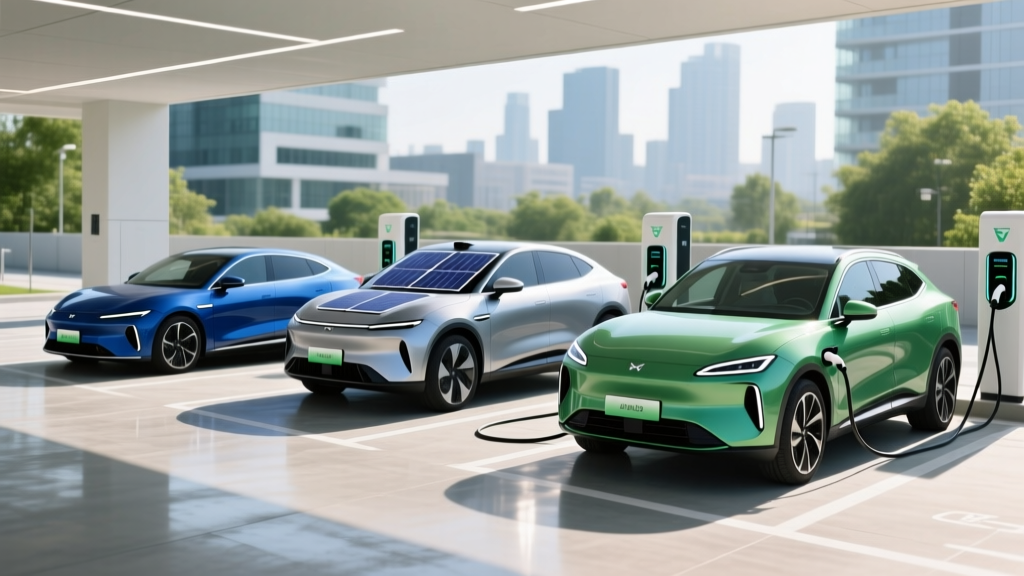
Quick Answer: What Does It Cost to Service an Electric Car?
Electric vehicles require significantly less routine maintenance than gas cars — no oil changes, no spark plugs, no transmission fluid, no exhaust system repairs. Expect to pay $300–$500 per year on routine EV maintenance (tire rotations, cabin air filters, brake fluid checks, wiper fluid) compared to $900–$1,200+ per year for a comparable gas vehicle. Over five years, that's a savings of roughly $3,000–$4,000. However, EVs are not maintenance-free: tires wear 20–30% faster due to vehicle weight and instant torque, and out-of-warranty battery or power-electronics repairs can cost $5,000–$20,000+ if they occur after the federal 8-year/100,000-mile battery warranty expires.
EV Maintenance: What Actually Needs Servicing?
The simplicity of an electric drivetrain is the single biggest ownership advantage of a battery-electric vehicle (BEV). A typical internal combustion engine has over 2,000 moving parts in the powertrain alone. A BEV electric motor has roughly 20. That difference eliminates a long list of service items gas-car owners take for granted.
Here's what you will need to service on an EV:
- Tires — The most frequent and costly recurring expense. EVs are heavy (a Tesla Model Y weighs ~4,400 lbs; a Ford F-150 Lightning ~6,500 lbs) and deliver instant torque. Expect tire replacement every 25,000–40,000 miles depending on driving style. Budget $800–$1,600 for a set of four EV-rated tires.
- Cabin air filter — Replace every 15,000–20,000 miles. Cost: $30–$80 (often DIY-friendly).
- Brake fluid — Check or flush every 2 years / 30,000 miles. Cost: $80–$150. Regenerative braking dramatically reduces pad and rotor wear, but the hydraulic system still needs fluid maintenance.
- Brake pads and rotors — Thanks to regen, many EV owners go 80,000–100,000+ miles before needing pad replacement. This is a massive savings over gas cars (typically 30,000–50,000 miles).
- Windshield wipers and washer fluid — Same as any car. $20–$50 per year.
- Coolant (battery thermal management) — Most manufacturers recommend a coolant check or flush every 5 years or 60,000–100,000 miles. Cost: $100–$250.
- 12V auxiliary battery — Yes, EVs still have a 12V battery for lights, infotainment, and computers. It typically lasts 3–5 years and costs $150–$300 to replace.
- Software updates — Many modern EVs receive over-the-air (OTA) updates. These are free but occasionally require a service-center visit for firmware related to safety systems.
Here's what you never need to service on a BEV:
- Engine oil and oil filters
- Spark plugs and ignition coils
- Timing belts or chains
- Transmission fluid (most BEVs use a single-speed reduction gear with sealed, lifetime lubricant)
- Exhaust system, catalytic converter, muffler
- Fuel injectors, fuel pump, fuel filter
- Emissions testing
EV vs Gas Car: Maintenance Cost Comparison
The U.S. Department of Energy and multiple long-term ownership studies consistently show that BEVs cost roughly 50–60% less to maintain per mile than gasoline vehicles. Here's a concrete five-year breakdown assuming 15,000 miles driven annually (75,000 miles total):
| Service Item | BEV Cost (5 yr) | Gas Car Cost (5 yr) |
|---|---|---|
| Oil changes | $0 | $450–$750 |
| Tires (replacement sets) | $1,200–$2,400 | $800–$1,600 |
| Brake pads/rotors | $0–$300 | $600–$1,200 |
| Cabin air filter | $100–$200 | $100–$200 |
| Brake fluid | $160–$300 | $160–$300 |
| Coolant flush | $100–$250 | $200–$400 |
| Spark plugs | $0 | $200–$500 |
| Transmission fluid | $0 | $150–$300 |
| Wipers / misc. | $100–$200 | $100–$200 |
| Unexpected repairs (avg.) | $200–$600 | $500–$1,500 |
| Total Estimated | $1,860–$4,250 | $3,260–$6,950 |
Net 5-year savings for the EV owner: roughly $1,400–$2,700 in maintenance alone. Note that the EV tire cost is higher — this is the one category where electrification adds expense, not subtracts it. The extra 500–1,000 lbs of battery mass and instant motor torque accelerate tread wear, especially on the driven axle.
Where to Service an Electric Car: Dealership vs Independent Shops
This is where EV ownership gets more complicated than gas-car ownership — and first-time buyers should plan ahead.
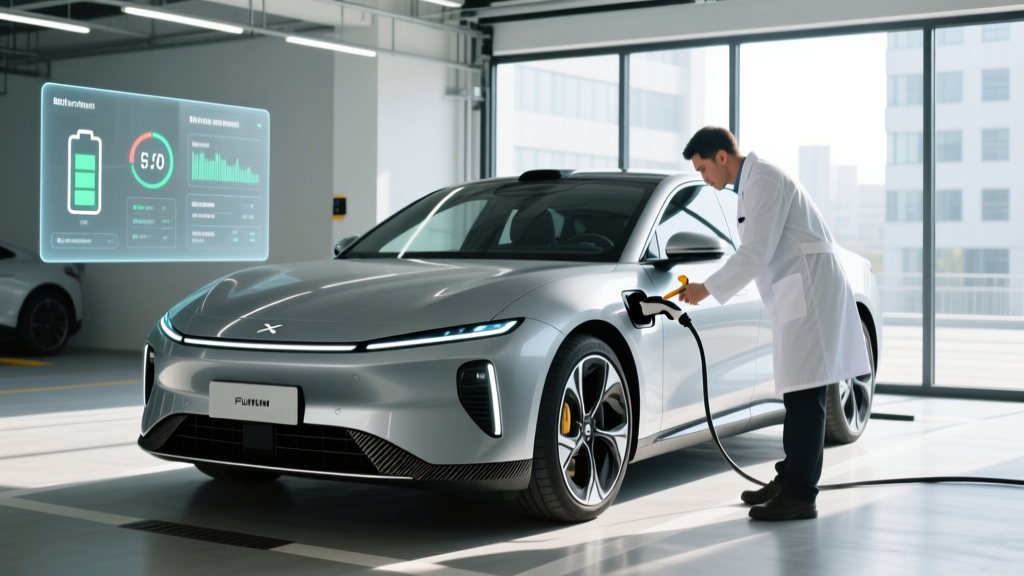
Dealerships remain the primary option for warranty-covered repairs, high-voltage system diagnostics, battery health checks, and software-related issues. Every major EV brand (Tesla, Hyundai, Kia, Ford, Chevrolet, BMW, Rivian, etc.) has factory-trained EV technicians at authorized service centers. For anything touching the battery pack, inverter, onboard charger, or electric motor, you'll almost certainly need a dealer.
Independent mechanics are increasingly capable of handling basic EV maintenance — tire rotations, brake fluid, cabin filters, wiper replacement, suspension work, and 12V battery swaps. However, many independents still lack high-voltage safety certification and the proprietary diagnostic software required for deeper EV repairs. According to the Bureau of Labor Statistics, the number of technicians trained in high-voltage EV systems is growing but still a fraction of the total mechanic workforce.
Mobile service is expanding. Tesla's Ranger program, Rivian's mobile service fleet, and Ford's mobile service vans can handle many common repairs (12V battery, cabin filter, firmware, minor body work) at your home or workplace. This is a genuine convenience advantage that many legacy gas-car brands don't offer.
Practical tip: Before buying, check how many authorized EV service centers exist within 30 miles of your home. In rural areas or smaller metro markets, the nearest qualified EV technician could be 60+ miles away — a real consideration if something goes wrong outside warranty.
Battery and Powertrain Warranty: Your Biggest Protection
The single most expensive component in any EV is the high-voltage traction battery. Replacement costs range from $5,000–$8,000 for smaller packs (Chevrolet Bolt EV) to $12,000–$20,000+ for large packs (Ford F-150 Lightning Extended Range, Tesla Model S). This is the nightmare scenario that keeps potential buyers up at night — but federal warranty requirements provide substantial protection.
By law, all EVs sold in the U.S. must carry a minimum battery and powertrain warranty of 8 years / 100,000 miles (whichever comes first). In California Air Resources Board (CARB) states — which include California, New York, Massachusetts, Oregon, Washington, and several others — that requirement extends to 10 years / 150,000 miles. These warranties cover battery capacity degradation below a defined threshold, typically 70% of original capacity.
| Vehicle | Battery Warranty | Capacity Threshold | Battery Chemistry |
|---|---|---|---|
| Tesla Model 3 (Standard Range) | 8 yr / 100,000 mi | 70% | LFP |
| Tesla Model Y (Long Range) | 8 yr / 120,000 mi | 70% | NMC |
| Hyundai Ioniq 5 | 10 yr / 100,000 mi | 70% | NMC |
| Chevrolet Equinox EV | 8 yr / 100,000 mi | 60% | NMC |
| Ford F-150 Lightning | 8 yr / 100,000 mi | 70% | NMC |
| BMW i4 | 8 yr / 100,000 mi | 70% | NMC |
Real-world degradation data is reassuring. Large-scale fleet studies by Recurrent Auto and Geotab show that modern EV batteries (2020 and newer) typically lose only 5–10% of capacity over the first 100,000 miles. LFP (lithium iron phosphate) batteries, used in the Tesla Model 3 Standard Range and some BYD models, show even slower degradation and tolerate regular 100% charging without harm. Catastrophic battery failure requiring full replacement is rare — well under 1% of vehicles in most datasets.
Common EV Service Myths vs Facts
| Myth | Fact |
|---|---|
| "EV batteries need replacing every 5–8 years, like a phone." | Modern EV batteries are engineered for 200,000+ mile lifespans. Most lose less than 10% capacity over 100,000 miles. The 8-year/100,000-mile federal warranty protects against abnormal degradation. |
| "EVs are maintenance-free." | EVs need tire rotations, brake fluid checks, cabin filters, coolant service, and 12V battery replacement. Maintenance is reduced, not eliminated. |
| "Any mechanic can service an EV." | High-voltage systems (400V–800V) require specialized training, insulated tools, and manufacturer diagnostic software. Many independents can handle basic maintenance but not powertrain repairs. |
| "Regenerative braking means you never need new brake pads." | Regen dramatically extends pad life (often 80,000–100,000+ miles), but pads and rotors still wear eventually, especially in hilly terrain or with aggressive driving. |
| "EV insurance is always much more expensive." | EV insurance premiums are often 10–25% higher than comparable gas cars due to higher repair costs after collisions and higher vehicle MSRP. But the gap is narrowing as EV prices drop and more body shops gain EV repair certification. |
| "Cold weather will destroy the battery." | Cold weather temporarily reduces range by 15–30% (due to battery chemistry and cabin heating demands), but it does not cause permanent damage. Battery preconditioning and garage parking mitigate the effect. |
Total Ownership Costs: EV vs Gas Over 5 Years
Maintenance savings alone don't tell the full story. Let's look at a concrete five-year total cost of ownership (TCO) comparison using a popular EV and its gas equivalent, both driven 15,000 miles/year:
| Cost Category | Ioniq 5 SE (BEV) | Tucson SEL (Gas AWD) |
|---|---|---|
| MSRP (2026 base) | $42,600 | $33,500 |
| Federal tax credit (§30D) | −$3,750 to $7,500* | $0 |
| Effective purchase price | $35,100–$38,850 | $33,500 |
| Fuel / electricity (5 yr) | $2,800–$4,500** | $7,500–$9,000 |
| Maintenance (5 yr) | $2,000–$3,500 | $4,000–$6,000 |
| Insurance (5 yr) | $8,500–$10,500 | $7,000–$8,500 |
| Depreciation (est.) | $16,000–$20,000 | $14,000–$17,000 |
| Estimated 5-Year Total | $64,400–$77,350 | $66,000–$74,000 |
* §30D credit eligibility depends on MSRP caps, buyer income limits, battery sourcing requirements, and point-of-sale transfer rules. Verify current eligibility at IRS.gov or consult a tax professional.
** Electricity cost assumes a mix of 80% home charging at $0.14/kWh and 20% DC fast charging at $0.35–$0.48/kWh. Gas cost assumes $3.40/gallon at 28 MPG combined. See fueleconomy.gov for vehicle-specific efficiency data.
The takeaway: at current prices, an EV and a comparable gas car are often within a few thousand dollars of each other over five years. The EV wins on fuel and maintenance but typically costs more upfront (even after credits) and carries higher insurance and depreciation. The math tips further in the EV's favor if you can charge mostly at home on cheap utility rates, if you qualify for the full federal credit, and if you plan to keep the car beyond five years (when gas-car repair costs escalate sharply).
Decision Framework: Should You Buy an EV Based on Service and Cost?
Choose a BEV if:
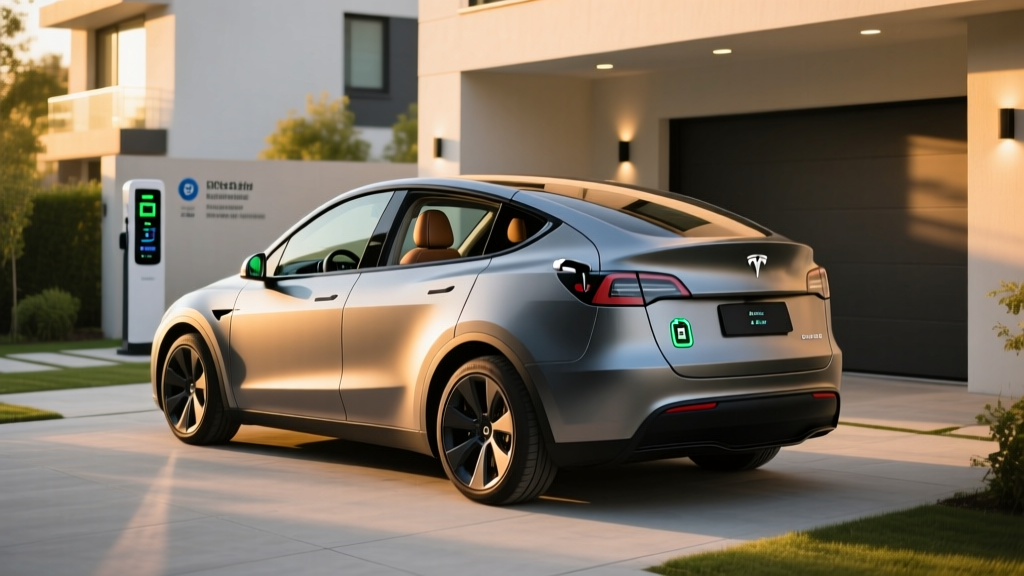
- You have access to Level 2 home charging (a 240V outlet or installed charger) — this is the single biggest predictor of EV satisfaction
- You drive 10,000–20,000 miles/year, maximizing fuel savings
- You live in an area with authorized EV service centers within 30 miles
- You want to minimize routine maintenance visits and never pay for an oil change again
- You qualify for the §30D federal tax credit (income ≤ $150K single / $300K joint, vehicle MSRP under cap, battery sourcing compliant)
- You plan to own the vehicle 5+ years to absorb the higher upfront cost
Choose a hybrid (HEV) or plug-in hybrid (PHEV) if:
- You lack reliable home or workplace charging access
- You frequently drive 300+ mile routes through areas with sparse DC fast-charging infrastructure
- You live in extreme cold climates (below 0°F regularly) where BEV range loss is most pronounced
- You want lower upfront cost and don't want to worry about battery warranty expiration
- You drive very low annual miles (<6,000), where fuel savings won't offset the EV price premium
Wait or reconsider if:
- Your only charging option is a standard 120V outlet (Level 1) and you drive more than 40 miles/day — Level 1 adds only ~3–5 miles of range per hour of charging
- You cannot find a qualified EV service center within reasonable distance
- Your budget cannot absorb the higher insurance premiums typical of EVs (get quotes before buying)
Frequently Asked Questions
How often does an electric car need to be serviced?
Most manufacturers recommend a basic inspection every 10,000–15,000 miles or once per year. This typically covers tire rotation, cabin air filter replacement, brake fluid check, and a general multi-point inspection. This is roughly half the service frequency of a gas car, which typically needs attention every 5,000–7,500 miles for oil changes alone.
Can I service my EV at any mechanic?
For basic maintenance — tire rotations, wiper replacement, cabin filters, brake fluid — many independent shops can handle it. For anything involving the high-voltage battery, electric motor, inverter, or onboard charger, you'll need a dealership or an independent shop with certified high-voltage technicians. Always confirm a shop's EV capabilities before scheduling.
What happens if the EV battery fails after the warranty expires?
Full battery replacement costs $5,000–$20,000+ depending on the vehicle and pack size. However, data from Geotab and Recurrent Auto shows that complete battery failure is rare (under 1% of vehicles). More commonly, batteries degrade gradually — losing 10–15% capacity over 150,000 miles — which reduces range but doesn't strand the vehicle. Some third-party shops now offer module-level battery repair (replacing individual degraded cells or modules rather than the entire pack) for $2,000–$5,000.
Do EVs need emissions testing?
No. Battery-electric vehicles have zero tailpipe emissions and are exempt from state emissions inspections in every U.S. jurisdiction. This saves $20–$50 per year in states that require annual testing, plus the time and inconvenience.
Is it more expensive to insure an electric car?
On average, EV insurance premiums run 10–25% higher than comparable gas vehicles. The reasons: higher repair costs after collisions (specialized parts, high-voltage safety protocols, fewer certified body shops), and higher vehicle MSRPs. However, some insurers now offer EV-specific discounts. Always get quotes from at least three insurers before purchasing to understand your actual cost.
Do electric cars last as long as gas cars?
There is no inherent reason an EV should have a shorter lifespan than a gas car. The electric motor has far fewer wear components than an internal combustion engine. The limiting factor is typically the battery — but with modern chemistries and thermal management, most EV batteries are engineered to retain 70%+ capacity at 200,000 miles. Many early Tesla Model S vehicles have exceeded 200,000 miles on their original battery packs. The vehicle's body, suspension, and interior will age the same as any car.