Quick Answer: What Is the Electric SEAT Car?
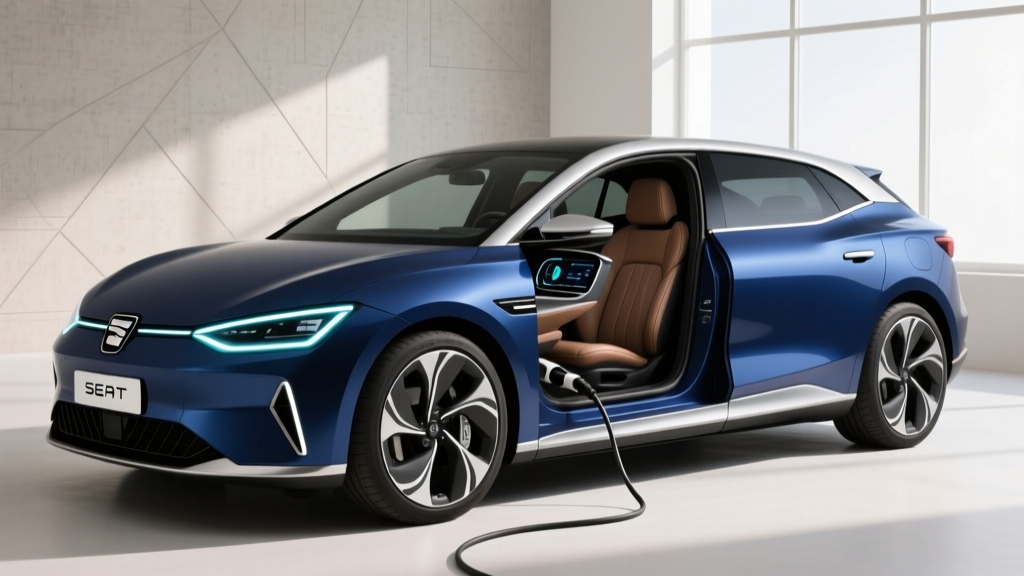
The electric SEAT car most buyers search for is the SEAT el-Born, a compact EV built on Volkswagen Group's MEB platform. Originally announced under the SEAT brand, it was repositioned to Cupra (SEAT's performance sub-brand) as the Cupra el-Born and later evolved into the Cupra Born. If you're in a market where SEAT vehicles are sold (primarily Europe, UK, and select international markets), the Cupra Born is the production electric hatchback you can buy today. It offers up to 335 miles WLTP (~280 miles EPA-equivalent), DC fast charging up to 125 kW, and a starting price around €39,000–£35,000 depending on market and trim.
US buyers: SEAT/Cupra does not sell vehicles in the United States. If you're searching from the US, consider the mechanically similar Volkswagen ID.4 or the Hyundai Ioniq 5 as alternatives on similar platforms.
SEAT / Cupra Born: The Electric Hatchback Explained
When enthusiasts and shoppers type "electric Seat car" into search engines, they're almost always looking for the compact electric hatchback that SEAT developed on VW's MEB (Modularer E-Antriebs-Baukasten) platform. The concept debuted as the SEAT el-Born in 2020, but Volkswagen Group ultimately shifted the production model to the Cupra brand for a sportier positioning. The result: the Cupra Born, which has been on sale since late 2021 and received a refresh for the 2025–2026 model years.
This matters because SEAT itself has pivoted away from developing new standalone models, with the Cupra brand absorbing the more dynamic, electrified offerings. If you walk into a SEAT dealership in Spain, Germany, or the UK asking for an electric car, you'll be pointed to the Cupra Born—or to the SEAT MÓ, which is an electric scooter, not a car.
| Specification | 58 kWh Battery | 77 kWh Battery |
|---|---|---|
| Usable Battery Capacity | 58 kWh (NMC) | 77 kWh (NMC) |
| WLTP Range | 264 mi (425 km) | 335 mi (540 km) |
| Estimated EPA-Equivalent Range | ~220 mi | ~280 mi |
| Motor Output | 201 hp (150 kW) / 231 hp with e-Boost | 228 hp (170 kW) |
| 0–62 mph (0–100 km/h) | 7.3 sec (6.6 sec e-Boost) | 7.0 sec |
| DC Fast Charge (peak) | 100 kW | 125 kW |
| 10–80% DC Charge Time | ~35 min | ~35 min |
| AC Level 2 Charging | 11 kW (3-phase) | 11 kW (3-phase) |
| Starting Price (UK/EU) | ~£35,000 / €39,000 | ~£41,000 / €45,000 |
| Battery Warranty | 8 years / 100,000 mi (160,000 km), 70% capacity retention | |
Note: WLTP range figures are typically 10–20% higher than EPA estimates. Real-world highway range at 70 mph will be lower still—expect roughly 200 miles from the 58 kWh pack and 250 miles from the 77 kWh pack in mixed driving, with 15–25% loss in freezing temperatures.
How the Cupra Born Compares to a Gas Hatchback
The natural cross-shop for the Cupra Born is a premium gas hatchback like the Volkswagen Golf GTI or the Ford Focus ST (where still available). Here's how the economics and driving experience stack up over a typical 5-year / 60,000-mile ownership period.
| Category | Cupra Born 77 kWh | VW Golf GTI 2.0T |
|---|---|---|
| Purchase Price (approx.) | €45,000 | €42,000 |
| Fuel/Energy Cost (60k mi) | ~€3,600 (home charging at €0.30/kWh) | ~€7,200 (at €1.70/L, 35 MPG) |
| Maintenance (5 yr) | ~€800 (brake pads, cabin filter, fluid top-offs) | ~€2,800 (oil changes, spark plugs, brake wear) |
| Insurance (avg. annual) | ~€900/yr | ~€850/yr |
| Estimated Depreciation (5 yr) | ~45% | ~40% |
| Total 5-Year Cost | ~€53,900 | ~€58,100 |
The Born costs more upfront but recoups the difference through dramatically lower energy and maintenance expenses. The break-even point typically arrives around year 3–4 for a driver covering 12,000 miles annually with home charging access. If you rely entirely on public DC fast charging at €0.50–0.60/kWh, your energy costs nearly double, extending the payback period.
Real-World Charging: What You Need to Know
The Cupra Born's charging performance is competent but not class-leading. Here's what ownership actually looks like:
Home Charging (Level 2 / AC)
With an 11 kW onboard charger (3-phase AC, common in European homes), the 77 kWh battery charges from empty to full in roughly 7.5 hours. If your home has single-phase power, you're limited to 7.2 kW, pushing a full charge to about 11 hours—still fine for overnight top-ups.
Installation cost for a home wallbox (e.g., Wallbox Pulsar Max or Easee Home) typically runs €500–€1,200 including the unit and electrician labor, depending on whether your electrical panel needs an upgrade.
Public DC Fast Charging
The Born peaks at 125 kW on the 77 kWh model. However, that peak is sustained only between roughly 10–40% state of charge. Above 60%, the charge curve tapers significantly—dropping to ~50 kW by 80%. This means a 10–80% session takes about 35 minutes, but pushing from 80–100% adds another 25+ minutes. On a road trip, plan your stops around 10–80% charges and skip the temptation to top off to full unless you're stopping overnight.
Real-World Range Reality Check
WLTP sticker: 335 miles (540 km) for the 77 kWh model.
Real-world mixed driving (68°F / 20°C): ~280 miles (450 km).
Highway at 75 mph (120 km/h): ~240 miles (385 km).
Winter highway (32°F / 0°C): ~200 miles (320 km) due to cabin heating demand and increased battery resistance.
The Born uses a resistive PTC heater rather than a heat pump in most trims, which hurts winter efficiency. If cold-weather range matters to you, a heat pump (available as an option or standard on some trims in Nordic markets) can recover 10–15% of that winter loss.
Common Misconceptions About the Electric SEAT Car
| Myth | Fact |
|---|---|
| "SEAT makes an electric car called the el-Born you can buy today." | The el-Born concept was rebranded to Cupra Born for production. SEAT no longer sells it under its own badge. |
| "The range is 335 miles, so I'll get that every day." | WLTP is optimistic. Expect 240–280 real-world miles depending on speed, temperature, and terrain. Source: EV Database real-world testing. |
| "It charges at 125 kW, so a full charge takes 35 minutes." | 125 kW is the peak rate, sustained only briefly. The average rate over a 10–80% session is closer to 80–90 kW. Charging slows dramatically above 80%. |
| "Electric cars need no maintenance." | Lower maintenance, yes—no oil changes or spark plugs. But tires wear 15–20% faster due to instant torque and heavier weight, cabin filters need replacement, and brake fluid still requires periodic flushing. |
| "I can get the US $7,500 tax credit." | The Cupra Born is not sold in the US and is not eligible for the IRS §30D federal tax credit. European buyers should check local incentives (e.g., Spain's MOVES III plan, UK plug-in grants if applicable). |
Who Should Buy the Cupra Born (and Who Shouldn't)
Decision Framework: Is the Cupra Born Right for You?
Choose the Cupra Born if:
- You live in Europe or the UK and want a sporty compact EV with VW Group MEB reliability.
- Your daily commute is under 100 miles and you can charge at home overnight.
- You value a premium-feeling interior and engaging driving dynamics over maximum range.
- You want a hatchback form factor (easier parking, practical cargo space of ~385 liters / 13.6 cu ft).
Look elsewhere if:
- You're in the US—SEAT/Cupra has no US presence. Consider the VW ID.4 (same MEB platform), Hyundai Ioniq 5, or Chevrolet Equinox EV.
- You regularly drive 300+ miles between charges in cold weather—the 77 kWh pack's real-world winter range of ~200 miles may leave you short.
- You need fast DC charging for frequent road trips—competitors like the Hyundai Ioniq 5 (peak 240 kW, 10–80% in ~18 min) or Tesla Model 3 (peak 250 kW) outperform the Born significantly.
- You need a family-sized vehicle—the Born is a compact hatchback, not a crossover. The Cupra Tavascan (MEB-based SUV, launching 2025–2026) may be a better fit.
First-Time EV Buyer Checklist for the Born
If the Cupra Born is your first electric car, here's what to verify before signing:
- Home charging access: Do you have a garage, driveway, or dedicated parking spot with electrical access? A standard Schuko outlet (2.3 kW) adds ~60 miles overnight—adequate for short commutes but slow for the 77 kWh pack. A wallbox is strongly recommended.
- Electrical panel capacity: Older European homes may have 40–63 amp main service. An 11 kW 3-phase charger draws 16 amps per phase—confirm with a licensed electrician that your panel can handle this alongside existing loads.
- Local incentives: Check current national and regional EV subsidies. In Spain, the MOVES IV plan may offer up to €7,000 off the purchase price when scrapping an old vehicle. In the UK, check for salary-scheme tax benefits (BIK rate of 2% for EVs).
- Insurance quotes: Get quotes before purchasing. EV insurance can run 10–20% higher than equivalent gas cars due to repair cost structures and battery replacement risk.
- Tire budget: EV-specific tires (e.g., Michelin Pilot Sport EV, Continental EcoContact 6 Q) cost €150–€250 per corner and may need replacement at 20,000–30,000 miles due to the Born's 1,800+ kg curb weight and instant torque delivery.
- Charging network apps: Download and register for the networks in your area (Ionity, Shell Recharge, Allego, or local providers) before your first road trip. Verify CCS2 connector compatibility—the Born uses the European CCS2 standard.
Bottom Line: The Electric SEAT Car in 2026
The Cupra Born is a genuinely good compact EV that answers the "electric SEAT car" question with a practical, engaging hatchback. Its MEB underpinnings give it solid build quality and access to VW Group's parts and service network across Europe. The 77 kWh model's real-world range of ~280 miles covers most daily needs comfortably, and home charging keeps running costs a fraction of a gas equivalent.
Its weaknesses are honest ones: DC charging speed lags behind Korean competitors, winter range drops noticeably without a heat pump, and the SEAT brand itself no longer sells it. For US-based readers who found this page searching for an electric SEAT, the Volkswagen ID.4 or ID.3 (if it ever reaches US shores) shares the same DNA with local availability and service infrastructure.
Frequently Asked Questions
Does SEAT make an electric car in 2026?
SEAT as a brand has shifted focus away from new vehicle development. The electric hatchback originally conceived as the SEAT el-Born is sold as the Cupra Born. SEAT dealerships typically sell and service Cupra models alongside remaining SEAT combustion models. The SEAT MÓ electric scooter exists but is not a car.
What is the real-world range of the Cupra Born?
The 77 kWh model achieves approximately 280 miles (450 km) in mixed real-world driving at moderate temperatures. Highway-only driving at 75 mph drops this to ~240 miles, and winter conditions (freezing temperatures) can reduce range to ~200 miles. The smaller 58 kWh model delivers roughly 220 miles mixed, scaling down proportionally.
How long does it take to charge the Cupra Born at home?
With an 11 kW 3-phase wallbox, the 77 kWh battery charges from empty to full in about 7.5 hours. On single-phase 7.2 kW power, expect roughly 11 hours. A standard household outlet (2.3 kW) would take over 33 hours—only practical for emergency top-ups or very low daily mileage.
Can I buy the Cupra Born in the United States?
No. Neither SEAT nor Cupra sells vehicles in the US market. The closest mechanical equivalent available in the US is the Volkswagen ID.4, built on the same MEB platform. The VW ID.4 offers up to 275 miles EPA range, DC fast charging up to 175 kW, and starts around $39,735 (2026 model year), potentially eligible for partial federal tax credit depending on battery sourcing and buyer income per IRS §30D rules.
Is the Cupra Born eligible for any tax credits or incentives?
It is not eligible for the US federal §30D tax credit since it's not sold in the US. European incentives vary by country: Spain's MOVES plan, Germany's now-discontinued Umweltbonus (ended 2023), France's bonus écologique (income-dependent, up to €4,000), and UK company-car BIK tax advantages all affect the net cost differently. Always check current government sources, as incentive programs change frequently.
How does the Cupra Born compare to the Tesla Model 3?
The Model 3 offers more range (~340 miles EPA for Long Range), significantly faster DC charging (250 kW peak, 10–80% in ~15 min), and access to the Supercharger network. The Born counters with a hatchback body style (more practical cargo loading), a more traditional interior layout, and often lower purchase prices in European markets. Performance is comparable in daily driving; the Model 3 wins on road-trip charging convenience.