Quick Verdict: What You Need to Know About the Scout Electric Truck
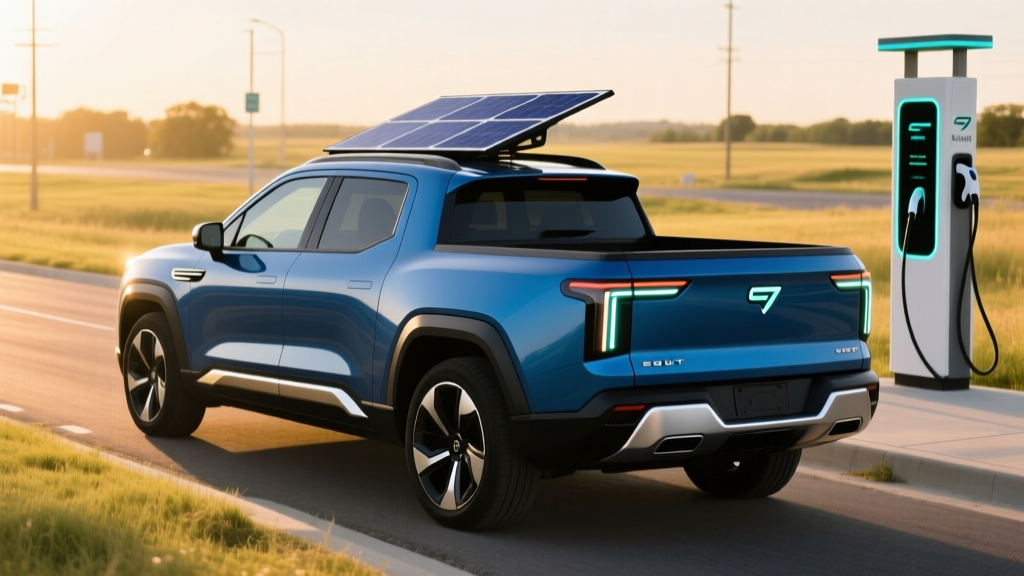
The Scout Terra (truck) and Scout Travelator (SUV) are all-electric, body-on-frame vehicles built by the revived International Harvester Scout brand under Volkswagen Group. As of early 2026, these vehicles are announced but not yet in customer hands — production is expected to begin at the new Blythewood, South Carolina plant, with first deliveries targeted for late 2026 or early 2027. All specs below are preliminary and subject to change.
What we know so far: Scout is targeting approximately 350 miles of EPA-estimated range (with an optional range-extender engine pushing total range beyond 500 miles), a starting price around $50,000 before incentives, standard all-wheel drive, and a direct-to-consumer sales model with a $100 refundable reservation.
If you're evaluating the Scout electric truck against established competitors like the Ford F-150 Lightning, Rivian R1T, or Chevrolet Silverado EV, the Scout Terra occupies a unique niche: a rugged, heritage-styled truck aimed at outdoor and overlanding use cases rather than pure work-truck duty or luxury-EV positioning. But before you place a reservation — or decide to wait — let's break down the numbers, the ownership economics, and the real-world considerations that spec sheets don't tell you.
Scout Terra Preliminary Specs: Range, Battery & Charging
Scout Motors has been deliberately measured in releasing hard technical specifications. What we have so far comes from official previews and executive statements. Here's the current data:
| Specification | Scout Terra (Preliminary) |
|---|---|
| Estimated EPA Range | ~350 miles (BEV); 500+ miles (with range extender) |
| Battery Chemistry | Not yet confirmed (likely NMC given range targets) |
| Usable Battery Capacity | Not yet disclosed |
| Max DC Fast Charge Rate | Not yet disclosed |
| Level 2 Charging | Not yet disclosed |
| Drivetrain | Standard AWD (dual motor) |
| 0-60 mph | Targeting under 6.0 seconds |
| Towing Capacity | Targeting 10,000+ lbs |
| Payload | Not yet disclosed |
| Starting MSRP | ~$50,000 (before incentives) |
| Body-on-Frame | Yes |
| Range Extender Option | Gasoline engine (series hybrid, EREV-style) |
Real-World Range Reality Check: The ~350-mile EPA target is promising, but real-world highway driving at 75 mph typically reduces range by 15-20% for body-on-frame trucks due to aerodynamic drag. Expect roughly 280-300 miles of usable highway range in mild weather. In cold climates (below 30°F), add another 20-30% reduction — meaning a Wyoming winter road trip could yield as little as 200-220 miles between charges. The optional range extender is Scout's hedge against this reality.
How the Scout Terra Compares to Gas Trucks and EV Rivals
The Scout electric truck doesn't exist in a vacuum. Buyers cross-shopping this vehicle are likely also considering the Ford F-150 Lightning, Rivian R1T, Chevrolet Silverado EV, and — for those not committed to electric — the Toyota Tacoma Hybrid or Ford Ranger. Here's how the numbers stack up:
| Attribute | Scout Terra (Est.) | Ford F-150 Lightning (2025) | Rivian R1T (Dual) | Chevy Silverado EV (4WT) |
|---|---|---|---|---|
| EPA Range | ~350 mi | 240-320 mi | 270-410 mi | 380-440 mi |
| Starting Price | ~$50,000 | ~$55,000 | ~$70,000 | ~$55,000 |
| Towing | 10,000+ lbs | 7,700-10,000 lbs | 11,000 lbs | 8,000-12,500 lbs |
| 0-60 mph | <6.0 sec | ~4.0-5.5 sec | ~4.5 sec | ~4.5-5.5 sec |
| Sales Model | Direct-to-consumer | Dealership | Direct-to-consumer | Dealership |
| Range Extender | Available (EREV) | No | No | No |
The Scout's most distinctive feature is the optional range extender — a small gasoline engine that acts as a generator to recharge the battery, similar to the EREV (extended-range electric vehicle) concept used by the Chevrolet Volt years ago and currently employed by the Ram 1500 REV. This positions the Terra as a bridge vehicle for buyers who want electric daily driving but aren't confident in public charging infrastructure for long hauls.
| Factor | Scout Terra (BEV) | Toyota Tacoma TRD (Gas) |
|---|---|---|
| Fuel/Energy Cost per Mile | ~$0.04-$0.06 (home charging) | ~$0.14-$0.18 (at $3.50/gal, 20 MPG) |
| Annual Fuel/Energy (15k mi) | ~$600-$900 | ~$2,100-$2,700 |
| Maintenance (Annual Est.) | ~$200-$400 | ~$600-$1,000 |
| Oil Changes | None | 2-3 per year |
| Emissions | Tailpipe: zero; upstream varies | ~4.6 tons CO₂/year |
Total Cost of Ownership: What the Scout Electric Truck Actually Costs
Sticker price is only the beginning. Here's a realistic 5-year ownership projection based on the preliminary $50,000 starting price, assuming 15,000 miles per year, home Level 2 charging, and national-average electricity rates of $0.16/kWh:
| Cost Category | Scout Terra (5-Year Est.) | Gas Truck (5-Year Est., ~$45k) |
|---|---|---|
| Purchase Price (base) | $50,000 | $45,000 |
| Federal Tax Credit (§30D) | Up to $7,500 (see eligibility below) | $0 |
| Effective Purchase | ~$42,500 | $45,000 |
| Energy/Fuel (5 yrs, 75k mi) | ~$3,000-$4,500 | ~$10,500-$13,500 |
| Maintenance (5 yrs) | ~$1,000-$2,000 | ~$3,000-$5,000 |
| Insurance (5 yrs, est.) | ~$12,000-$15,000 | ~$9,000-$12,000 |
| Estimated 5-Year Total | ~$58,500-$64,000 | ~$67,500-$75,500 |
Key takeaway: Even with a slightly higher purchase price and elevated insurance premiums (common for new EV brands and body-on-frame trucks), the Scout Terra's energy and maintenance savings are substantial — potentially $8,000-$15,000 over five years. The math improves further if you have rooftop solar or access to off-peak electricity rates below $0.10/kWh.
Federal Tax Credit: Do You Qualify for §30D?
The IRS §30D Clean Vehicle Credit can reduce your federal tax liability by up to $7,500, or be transferred to the dealer at point of sale as an upfront discount. But eligibility is not automatic. Here's the 2026 checklist:
- MSRP Cap: Trucks, vans, and SUVs must have an MSRP of $80,000 or less. The Scout Terra at ~$50,000 base should qualify, but loaded trims could push past the cap.
- Buyer Income Limits: Modified adjusted gross income (MAGI) must not exceed $300,000 (joint filers), $225,000 (head of household), or $150,000 (individual).
- Battery Sourcing: The battery must meet critical-mineral and battery-component requirements that phase in more strictly each year. Scout's VW Group supply chain must comply — this is not guaranteed for a new brand in its first model year.
- Final Assembly: Must occur in North America. Scout's South Carolina plant satisfies this requirement.
- Point-of-Sale Transfer: You can transfer the credit to the seller at purchase, effectively reducing your out-of-pocket cost even if you have no tax liability.
Critical caveat: Because Scout Motors is a new manufacturer, the IRS must formally certify the Terra's eligibility. Do not assume the credit applies until the vehicle appears on the official fueleconomy.gov qualified vehicle list. Always consult a tax professional before making financial decisions based on the credit.
Real-World Ownership: What First-Time EV Truck Buyers Must Know
Home Charging Is Non-Negotiable for Cost Savings
The $0.04-$0.06/mile energy cost above assumes Level 2 home charging. If you rely exclusively on public DC fast charging (average $0.35-$0.50/kWh in 2026), your per-mile cost jumps to $0.10-$0.15 — still cheaper than gas, but the savings gap narrows significantly. Budget $800-$2,000 for a home Level 2 charger installation (240V, 40-48 amp circuit). If your home electrical panel needs an upgrade to 200A, add $1,500-$3,000.
Cold Weather Hits Trucks Hard
Body-on-frame trucks have poor aerodynamics and large frontal areas, compounding cold-weather range loss. If you live in the northern tier (Minnesota, Montana, New England), plan for 25-35% range reduction in winter. The Scout Terra's range-extender option is specifically designed for this scenario — the gas engine can provide cabin heat without draining the battery, a significant advantage over pure BEVs in sub-freezing conditions.
Charging Infrastructure Gaps Remain Real
While the NREL Alternative Fuels Station Locator shows continued DC fast-charger growth, rural corridors — exactly where truck buyers drive — still have significant gaps. Scout's range-extender option directly addresses this. If your typical routes include I-80 through Wyoming, US-50 through Nevada, or rural stretches of the Pacific Northwest, the EREV configuration is worth the added cost and complexity.
Insurance Will Be Higher
New EV brands, high-repair-cost body structures, and truck classification all push insurance premiums upward. Expect to pay 20-40% more than a comparable gas truck. Get quotes before ordering. Companies like State Farm, GEICO, and Progressive have varying EV discount programs — shop around.
Common Misconceptions About the Scout Electric Truck
| Myth | Fact |
|---|---|
| "Scout is made by Tesla" | Scout Motors is a subsidiary of Volkswagen Group, reviving the International Harvester Scout nameplate. It has no connection to Tesla. |
| "The $50,000 price means everyone gets the $7,500 credit" | The §30D credit depends on buyer income, battery sourcing compliance, and MSRP. Scout must be certified by the IRS, and loaded trims may exceed the $80,000 MSRP cap. |
| "350 miles of range means 350 miles anywhere" | Highway driving at 75 mph, cold weather, towing, and payload all reduce range substantially. Expect 250-300 real-world highway miles in mild conditions. |
| "The range extender makes it a hybrid" | It's an EREV (extended-range EV). The gas engine generates electricity — it does not drive the wheels directly. The truck always drives on electric motors. |
| "I can buy one at a VW dealership" | Scout uses a direct-to-consumer sales model, similar to Tesla and Rivian. Orders are placed through Scout's own platform, not VW dealers. |
Decision Framework: Should You Reserve a Scout Electric Truck?
Reserve the Scout Terra if:
- You want an electric truck with rugged, overlanding-oriented styling and genuine off-road capability
- You have home Level 2 charging (or can install it)
- Your daily driving is under 200 miles round-trip, with occasional longer trips covered by the range extender
- You're comfortable being an early adopter of a brand-new manufacturer with no service track record
- The $100 refundable reservation fee is low-risk for you
Wait or choose a competitor if:
- You need a truck now — Scout deliveries are not expected until late 2026 or early 2027
- You require proven long-term reliability data and an established service network
- You tow heavy loads frequently — towing cuts EV range by 30-50%, and the Terra's real-world towing range is unproven
- You live in an apartment or lack access to any form of home or workplace charging
- You're counting on the $7,500 tax credit and Scout's battery sourcing hasn't been IRS-certified by your purchase date
Frequently Asked Questions
When will the Scout Terra actually be available to buy?
Scout Motors targets production start at its Blythewood, SC facility in late 2026, with customer deliveries following shortly after. However, new-automaker production timelines frequently slip. Plan for a realistic delivery window of early-to-mid 2027 and don't make time-sensitive plans around the announced date.
How does the range extender work?
The range extender is a gasoline engine that operates as a generator — it charges the battery pack but does not mechanically drive the wheels. This is the EREV (extended-range electric vehicle) architecture. You still plug in to charge; the gas engine simply extends total range beyond what the battery alone provides, targeting 500+ combined miles.
What charging connector will the Scout Terra use?
Scout Motors has not officially confirmed the connector standard. However, with the industry-wide shift to NACS (North American Charging Standard, the Tesla connector), it is highly likely the Terra will ship with a NACS port, granting access to Tesla Superchargers and the growing NACS-equipped public network.
Is the Scout Terra eligible for the $7,500 federal tax credit?
Potentially, but not guaranteed. The vehicle must be certified by the IRS under §30D rules, including battery-component and critical-mineral sourcing requirements. Scout's VW Group backing helps, but first-year compliance is not assured. Check the IRS qualified vehicles list before finalizing any purchase decision.
How does the Scout Terra compare to the Ford F-150 Lightning?
The F-150 Lightning is a proven, available product with established range (240-320 mi EPA depending on battery), a dealer service network, and known pricing starting around $55,000. The Scout Terra targets a lower starting price (~$50,000) with more range (~350 mi) and an available range extender, but carries new-brand risk and no delivery timeline certainty. If you need a truck today, the Lightning wins. If you can wait and want the range-extender option, the Terra is compelling.
Will Scout have service centers?
Scout Motors has announced plans for a network of service and experience centers, but details on coverage density are sparse. Early adopters in or near South Carolina will likely have the best access. If you live in a state far from planned service locations, factor in the inconvenience and potential travel cost for warranty repairs.