The Sam Altman Tesla Deposit Buzz — And Why the 2026 Model Y Still Stands on Its Own
When OpenAI CEO Sam Altman publicly discussed his Tesla deposit in early 2025, it reignited a wave of searches around the phrase "Sam Altman Tesla deposit" and what it signals about Tesla's brand pull among tech leaders. But deposits and celebrity endorsements don't charge your car on a cold January morning or squeeze into a tight parking garage. What matters to real buyers is range, charging speed, interior space, and total cost of ownership.
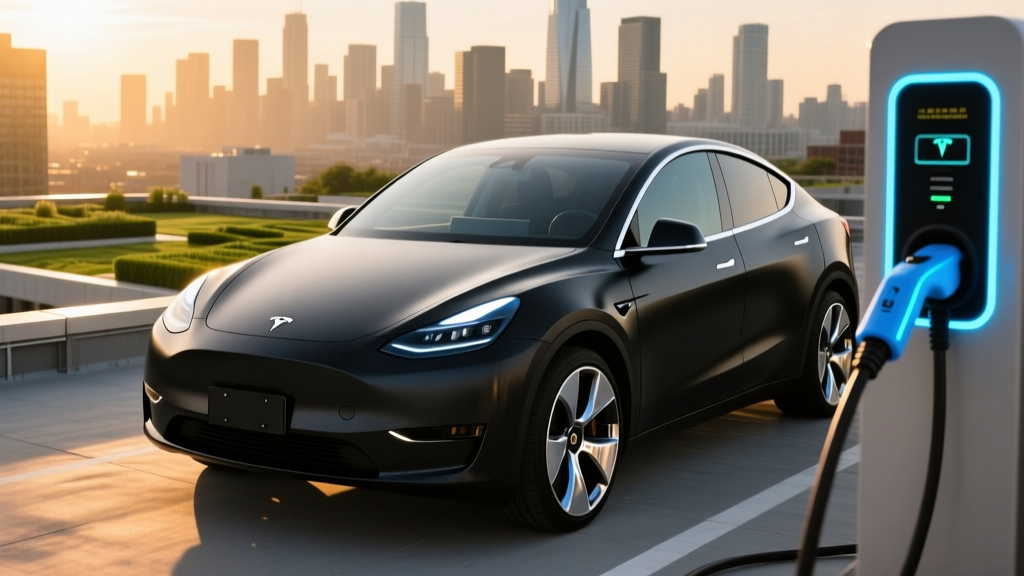
This review examines the 2026 Tesla Model Y — the best-selling EV in the U.S. and one of the vehicles most frequently associated with high-profile tech-figure purchases — using the exact metrics that determine whether it's the right EV for your driveway, not just someone else's social media feed.
2026 Tesla Model Y: Full Spec Sheet at a Glance
| Spec | Value |
|---|---|
| EPA Estimated Range | 320 miles (Long Range AWD) |
| Battery Capacity | ~78 kWh usable (NMC chemistry, 2170 cells) |
| Drivetrain | Dual-motor AWD |
| Horsepower | 384 hp combined |
| 0–60 mph | 4.8 seconds |
| Max DC Fast Charge | 250 kW (V3 Supercharger) |
| 10–80% DC Charge Time | ~27 minutes |
| Level 2 Home Charge Rate | 11.5 kW (~44 mi/hr) |
| MPGe (Combined) | 117 MPGe |
| Efficiency | 28 kWh / 100 mi |
| Cargo Volume (rear seats up) | 30.2 cu ft |
| Cargo Volume (rear seats folded) | 72.1 cu ft |
| Rear Legroom | 36.5 inches |
| Base MSRP (Long Range AWD) | $48,990 |
| Performance Trim MSRP | $53,990 |
| Battery Warranty | 8 years / 120,000 miles |
| Basic Vehicle Warranty | 4 years / 50,000 miles |
Real-World Range: What the EPA Sticker Doesn't Tell You
EPA Estimate: 320 miles (Long Range AWD)
Real-World Expectation:
- City / mixed driving (moderate climate): ~290–310 miles
- Sustained highway (70–75 mph): ~255–275 miles
- Cold weather (below 32°F, highway): ~220–245 miles (25–30% loss)
The 2026 Model Y Long Range AWD carries an EPA-estimated 320 miles of range. That's a competitive figure for a dual-motor crossover, but EPA testing uses moderate speeds and climate-controlled conditions that don't reflect a 75-mph interstate run in February.
In real-world highway testing, the Model Y's aerodynamic drag and the energy demands of all-wheel drive reduce range to roughly 255–275 miles at sustained speeds above 70 mph. Cold weather compounds this: lithium-ion cells lose efficiency below freezing, and cabin heating draws heavily from the pack. Tesla's heat pump helps mitigate this compared to older resistance-heater EVs, but expect a 25–30% range reduction in sub-freezing highway driving.
For daily commuting under 60 miles round-trip, the Model Y's range is more than adequate even in worst-case conditions. For road trips, the Supercharger network largely offsets range limitations — provided you plan stops around V3 or V4 stations.
Charging Speed: DC Fast Charging and Home Setup
| Charging Level | Max Power | Speed (Miles Added) | Notes |
|---|---|---|---|
| Level 1 (120V household) | ~1.4 kW | ~3–4 mi/hr | Emergency/trickle only |
| Level 2 (240V home) | 11.5 kW | ~44 mi/hr | Full charge in ~7 hrs (0–100%) |
| DC Fast (V3 Supercharger) | 250 kW peak | ~162 mi in 15 min | 10–80% in ~27 min |
| DC Fast (V4 Supercharger) | Up to 250 kW | Similar to V3 | Newer stalls, improved cable management |
| CCS Adapter (non-Tesla DCFC) | Up to 250 kW | Varies by station | Requires Tesla CCS adapter (included) |
The Model Y's peak DC fast-charge rate of 250 kW is strong but not class-leading — the Hyundai Ioniq 5 peaks at 350 kW on 800V architecture, and the Porsche Macan EV pushes even higher. However, Tesla's charge curve management is well-optimized: the Model Y sustains above 200 kW through the 10–40% state-of-charge window before tapering. A 10–80% session takes roughly 27 minutes at a V3 Supercharger.
Above 80% SoC, charge speed drops sharply — this is normal for NMC lithium-ion chemistry to protect cell longevity. Don't plan road-trip stops around 100% charges; the last 20% can add 20+ minutes for only ~60 miles of range.
Home charging: With a Wall Connector on a 60-amp circuit (48-amp continuous), the Model Y charges at 11.5 kW, adding about 44 miles per hour. A full overnight charge from 20% to 100% takes roughly 7 hours. Most owners who charge nightly at home rarely visit public chargers except on road trips.
Installation of a 240V/60A circuit typically costs $800–$2,000 depending on panel proximity and local permitting. If your home has a 100-amp main panel, a panel upgrade to 200 amps may be required, adding $1,500–$3,000.
Performance, Efficiency, and Daily Drivability
The Long Range AWD Model Y delivers 384 horsepower from its dual-motor setup, hitting 0–60 mph in 4.8 seconds. That's quick for a family crossover — quicker than most gas-powered competitors in the segment — and the instant torque delivery makes highway merging effortless.
The Performance trim drops the 0–60 time to approximately 3.5 seconds with 455 hp, though at a $5,000 premium and a modest range reduction to ~295 miles EPA.
Efficiency is rated at 117 MPGe combined, or 28 kWh per 100 miles. This is competitive with the Ford Mustang Mach-E (105 MPGe combined for the extended-range AWD) and slightly behind the Hyundai Ioniq 5 AWD (110 MPGe). Tesla's thermal management system — including the octovalve heat pump — contributes to strong cold-weather efficiency relative to competitors still using PTC heaters.
Regenerative braking is aggressive in the Model Y, and Tesla has largely moved to a single-pedal driving default. There is no user-adjustable regen setting in current firmware, which frustrates some buyers transitioning from EVs with customizable regen levels.
Pricing, Tax Credits, and Total Cost
| Trim | Base MSRP | Destination Fee | Federal Credit (§30D) | Effective Price (if eligible) |
|---|---|---|---|---|
| Long Range AWD | $48,990 | $1,390 | Up to $7,500* | ~$42,880 |
| Performance | $53,990 | $1,390 | Up to $7,500* | ~$47,880 |
*Federal tax credit eligibility under IRS §30D depends on multiple factors:
- MSRP cap: SUVs/crossovers must be under $80,000 — the Model Y qualifies.
- Buyer income cap: Modified AGI must not exceed $150,000 (single), $225,000 (head of household), or $300,000 (joint).
- Battery sourcing: Critical minerals and battery component requirements phase in annually. As of 2026, a significant percentage of battery components must be manufactured or assembled in North America, and critical minerals must be sourced from the U.S. or FTA partners. Tesla's shift to U.S.-based LFP and NMC supply chains has kept the Model Y eligible, but verify current-year status on the fueleconomy.gov credit lookup before purchasing.
- Point-of-sale transfer: Since 2024, buyers can transfer the credit to the dealer at purchase, reducing the upfront cost rather than waiting for a tax refund.
State and local incentives vary by jurisdiction. California's CVRP, Colorado's state credit, and utility-company rebates can further reduce cost. Consult your tax professional for personal eligibility.
Interior, Cargo, and Technology
The 2026 Model Y's "Highland 2" refresh (carried over from the 2025 update) brought meaningful improvements: ventilated front seats, ambient lighting, a rear-seat touchscreen, and improved sound insulation. The minimalist interior remains polarizing — no physical stalks (turn signals are on the steering wheel), no instrument cluster, and all controls route through the 15.4-inch center display.
Cargo capacity: 30.2 cu ft behind the second row, expanding to 72.1 cu ft with seats folded. The rear trunk opening is wide and low, making loading easier than many competitors. A small front trunk (frunk) adds ~2.1 cu ft for charging cables or a soft bag.
Rear legroom: 36.5 inches — adequate for adults on shorter trips but tighter than the Hyundai Ioniq 5 (39.4 inches) or Kia EV6 (39.0 inches). The Model Y's panoramic glass roof creates an airy feel but offers no shade panel, which some passengers find uncomfortable in summer.
Infotainment and driver assist: Tesla's software remains best-in-class for responsiveness and over-the-air update frequency. Navigation integrates Supercharger routing with battery preconditioning — the car warms the battery en route to a fast charger, improving charge speed on arrival.
Autopilot comes standard and includes adaptive cruise control and lane centering. Full Self-Driving (Supervised) is a $8,000 add-on (or $99/month subscription). FSD is an SAE Level 2 system — the driver must remain attentive, keep hands ready, and supervise at all times. It is not autonomous driving. Tesla's FSD has improved substantially in city environments, but it remains a driver-assist feature, not a replacement for an engaged driver.
Pros and Cons
Pros
- Access to the Supercharger network — the most reliable and extensive DC fast-charging network in North America
- Strong efficiency (28 kWh/100 mi) with effective heat pump for cold climates
- Class-leading software, OTA updates, and navigation with charge preconditioning
- Competitive 320-mile EPA range for a dual-motor AWD crossover
- Spacious cargo area with practical liftback design
- Federal tax credit eligible (verify current sourcing requirements)
Cons
- Rear legroom is tight for a vehicle in this price class (36.5 in)
- No physical turn-signal stalks — adjustment period for new owners
- 250 kW peak charge rate trails 800V competitors (Ioniq 5 at 350 kW)
- No adjustable regenerative braking setting
- Glass roof lacks a retractable shade
- FSD (Supervised) is expensive and remains Level 2 — not self-driving
Who Should Buy the 2026 Tesla Model Y?
Choose the Model Y if:
- You road-trip frequently and want the most reliable public charging network (Supercharger access is a genuine advantage over CCS-only competitors)
- You value software quality, OTA updates, and integrated navigation with charge routing
- You need a practical AWD crossover with strong cargo space and competitive range
- You can charge at home and want to minimize public-charging dependency for daily use
Look elsewhere if:
- Rear-seat passenger comfort is a priority (Ioniq 5 and EV6 offer more legroom)
- You want the fastest possible DC charging (800V platforms charge 10–80% in ~18 minutes)
- You prefer physical controls, an instrument cluster, or Apple CarPlay/Android Auto (Tesla offers none of these)
- You need three rows of seating (consider the Kia EV9 or Tesla Model X)
Frequently Asked Questions
What is the real-world range of the 2026 Tesla Model Y?
The EPA rates the Long Range AWD at 320 miles. In real-world highway driving at 70–75 mph, expect 255–275 miles. In cold weather below freezing, that drops to approximately 220–245 miles. City and mixed driving in moderate climates yields results closest to the EPA sticker, typically 290–310 miles.
How fast does the Model Y charge at home and on the road?
At home on a 240V/60A Level 2 charger, the Model Y charges at 11.5 kW, adding roughly 44 miles per hour (full charge in ~7 hours). On a V3 Supercharger, it peaks at 250 kW and charges from 10–80% in approximately 27 minutes. Charge speed tapers significantly above 80% SoC.
How much does the Model Y cost after the federal tax credit?
The Long Range AWD starts at $48,990 plus a $1,390 destination fee. If you qualify for the full $7,500 federal credit under §30D (income, MSRP, and battery-sourcing requirements all met), the effective price drops to approximately $42,880. Verify current eligibility on fueleconomy.gov and consult a tax professional.
Does the 2026 Model Y qualify for the $7,500 federal EV tax credit?
As of early 2026, the Model Y qualifies — its MSRP is under the $80,000 SUV cap, and Tesla's North American battery sourcing meets current critical-mineral and component requirements. However, buyer income must not exceed IRS thresholds ($150K single / $300K joint), and sourcing rules tighten annually. Always confirm on the IRS website and fueleconomy.gov before purchasing.
Is the Model Y worth buying over the Hyundai Ioniq 5 or Ford Mustang Mach-E?
The Model Y wins on Supercharger network access, software quality, and cargo practicality. The Ioniq 5 offers faster 800V charging (350 kW peak, ~18 min 10–80%), more rear legroom, and Apple CarPlay. The Mach-E provides a more traditional interior layout and competitive pricing. If public charging reliability on road trips is your top priority, the Model Y's Supercharger advantage is significant. If you charge primarily at home and value rear-seat comfort or faster DC charging, the Ioniq 5 is a strong alternative.
What did the Sam Altman Tesla deposit story actually involve?
Sam Altman's public comments about placing a Tesla deposit circulated widely in tech media and social platforms, driving search interest around the phrase. Whether related to a Cybertruck, Model Y, or future vehicle reservation, the deposit itself doesn't change the Model Y's specs, pricing, or suitability for your needs. Evaluate the vehicle on its engineering merits — range, charging, space, and cost — rather than celebrity purchase signals.
Is Tesla's Full Self-Driving actually self-driving?
No. FSD (Supervised) is an SAE Level 2 driver-assistance system. The driver must remain fully attentive, keep hands available, and supervise the system at all times. It handles many city and highway scenarios impressively but does not replace the driver. Only Level 4 services like Waymo operate without a human driver in defined geographic zones.