Quick Answer: Are Sailun ERange EV Tires Worth It?
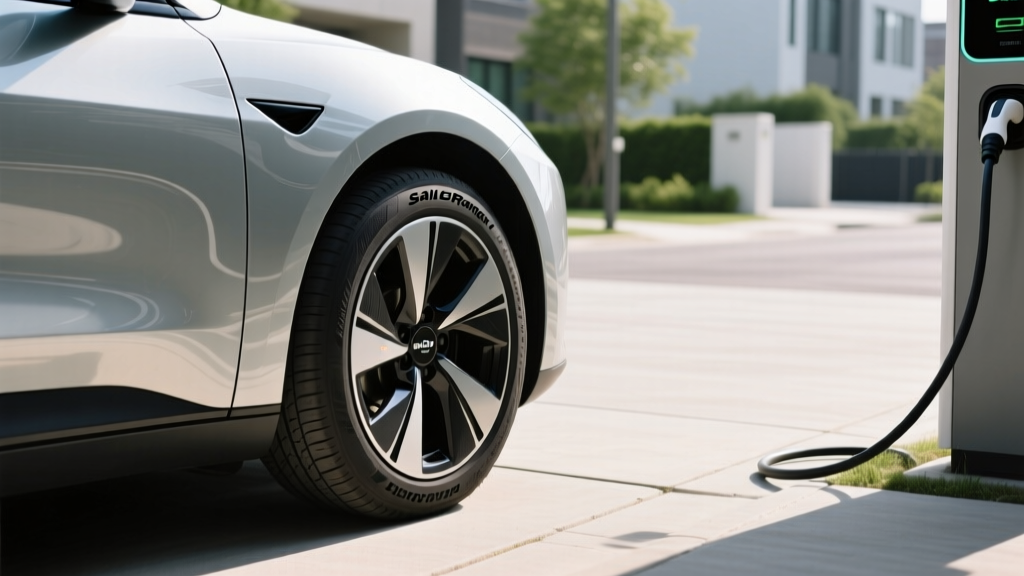
Sailun ERange EV tires are designed specifically for electric vehicles with a focus on low rolling resistance, noise reduction, and higher load capacity to handle EV weight. For most EV owners, switching to a dedicated EV tire like the ERange can yield a 3–7% improvement in efficiency (measured in Wh/mi) compared to standard all-season touring tires, translating to roughly 8–20 extra miles of real-world range on a typical 300-mile EPA-rated EV. At current US average electricity prices (~$0.17/kWh), that efficiency gain saves approximately $40–$90 per year for a driver covering 12,000 miles. The ERange line typically costs $140–$220 per tire depending on size, placing it in the budget-to-mid tier — significantly less than Michelin e.Primacy or Pirelli Elect offerings, which run $250–$350 per tire.
Why EVs Need Different Tires Than Gas Cars
Electric vehicles place unique demands on tires that conventional passenger-car rubber was never engineered to handle. Three factors drive the engineering divergence:
- Weight: A typical EV is 500–1,000 lbs heavier than a comparably sized gas car due to the battery pack. The Hyundai Ioniq 5 (4,431 lbs curb weight) versus the gas Hyundai Tucson (3,474 lbs) illustrates a ~950-lb gap. Tires must carry higher loads without excessive sidewall flex or accelerated wear.
- Instant torque: EV motors deliver peak torque from 0 RPM. This puts more shear force on the contact patch during acceleration, wearing standard tires 20–30% faster than on equivalent ICE vehicles, according to data from multiple tire manufacturers.
- Range sensitivity: Rolling resistance directly impacts energy consumption. A 10% reduction in rolling resistance coefficient (RRC) typically yields a 1.5–2.5% improvement in vehicle efficiency. On an EV consuming 280 Wh/mi, that's a saving of 4–7 Wh/mi — meaningful when every watt-hour counts toward range.
The Sailun ERange line addresses all three: reinforced construction for load capacity, a compound tuned for torque delivery, and a low-RRC tread design. Sailun also incorporates its proprietary "ECOpoint" compound technology, which the company claims reduces rolling resistance without sacrificing wet grip — the traditional trade-off in tire engineering.
Sailun ERange Specs and Lineup Overview
The ERange series is available across a range of sizes popular on current EVs and hybrids. Key specifications based on Sailun's published data:
| Attribute | Sailun ERange EV | Typical Standard All-Season |
|---|---|---|
| Target Application | BEV / PHEV | ICE / General |
| Rolling Resistance Coefficient (RRC) | ~6.0–6.5 kg/t (claimed) | ~8.0–9.5 kg/t |
| Load Index (typical 225/55R18) | 102V (XL rated) | 98V (standard) |
| Noise Reduction Tech | Foam-lined variants available | Rarely included |
| Treadwear Warranty | 50,000 miles | 50,000–70,000 miles |
| Price per Tire (225/55R18) | ~$165–$195 | $120–$200 |
| Estimated Efficiency Gain vs. Standard | 3–7% | Baseline |
Important note on sizing: Always match your OEM tire size and load rating. Many EVs require XL (extra load) rated tires. Installing a standard-load tire on a heavy EV can compromise handling, wear, and safety. Check your door jamb placard or owner's manual for the exact specification.
Real-World Range Impact: What the Numbers Actually Mean
Let's model the efficiency gain on two popular EVs to translate rolling-resistance improvement into tangible range:
Scenario A: Tesla Model 3 Long Range (2025)
EPA range: 363 miles | Usable battery: ~75 kWh | Efficiency: ~248 Wh/mi
A 5% efficiency improvement reduces consumption to ~236 Wh/mi, extending real-world range from approximately 302 miles (accounting for typical highway/cold-weather reduction) to roughly 318 miles. That's ~16 extra miles per charge — enough to matter on longer trips where you're planning Supercharger stops around a 10–80% charge curve.
Scenario B: Ford Mustang Mach-E Extended Range (2025)
EPA range: 320 miles | Usable battery: ~91 kWh (NMC) | Efficiency: ~290 Wh/mi
A 5% gain drops consumption to ~276 Wh/mi, adding roughly 14–18 real-world miles depending on driving conditions. For cold-climate drivers in the Midwest or Northeast, where range can drop 20–30% in winter, any efficiency recovery is welcome.
These gains assume proper tire inflation (check monthly — underinflation increases rolling resistance by 5–10%), moderate driving, and ambient temperatures above 50°F. Cold weather, aggressive driving, and high speeds erode the benefit.
Cost Comparison: EV Tires vs. Standard Tires vs. Gas Car Tires
The economics of EV-specific tires involve a higher upfront cost offset by efficiency savings and, in some cases, longer service life under EV torque loads. Here's a 50,000-mile cost comparison:
| Cost Factor | Sailun ERange EV (Set of 4) | Standard All-Season (Set of 4) | Premium EV Tire (e.g., Michelin e.Primacy) |
|---|---|---|---|
| Tire Purchase | $660–$780 | $480–$720 | $1,000–$1,400 |
| Mounting & Balancing | $80–$120 | $80–$120 | $80–$120 |
| Efficiency Savings over 50k mi* | $150–$350 | $0 (baseline) | $175–$400 |
| Expected Lifespan on EV | 40,000–50,000 mi | 25,000–35,000 mi | 45,000–55,000 mi |
| Replacement Sets over 100k mi | ~1.5 sets | ~2.5 sets | ~1.5 sets |
| 100k-Mile Total Tire Cost (est.) | $1,350–$1,700 | $1,700–$2,500 | $2,200–$3,000 |
*Efficiency savings calculated at $0.17/kWh average electricity cost, 5% efficiency gain, 12,000 mi/year driving.
The key insight: standard all-season tires often cost more over the life of an EV because they wear faster under instant-torque acceleration and don't recover any efficiency savings. The Sailun ERange's mid-tier pricing makes it one of the more cost-effective EV tire choices on the market.
How EV Tire Choice Compares to Other Efficiency Upgrades
Tire selection is one of several levers EV owners can pull to maximize range. Here's how it stacks up against other common modifications:
| Efficiency Upgrade | Typical Range Gain | Cost | Effort |
|---|---|---|---|
| EV-specific low-RR tires (e.g., Sailun ERange) | +3–7% (8–20 mi) | $660–$780 (set) | Standard tire swap |
| Aero wheel covers / smaller wheels | +3–5% (8–15 mi) | $0–$400 | Simple swap |
| Tire pressure optimization (+3–5 PSI over door sticker) | +1–3% (3–8 mi) | $0 | Monthly check |
| Heat pump (if not OEM-equipped) | +5–10% winter range | $1,500–$3,000 (retrofit rare) | Major install |
| Roof rack removal | +2–5% at highway speed | $0 | Remove when not in use |
For most owners, the tire swap and pressure optimization combo offers the best cost-to-benefit ratio. Unlike a heat pump retrofit (which is impractical on most vehicles), tires are a consumable you'll replace anyway.
Common Misconceptions About EV Tires
| Myth | Fact |
|---|---|
| "Any tire fits my EV as long as the size matches." | Load index and speed rating must meet or exceed OEM spec. An under-rated tire on a 5,000-lb EV can overheat, deform, or fail. Always check the XL (extra load) designation. |
| "EV tires are just marketing — regular tires work fine." | Standard tires physically work, but they wear faster under EV torque, increase energy consumption, and often generate more road noise (which is more noticeable without engine masking). The efficiency and longevity differences are measurable. |
| "Low rolling resistance means bad wet grip." | Modern compounds (including Sailun's ECOpoint) have narrowed this trade-off significantly. Independent EU tire label testing shows several EV-specific tires achieving A or B wet-grip ratings alongside low RRC scores. |
| "EV tires cost twice as much as regular tires." | Premium EV tires (Michelin, Pirelli, Continental) do carry a premium. But the Sailun ERange line sits in the $140–$220 range — comparable to many standard touring all-season tires from mid-tier brands. |
| "I'll get 70,000 miles from EV tires." | Even EV-optimized tires typically last 40,000–55,000 miles on electric vehicles due to weight and torque. Sailun rates the ERange at 50,000 miles — realistic if you rotate every 5,000–7,500 miles and maintain proper inflation. |
Decision Framework: Should You Buy Sailun ERange EV Tires?
Choose Sailun ERange EV Tires If:
- You drive a BEV or PHEV and want to recover 3–7% efficiency without paying premium-brand prices.
- Your current tires are worn and you're due for a replacement anyway — the marginal upgrade cost is small.
- You prioritize value: the ERange offers EV-specific engineering at $140–$220/tire vs. $250–$350 for premium competitors.
- You drive 10,000–15,000 miles/year and want measurable per-charge range improvement for road-trip planning.
- Your OEM tires were standard all-season tires not optimized for EV weight and torque.
Consider Alternatives If:
- You need maximum snow/ice performance — dedicated winter tires (e.g., Nokian Hakkapeliitta EV) outperform all-season EV tires in severe cold below 20°F.
- You want the absolute longest treadwear warranty — some premium brands offer 60,000-mile warranties vs. Sailun's 50,000.
- Your EV already came equipped with OEM EV-optimized tires (e.g., Tesla's Michelin Pilot Sport EV) and they're performing well. Don't fix what isn't broken.
- You primarily drive short urban commutes under 30 miles where range optimization has minimal practical impact.
First-Time EV Buyer Tire Checklist
If you're new to EV ownership and approaching your first tire replacement, keep these points in mind:
- Check your door jamb placard for the OEM tire size, load index, speed rating, and recommended cold inflation pressure. Match or exceed all ratings.
- Verify XL (extra load) requirement. Most EVs over 4,000 lbs require XL-rated tires. The Sailun ERange offers XL ratings across its lineup.
- Rotate every 5,000–7,500 miles. EV weight distribution (heavier over the rear axle in many models) and regenerative braking forces cause uneven wear patterns. Rotation is non-negotiable for tire longevity.
- Consider foam-lined variants if cabin noise matters to you. Without engine noise, tire roar is the dominant sound at highway speeds in most EVs. Acoustic foam lining can reduce interior noise by 3–5 dB.
- Budget for alignment. EV suspension geometry under heavier loads can drift faster. A $100–$150 alignment when mounting new tires protects your investment.
- Track your Wh/mi before and after. Use your EV's trip computer or an OBD-II app to log efficiency for 500 miles before and after the tire swap. This gives you real data on the ERange's impact in your specific driving conditions.
Frequently Asked Questions
Do Sailun ERange EV tires fit Tesla vehicles?
The ERange line covers several sizes used on Tesla Model 3 and Model Y, including 235/45R18 and 255/45R19. Always verify the exact size and load index against your vehicle's door jamb placard. Tesla OEM tires are typically Michelin or Hankook EV-specific variants — the ERange is a budget-friendly alternative with comparable low-RR design goals.
Will switching to Sailun ERange tires void my EV warranty?
No. Under the Magnuson-Moss Warranty Act, using aftermarket tires that meet OEM specifications cannot void your vehicle warranty. Ensure the tire matches your required size, load index, and speed rating. Keep your purchase receipt and installation records.
How do Sailun ERange tires perform in rain and snow?
The ERange is an all-season tire with an M+S (mud and snow) rating. It performs adequately in light snow and rain. However, for regions with sustained winter temperatures below 30°F or regular snowfall, dedicated winter tires are strongly recommended. No all-season tire — EV-specific or not — matches the grip of a dedicated winter compound on ice and packed snow.
How much range can I realistically expect to gain?
Real-world gains vary by driving style, climate, and vehicle. The 3–7% efficiency improvement translates to roughly 8–20 miles on a 300-mile EPA-rated EV under mixed driving conditions. Highway-only driving at 75+ mph and cold weather below 40°F will reduce this benefit. City driving with frequent regenerative braking maximizes the relative gain because rolling resistance is a larger share of total energy consumption at lower speeds.
Are Sailun tires reliable? What about quality concerns?
Sailun is a major Chinese tire manufacturer with global distribution and OEM supply contracts. The brand has improved significantly over the past decade. Independent testing by European tire-labeling authorities has rated Sailun products competitively in rolling resistance and wet grip. That said, the brand doesn't carry the same long-term track record as Michelin, Continental, or Bridgestone. For budget-conscious EV owners willing to accept a mid-tier brand, the ERange offers solid value. For those prioritizing maximum brand confidence, the premium EV tire segment has more established options.
Do I need to tell my insurance company about aftermarket tires?
Generally, no — replacing tires with equivalent-spec aftermarket tires is considered routine maintenance, not a modification. However, if you change tire dimensions (wider, different diameter) from OEM, notify your insurer. The ERange is designed as a direct replacement, so no notification is typically needed.
For official tire efficiency ratings and EV energy consumption data, consult fueleconomy.gov and the NHTSA vehicle database. Always verify current tire pricing and availability through authorized Sailun dealers, as sizes and compound formulations may be updated by the manufacturer.