What Is the "Russian Cybertruck" and Does It Actually Exist?
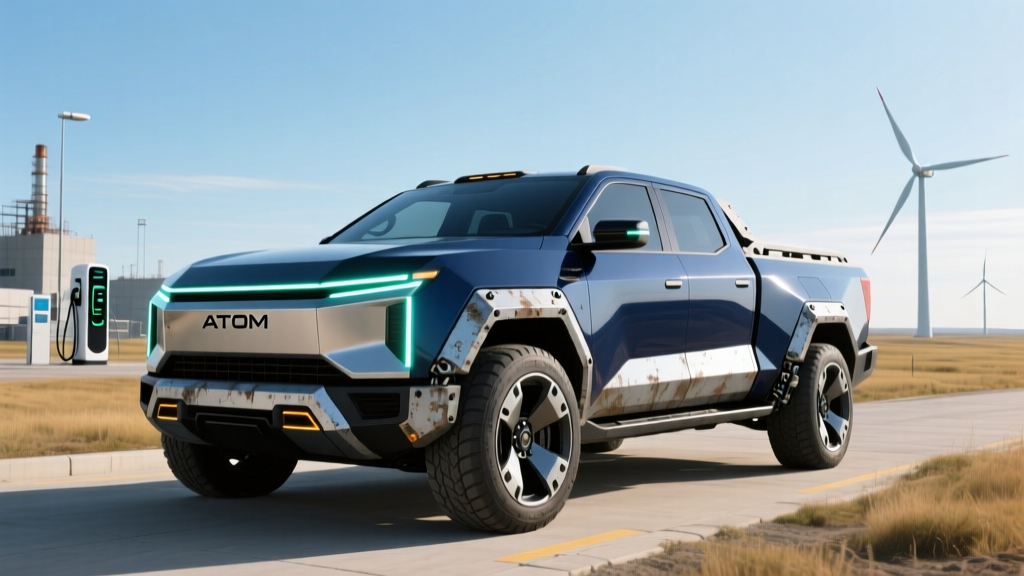
If you've seen viral renders of an angular, stainless-steel electric pickup labeled the "Russian Cybertruck," you've likely encountered concept imagery tied to ATOM, a Russian EV startup that unveiled aggressive concept designs for a Cybertruck-style electric pickup and SUV. The short answer for US-based EV shoppers: this vehicle is not available for purchase anywhere, and there is no confirmed production timeline or US market entry plan.
Unlike the Tesla Cybertruck, which has been in production since late 2023 with verifiable EPA data, the ATOM electric pickup remains in the concept and prototype phase. Russian domestic EV manufacturing is still nascent, with companies like Evolute, Amberauto, and ATOM announcing ambitious lineups but delivering limited production volumes primarily for fleet and government use within Russia.
This article breaks down what's been announced, separates confirmed specs from concept-stage claims, and explains why US buyers evaluating an angular electric pickup should focus on vehicles you can actually buy and charge today.
Announced Specs vs. Reality: What We Know (and Don't)
Because the ATOM electric pickup has not entered verified production, there are no EPA range estimates, no independent battery testing, and no third-party crash ratings. The figures below reflect preliminary manufacturer claims from concept announcements and should be treated as targets, not guarantees.
| Specification | Claimed / Estimated | Status |
|---|---|---|
| EPA Range | Not tested (manufacturer claims ~310 mi / 500 km) | Unverified — no EPA certification |
| Battery Capacity | ~90-100 kWh (claimed) | Chemistry unconfirmed; likely NMC |
| DC Fast Charge (Peak kW) | Claimed ~150-200 kW | No independent verification |
| 10-80% Charge Time | Claimed ~30 min | Unverified |
| Level 2 Home Charge | Not published | Unknown |
| 0-60 mph | Claimed <5.0 sec (dual-motor AWD) | Unverified |
| Horsepower | Claimed ~400-500 hp (dual-motor) | Unverified |
| Drivetrain | Dual-motor AWD (announced) | Concept stage |
| MPGe / Efficiency | Not rated | No EPA testing |
| Towing Capacity | Claimed ~7,500 lbs | Unverified |
| Cargo Bed Length | Not published | Concept stage |
| Base MSRP (US) | Not available — no US pricing | N/A |
| Federal Tax Credit (§30D) | Not eligible | Not sold in US; no NA battery sourcing |
| Battery Warranty | Not published | Unknown |
Range and Battery: Concept Claims vs. Real-World Expectations
Russian EV startups have limited access to tier-1 battery suppliers like CATL, Panasonic, or LG Energy Solution due to ongoing sanctions and supply-chain restrictions. This raises legitimate questions about cell sourcing, energy density, thermal management sophistication, and long-term degradation data — all critical factors that established manufacturers like Tesla, Ford, Rivian, and Hyundai have spent billions validating.
For context, the Tesla Cybertruck AWD carries an EPA-verified 340-mile range with a 123 kWh battery pack, while the Rivian R1T Dual-Motor achieves 352 miles EPA from a 128.9 kWh pack. Both have published degradation curves, verified charge rates, and extensive real-world owner data.
Charging Speed: What We Can Infer
No verified charge-curve data exists for the ATOM pickup. The claimed 150-200 kW peak DC fast-charge rate, if accurate, would place it behind current segment leaders:
| Vehicle | Peak DC kW | 10-80% Time | Connector | Availability |
|---|---|---|---|---|
| Tesla Cybertruck | 250 kW | ~18 min | NACS | On sale now |
| Rivian R1T (2025+) | 220 kW | ~21 min | NACS (2025+) | On sale now |
| Ford F-150 Lightning (Extended Range) | 150 kW | ~38 min | CCS / NACS adapter | On sale now |
| Chevrolet Silverado EV (4WT) | 350 kW | ~12 min | CCS / NACS adapter | On sale now |
| ATOM Pickup (Claimed) | ~150-200 kW | ~30 min (claimed) | Unknown | Not available |
Peak kW is not sustained kW. Real-world DC fast charging follows a taper curve: a vehicle might hit 250 kW at 10% State of Charge (SoC) but drop to 100 kW by 60% and below 50 kW above 80%. Without verified charge-curve data, any "30-minute" claim is speculative. Home Level 2 charging specs have not been published.
Pricing, Tax Credits, and Why US Buyers Should Look Elsewhere
The ATOM electric pickup has no US pricing because it is not sold in the United States. There is no announced plan for US market entry, no US-spec homologation, and no NHTSA compliance certification.
For US buyers drawn to the angular-pickup aesthetic, here's what you can actually purchase, charge, and service:
| Vehicle | Base MSRP | EPA Range | §30D Credit Eligible? | Effective Price (w/ credit) |
|---|---|---|---|---|
| Tesla Cybertruck AWD | $79,990 | 340 mi | Partial — check sourcing | ~$72,490–$79,990 |
| Rivian R1T Dual-Motor | $69,900 | 352 mi | Yes (select trims) | ~$62,400 |
| Ford F-150 Lightning XLT | $54,995 | 240 mi (Std) / 320 mi (Ext) | Yes | ~$47,495 |
| Chevrolet Silverado EV 4WT | $59,900 | 380 mi | Yes | ~$52,400 |
Tech, Safety, and the Support Gap
Concept renders show a minimalist interior with a large central touchscreen, but ATOM has published no details on:
- ADAS / Driver Assistance: No SAE automation level claimed. No confirmation of features like adaptive cruise, lane-keeping, or automatic emergency braking.
- Infotainment: No app ecosystem, no over-the-air update architecture confirmed.
- Crash Testing: No NHTSA or IIHS ratings. No crash-test program announced.
- Service Network: Zero US service centers. No parts supply chain. No mobile service capability.
- Charging Network Access: No confirmed connector type (NACS, CCS, or CHAdeMO). No roaming agreements with Tesla Supercharger, Electrify America, or EVgo.
For comparison, every electric pickup currently sold in the US comes with at minimum an 8-year/100,000-mile battery and powertrain warranty, access to thousands of DC fast chargers, established service networks, and verified safety ratings.
Who Is This Vehicle For? (And Who Should Buy Something Else)
Choose an available US-market electric pickup if:
- You need verified EPA range and real-world charging data
- You want federal tax credit eligibility (up to $7,500 at point of sale)
- You require a service network and warranty coverage
- You need access to the Tesla Supercharger or Electrify America DC fast-charging networks
- You want NHTSA/IIHS safety ratings before committing $60,000+
The ATOM concept might interest you only if:
- You are a Russia-based fleet buyer or government entity with access to early production
- You are tracking global EV startup developments for industry research
- You are speculating on future imports (highly unlikely given current trade restrictions)
Frequently Asked Questions
Can I buy the Russian Cybertruck in the United States?
No. The ATOM electric pickup is a concept-stage vehicle not available for purchase in any market. There is no US market entry plan, no NHTSA certification, and no US dealer or service network.
What is the real-world range of the Russian Cybertruck?
There is no verified real-world range. The manufacturer claims approximately 310 miles (~500 km), likely under WLTP testing. No EPA testing has been conducted. For reference, WLTP figures typically overstate range by 15-25% compared to EPA testing, and cold weather can reduce usable range by an additional 20-30%.
How fast does it charge?
Unverified. The manufacturer claims 150-200 kW peak DC fast charging with a ~30-minute 10-80% time. No independent testing confirms this. Home Level 2 charging specifications have not been published.
Does the Russian Cybertruck qualify for the federal EV tax credit?
No. Under current IRS §30D rules, the vehicle would need North American final assembly, compliant battery sourcing, and US market availability. It meets none of these criteria.
Is the Russian Cybertruck worth waiting for?
No, not for US buyers. Multiple electric pickups with verified specs, EPA range, DC fast-charging capability, tax-credit eligibility, and full service networks are available now. The ATOM pickup has no confirmed production date, no US homologation path, and no support infrastructure.
What are the biggest pros and cons?
- Angular Cybertruck-inspired design
- Claimed 310+ mile range
- Dual-motor AWD
- Potentially lower price in Russian domestic market
- Not available for purchase anywhere
- No EPA range or efficiency verification
- No US service, parts, or charging access
- No federal tax credit eligibility
- No crash-test ratings
- Sanctions and supply-chain risk
- Unknown battery chemistry and degradation data