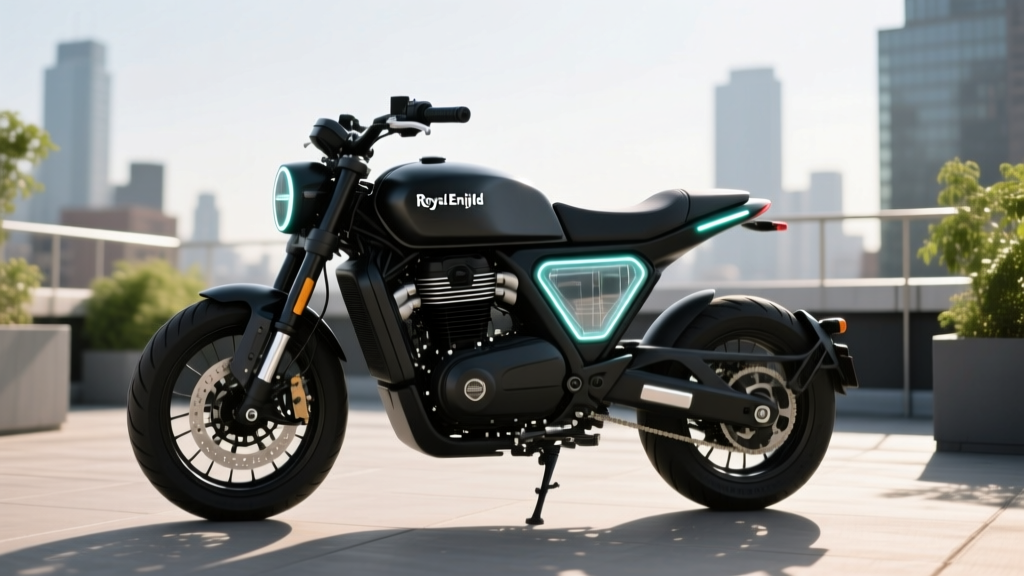
Bottom line: Royal Enfield has not released an electric motorcycle as of early 2026. The company has confirmed it is developing an electric platform, but no production model, pricing, EPA range, or battery specifications have been officially published. If you're researching "Royal Enfield electric" to buy one today, the honest answer is that it doesn't exist yet — and likely won't be purchasable in the U.S. market until at least 2027 or later, given Royal Enfield's cautious product rollout history and the regulatory hurdles for imported electric two-wheelers.
What Royal Enfield Has Actually Said About Going Electric
Royal Enfield, the Indian manufacturer owned by Eicher Motors, has built its global reputation on mid-displacement motorcycles (350cc–650cc) with classic styling and accessible pricing. The brand has been notably deliberate about electrification compared to competitors like Harley-Davidson (which launched the LiveWire), Zero Motorcycles, and Energica.
What we know from official statements and industry reporting through 2025–2026:
- Royal Enfield's parent company Eicher Motors has allocated capital expenditure toward EV R&D, but the motorcycle division has prioritized expanding its ICE lineup (including the Himalayan 450 and updated Classic/Interceptor platforms).
- CEO Siddhartha Lal has publicly stated the company is "working on electric" but emphasized they won't rush a product to market until battery costs and charging infrastructure in their primary markets (India, Southeast Asia, Latin America) mature sufficiently.
- Royal Enfield has filed patents for electric motorcycle frames and battery-pack configurations, suggesting genuine engineering work rather than vaporware — but patent filings don't guarantee production timelines.
- The company's first EV is widely expected to target the Indian domestic market initially, where government FAME-II subsidies and dense urban commuting patterns make electric two-wheelers economically compelling. U.S. availability would follow only after proving the platform domestically.
This matters for anyone searching for a Royal Enfield electric motorcycle: even when one launches, expect it to debut in India with specifications tuned for that market's needs (shorter range, lower top speed, aggressive pricing) before any global variant appears.
What a Royal Enfield Electric Motorcycle Might Look Like (Projected Specs)
Based on patent filings, industry analyst projections, and the competitive landscape for mid-displacement-equivalent electric motorcycles, here's what a realistic Royal Enfield EV platform could deliver if it reaches production by 2027–2028:
| Specification | Projected Range | Comparable Existing EV |
|---|---|---|
| Battery Capacity | 5–8 kWh (likely LFP chemistry) | Zero S (7.2 kWh usable) |
| City Range | 70–110 miles | Energica Eva Ribelle (~120 mi city) |
| Highway Range (65 mph) | 45–70 miles | Harley-Davidson LiveWire ONE (~70 mi hwy) |
| Motor Output | 15–25 kW (20–33 HP equivalent) | Royal Enfield Hunter 350 (~20 HP) |
| Top Speed | 65–85 mph | Zero SR/S (124 mph) |
| DC Fast Charge (if equipped) | 10–80% in ~40 min (est.) | LiveWire (10–80% in ~40 min) |
| Level 2 AC Charge | Full charge in ~3–4 hours | Standard for electric motorcycles |
| Estimated MSRP (U.S., if available) | $6,000–$10,000 | Zero S ($11,495 base) |
Important caveats: These figures are analyst projections, not manufacturer specifications. Royal Enfield has published no official numbers. The LFP (lithium iron phosphate) chemistry assumption is based on cost sensitivity in Royal Enfield's target markets and the chemistry's superior cycle life — though LFP sacrifices some energy density versus NMC, meaning a physically larger battery pack for equivalent range.
How a Royal Enfield Electric Would Compare to Existing Electric Motorcycles
Until Royal Enfield enters the electric motorcycle market, buyers have several proven options. Here's how the competitive landscape looks in 2026:
| Model | Battery (kWh) | City Range | Highway Range | Peak Power | 0–60 mph | MSRP |
|---|---|---|---|---|---|---|
| Zero SR/S | 14.4 usable (Z-Force) | 161 mi | 82 mi | 82 HP (140 lb-ft) | 3.3 sec | $20,995 |
| Zero S | 7.2 usable | 97 mi | 49 mi | 46 HP | 5.1 sec | $11,495 |
| LiveWire ONE | 15.4 usable | 146 mi | 70 mi | 105 HP | 3.0 sec | $21,999 |
| Energica Ego+ | 21.5 usable | 261 mi | 110 mi | 145 HP | 2.6 sec | $28,160 |
| Royal Enfield Electric | Not announced | N/A | N/A | N/A | N/A | N/A |
The gap is clear: existing electric motorcycles are performance-oriented machines priced between $11,000 and $28,000. Royal Enfield's brand positioning suggests they would target the affordable commuter segment — think $6,000–$10,000 — with modest power and range adequate for urban use. That's a fundamentally different product from a Zero SR/S or LiveWire.
If you need an electric motorcycle today, the Zero S at $11,495 is the closest analog to what a Royal Enfield electric might become: accessible power, reasonable range for commuting, and a price that doesn't require motorcycle-enthusiast budgets. But it costs roughly double what a Royal Enfield ICE motorcycle sells for ($4,000–$7,000 range), illustrating the battery-cost premium that Royal Enfield would need to overcome.
Electric Motorcycle vs. Gas: The Real Ownership Cost Comparison
Since a Royal Enfield electric doesn't exist yet, let's model the ownership economics using a comparable scenario: a current Royal Enfield Hunter 350 (gasoline) versus a Zero S (electric) as a stand-in for the type of commuter motorcycle Royal Enfield might eventually build.
| Cost Category | Royal Enfield Hunter 350 (Gas) | Zero S (Electric, L2 Home Charging) |
|---|---|---|
| Purchase Price (MSRP) | $4,250 | $11,495 |
| Federal Tax Credit (§30D eligible) | $0 | Up to $7,500* (subject to income/MSRP caps) |
| Effective Purchase Price | $4,250 | ~$3,995* |
| Fuel / Electricity (30,000 mi) | ~$2,100 (70 MPG avg, $3.50/gal) | ~$360 (0.12 kWh/mi, $0.15/kWh avg) |
| Oil Changes (5 years) | ~$450 (15 changes @ $30) | $0 |
| Brake Pad Replacement | ~$300 (1 set) | ~$150 (regen braking extends life) |
| Chain / Belt Maintenance | ~$400 (1 replacement + lube) | ~$400 (belt drive, similar interval) |
| Insurance (5 years avg) | ~$2,400 | ~$2,800 (higher replacement cost) |
| Total 5-Year Cost | ~$9,900 | ~$7,855* |
*Tax credit availability depends on IRS §30D eligibility: buyer income must be ≤$150,000 (single) or ≤$300,000 (joint); MSRP must be ≤$80,000 for motorcycles; battery sourcing and critical mineral requirements apply. Always verify current-year rules at irs.gov and consult a tax professional.
The takeaway: even with the full $7,500 federal tax credit, the electric option starts at a comparable effective price but saves substantially on fuel and maintenance. Without the tax credit, the electric motorcycle costs roughly $3,000–$4,000 more over five years. Your break-even depends entirely on your credit eligibility, local electricity rates, and annual mileage.
Real-World Ownership Considerations for Electric Motorcycles
Before deciding to wait for a Royal Enfield electric or buy an existing electric motorcycle now, consider these practical factors that spec sheets don't capture:
Home Charging Access Is Non-Negotiable
Electric motorcycles rely almost entirely on Level 1 (standard 120V outlet) or Level 2 (240V) home charging. Public DC fast-charging infrastructure for motorcycles is extremely limited — most Electrify America and EVgo stations are designed for four-wheel vehicles, and motorcycle-specific adapters are rare. If you live in an apartment without garage/outlet access, or street-park regularly, an electric motorcycle becomes impractical regardless of brand.
A Level 2 home installation for motorcycle charging typically requires:
- A dedicated 240V/20A or 240V/30A circuit
- Electrician labor: $300–$800 (assuming panel capacity exists)
- Panel upgrade (if needed): $1,500–$3,000
- EVSE equipment: $200–$500 for a quality Level 2 unit
Cold-Weather Range Loss
Lithium-ion batteries lose 15–30% of their rated range in freezing temperatures (below 32°F). A motorcycle with a projected 80-mile highway range in summer could deliver only 55–65 miles in winter commuting conditions. Unlike electric cars, most electric motorcycles lack active battery thermal management (heat pumps or liquid cooling), making cold-weather degradation more severe. If you ride year-round in northern U.S. climates, plan for significantly reduced winter range.
Highway Efficiency Penalty
Electric motorcycles, like electric cars, consume substantially more energy at highway speeds than in stop-and-go city riding. Aerodynamic drag increases with the square of velocity, and motorcycles have no regenerative braking benefit at steady highway speeds. Expect highway range to be 45–55% of city range — a critical factor if your commute includes interstate segments.
Common Misconceptions About Royal Enfield's Electric Plans
| Myth | Fact |
|---|---|
| "Royal Enfield already sells an electric motorcycle" | No production electric model exists as of 2026. Patent filings and R&D investment confirm development work, but nothing is purchasable. |
| "When it launches, it'll be available in the U.S. immediately" | Royal Enfield typically debuts new platforms in India first, with U.S./EU variants following 12–24 months later — if at all. The Indian market's price sensitivity and subsidy structure will drive initial specs. |
| "It'll have 150+ mile range like electric cars" | Motorcycle battery packs are physically constrained. Even premium electric motorcycles (Energica at $28,000) achieve 110–130 highway miles. A budget Royal Enfield EV would likely deliver 50–80 highway miles. |
| "It'll qualify for the full $7,500 federal tax credit" | §30D eligibility requires meeting battery sourcing and critical mineral thresholds, plus buyer income and MSRP caps. Many imported EVs have lost partial or full credit eligibility as sourcing rules tighten annually. No guarantee a Royal Enfield EV would qualify. |
| "Electric motorcycles are maintenance-free" | While oil changes and valve adjustments disappear, tires, brake fluid, suspension, chain/belt, and battery degradation still require attention. Budget $200–$400/year for non-powertrain maintenance. |
Decision Framework: Should You Wait or Buy Now?
If you want an electric motorcycle today and need one for commuting: Buy a Zero S or LiveWire DEL MAR. These are proven platforms with established dealer networks, published EPA-equivalent range figures, and available parts. You won't wait for an unannounced product.
If you specifically want a Royal Enfield and are willing to wait 2+ years: Monitor Royal Enfield's official channels for a production announcement. Understand that the first-generation product will likely prioritize Indian-market needs (low cost, moderate range, urban commuting) over U.S. highway expectations. You may be better served by a used Zero or a Honda CB350 (gas) in the interim.
If you're drawn to the Royal Enfield brand for its classic styling and accessible pricing: The Hunter 350, Meteor 350, and Classic 350 remain excellent gasoline motorcycles in the $4,000–$6,500 range. The fuel-cost penalty versus electric is modest at motorcycle MPG figures (70–85 MPG combined). Unless you have home charging access and high annual mileage, the economics don't strongly favor waiting for an electric variant.
If you live in an apartment or lack home charging: Do not buy any electric motorcycle in 2026. Public charging infrastructure for two-wheelers is inadequate, and relying on Level 1 (120V) charging alone means 8–12 hour charge times for a depleted battery. A fuel-efficient gasoline motorcycle (Royal Enfield or otherwise) remains the practical choice.
Frequently Asked Questions
When will Royal Enfield release an electric motorcycle?
No official launch date has been announced. Industry analysts project a reveal no earlier than 2027, with U.S. availability likely 2028 or later if the company decides to export the model. Royal Enfield has historically taken 3–5 years from initial platform development to market launch.
Will a Royal Enfield electric motorcycle be affordable?
Royal Enfield's brand positioning suggests aggressive pricing, likely $6,000–$10,000 for a U.S.-spec model if it reaches production. This would undercut the Zero S ($11,495) and LiveWire ($21,999) significantly, though likely with corresponding trade-offs in range, power, and charging speed.
Can I charge an electric motorcycle at a regular outlet?
Yes — Level 1 charging from a standard 120V household outlet works for electric motorcycles, but it's slow. Expect 6–12 hours for a full charge depending on battery size. Most owners install a 240V Level 2 circuit for 2–4 hour charge times, which requires a licensed electrician and costs $500–$2,000 depending on your home's electrical panel capacity.
Do electric motorcycles qualify for the $7,500 federal tax credit?
Electric motorcycles can qualify under IRS §30D, but eligibility is not automatic. The vehicle must meet battery sourcing and critical mineral requirements (which tighten annually), the buyer's adjusted gross income must fall below caps ($150,000 single / $300,000 joint), and MSRP must not exceed $80,000. Always verify current rules at irs.gov before assuming credit availability.
What's the best electric motorcycle I can buy right now?
For commuting and value, the Zero S ($11,495, ~97 city miles, 7.2 kWh battery) is the segment benchmark. For performance, the LiveWire ONE ($21,999, ~146 city miles, 105 HP) leads the market. Neither competes on price with Royal Enfield's gasoline lineup, which is precisely the gap a Royal Enfield electric would aim to fill — if and when it arrives.