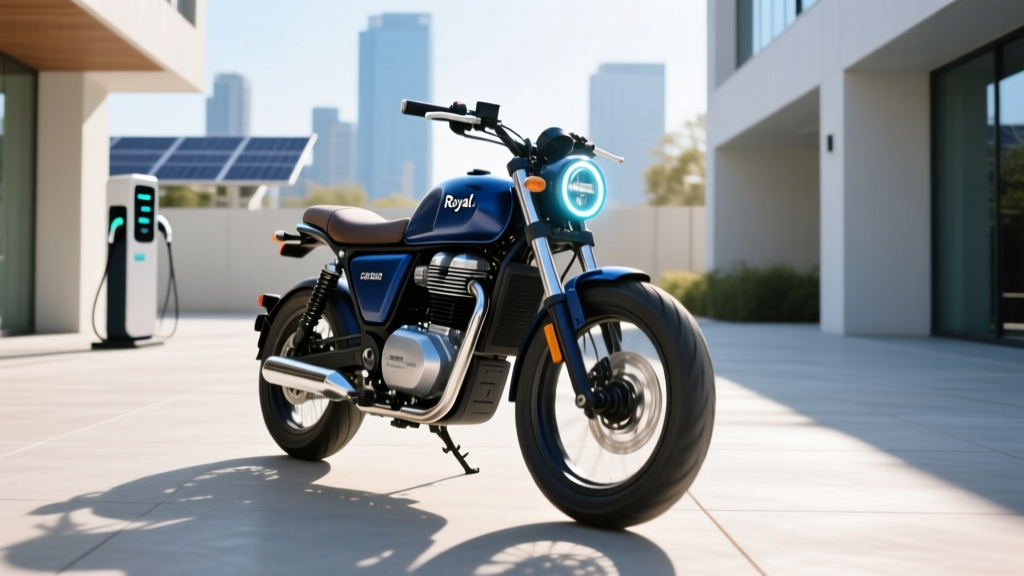
If you're searching for Royal Enfield electric bikes in 2026, here's the direct answer: Royal Enfield has not yet released a production electric motorcycle for global sale. The company has confirmed an electric platform is in development, with a production model expected to launch in India first, likely in late 2026 or 2027. Any specs circulating online remain preliminary and unconfirmed by the manufacturer.
Quick Answer: Royal Enfield Electric Bike Status (2026)
- Current status: In development / pre-production
- Expected launch: Late 2026 (India) / 2027+ (global markets)
- Confirmed specs: None officially released
- Prototype hints: Company has referenced a mid-weight EV platform (~3-5 kWh battery range)
- Availability in US/EU: Not confirmed — India likely first market
What We Know About Royal Enfield's EV Plans
Royal Enfield's parent company, Eicher Motors, has invested in electric two-wheeler development, and the brand has publicly acknowledged work on an electric motorcycle platform. CEO Siddhartha Lal has stated the company is taking a deliberate approach, prioritizing ride character and reliability over rushing to market. This aligns with Royal Enfield's brand identity — they're known for accessible, torque-rich parallel-twins and singles, not cutting-edge tech showcases.
For context, the Indian electric two-wheeler market is already competitive. Brands like Ather Energy, Ola Electric, and TVS (with the iQube) are selling production electric scooters and motorcycles in India today. Royal Enfield's entry would need to differentiate on build quality, brand heritage, and potentially a motorcycle form factor (as opposed to the scooter-heavy EV market in India).
Estimated Specs: What a Royal Enfield EV Could Look Like
While no official specifications have been published, we can estimate based on the competitive landscape, Royal Enfield's existing model positioning, and statements from company leadership. The following table reflects educated projections, not confirmed data:
| Specification | Estimated / Projected | Comparable Gas Model |
|---|---|---|
| Battery capacity | 3.5–5.5 kWh (usable) | N/A (12.4-gal tank on Hunter 350) |
| Estimated range (city) | 80–120 km (~50–75 miles) | Hunter 350: ~250 mi per tank |
| Estimated range (highway/real-world) | 60–90 km (~37–56 miles) | Hunter 350: ~200 mi highway |
| Motor output | 5–8 kW peak | Hunter 350: 20.2 HP |
| Top speed | 90–105 km/h (~56–65 mph) | Hunter 350: ~115 km/h (71 mph) |
| Charge time (home, 15A outlet) | 3–5 hours (0–100%) | Refuel: ~3 minutes |
| Fast charge (if supported) | Not confirmed | N/A |
| Expected India price | ₹1.8–2.5 lakh (~$2,200–$3,000 USD) | Hunter 350: ₹1.5 lakh (~$1,800) |
Note: These are projected figures based on segment analysis, not official Royal Enfield data. Treat them as directional, not definitive.
Electric Motorcycle vs. Gas: The Real Cost Breakdown
Whether you're in India (Royal Enfield's primary market) or considering imports elsewhere, the economics of an electric motorcycle differ significantly from a gas equivalent. Here's a comparison using a Royal Enfield Hunter 350 (gas) as the baseline against a projected electric equivalent:
| Cost Factor | Gas (Hunter 350) | Electric (Projected) |
|---|---|---|
| Purchase price | ~$1,800 USD (India) | ~$2,200–$3,000 USD (India) |
| Fuel / energy cost per km | ₹1.5–2.0/km (petrol) | ₹0.15–0.30/km (electricity) |
| Annual fuel/energy (10,000 km) | ~₹17,500 ($210) | ~₹2,250 ($27) |
| Maintenance (annual) | ₹3,000–5,000 (oil, filters, chain) | ₹500–1,500 (brakes, tires, no oil) |
| 5-year total operating cost | ~₹1,12,500 ($1,350) | ~₹18,750 ($225) |
| 5-year total ownership cost | Purchase + ₹1,12,500 = ~₹2,62,500 | Purchase + ₹18,750 = ~₹2,88,750 |
The takeaway: an electric Royal Enfield would cost more upfront but dramatically less to operate. The break-even point against a gas Hunter 350 likely falls between years 3 and 4 for a rider covering 10,000+ km annually. For lower-mileage riders, the payback period extends considerably.
Real-World Ownership Considerations
Before buying any electric two-wheeler — Royal Enfield or otherwise — these practical factors determine whether EV ownership works for you:
Home Charging Access
Most electric motorcycles in this segment charge via a standard 15A household outlet. If you have a dedicated parking spot with outlet access (ground-floor garage, apartment with charging provision), daily charging is straightforward — plug in overnight, wake up to a full battery. If you park on the street or lack outlet access, daily EV ownership becomes significantly harder. This is the single biggest ownership variable.
Climate and Range Reality
Lithium-ion batteries lose efficiency in extreme temperatures. In Indian summers (40°C+), expect range to hold reasonably well but battery degradation to accelerate over time without active thermal management. In cold climates (near-freezing, relevant for northern India or potential European/US markets), expect 20–35% range reduction in winter. A projected 100 km city range could drop to 65–75 km in cold weather.
Driving Patterns
Electric motorcycles excel in stop-and-go city riding where regenerative braking recovers energy. Highway riding at sustained speeds (80+ km/h) drains the battery faster due to aerodynamic drag and no regen opportunities. If your commute is 90% city, an EV is ideal. If it's 90% highway, range anxiety will be real with a 3.5–5.5 kWh battery.
Charging Infrastructure
Public charging for two-wheelers remains sparse outside major Indian metros. Unlike four-wheeler EVs that can use DC fast-charging networks (CCS, NACS), most electric motorcycles rely on slower AC charging or proprietary swap stations. Royal Enfield has not confirmed whether their EV will support battery swapping, a feature offered by competitors like Gogoro and some Indian startups.
Common Misconceptions About Electric Motorcycles
| Myth | Fact |
|---|---|
| "Electric bikes have no power" | Electric motors deliver peak torque from 0 RPM. A 7 kW electric motor can feel punchier off the line than a 20 HP gas engine in city traffic, though top speed will be lower. |
| "The battery will die in 2 years" | Modern LFP or NMC cells with proper BMS retain 80%+ capacity after 1,000–1,500 full charge cycles — roughly 5–8 years of daily use. Warranty coverage varies by brand. |
| "Charging takes all day" | A 3.5 kWh battery on a 15A outlet charges in ~3 hours. Overnight charging is more than sufficient for daily commuting. |
| "I can't ride in the rain" | Production electric motorcycles carry IP67-rated battery enclosures. Riding in rain is safe — flooding/submersion is a separate concern, same as gas bikes. |
| "Electric bikes are silent and dangerous" | Most production EVs include artificial sound generators at low speeds for pedestrian safety. At higher speeds, tire and wind noise are audible. |
Should You Wait or Buy Now?
If you're specifically interested in a Royal Enfield electric motorcycle, waiting is your only option — there's nothing to buy yet. But if you're evaluating the broader electric two-wheeler market, here's a practical decision framework:
Decision Framework: Electric Motorcycle Purchase
- If your daily commute is under 60 km (37 miles) round-trip AND you have home outlet access: An electric motorcycle or scooter (Ather 450X, Ola S1 Pro, TVS iQube) is a strong fit today. You'll save ₹15,000+ annually on fuel in India.
- If your commute exceeds 80 km or includes sustained highway riding: Current electric two-wheelers in this price segment will feel limiting. A gas Royal Enfield (Hunter 350, Classic 350) or a larger electric motorcycle (Ultraviolette F77, at a higher price point) is more practical.
- If you want Royal Enfield specifically: Continue riding your current bike or buy a gas model now. The EV platform is at least 12–18 months from global availability, and India-first launches often take 1–2 additional years to reach US/EU markets.
- If you're in the US or Europe: Royal Enfield's electric motorcycle is unlikely to reach your market before 2028 at the earliest. Consider established options: Zero Motorcycles, LiveWire ONE, or Maeving RM1 for electric; or continue with Royal Enfield's gas lineup (Meteor 350, Scram 440) which remain strong value propositions.
What First-Time EV Buyers Should Know
Whether you're buying a Royal Enfield EV when it launches or any electric two-wheeler today, these principles apply:
kW vs. kWh matters. kW (kilowatts) measures power — how fast the motor can deliver energy (acceleration, top speed). kWh (kilowatt-hours) measures energy storage — how much the battery holds (range). A 5 kWh battery with a 7 kW motor is the two-wheeler equivalent of a small car with a modest fuel tank. Don't confuse the two when comparing specs.
Battery chemistry affects longevity. LFP (lithium iron phosphate) batteries offer longer cycle life and better thermal safety but lower energy density (heavier for the same range). NMC (nickel manganese cobalt) packs more energy per kilogram but degrades faster in high heat. Ask which chemistry any EV uses before buying — it matters for 5-year ownership costs.
Warranty is critical. Battery replacement on an electric motorcycle can cost 40–60% of the vehicle's purchase price. Look for minimum 3-year/50,000 km battery warranties with guaranteed capacity retention (80%+ threshold). Brands that don't publish clear battery warranty terms are a risk.
No federal tax credits apply (US). The IRS §30D clean vehicle credit applies to four-wheeled vehicles meeting specific MSRP, income, and battery sourcing requirements. Electric motorcycles do not currently qualify for the federal $7,500 credit. Some states offer separate two-wheeler EV incentives — check your local DMV or energy office.
Frequently Asked Questions
Is the Royal Enfield electric bike available to buy in 2026?
No. As of early 2026, Royal Enfield has not launched a production electric motorcycle. The company has confirmed an EV platform is in development, with India likely as the first market. Expect a potential launch in late 2026 or 2027 for India, with global markets following later.
What will the Royal Enfield electric bike cost?
No official pricing has been announced. Based on competitive positioning in India and the premium Royal Enfield commands over rivals, a reasonable estimate is ₹1.8–2.5 lakh ($2,200–$3,000 USD) for the Indian market. US/EU pricing, if the model is exported, would likely be higher due to homologation, shipping, and dealer markup.
How far will a Royal Enfield electric motorcycle go on a charge?
Without official specs, this is speculative. Based on the segment and likely battery size (3.5–5.5 kWh), expect 80–120 km (50–75 miles) in city riding and 60–90 km (37–56 miles) in mixed or highway riding. Cold weather would reduce these figures by 20–35%.
Can I charge an electric motorcycle at a regular outlet?
Yes, most electric motorcycles in this segment support charging via a standard household outlet (15A in India, 120V/15A in the US). A full charge typically takes 3–5 hours depending on battery capacity. No special home installation is required, though a dedicated circuit is recommended for safety.
How does an electric motorcycle compare to a gas Royal Enfield?
An electric Royal Enfield would offer lower top speed and range than a gas Hunter 350 or Classic 350, but significantly lower operating costs (roughly 1/8th the per-km energy cost), instant torque for city riding, and minimal maintenance. The trade-off is higher upfront cost, limited range for highway touring, and charging logistics if you lack home outlet access.
Will Royal Enfield's electric bike come to the United States?
This is unconfirmed. Royal Enfield sells gas motorcycles in the US through a dealer network, but electric two-wheeler exports face additional regulatory hurdles (EPA certification, DOT compliance, potentially different battery safety standards). If the EV launches in India in 2026–2027, US availability would likely not arrive before 2028–2029 at the earliest.
Sources consulted: Royal Enfield official statements via royalenfield.com, IRS clean vehicle credit guidelines at irs.gov, and segment analysis from Indian two-wheeler market data. All projected specifications are estimates based on competitive positioning and should not be treated as confirmed manufacturer data.