Quick Answer: Is the Volkswagen Electric Bus Worth It?
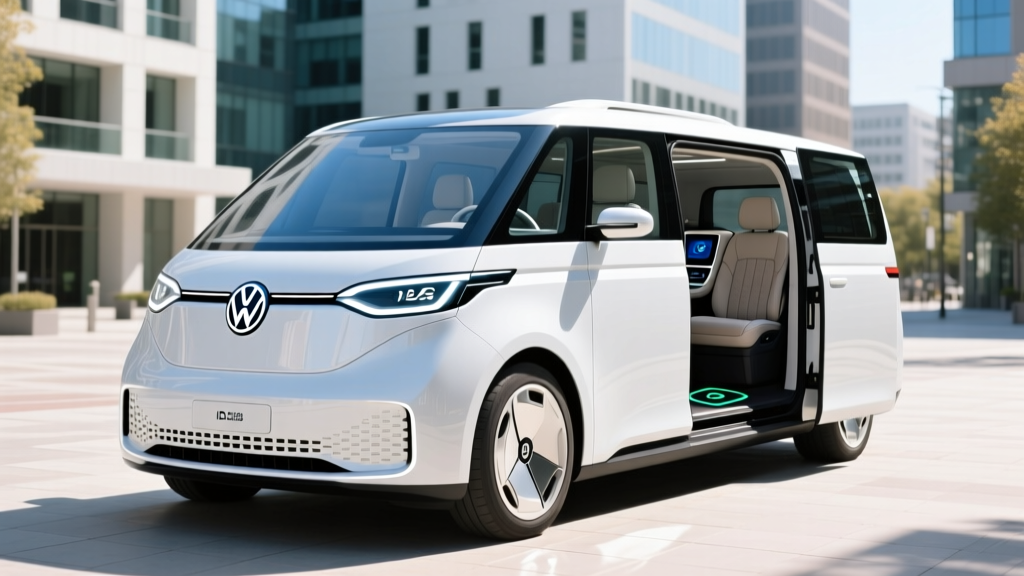
The 2026 Volkswagen ID. Buzz is the modern reincarnation of the classic VW Microbus, built on VW's MEB electric platform with a 91 kWh (usable) NMC battery, 231 miles of EPA-estimated range (RWD Pro S trim), and a peak DC fast-charge rate of 170 kW. Starting at $59,995 MSRP for the Pro S, it's priced as a premium three-row family hauler — not a budget EV. Real-world highway range drops to roughly 190–210 miles, and cold-weather driving can shave another 15–25% off that figure. If you need three rows, distinctive styling, and can charge at home, the ID. Buzz delivers. If you regularly tow, road-trip beyond 200 miles between stops, or need the lowest possible cost-per-mile, a hybrid minivan or a longer-range SUV may serve you better.
Volkswagen ID. Buzz: Core EV Specs at a Glance
| Specification | ID. Buzz Pro S (RWD) | ID. Buzz 4Motion (AWD) |
|---|---|---|
| EPA Range | 231 miles | 219 miles |
| Battery (usable) | 91 kWh, NMC chemistry | 91 kWh, NMC chemistry |
| Motor Output | 282 hp / 406 lb-ft | 330 hp (combined) / 406 lb-ft |
| 0–60 mph | ~7.9 seconds | ~6.5 seconds |
| Peak DC Fast Charge | 170 kW (CCS1) | 170 kW (CCS1) |
| 10–80% DC Charge Time | ~26 minutes | ~26 minutes |
| Level 2 AC Charge Rate | 11 kW (~7.5 hrs 0–100%) | 11 kW (~7.5 hrs 0–100%) |
| EPA Efficiency | 87 MPGe (combined) | 82 MPGe (combined) |
| Cargo (behind 3rd row) | 18.4 cu ft | 18.4 cu ft |
| Cargo (max, seats folded) | 137.0 cu ft | 137.0 cu ft |
| Base MSRP | $59,995 | $63,495 |
| Battery/Powertrain Warranty | 8 yr / 100,000 mi | 8 yr / 100,000 mi |
Source: EPA fueleconomy.gov and Volkswagen USA. Specs reflect 2025 model year carried into 2026 production. Always confirm trim-level details with your dealer before purchase.
Real-World Range vs. the EPA Sticker
EPA Sticker: 231 miles (RWD Pro S)
Expect in practice:
- Mixed suburban/commute driving: 210–225 miles — close to sticker in moderate temps at 35–55 mph.
- Sustained highway (70–80 mph): 190–210 miles. The ID. Buzz's tall, boxy profile creates significant aerodynamic drag above 65 mph, which is the single biggest range killer for this shape.
- Cold weather (below 32°F): 160–195 miles. The NMC battery loses efficiency in cold temperatures, and cabin heating draws substantial power. The ID. Buzz does include a heat pump on higher trims, which mitigates some loss, but the large cabin volume still requires significant energy to warm.
- Mountainous terrain: Expect wide swings — regen recovers energy on descents, but sustained climbs can consume 20–30% more energy per mile.
The ID. Buzz's aerodynamic penalty is the defining ownership reality. Unlike a sleek sedan such as the Hyundai Ioniq 6 (361 mi EPA), this vehicle's flat front and upright greenhouse push energy consumption higher at speed. On a flat, 65-mph cruise in 65°F weather, you'll approach the EPA number. On a 75-mph interstate run in January, plan for stops every 170 miles or so.
Charging: Home Setup and Public DC Fast Charging
Level 2 Home Charging (Where You'll Do 90%+ of Charging)
The ID. Buzz accepts up to 11 kW on Level 2 AC, which translates to roughly 28–30 miles of range per hour of charging. A full 0–100% session takes about 7.5 hours — easily achievable overnight. To deliver 11 kW, you need a 48-amp hardwired Level 2 charger on a 60-amp dedicated circuit (or a 40-amp NEMA 14-50 outlet for ~9.6 kW / ~25 mi/hr).
| Item | Estimated Cost |
|---|---|
| Level 2 charger (48A, Wi-Fi enabled — e.g., ChargePoint Home Flex, Emporia Level 2) | $400–$700 |
| Electrician labor (run 60A circuit, mount charger) | $600–$1,800 |
| Permit & inspection | $50–$200 |
| Electrical panel upgrade (if needed — 200A service) | $1,500–$3,500 |
| Total typical install | $1,050–$2,700 (no panel upgrade) |
Home charging is practically mandatory for ID. Buzz ownership. Without it, you're dependent on public Level 2 stations (often 6.6–7.2 kW, adding only ~18 mi/hr) or DC fast chargers, which aren't designed for daily 10–100% fills and will accelerate battery wear if overused.
DC Fast Charging on Road Trips
The ID. Buzz peaks at 170 kW on CCS1 connectors. In optimal conditions (battery preconditioned, 10% starting SoC), you'll see the charge curve hold near 170 kW up to roughly 40% SoC, then taper progressively. The 10–80% session takes about 26 minutes. Above 80%, charging slows dramatically — expect another 20+ minutes to go from 80–100%.
Charging cost at a public DC station (e.g., Electrify America) averages $0.43–$0.56/kWh depending on location and membership. A 10–80% fill (~64 kWh added) costs roughly $28–$36 per stop.
Cost of Ownership: ID. Buzz vs. Gas Minivan
The natural cross-shop for the ID. Buzz is a three-row gas minivan like the Toyota Sienna (hybrid, 36 MPG combined, ~$38,000 base) or Honda Odyssey (~$39,000 base, ~22 MPG combined). Here's a five-year cost projection assuming 12,000 miles/year, home charging at $0.14/kWh, and gas at $3.40/gallon:
| Cost Category | VW ID. Buzz Pro S (RWD) | Toyota Sienna LE (HEV) | Honda Odyssey (Gas) |
|---|---|---|---|
| Base MSRP | $59,995 | $38,085 | $39,690 |
| Fed. EV Tax Credit (§30D)* | Up to $7,500 (see eligibility) | $0 | $0 |
| Effective Purchase Price | ~$52,495 | $38,085 | $39,690 |
| 5-Year Fuel/Energy (60,000 mi) | ~$2,500 (home L2) | ~$5,667 | ~$9,273 |
| 5-Year Maintenance (est.) | ~$1,200 | ~$2,800 | ~$3,200 |
| 5-Year Insurance (est.) | ~$11,500 | ~$8,500 | ~$8,800 |
| 5-Year Total (purchase + fuel + maint. + ins.) | ~$67,695 | ~$55,052 | ~$60,963 |
*§30D Federal EV Tax Credit eligibility depends on buyer income caps ($150K single / $300K joint MAGI), vehicle MSRP caps ($80,000 for vans/SUVs), battery critical-mineral and component sourcing requirements, and point-of-sale transfer election. Check current rules at IRS.gov. The ID. Buzz's eligibility has been subject to change as VW adjusts battery sourcing — verify at point of purchase.
The ID. Buzz saves substantially on fuel and maintenance, but the higher purchase price and elevated insurance premiums (common for EVs due to repair costs and parts pricing) keep the five-year total above both minivan alternatives. The break-even point versus the Sienna hybrid likely extends beyond six years of ownership for most buyers.
Federal Tax Credit & Incentives: What Actually Applies
§30D Clean Vehicle Credit — Requirements as of 2026:
- Vehicle MSRP cap: ≤$80,000 for vans, SUVs, and trucks (ID. Buzz qualifies)
- Buyer income cap: ≤$150,000 single / ≤$225,000 head of household / ≤$300,000 joint (MAGI)
- Battery sourcing: Increasing percentages of critical minerals and battery components must be sourced from the US or FTA partners — these thresholds tighten annually
- Point-of-sale transfer: You may transfer the credit to the dealer for an immediate price reduction at purchase, or claim it on your tax return
- Final assembly: Must occur in North America (the ID. Buzz is assembled in Hanover, Germany — this may disqualify it from §30D depending on current IRS guidance)
This is the single most important pre-purchase check. The ID. Buzz's European assembly has been a persistent question mark for §30D eligibility. Some leasing structures may allow access to the commercial clean vehicle credit (§45W) passed through as a lease incentive, even if purchase doesn't qualify. Always confirm current eligibility with your dealer and a tax professional before signing.
Common Misconceptions About the VW Electric Bus
| Myth | Fact |
|---|---|
| "It gets 231 miles no matter how you drive." | EPA is a laboratory estimate. Highway, cold, and mountain driving reduce range 15–30%. Plan for 170–210 real-world miles on road trips. |
| "I can charge it anywhere on any connector." | The ID. Buzz uses CCS1. While VW has committed to NACS adoption on future models, current ID. Buzz owners need a CCS-to-NACS adapter for Tesla Superchargers (verify adapter compatibility before relying on this). |
| "The battery will need expensive replacement in a few years." | VW warranties the battery for 8 years / 100,000 miles against degradation below 70% capacity. Industry data shows NMC batteries typically retain 85–92% capacity at 100K miles when not routinely charged to 100% on DC. |
| "It's basically a minivan." | The ID. Buzz has a shorter wheelbase and less cargo flexibility than a Sienna or Odyssey. Third-row space is adequate for children but tight for adults on long trips. Think of it as a premium people-mover, not a full-size minivan replacement. |
| "EVs have no maintenance costs." | No oil changes, but tires wear faster (heavier vehicle, instant torque), cabin air filters need replacement, brake fluid flushes are still required, and the 12V auxiliary battery still needs periodic attention. |
Decision Framework: Should You Buy the ID. Buzz?
Choose the Volkswagen ID. Buzz if:
- You have reliable home Level 2 charging and drive mostly under 180 miles per day
- You want a distinctive, conversation-starting three-row EV and value design over maximum efficiency
- Your typical trips are suburban commutes, school runs, and weekend outings within a 100-mile radius
- You can absorb the ~$52,000–$63,000 effective purchase price without stretching your budget
- You don't need to tow (the ID. Buzz is rated for just 2,200 lbs with a factory hitch)
Look elsewhere if:
- You regularly drive more than 200 miles between charging stops — consider the Kia EV9 (304 mi EPA, ~$54,900) or Rivian R1S (352 mi, ~$79,900)
- Total cost of ownership is the priority — the Toyota Sienna hybrid (36 MPG, ~$38K) will cost ~$12,000 less over five years
- You live in an apartment or lack home charging access — the ID. Buzz's 231-mile range and 170 kW charge rate make public-charging-only ownership frustrating
- You need maximum cargo volume — the Sienna offers 101 cu ft behind the second row vs. the Buzz's less configurable space
- You frequently drive in extreme cold — range loss of 25–30% means winter highway range may dip below 160 miles
What First-Time EV Buyers Should Know Before Purchasing
If the ID. Buzz is your first electric vehicle, internalize these ownership realities before signing:
- Home charging is non-negotiable. Budget $1,000–$2,700 for a Level 2 installation before delivery day. Without it, ownership becomes a chore of public-charger hunting.
- kW vs. kWh matters. The battery holds 91 kWh of energy (think: fuel tank size). The charger delivers up to 170 kW of power (think: flow rate at the pump). Confusing these leads to unrealistic expectations.
- Don't DC fast-charge to 100% routinely. For battery longevity, set your daily charge limit to 80% and use DC fast charging primarily for road trips. The NMC chemistry in the ID. Buzz prefers partial cycles.
- Precondition the battery. When navigating to a DC fast charger, the ID. Buzz will warm the battery to optimize charge speed. If you arrive cold without preconditioning, your 170 kW peak may drop to 80–100 kW, adding 10–15 minutes to your stop.
- Insurance will cost more. EV premiums run 15–25% higher than equivalent gas vehicles due to specialized repair requirements and parts costs. Get quotes before purchase.
Frequently Asked Questions
Does the Volkswagen ID. Buzz qualify for the $7,500 federal tax credit?
Eligibility is uncertain and subject to change. The ID. Buzz is assembled in Germany, and §30D requires North American final assembly for purchase-credit eligibility. However, leasing may unlock a commercial credit pass-through. Verify at IRS.gov and with your dealer before committing.
How long does it take to charge the ID. Buzz at home?
On a 48-amp Level 2 charger (11 kW), a full 0–100% charge takes approximately 7.5 hours. Most owners charge from 20–80% daily, which takes about 5 hours — easily completed overnight on a standard off-peak electricity schedule.
What is the real highway range of the VW electric bus?
Expect 190–210 miles at sustained 70–75 mph speeds in moderate temperatures. In cold weather (below freezing) at highway speeds, plan for 160–180 miles before needing to charge. The boxy aerodynamic profile is the primary reason the real-world highway figure falls short of the 231-mile EPA estimate.
Can the ID. Buzz use Tesla Superchargers?
The ID. Buzz is equipped with a CCS1 port. Access to the Tesla Supercharger network (NACS connectors) requires a CCS-to-NACS adapter. Volkswagen has indicated future models will adopt NACS natively, but current ID. Buzz owners should verify adapter compatibility and Supercharger stall availability in their area before relying on this for road trips.
How does the ID. Buzz compare to the Kia EV9?
The Kia EV9 offers longer range (up to 304 miles EPA on the Light RWD trim), faster DC charging (up to 236 kW), a lower starting price (~$54,900), and more conventional SUV styling with similar three-row seating. The ID. Buzz trades those advantages for iconic design, a more car-like driving position, and greater cultural cachet. If specs-per-dollar is the priority, the EV9 wins. If emotional connection to the vehicle matters, the Buzz has no rival.
What happens if the battery degrades?
Volkswagen warranties the high-voltage battery for 8 years or 100,000 miles, guaranteeing it will retain at least 70% of original capacity. A full battery replacement outside warranty currently costs an estimated $15,000–$22,000, though prices are expected to decline as battery manufacturing scales. Most EV batteries in real-world use retain 85–92% capacity at the 100,000-mile mark when properly maintained.