The Short Answer on the Rolls-Royce Spectre EV
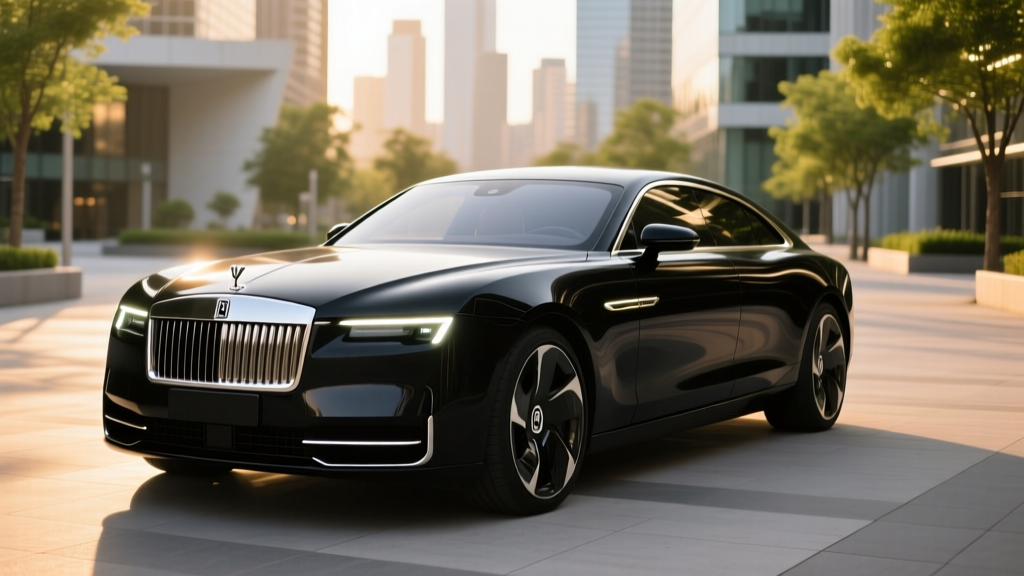
The Rolls-Royce Spectre is the brand's first fully electric ultra-luxury coupe, built on the dedicated aluminum Architecture of Luxury platform. For 2026, it carries a 102 kWh usable battery (NMC chemistry), an EPA-estimated 291 miles of range, a peak DC fast-charge rate of 195 kW (10–80% in approximately 34 minutes), and a twin-motor all-wheel-drive powertrain producing 577 horsepower and 664 lb-ft of torque. Base MSRP starts around $422,750 before options — and no, it does not qualify for the federal §30D tax credit due to price and sourcing rules. Real-world highway range settles closer to 240–260 miles, which is typical for a 6,500+ lb luxury EV.
Range and Efficiency: EPA Sticker vs. Real-World Driving
The EPA rates the 2026 Rolls-Royce Spectre at 291 miles on its combined cycle, with an efficiency figure of approximately 73 MPGe (or roughly 46 kWh/100 mi). That efficiency number is on the higher side — a direct consequence of the Spectre's mass, aerodynamic profile (Cd 0.25 is good, but the frontal area is enormous), and the energy demands of its lavish climate and cabin systems.
EPA Range: 291 miles
Real-World Expectation: 240–260 miles on highway trips at 70+ mph; 200–230 miles in cold weather (below 32°F) without consistent preconditioning. City driving with regenerative braking can push closer to or slightly above the EPA figure.
In practice, the Spectre's range is perfectly adequate for its intended use case: chauffeured city driving, airport runs, and regional trips where the owner plans charging around scheduled stops. This is not a road-trip vehicle in the way a Tesla Model S or Lucid Air is — and that's by design. The Spectre prioritizes silence, ride quality, and cabin isolation over efficiency-per-kWh.
Charging Speeds: Home Level 2 and DC Fast Charging
The Spectre uses a CCS1 connector (not NACS, though Rolls-Royce parent BMW has committed to NACS for future models). Here's what charging looks like across all three levels:
| Level | Power | Time (10–80%) | Miles Added per Hour |
|---|---|---|---|
| Level 1 (120V) | ~1.4 kW | Not practical (~72+ hrs) | ~3 mi/hr |
| Level 2 (240V, 48A) | ~11.5 kW | ~9.5 hours | ~25 mi/hr |
| DC Fast Charge | Peak 195 kW | ~34 minutes | ~180 mi in 15 min (peak) |
The 195 kW peak DC rate is respectable but not class-leading — the Lucid Air peaks at 300+ kW, and the Porsche Taycan at 320 kW on 800V architecture. The Spectre runs on a 400V system, which limits peak charge speed. Expect the charge curve to taper noticeably above 60% SoC, with the 60–80% portion taking nearly as long as 10–60%. This is standard behavior for NMC packs on 400V but worth noting if you plan frequent road trips.
For home charging — which is where 90%+ of Spectre owners will replenish — a Level 2 wallbox at 11.5 kW will fully recharge the 102 kWh pack overnight in about 9.5 hours. Most Spectre owners will have professional-grade home charging installations, often integrated with solar or home energy management systems.
Performance and Driving Dynamics
The twin-motor AWD powertrain delivers 577 hp and 664 lb-ft of torque, propelling the 6,559-lb Spectre from 0–60 mph in 4.4 seconds (per Rolls-Royce official specs). That's not supercar territory, but it's effortlessly quick for a vehicle of this mass and dimension.
The driving experience is calibrated for waftability — Rolls-Royce's signature term. The electric powertrain is a natural fit: zero vibration, instant torque at low speeds, and near-silent operation. The planar suspension system, rear-wheel steering, and acoustic insulation make this arguably the quietest EV on the road. Regenerative braking is adjustable but defaults to a moderate setting; one-pedal driving is available but not aggressively tuned, consistent with the brand's preference for smooth transitions over sporty deceleration.
Spectre EV vs. Gas Rolls-Royce: Ownership Cost Comparison
How does the Spectre stack up against a gas-powered Rolls-Royce (like the outgoing Wraith or a Cullinan) on running costs? The EV wins on fuel and maintenance, but insurance and depreciation tell a more complex story.
| Category | Spectre EV | Gas Rolls-Royce (Wraith/Cullinan) |
|---|---|---|
| Base MSRP | ~$422,750 | ~$350,000–$450,000 |
| Federal Tax Credit (§30D) | $0 (exceeds MSRP cap) | $0 |
| Annual "Fuel" Cost (12,000 mi) | ~$720 (at $0.13/kWh home) | ~$3,600 (at $4.00/gal, 14 MPG) |
| Annual Maintenance | ~$800–$1,200 | ~$2,500–$4,000 |
| Annual Insurance (est.) | ~$8,000–$12,000 | ~$7,000–$10,000 |
| 5-Year Depreciation (est.) | 45–55% | 40–50% |
| Battery Warranty | 8 yr / 100,000 mi | N/A |
The Spectre saves roughly $2,800–$3,000 per year on fuel and $1,500–$2,800 on maintenance (no oil changes, fewer brake replacements due to regen, no transmission fluid). Over five years, that's approximately $20,000–$29,000 in operational savings. However, insurance premiums run 15–25% higher for the EV variant due to repair-cost data on high-voltage systems and aluminum body panels, and early depreciation curves for luxury EVs tend to be steeper than for established gas models.
Per fueleconomy.gov, the Spectre's annual electricity cost is estimated at approximately $700–$800 for 15,000 miles of mixed driving — a fraction of what any V12 Rolls-Royce demands at the pump.
Who Should Buy the Spectre EV? A Decision Framework
Buy the Rolls-Royce Spectre if:
- You want the quietest, most refined luxury coupe available and prioritize cabin serenity over efficiency metrics
- You have reliable Level 2 home charging and drive mostly in urban/suburban environments under 200 miles per day
- You value the brand cachet and bespoke customization program (Coachbuild, Starlight Headliner, etc.)
- You're replacing a gas Rolls-Royce and want to eliminate fuel and maintenance overhead
Look elsewhere if:
- You need 350+ miles of real-world range for frequent long-distance travel (consider the Lucid Air Grand Touring at 516 mi EPA)
- Fast DC charging speed is a priority — the 195 kW peak lags behind 800V competitors
- You want a four-door luxury EV (the Spectre is a two-door coupe; the BMW i7 or Mercedes EQS offer sedan practicality)
- You expect the federal tax credit to offset the purchase price — the Spectre's MSRP far exceeds the §30D cap of $55,000 for sedans/$80,000 for SUVs/trucks
Common Misconceptions About the Spectre EV
| Myth | Fact |
|---|---|
| "The Spectre qualifies for the $7,500 federal EV tax credit." | It does not. The §30D credit caps eligible vehicle MSRP at $55,000 (sedans) or $80,000 (SUVs/trucks/vans). The Spectre at $422K+ is ineligible. See IRS §30D guidelines. |
| "Electric means it drives like a Tesla." | The Spectre is tuned for isolation and comfort, not sporty engagement. It shares nothing in driving character with performance-oriented EVs. |
| "291 miles of range isn't enough for a luxury car." | For the Spectre's typical usage pattern (daily chauffeured drives under 100 miles, overnight home charging), 291 miles is more than sufficient. The average American drives ~37 miles/day per FHWA data. |
| "EV batteries will need expensive replacement soon." | The Spectre's NMC battery carries an 8-year/100,000-mile warranty with a capacity retention threshold (typically 70%). NMC degradation data from similar BMW/Rolls-Royce platforms shows ~10–12% loss over 100K miles. |
| "It can use Tesla Superchargers." | As of 2026, the Spectre uses CCS1. Rolls-Royce/BMW have announced NACS adoption for future models, but current Spectre owners rely on Electrify America, EVgo, and other CCS networks — or use a CCS-to-NACS adapter where supported. |
Battery Longevity, Warranty, and Replacement Reality
The Spectre's 102 kWh NMC (nickel manganese cobalt) battery is engineered for longevity rather than maximum energy density. Rolls-Royce provides an 8-year / 100,000-mile battery warranty guaranteeing minimum 70% state of health (SoH). Based on data from the BMW Group's fifth-generation eDrive platform (which shares architecture), owners can expect approximately 88–92% capacity retention at 100,000 miles under normal use.
NMC chemistry offers higher energy density than LFP (lithium iron phosphate), which is why it's used in a vehicle where packaging a 102 kWh pack into a coupe form factor matters. The trade-off: NMC degrades slightly faster than LFP over thousands of cycles, and it benefits from avoiding routine charging to 100% or draining below 10%. For daily use, setting the charge limit to 80–90% and preconditioning before DC fast charging will maximize long-term SoH.
Out-of-warranty battery replacement, should it ever be needed, is estimated at $25,000–$35,000 based on comparable BMW-group pack pricing — a figure that matters less to Spectre buyers but is relevant for second and third owners.
Frequently Asked Questions
Does the Rolls-Royce Spectre qualify for any EV tax credits?
No. The federal §30D clean vehicle credit has an MSRP cap of $55,000 for sedans and $80,000 for SUVs, trucks, and vans. The Spectre's $422,750+ base price makes it ineligible. Some states offer luxury-EV incentives or rebates for home charger installation, but these vary by jurisdiction — check your state's energy office or afdc.energy.gov for local programs.
How does the Spectre compare to the BMW i7 or Mercedes EQS?
The BMW i7 xDrive60 (~$120K, 318 mi EPA, 536 hp) and Mercedes EQS 580 (~$127K, 371 mi EPA, 536 hp) offer more range, faster DC charging, and four-door practicality at roughly one-third the price. The Spectre's advantage is bespoke craftsmanship, exclusivity, and the Rolls-Royce ownership experience. They share BMW-group electric architecture, but the Spectre's tuning, materials, and sound insulation are in a different tier.
Can I charge the Spectre at home with a standard outlet?
Technically yes on a 120V Level 1 outlet, but at ~1.4 kW it would take over 72 hours to charge from 10–80%. A Level 2 home charger (240V, 48A circuit) is effectively mandatory, adding ~25 miles per hour of charging and completing a full overnight charge in about 9.5 hours. Expect a professional Level 2 installation to cost $1,500–$3,500 including the wallbox, electrical work, and permitting — potentially more if your home needs a panel upgrade to 200A service.
What's the real-world range in cold weather?
In temperatures below freezing (32°F/0°C), expect the Spectre's range to drop by approximately 20–30%, landing around 200–230 miles. This is due to battery chemistry (NMC internal resistance increases in cold), cabin heating demands, and reduced regenerative braking efficiency. Preconditioning the battery while plugged in — using the Rolls-Royce app to set departure times — mitigates some of this loss by warming the pack before you drive.
Is the Spectre self-driving?
No. The Spectre offers Level 2 driver-assistance features (adaptive cruise control, lane-keeping assist, automated parking) under the SAE automation scale. The driver must remain engaged and hands-on at all times. This is not a Level 4 autonomous vehicle like a Waymo robotaxi. Rolls-Royce has not announced any plans for driverless capability.