Rivian's Gen 2 platform — introduced for the 2025 model year and carried into 2026 — replaced a conventional domain-controller layout with a true zonal architecture. The result is not a marketing buzzword: it fundamentally reshapes how the R1T pickup and R1S SUV manage power, data, and over-the-air updates. For buyers, the architecture translates into fewer parts that can fail, faster software improvements, and measurable weight savings that show up on the range sticker.
This review unpacks what Rivian's zonal architecture actually does, then grounds it in the hard ownership numbers — EPA range, charging curves, pricing, tax-credit eligibility, and cargo dimensions — that determine whether an R1T or R1S belongs on your shortlist in 2026.
What Rivian's Zonal Architecture Actually Is
Legacy vehicles use dozens of dedicated electronic control units (ECUs) — one for door locks, one for HVAC, one for lighting, etc. — each from a different supplier, each with its own codebase, all talking over a CAN bus. Rivian's Gen 1 R1T/R1S already consolidated this somewhat, but the Gen 2 platform goes further.
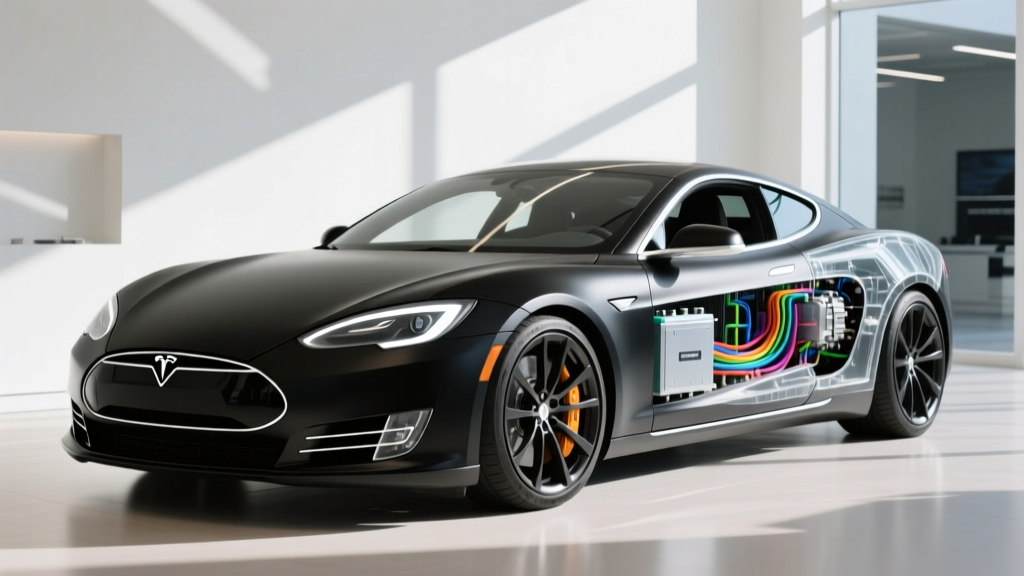
Instead of 100+ ECUs, Rivian uses a handful of high-performance compute zones grouped by physical location in the vehicle (front, rear, left, right). Each zone controller handles every electrical function within its geographic area. This yields three concrete benefits:
- ~44 lb (20 kg) of copper wiring eliminated — zone controllers sit close to the components they serve, so short low-voltage runs replace long harnesses spanning the vehicle.
- ~1,700 fewer connectors — each connector is a potential corrosion or failure point; removing them lifts long-term reliability.
- Unified software stack — Rivian writes and controls all zone-controller firmware, enabling OTA updates that can touch braking, suspension, lighting, and infotainment in a single push, without negotiating with 40 Tier-1 supplier black boxes.
For owners, the payoff is tangible: faster, more ambitious OTA features (Rivian shipped suspension retunes, regen refinements, and camp-mode upgrades all via software), easier diagnostics, and a wiring harness that is dramatically simpler to service if a fault does occur.
2026 R1T & R1S: Hard Specs at a Glance
| Attribute | Value |
|---|---|
| EPA range (Std Pack, 92.5 kWh usable) | 270 mi |
| EPA range (Large Pack, 119 kWh usable, NMC) | 352 mi (R1T Dual-Motor) |
| Battery chemistry | NMC (Std & Large); LFP on entry Std Pack trims in select markets |
| Peak DC fast-charge rate | ~205 kW (Large Pack) |
| 10–80% DC fast charge time | ~30 min (Large Pack, preconditioned) |
| Level 2 home charge rate | 11.5 kW onboard (~30 mi/hr on a 48A/240V circuit) |
| 0–60 mph (Dual-Motor AWD) | 4.5 sec |
| 0–60 mph (Tri-Motor AWD) | 2.9 sec |
| Horsepower (Dual-Motor / Tri-Motor) | 533 hp / 850 hp |
| Drivetrain | AWD standard, dual- or tri-motor |
| Efficiency (Dual-Motor Large) | 73 MPGe combined / ~46 kWh/100 mi |
| Towing capacity | 11,000 lb (R1T) |
| Battery/powertrain warranty | 8 yr / 175,000 mi, 70% capacity retention |
| Base MSRP (R1T Dual-Motor Standard) | $69,900 |
R1S SUV variants mirror these powertrains with ~5–10 mi less range and slightly lower MPGe due to higher curb weight and a larger frontal area. Full EPA data is published at fueleconomy.gov.
Real-World Range: What the EPA Sticker Doesn't Say
- EPA combined: 352 mi
- Real-world highway (70–75 mph, 70°F): ~300–315 mi
- Real-world mixed city/highway: ~325 mi
- Cold weather (20°F, highway): ~240–260 mi
- Towing 5,000 lb trailer: ~170–190 mi
The R1T's boxy, truck-shaped aero hurts highway efficiency more than it does in a sedan like the Tesla Model S or Lucid Air. The heat pump standard on Gen 2 limits cold-weather HVAC draw, but lithium-ion chemistry itself loses usable capacity and charge acceptance below freezing — preconditioning the battery before a fast-charge stop is essential, and the navigation system does this automatically when a Supercharger or Rivian Adventure Network station is set as the destination.
If your commute is mostly sub-60 mph suburban driving, expect to meet or slightly beat EPA. If you spend most miles at 80 mph on I-70 in January, plan around ~60% of sticker range to keep a comfort margin.
Charging: DC Fast Curve, Home Level 2, and Connector Reality
Rivian uses the NACS (Tesla-style) charge port on all 2026 R1T and R1S vehicles, giving native access to Tesla Superchargers without an adapter — a significant network advantage over CCS-only competitors.
| Method | Power | Added per hour | Notes |
|---|---|---|---|
| 120V Level 1 (standard outlet) | ~1.4 kW | ~3 mi/hr | Emergency/trickle only |
| 240V Level 2, 48A wall connector | 11.5 kW | ~30 mi/hr | Full charge overnight, ~10–12 hr |
| DC fast charge, peak | 205 kW | — | Only sustained between ~15–55% SoC |
| DC fast charge, 10–80% | — | — | ~30 min, preconditioned |
| DC fast charge, 80–100% | <40 kW | — | Steep taper; avoid on road trips |
The charge curve is where the zonal architecture quietly earns its keep. Rivian's thermal-management system — coordinated by the zone controllers rather than a separate ECU — can ramp cooling fluid flow precisely as the pack approaches its peak acceptance rate, then taper aggressively past 80% SoC to protect long-term health. The result is a curve that is competitive with Hyundai/Kia's 800V E-GMP platform at the low end but falls off faster above 80%. For road-trip planning, target 10–80% stops and skip the last 20% unless you're ending the day.
At home, a 60A/240V circuit with a hardwired wall connector delivers the full 11.5 kW. Budget roughly $800–$1,800 for installation if your panel has capacity; a 200A panel upgrade can add $1,500–$3,000. Always have a licensed electrician confirm wire gauge and breaker sizing — undersizing is a fire risk.
Pricing, Trims, and Federal Tax Credit Eligibility
| Trim | Base MSRP | §30D credit (est.) | Effective price |
|---|---|---|---|
| Dual-Motor Standard Pack | $69,900 | Up to $7,500* | ~$62,400 |
| Dual-Motor Large Pack | $75,900 | Up to $7,500* | ~$68,400 |
| Tri-Motor Large Pack | $99,900 | Up to $7,500* | ~$92,400 |
| Quad-Motor (if equipped) | ~$119,000 | $0 (over MSRP cap) | ~$119,000 |
* Under IRS §30D, the $7,500 credit requires: (1) the buyer's AGI under $150,000 single / $300,000 married-filing-jointly; (2) the vehicle MSRP at or below $80,000 for pickups/SUVs; (3) battery-critical-mineral and battery-component sourcing thresholds that tighten annually. Credits can be transferred to the dealer as a point-of-sale rebate. Verify current-year rules at irs.gov and with a tax professional before purchase — sourcing rules have disqualified several otherwise-eligible models in recent years.
The $80,000 MSRP cap for trucks/SUVs is the critical line: Dual-Motor trims typically clear it, while Tri-Motor and any Quad-Motor build exceed it and lose the federal credit entirely. State incentives (Colorado, California, Massachusetts, etc.) may stack on top and are not subject to the same caps, but vary by jurisdiction.
Cargo, Passenger Space, and the Gear Tunnel Advantage
The R1T's party trick remains the Gear Tunnel — a 1.8-meter (69 in) lockable, weatherproof pass-through between the cab and the bed that no body-on-frame competitor offers. Combined with the ~11 cu ft frunk and a 4.5-ft bed (extendable with the tailgate down), usable enclosed cargo volume is closer to a large SUV than a traditional midsize truck.
- R1T frunk: 11.0 cu ft
- R1T Gear Tunnel: 11.7 cu ft
- R1T bed (tailgate up): 27.2 cu ft
- R1S cargo behind 3rd row: 10.5 cu ft
- R1S cargo, 3rd row folded: 57.1 cu ft
- R1S cargo, all rows folded: 104.7 cu ft
- Front legroom (both R1T/R1S): 41.3 in
- Rear legroom (R1T crew cab): 38.2 in
The R1S's third row is best for children or short trips; adults will find the seat cushion low and knee room tight. For families needing true 7-seat comfort, the Kia EV9 or a three-row PHEV remains a more honest choice.
Driver Assistance, Infotainment, and OTA Value
Standout tech enabled directly by the zonal architecture:
- Driver+ hands-off highway assist with driver-monitoring camera on 15.6-inch center display.
- Full-vehicle OTA updates covering powertrain, suspension damping, lighting choreography, and HVAC logic — not just infotainment.
- Camp Mode, Pet Mode, Gear Guard (camera-monitored bed security) all updated in-place via software.
- Native NACS navigation with preconditioning coordinated across zones for optimal charge-stop arrival SoC.
Notable drawbacks: the R1T/R1S still lacks Apple CarPlay/Android Auto (Rivian insists on its own stack), the glass roof admits substantial solar heat in summer, and panel-gap consistency, while improved on Gen 2, still trails Lexus or Porsche standards at these price points.
Pros, Cons, and Who This EV Suits Best
- Class-leading enclosed cargo versatility (Gear Tunnel + frunk + bed)
- NACS port = native Supercharger access
- 11,000-lb towing capacity (R1T) with integrated trailer brake controller
- Zonal architecture enables deep, fast OTA improvements
- Off-road capability genuine, not cosmetic (air suspension + quad-motor torque vectoring)
- 8 yr / 175,000 mi battery warranty exceeds industry norm
- Highway real-world range noticeably below EPA due to truck aero
- No CarPlay/Android Auto
- Tri-Motor and above lose §30D credit over MSRP cap
- Towing cuts range roughly in half — plan accordingly
- Service-center footprint still limited outside major metros
- Insurance premiums run 15–25% above comparable ICE trucks
Best for: Outdoor-active households who want a daily-driver truck or SUV with genuine off-road and towing capability, have Level 2 charging at home, and mostly road-trip within the Supercharger/Rivian Adventure Network footprint.
Look elsewhere if: You regularly tow more than 5,000 lb over long distances (consider a heavy-duty diesel until EV towing range catches up), live in a charging-desert region, or need a third row for adults (R1S, EV9, or a three-row PHEV).
Rivian R1T/R1S vs Key Competitors
Against the Ford F-150 Lightning, the R1T wins on performance, build feel, and software sophistication but loses on rear-seat space, dealer service access, and starting price (the Lightning still undercuts by ~$15,000). Against the Chevrolet Silverado EV, the Rivian is more refined and off-road capable; the Silverado EV wins on max towing and work-truck utility. Against the Tesla Cybertruck, the R1T is more conventional, more serviceable, and offers an enclosed bed via the Gear Tunnel — the Cybertruck counters with slightly better highway efficiency and a polarizing-but-distinctive design.
The zonal architecture is the differentiator that compounds over time: five years from now, an R1T will likely have received suspension, thermal, and driver-assist upgrades that a body-on-frame competitor's ECU fragmentation simply cannot match via OTA.
Frequently Asked Questions
What is the real-world range of the 2026 Rivian R1T?
EPA rates the Dual-Motor Large Pack at 352 mi combined. Expect ~300–315 mi on real highway driving at 70–75 mph in mild weather, ~240–260 mi in sub-freezing highway driving, and ~170–190 mi while towing a 5,000-lb trailer.
How fast does the R1T/R1S charge at home and on the road?
On a 48A Level 2 home charger, 11.5 kW delivers about 30 mi/hr, filling a Large Pack overnight. On a DC fast charger, the Large Pack peaks at ~205 kW and reaches 10–80% in roughly 30 minutes when preconditioned. Above 80% SoC, charge rate tapers sharply — skip it on road trips.
Does the Rivian R1T qualify for the $7,500 federal EV tax credit?
Dual-Motor trims under the $80,000 MSRP cap for trucks/SUVs can qualify, subject to IRS §30D income caps ($150k single / $300k MFJ) and annual-tightening battery-sourcing rules. Tri-Motor builds typically exceed the MSRP cap and lose the federal credit. Verify at irs.gov and with a tax professional before purchase.
Is the R1T worth buying vs the F-150 Lightning or Silverado EV?
If you value software sophistication, off-road capability, NACS Supercharger access, and the Gear Tunnel's enclosed cargo, yes. If you need maximum rear-seat space, lowest purchase price, or a nationwide dealer service network, the Lightning or Silverado EV may fit better.
What are the biggest pros and cons of Rivian's zonal architecture?
Pros: 44 lb of wiring removed, ~1,700 fewer connectors to fail, and a unified software stack that enables deep OTA updates across powertrain and chassis. Cons: repairs require Rivian-trained technicians (less DIY-friendly than a conventional ECU swap), and early-adopter software bugs can affect multiple systems at once until patched.
What is Rivian's battery and powertrain warranty?
8 years / 175,000 miles with a 70% capacity-retention threshold — above the industry-standard 100,000 mi. Bumper-to-bumper is 5 years / 60,000 miles.
Sources: EPA fueleconomy.gov; Rivian official spec sheets; IRS §30D Clean Vehicle Credit guidance. Specs reflect 2026 model-year data available at time of publication; always confirm final figures with your dealer before ordering.