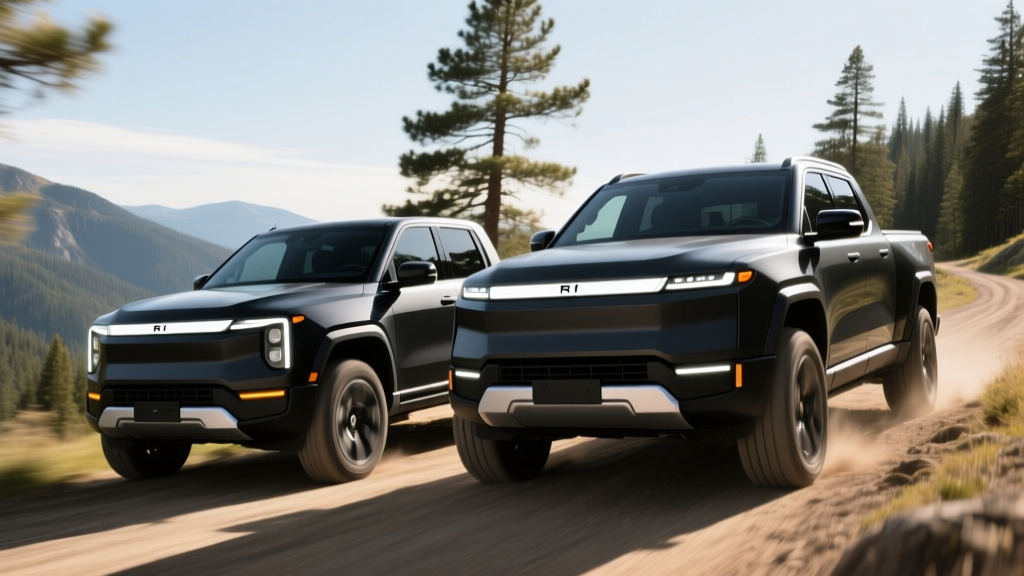
If you've been searching Rivian what brand and wondering whether this American EV maker deserves a spot in your driveway, you're not alone. Rivian has carved out a distinct identity since delivering its first R1T pickup in late 2021, positioning itself as the premium adventure-electric alternative to Tesla, Ford, and legacy luxury SUVs. As of the 2026 model year, Rivian fields two core vehicles — the R1T pickup and the R1S three-row SUV — both riding the company's updated Gen 2 platform with dual- and quad-motor powertrains, NMC and LFP battery options, and a growing North American Supercharger-compatible charging footprint.
This guide breaks down everything a prospective buyer needs: real-world range, charging speeds, pricing after federal tax credits, and whether a Rivian makes financial and practical sense versus the competition.
Rivian at a Glance: Brand Overview & Lineup
Rivian Automotive, Inc. is headquartered in Irvine, California, with manufacturing in Normal, Illinois. Founded in 2009 by RJ Scaringe, the company went public in November 2021 and has since delivered over 150,000 vehicles. Unlike legacy automakers retrofitting gas platforms, Rivian designed its skateboard architecture from the ground up for electric propulsion, yielding a low center of gravity, flat floor, and the signature gear tunnel (a full-width pass-through storage compartment unique to the R1T).
The 2026 lineup consists of:
- R1T — A midsize crew-cab electric pickup (5-passenger, ~4.5-foot bed)
- R1S — A three-row electric SUV (7-passenger, based on the same platform)
Both vehicles share powertrains, battery packs, and most technology, differing primarily in body style, cargo configuration, and rear-passenger space.
2026 Rivian R1T & R1S: Core Specifications
| Specification | Dual-Motor (Standard Pack) | Dual-Motor (Large Pack) | Quad-Motor (Max Pack) |
|---|---|---|---|
| EPA Range (R1T) | 270 mi | 352 mi | 420 mi |
| EPA Range (R1S) | 261 mi | 340 mi | 410 mi |
| Battery Capacity (usable) | 92 kWh (LFP) | 128 kWh (NMC) | 149 kWh (NMC) |
| Horsepower | 533 hp | 533 hp | 1,025 hp |
| 0-60 mph | 4.5 sec | 4.5 sec | 2.9 sec |
| Drivetrain | AWD (dual-motor) | AWD (dual-motor) | AWD (quad-motor) |
| Max DC Fast Charge | 200 kW | 220 kW | 220 kW |
| 10-80% DC Charge Time | ~28 min | ~30 min | ~36 min |
| Level 2 Home Charging | 11.5 kW (~25 mi/hr) | 11.5 kW (~25 mi/hr) | 11.5 kW (~25 mi/hr) |
| Towing Capacity | 11,000 lbs | 11,000 lbs | 11,000 lbs |
| Efficiency (R1T Dual-Motor) | 70 MPGe combined / 48 kWh/100 mi | ||
| Base MSRP (R1T Dual-Motor) | $69,900 (before incentives) | ||
Source: EPA / fueleconomy.gov, Rivian official specifications. R1S figures are slightly lower due to increased weight and less aerodynamic profile.
Real-World Range: What the EPA Sticker Doesn't Tell You
The R1T Dual-Motor Large Pack carries an EPA-estimated 352 miles of range. In real-world mixed driving, expect ~290-310 miles under normal conditions. Sustained highway driving at 75+ mph drops this to ~260-280 miles due to the R1T's truck aerodynamics. In cold weather (below 30°F), plan for a 15-25% reduction, bringing effective range to ~220-260 miles on the Large Pack.
The Max Pack's 420-mile EPA rating translates to roughly ~340-360 real-world miles in temperate mixed driving — enough for most road trips with a single charge stop. However, the 149 kWh NMC pack adds significant weight (~300 lbs over the Large Pack), which slightly reduces efficiency in stop-and-go driving.
Rivian's LFP-equipped Standard Pack models trade range for longevity and lower cost. LFP (lithium iron phosphate) chemistry tolerates daily 100% charging without the degradation concerns of NMC, making it ideal for commuters who can charge at home nightly. The trade-off: less energy density, meaning fewer total miles per charge and reduced cold-weather performance (LFP loses more capacity in freezing temps than NMC).
Charging Speed & Infrastructure: DC Fast + Home Level 2
| Charging Method | Power / Rate | Miles Added per Hour | Notes |
|---|---|---|---|
| Level 1 (120V household) | ~1.4 kW | ~3 mi/hr | Emergency/top-up only |
| Level 2 (240V home, 48A) | 11.5 kW | ~25 mi/hr | Full charge overnight (~10-12 hrs for Large Pack) |
| DC Fast Charge (peak) | 200-220 kW | ~650-700 mi/hr (at peak) | 10-80% in 28-36 min; tapers significantly above 80% |
| Tesla Supercharger (NACS adapter) | Up to ~200 kW | ~600 mi/hr (at peak) | Adapter included with 2025+ models; access to 25,000+ stalls |
Rivian's DC fast charging curve is competitive but not class-leading. The Large Pack peaks at 220 kW but tapers to ~100 kW by 60% SoC and drops below 50 kW past 80%. This means a 10-80% session takes roughly 30 minutes, but charging from 80-100% can add another 25-30 minutes. For road trips, the practical strategy is to charge to 80% and move on — a pattern common to most NMC-equipped EVs.
One major advantage for 2026: Rivian now provides a NACS (North American Charging Standard) adapter with new vehicles, granting access to Tesla's Supercharger network — widely regarded as the most reliable DC fast-charging infrastructure in North America. This significantly reduces charging-desert anxiety on long road trips.
Pricing, Trims & Federal Tax Credit Eligibility
| Trim / Configuration | Base MSRP | Federal Tax Credit (§30D) | Effective Price (if eligible) |
|---|---|---|---|
| R1T Dual-Motor Standard Pack | $69,900 | Up to $7,500 | ~$62,400 |
| R1T Dual-Motor Large Pack | $75,900 | Up to $7,500 | ~$68,400 |
| R1T Quad-Motor Max Pack | $99,900 | $0 (exceeds MSRP cap) | $99,900 |
| R1S Dual-Motor Standard Pack | $74,900 | Up to $7,500 | ~$67,400 |
| R1S Dual-Motor Large Pack | $79,900 | Up to $7,500 | ~$72,400 |
| R1S Quad-Motor Max Pack | $104,900 | $0 (exceeds MSRP cap) | $104,900 |
Tax credit caveats (2026 rules per IRS §30D):
- MSRP cap: Vans, SUVs, and pickups qualify up to $80,000 MSRP. The Quad-Motor Max Pack trims exceed this cap and do not qualify.
- Income cap: Modified AGI must not exceed $150,000 (single), $225,000 (head of household), or $300,000 (joint filers).
- Battery sourcing: A percentage of critical minerals and battery components must be sourced from the U.S. or free-trade-agreement countries. Rivian's U.S.-assembled vehicles generally meet these thresholds, but buyers should verify current-year compliance at the point of sale.
- Point-of-sale transfer: Eligible buyers can transfer the credit to the dealer at purchase, reducing the out-of-pocket price immediately rather than waiting for a tax refund.
Because Rivian assembles all vehicles in Normal, Illinois, the domestic-assembly requirement is satisfied. However, tax rules evolve — always confirm eligibility with your tax professional and the IRS portal before purchasing.
Interior, Cargo & Technology
The R1T and R1S share a minimalist, tech-forward cabin dominated by a 15.6-inch center touchscreen and a 12.3-inch digital instrument cluster. Rivian runs its own proprietary infotainment OS (not Android Automotive), which offers clean graphics and responsive performance but lacks native Google Maps or the broader Play Store app ecosystem found in vehicles like the Hyundai Ioniq 5 or Polestar 3.
R1T cargo dimensions:
- Bed length: 54.0 inches (4.5 feet)
- Gear tunnel: 11.0 cu ft (lockable, climate-adjacent pass-through)
- Frunk (front trunk): 11.0 cu ft
- Total cargo volume (bed + tunnel + frunk): ~45 cu ft of enclosed/covered storage
R1S cargo dimensions:
- Behind 3rd row: 10.6 cu ft
- Behind 2nd row (3rd row folded): 46.7 cu ft
- Behind 1st row (all rear rows folded): 104.6 cu ft
- Frunk: 11.0 cu ft
Passenger space: Both vehicles offer generous front-row legroom (41.4 inches). R1T rear legroom is 38.2 inches. R1S third-row legroom is a tight 30.4 inches — suitable for children or short trips, not adults on long drives.
Driver assistance: Rivian's Driver+ system provides SAE Level 2 lane-centering and adaptive cruise control on divided highways. It is not a hands-free system like GM's Super Cruise or Ford's BlueCruise — the driver must maintain steering-wheel contact and visual attention at all times. Rivian has been steadily improving Driver+ through over-the-air updates, but it remains a generation behind Tesla's Autopilot in terms of confidence and lane-change fluidity.
Rivian Driver+ is an SAE Level 2 driver-assistance system. The driver must remain fully engaged, hands on or near the wheel, and eyes on the road at all times. This is not autonomous or self-driving capability.
Warranty & Long-Term Ownership
Rivian backs both the R1T and R1S with:
- Vehicle limited warranty: 5 years / 60,000 miles
- Battery & drive unit warranty: 8 years / 175,000 miles (retains ≥70% of original capacity)
- Corrosion warranty: 5 years / unlimited miles
The 175,000-mile battery warranty is among the most generous in the EV segment, exceeding Tesla's 120,000-150,000-mile coverage on most models and matching Hyundai/Kia's benchmark. The 70% capacity-retention threshold is industry-standard, though some competitors (like GM) use the same threshold.
One ownership consideration: Rivian operates a direct-to-consumer sales and service model (no franchised dealers). Service is handled through Rivian-owned service centers and a mobile service fleet. Coverage is expanding but remains sparse in rural areas compared to Ford or Toyota dealer networks. Buyers outside major metro areas should verify service accessibility before purchasing.
Rivian vs. the Competition: Is It Worth Buying?
Pros
- Class-leading adventure capability (11,000-lb towing, 14.9" ground clearance, quad-motor tank turns)
- Unique gear tunnel storage (R1T) — no competitor offers equivalent enclosed cross-cab storage
- Excellent build quality and materials for a startup — rivals Audi/BMW fit and finish
- NACS Supercharger adapter included — access to the best DC fast-charging network
- Strong 8-yr/175,000-mi battery warranty
- U.S.-assembled in Illinois — qualifies for §30D credit (income/MSRP permitting)
Cons
- Expensive: $69,900+ starting; Max Pack trims push past $100K with no tax credit
- DC fast charging peaks at 220 kW — slower than Hyundai/Kia E-GMP (350 kW capable) or Tesla (250 kW)
- Driver+ (Level 2 ADAS) lags Tesla Autopilot and GM Super Cruise in refinement
- Service network still limited outside major metros
- R1S third row is cramped for adults
- Proprietary infotainment lacks Android Automotive / Google built-in
Key competitors and how the Rivian stacks up:
- Tesla Cybertruck: Polarizing design, faster charging (250 kW Supercharger native), but worse build quality reputation and no gear tunnel. Priced similarly ($79,990+ for AWD).
- Ford F-150 Lightning: More affordable (starting ~$55,000), broader service network, but lower range (320 mi max) and less premium interior.
- Chevrolet Silverado EV: Competitive range (up to 450 mi on Max Range), but availability and pricing vary. Less refined ride quality.
- Kia EV9 (SUV alternative to R1S): Starting ~$55,000, 800V architecture (faster charging), but no off-road capability and smaller overall.
- Choose Rivian R1T if: You want a premium electric pickup for weekend adventures, camping, light-to-medium towing (≤11,000 lbs), and daily driving — and you value build quality and unique storage (gear tunnel) over the lowest possible price.
- Choose Rivian R1S if: You need a three-row electric SUV with genuine off-road capability and a premium cabin, and your third-row passengers are primarily children. The R1S makes sense for active families who tow boats or trailers and want Supercharger access.
- Look elsewhere if: Budget is the primary concern (F-150 Lightning or EV9 offer more value), you need best-in-class charging speed (Hyundai/Kia 800V platforms), or you require hands-free highway driving (GM Super Cruise).
Frequently Asked Questions
What is the real-world range of a Rivian R1T?
The EPA-estimated range for the R1T Dual-Motor Large Pack is 352 miles. Real-world mixed driving typically yields 290-310 miles. Sustained highway driving at 75+ mph drops this to roughly 260-280 miles, and cold weather (below 30°F) can reduce range by 15-25%, resulting in approximately 220-260 usable miles.
How fast does a Rivian charge at home and on the road?
At home on a 240V Level 2 charger (48A / 11.5 kW), a Rivian adds approximately 25 miles of range per hour — a full Large Pack charge takes about 10-12 hours overnight. On DC fast chargers, the Large Pack peaks at 220 kW and charges from 10-80% in approximately 30 minutes. Charging slows considerably above 80% SoC due to battery-protective tapering.
How much does a Rivian cost after federal tax credits?
The 2026 R1T Dual-Motor Standard Pack starts at $69,900 and can drop to approximately $62,400 if you qualify for the full $7,500 federal tax credit (§30D). Eligibility depends on your income (≤$300K joint), the vehicle's MSRP (≤$80K for trucks/SUVs), and battery-sourcing compliance. Max Pack trims exceed the $80K MSRP cap and do not qualify. Always verify with a tax professional and the IRS §30D guidelines.
Does the Rivian R1T qualify for the $7,500 federal EV tax credit?
The R1T Dual-Motor Standard Pack ($69,900) and Large Pack ($75,900) qualify for up to $7,500 in federal tax credits, assuming the buyer meets income thresholds and battery-sourcing requirements are satisfied. The Quad-Motor Max Pack ($99,900) exceeds the $80,000 MSRP cap for pickups and does not qualify. Rivian's U.S. assembly in Illinois satisfies the domestic-assembly requirement.
Is Rivian a reliable brand compared to Tesla or Ford?
Rivian's build quality has improved significantly since early 2022 production, and owner satisfaction surveys (Consumer Reports, J.D. Power) consistently rank Rivian high for owner enthusiasm. However, the company's service network is far smaller than Ford's or Tesla's, and some early-build vehicles experienced software and component issues. The 8-year/175,000-mile battery warranty provides strong long-term protection.
Can a Rivian tow a trailer, and how does towing affect range?
All R1T and R1S configurations are rated to tow up to 11,000 lbs. However, towing at or near maximum capacity reduces range by approximately 40-50%. Towing a 5,000-lb camper at highway speeds, expect roughly 150-180 miles of range on the Large Pack — plan charge stops accordingly.
What charging connector does Rivian use?
2025 and newer Rivian vehicles come equipped with a NACS (Tesla-style) charge port and include an adapter for CCS stations. This provides access to both Tesla Superchargers and legacy CCS networks like Electrify America and EVgo. Older (2022-2024) Rivians have a CCS port and can use a NACS adapter for Supercharger access.
Sources: EPA / fueleconomy.gov, IRS §30D Clean Vehicle Credits, Rivian Automotive official specifications.