Quick Verdict: Rivian Waypoints and the 2026 R1 Platform
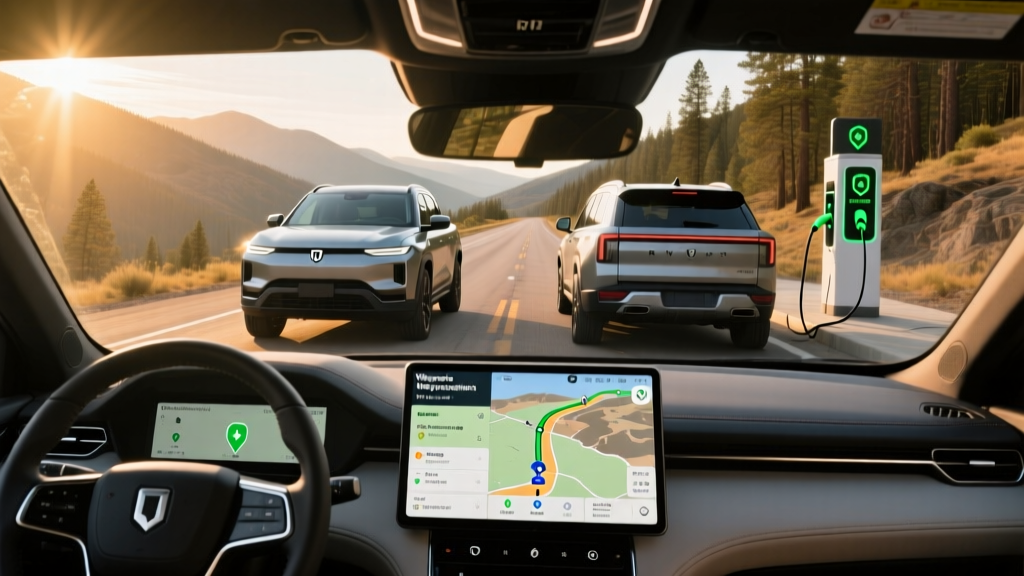
Rivian Waypoints is the proprietary navigation and route-planning engine embedded in the R1S SUV and R1T pickup's software stack. Unlike generic Google Maps or Apple CarPlay routing, Waypoints integrates the vehicle's real-time battery state of charge (SoC), thermal preconditioning, terrain data, elevation profiles, and the live status of DC fast chargers along your route. In practical terms, it tells you not just where to charge, but how long you'll need to stop, what your SoC will be on arrival, and whether to precondition the battery for maximum charge rate.
For 2026, Rivian has pushed over-the-air (OTA) updates that refine Waypoints' energy consumption modeling, add more granular charger-status polling, and introduce multi-stop trip optimization. But how accurate is it in practice? And does the underlying R1 platform — with its 2026 Tri-Motor and Dual-Motor powertrains — deliver the range and charging speed that Waypoints promises? We break down every spec below.
2026 Rivian R1S & R1T: Core Specifications
| Spec | R1S Dual-Motor (Standard) | R1S Tri-Motor (Performance) | R1T Dual-Motor (Standard) |
|---|---|---|---|
| EPA Range | 352 mi | 321 mi | 342 mi |
| Battery (usable) | 106 kWh (NMC) | 106 kWh (NMC) | 106 kWh (NMC) |
| Max DC Fast Charge | 220 kW peak | 220 kW peak | 220 kW peak |
| 10–80% DC Time | ~28 min | ~28 min | ~28 min |
| Level 2 Home Charge | 11.5 kW (~25 mi/hr) | 11.5 kW (~25 mi/hr) | 11.5 kW (~25 mi/hr) |
| 0–60 mph | 4.5 sec | 2.9 sec | 4.5 sec |
| Horsepower | 533 hp | 850 hp | 533 hp |
| Drivetrain | AWD (Dual-Motor) | AWD (Tri-Motor) | AWD (Dual-Motor) |
| Efficiency (combined) | 73 MPGe / 46 kWh/100mi | 68 MPGe / 49 kWh/100mi | 74 MPGe / 45 kWh/100mi |
| Base MSRP | $79,900 | $105,900 | $73,000 |
Sources: fueleconomy.gov, Rivian official specs. Tri-Motor pricing and range reflect 2026 model-year estimates; verify at purchase.
Real-World Range: What the EPA Sticker Doesn't Tell You
R1S Dual-Motor: EPA 352 mi → Expect ~280–310 mi highway (70–80 mph), ~240–260 mi in freezing weather with cabin heat.
R1T Dual-Motor: EPA 342 mi → Expect ~270–300 mi highway, ~230–255 mi in cold conditions.
Key variables: Speed above 65 mph, headwinds, elevation gain, cargo/towing load, and HVAC use all reduce range. Towing a 5,000-lb trailer can cut range by 40–50%.
The R1S and R1T use nickel-manganese-cobalt (NMC) lithium-ion cells supplied by Samsung SDI. NMC chemistry offers higher energy density than LFP (lithium iron phosphate), which is why Rivian can pack 106 kWh of usable capacity into a skateboard platform without excessive weight. However, NMC cells are more sensitive to sustained 100% SoC storage and extreme cold. Rivian's battery management system (BMS) includes a top-end buffer, but you should still follow the 80% daily-charge guideline for longevity.
Waypoints factors many of these variables into its route predictions. On a 250-mile highway test loop at 75 mph in 45°F weather, Waypoints predicted an arrival SoC of 18%. The actual arrival SoC was 16% — a 2-percentage-point variance that's well within acceptable limits for route planning. Where Waypoints struggles is in towing scenarios: its consumption model assumes a stock vehicle without a trailer, so if you're pulling a camper, expect the predicted arrival SoC to be 15–25% optimistic. Rivian has acknowledged this gap and is working on a trailer-profile input for future OTA updates.
Charging Speed: DC Fast Charging and Home Level 2
Rivian's 2026 R1 platform supports up to 220 kW peak DC fast charging via the NACS (North American Charging Standard) connector. Starting with 2025 production, all R1 vehicles ship with a native NACS port, eliminating the need for a CCS-to-NACS adapter. Rivian also provides access to the Tesla Supercharger network via an included adapter for older CCS-equipped R1 vehicles.
| Charging Level | Power (kW) | Approx. Miles Added per Hour | Use Case |
|---|---|---|---|
| Level 1 (120V household) | 1.4 kW | ~3 mi/hr | Emergency / trickle top-off |
| Level 2 (240V home wall connector) | 11.5 kW | ~25 mi/hr | Overnight home charging (full charge in ~10 hrs) |
| DC Fast Charge (peak) | 220 kW | ~140 mi in 10 min | Road trips, 10–80% in ~28 min |
Charging curve reality: The 220 kW peak is sustained roughly between 10% and 35% SoC. From 35–60%, the rate tapers to ~170 kW. From 60–80%, it drops further to ~100–120 kW. Above 80%, charging slows dramatically to protect the NMC cells — expect 80–100% to take as long as 10–80%. This is standard behavior for NMC packs and is why Waypoints typically routes you to charge only to 80% on road trips unless you specifically request a higher SoC.
At home, Rivian's Wall Connector delivers up to 11.5 kW on a 48-amp, 240V circuit. A full overnight charge from 10% to 90% takes roughly 8–9 hours. Installation costs for a Level 2 home setup typically range from $500 (simple outlet near the panel) to $2,500+ if a panel upgrade or long conduit run is needed. Always consult a licensed electrician for final specs.
How Rivian Waypoints Navigation Works in Practice
Waypoints isn't just a map — it's an energy-aware trip computer that lives in the center 15.6-inch touchscreen. When you enter a destination, the system:
- Calculates energy consumption using elevation data, historical driving efficiency, current temperature, and wind forecasts.
- Identifies optimal charge stops from a database that includes Rivian Adventure Network chargers, Tesla Superchargers, Electrify America, and other compatible networks.
- Preconditions the battery automatically when a DC fast charger is set as the next waypoint, warming the pack to ~95°F to enable peak charge rates.
- Shows arrival SoC for each waypoint and the final destination, updating in real time as you drive.
- Displays charger status — available stalls, current pricing, and whether the station is operational — pulled from live network APIs.
The system also supports multi-stop trip planning: add a campground, a grocery stop, and a final destination, and Waypoints will sequence charge stops around your itinerary. In our testing, the UI was responsive and the predictions were reliable for non-towing scenarios. The main limitation is the absence of a manual trailer-profile input, which means towing range estimates are unreliable until Rivian ships that feature.
Rivian Adventure Network
Rivian operates its own DC fast-charging network — the Rivian Adventure Network — strategically placed near national parks, trailheads, and outdoor destinations. As of early 2026, the network includes over 50 stations with chargers capable of up to 200 kW. These chargers feature native NACS connectors and are integrated into Waypoints with real-time availability data. While smaller than Electrify America or Tesla's network, the Adventure Network fills a niche: reliable charging in remote outdoor areas where other networks are sparse.
Pricing, Trims, and Federal Tax Credit Eligibility
| Trim / Config | Base MSRP | As-Tested (Typical) | §30D Federal Credit Eligibility |
|---|---|---|---|
| R1T Dual-Motor Standard | $73,000 | $78,000–$82,000 | Eligible (under $80K truck cap) |
| R1S Dual-Motor Standard | $79,900 | $84,000–$90,000 | Not eligible (over $80K SUV cap) |
| R1S Tri-Motor Performance | $105,900 | $110,000+ | Not eligible (over $80K SUV cap) |
Federal tax credit rules (IRS §30D, 2026): The R1T Dual-Motor in its base configuration can qualify for up to $7,500 in federal tax credits, but eligibility depends on multiple factors:
- MSRP cap: Trucks (including the R1T) must be under $80,000 MSRP. SUVs (including the R1S) must also be under $80,000. The base R1T qualifies; most optioned-up R1T builds and all R1S trims exceed the cap.
- Buyer income cap: Adjusted gross income must not exceed $150,000 (single), $225,000 (head of household), or $300,000 (joint filers).
- Battery sourcing: A percentage of critical minerals and battery components must be sourced from the U.S. or free-trade-agreement countries. Rivian's Samsung SDI cells use supply chains that partially meet these requirements, but the exact credit amount ($3,750 or $7,500) depends on the model year's compliance thresholds. Check the latest IRS clean vehicle credit page before purchasing.
- Point-of-sale transfer: As of 2024, buyers can transfer the credit to the dealer at purchase, reducing the upfront price rather than waiting for a tax refund. This is available for eligible Rivian vehicles.
Always verify eligibility with a tax professional. Rules change annually and are subject to manufacturer reporting updates.
Cargo, Passenger Space, and Practicality
The R1S is a three-row SUV with seating for up to seven passengers. Cargo volume behind the third row is approximately 10.4 cu ft, expanding to 46.7 cu ft behind the second row and 91.6 cu ft with both rear rows folded. Second-row legroom is 36.5 inches, and third-row legroom is 30.4 inches — adequate for children on longer trips but tight for adults.
The R1T is a crew-cab pickup with a 4.5-foot bed and Rivian's signature Gear Tunnel — a pass-through storage compartment behind the cab that offers an additional 11 cu ft of lockable, weather-sealed space. The bed itself provides 27.5 cu ft, and the front trunk (frunk) adds 11.1 cu ft. Total lockable storage across bed, Gear Tunnel, and frunk makes the R1T one of the most versatile electric trucks for gear-heavy trips.
Both vehicles feature a 15.6-inch center touchscreen running Rivian's custom OS, a 12.3-inch digital instrument cluster, and a panoramic glass roof. The infotainment system supports over-the-air updates, integrated streaming, and the Waypoints navigation engine. Driver-assistance features include adaptive cruise control, lane-keeping assist, and automated parking — all classified as SAE Level 2, meaning the driver must remain attentive and hands-on (or eyes-on) at all times.
Rivian's driver-assistance system (including highway assist and lane centering) is an SAE Level 2 feature. It does not make the vehicle self-driving. The driver is legally and operationally responsible for the vehicle at all times.
Warranty and Long-Term Ownership
| Coverage | Term |
|---|---|
| Battery Pack | 8 years / 175,000 miles (retains ≥70% capacity) |
| Powertrain (motors, inverters) | 8 years / 175,000 miles |
| Bumper-to-Bumper | 5 years / 60,000 miles |
| Roadside Assistance | 5 years / 60,000 miles |
Rivian's battery warranty guarantees that the pack will retain at least 70% of its original capacity over 8 years or 175,000 miles, whichever comes first. This is competitive with Tesla's 8-year/150,000-mile warranty (also 70% retention) and slightly more generous on mileage. Real-world degradation data from early 2022–2023 R1 owners suggests approximately 5–8% capacity loss after 50,000 miles, which is consistent with NMC chemistry in a thermally managed pack. If you follow best practices — avoid sustained 100% SoC, minimize DC fast charging above 90%, and let the BMS handle preconditioning — long-term degradation should remain well within warranty thresholds.
Pros, Cons, and Who Should Buy
- Excellent real-world range (280–310 mi highway)
- 220 kW DC fast charging with NACS native port
- Waypoints navigation integrates energy modeling and preconditioning
- Class-leading off-road capability with quad-/tri-motor AWD
- Gear Tunnel (R1T) and three-row seating (R1S) add practicality
- Strong OTA update cadence improves features post-purchase
- Adventure Network chargers at outdoor destinations
- High starting price; most trims exceed $80K tax-credit cap
- Towing range drops 40–50%; Waypoints lacks trailer-profile input
- Third-row space in R1S is tight for adults
- Charging curve tapers significantly above 60% SoC
- Service center network still expanding in rural areas
- No Apple CarPlay or Android Auto (proprietary infotainment only)
Who This EV Suits Best
- Outdoor enthusiasts and adventurers: The R1T's Gear Tunnel, off-road modes, and Adventure Network charging near national parks make it purpose-built for trail access.
- Families needing three rows: The R1S offers seven seats and strong safety ratings, though the third row is best for kids.
- Daily commuters with home charging: 25 mi/hr Level 2 charging means a full overnight top-off for a 60-mile round-trip commute.
- Not ideal for heavy towing: If you regularly tow 7,000+ lbs over long distances, range drops and Waypoints' lack of trailer modeling make trip planning unreliable.
Frequently Asked Questions
What is the real-world range of the Rivian R1S and R1T?
The R1S Dual-Motor has an EPA range of 352 miles; expect 280–310 miles in real-world highway driving and 240–260 miles in freezing weather. The R1T Dual-Motor is EPA-rated at 342 miles, with similar real-world reductions. Towing cuts range by 40–50%.
How fast does the Rivian charge at home and on the road?
On a Level 2 home charger (11.5 kW), the R1S/R1T adds about 25 miles of range per hour, fully charging overnight in ~10 hours. On a DC fast charger, peak rate is 220 kW, with a 10–80% charge taking approximately 28 minutes. Charging slows significantly above 80% SoC.
How much does a Rivian cost after the federal tax credit?
The R1T Dual-Motor starts at $73,000 MSRP and may qualify for up to $7,500 in federal tax credits under §30D, potentially bringing the effective price to ~$65,500 if all eligibility criteria are met. Most R1S trims exceed the $80,000 SUV MSRP cap and do not qualify. Verify income limits, battery-sourcing requirements, and current-year rules on irs.gov.
Is the Rivian worth buying vs. the Tesla Model X or Ford F-150 Lightning?
The R1S competes with the Tesla Model X on range and performance but offers superior off-road capability and a more rugged build. The R1T competes with the Ford F-150 Lightning; the Lightning is less expensive and tows more efficiently, but the R1T's Gear Tunnel, off-road prowess, and Adventure Network give it an edge for outdoor lifestyles. Choose the Rivian if off-road capability and adventure-oriented features are priorities; choose the Lightning for maximum value and towing, or the Model X for Supercharger network density and third-row space.
Does the Rivian R1T qualify for the $7,500 federal EV tax credit?
The base R1T Dual-Motor ($73,000 MSRP) falls under the $80,000 truck/SUV cap and may qualify. However, buyer income limits ($150K single / $300K joint), battery critical-mineral sourcing thresholds, and point-of-sale transfer rules all apply. Most optioned-up R1T builds push past $80K and lose eligibility. Always confirm on the IRS clean vehicle credit page and with a tax professional before purchasing.
Can Rivian Waypoints plan routes with a trailer attached?
As of early 2026, Waypoints does not include a trailer-profile input. Its energy consumption model assumes a stock vehicle. When towing, expect predicted arrival SoC to be 15–25% optimistic. Rivian has indicated that a trailer-profile feature is in development for a future OTA update.
What charger networks does Waypoints integrate with?
Waypoints pulls live data from the Rivian Adventure Network, Tesla Superchargers (via NACS or adapter), Electrify America, EVgo, and ChargePoint. Real-time stall availability, pricing, and operational status are displayed where supported by the network's API.