The 2026 Tesla Model Y: Still the Benchmark or Losing Its Edge?
If you've searched "why is Tesla stock dropping" lately, you're not alone. The question has trended consistently as Tesla's share price has faced pressure from intensifying EV competition, shifting federal incentive landscapes, and margin compression driven by aggressive price cuts. But stock-market headwinds don't necessarily translate to a bad product. The 2026 Tesla Model Y remains one of the most capable electric SUVs on the market — though its dominance is no longer uncontested.
This review puts the 2026 Model Y under a data-driven microscope: real-world range versus EPA estimates, charging curve realities, tax-credit eligibility under current IRS §30D rules, and how it stacks up against the Hyundai Ioniq 5, Ford Mustang Mach-E, and Chevrolet Equinox EV. Whether you're a current owner evaluating an upgrade or a first-time EV buyer weighing options, this is the spec-heavy, hype-free breakdown you need.
Range, Battery, and Efficiency: The Numbers That Matter
The 2026 Model Y Long Range AWD carries a 78.1 kWh usable battery pack using NMC (nickel manganese cobalt) chemistry — chosen for its higher energy density compared to LFP, which Tesla reserves for the base RWD trim. The Long Range achieves an EPA-estimated 320 miles of range, while the base RWD model with its ~60 kWh LFP battery is rated at 280 miles EPA.
EPA 320 miles (Long Range AWD) sounds excellent on paper, but real-world results vary significantly by driving condition:
- City/commute driving (mild weather): ~305–330 miles — regen braking in stop-and-go traffic recovers energy efficiently
- Highway driving at 70–75 mph: ~255–280 miles — aerodynamic drag dominates at sustained speed
- Cold weather (below 32°F) highway: ~210–240 miles — battery heating and cabin climate draw can cut range 25–35%
- Towing (with 3,500-lb trailer): ~150–175 miles — expect roughly half the rated range under load
The Model Y's heat pump (standard since 2021) helps mitigate cold-weather losses compared to resistive heating, but physics is physics — plan for 20–30% reduction when temperatures drop below freezing.
| Spec | Long Range AWD | Performance AWD | RWD (Base) |
|---|---|---|---|
| EPA Range | 320 miles | 295 miles | 280 miles |
| Battery (usable) | 78.1 kWh (NMC) | 78.1 kWh (NMC) | ~60 kWh (LFP) |
| MPGe (combined) | 122 MPGe | 111 MPGe | 128 MPGe |
| kWh/100 mi | 28 kWh | 30 kWh | 26 kWh |
| 0–60 mph | 4.8 sec | 3.5 sec | 6.6 sec |
| Horsepower | 384 hp | 456 hp | 295 hp |
| Drivetrain | Dual-motor AWD | Dual-motor AWD | Single-motor RWD |
| Top Speed | 135 mph | 155 mph | 135 mph |
Efficiency remains a Tesla strong suit. At 28 kWh per 100 miles (Long Range), the Model Y converts electricity to motion with less waste than most competitors. The Hyundai Ioniq 5 AWD, for comparison, consumes roughly 30 kWh/100 mi. That 2 kWh difference translates to roughly 15–20 extra miles per full charge at similar battery sizes.
Charging Speed: DC Fast Charge and Home Level 2 Reality
Charging speed is where Tesla's Supercharger network advantage becomes tangible. The 2026 Model Y Long Range supports a peak DC fast-charge rate of 250 kW at V3 Superchargers and compatible third-party CCS/NACS stations. Tesla's published 10–80% time is approximately 27 minutes, though real-world sessions depend heavily on battery preconditioning and ambient temperature.
Here's where the charging curve matters: the Model Y peaks near 250 kW only between roughly 10–30% state of charge (SoC). From 30–60%, it sustains around 150–180 kW. Above 60%, it tapers to 80–100 kW, and past 80% it drops below 50 kW to protect battery longevity. This is why Tesla (and every other automaker) quotes 10–80% times rather than 0–100%.
| Charging Level | Power / Voltage | Speed (Miles/Hour) | Notes |
|---|---|---|---|
| Level 1 (120V outlet) | ~1.4 kW | ~4 mi/hr | Emergency/trickle only; ~80 hrs for full charge |
| Level 2 (240V, 48A) | 11.5 kW | ~37 mi/hr | Home Wall Connector; full charge in ~8.5 hrs |
| Level 2 (240V, 32A) | 7.7 kW | ~25 mi/hr | Common portable/mobile connector setup |
| DC Fast (V3 Supercharger) | 250 kW peak | ~1,000+ mi/hr (peak) | 10–80% in ~27 min with preconditioning |
| DC Fast (V4 Supercharger) | Up to 350 kW* | Varies | *Model Y currently capped at ~250 kW by onboard systems |
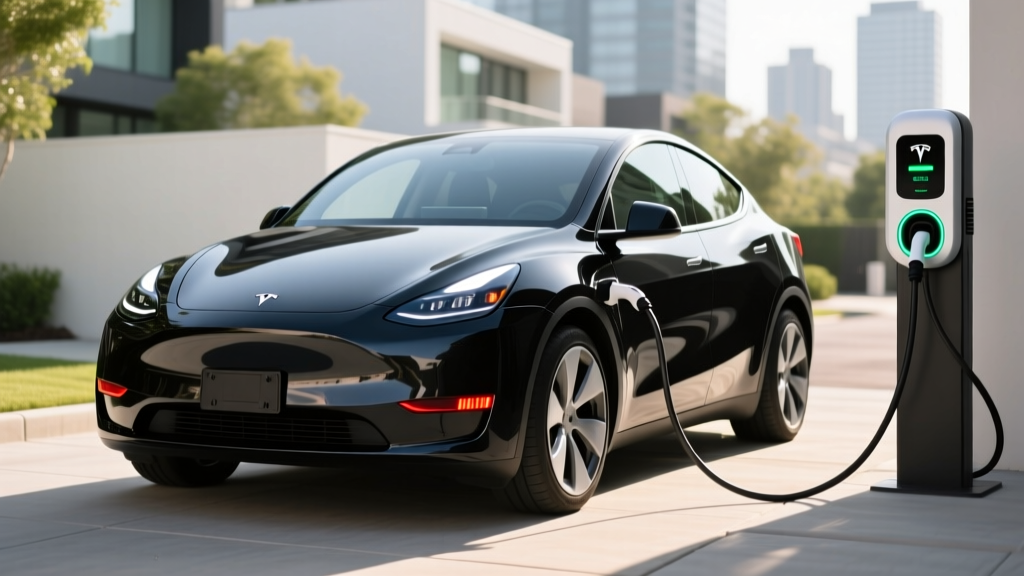
For home Level 2 charging, Tesla's Wall Connector at 48 amps delivers 11.5 kW, adding roughly 37 miles of range per hour. A full overnight session (8 hours) restores about 296 miles — enough to replenish nearly a full battery. Installation typically costs $800–$2,500 depending on whether your electrical panel needs an upgrade to support a 60-amp circuit (the charger draws 48A continuous, which requires a breaker rated at 125% of that, or 60A). Always consult a licensed electrician for final specs.
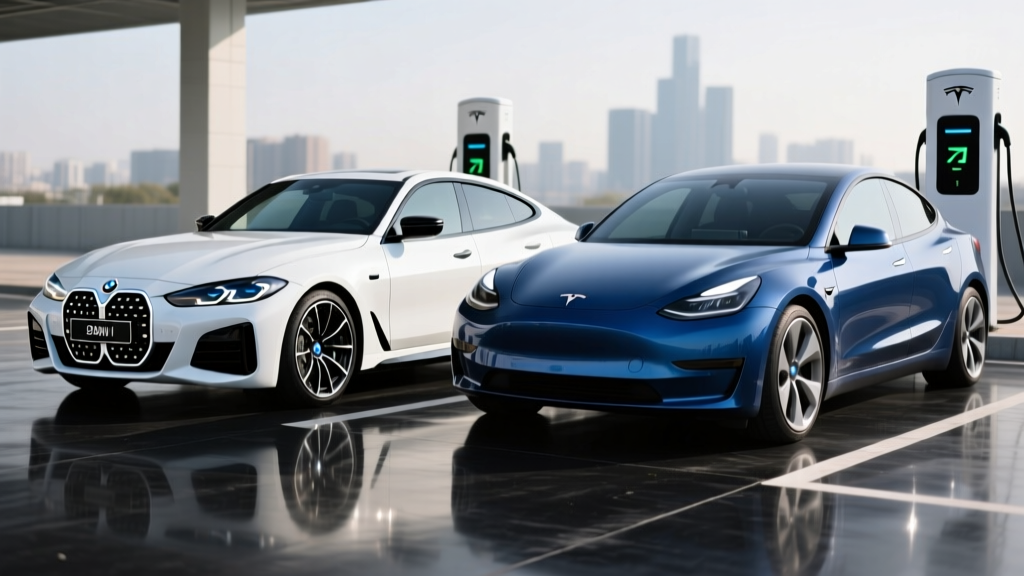
One important 2026 development: Tesla's Supercharger network is now open to non-Tesla EVs via the NACS (North American Charging Standard) connector, which has been adopted by Ford, GM, Rivian, Hyundai, and most major automakers. This means the Supercharger advantage is no longer exclusive — but the network's reliability and density still lead the industry, with over 6,500 V3/V4 stalls across the U.S.
Pricing, Tax Credits, and Total Cost: What You'll Actually Pay
Tesla has adjusted Model Y pricing multiple times over the past two years, reflecting the competitive pressure that also partly answers why is Tesla stock dropping — margin compression from price cuts has weighed on investor sentiment. As of early 2026, here's where the lineup stands:
| Trim | Base MSRP | As-Tested (typical) | §30D Credit Eligible? | Effective Price (with credit) |
|---|---|---|---|---|
| RWD (Base) | $44,990 | $46,490 | Partial — up to $3,750* | ~$42,740 |
| Long Range AWD | $48,990 | $51,490 | Partial — up to $3,750* | ~$47,740 |
| Performance AWD | $53,990 | $56,990 | Partial — up to $3,750* | ~$53,240 |
*Critical tax-credit caveats: Under current IRS §30D rules, the full $7,500 federal tax credit requires meeting two separate $3,750 components — one for critical-mineral sourcing and one for battery-component manufacturing. As of 2026, many Tesla Model Y configurations qualify for only one component ($3,750) due to evolving battery-sourcing requirements. Additionally:
- MSRP cap: SUVs must be priced at or below $80,000 (all Model Y trims qualify)
- Buyer income cap: AGI must not exceed $150,000 (single), $225,000 (head of household), or $300,000 (joint) — verified on your tax return
- Point-of-sale transfer: You can transfer the credit to the dealer at purchase to reduce the upfront price, effective since Jan 1, 2024
- Battery sourcing rules tighten annually — always verify current-year eligibility on IRS.gov or with a tax professional before purchasing
The RWD trim's LFP battery chemistry (lithium iron phosphate) is worth noting: LFP cells are typically sourced from China (CATL), which faces restrictions under §30D's foreign-entity-of-concern (FEOC) rules. This is why the base model may see reduced or eliminated credit eligibility depending on the production month. Consult the fueleconomy.gov tax credit lookup for the most current VIN-specific eligibility.
Performance, Cargo, and Daily Livability
The Model Y's dual-motor AWD powertrain delivers 384 horsepower in the Long Range trim, launching it to 60 mph in 4.8 seconds — quicker than nearly every gasoline compact SUV in its price range. The Performance trim drops that to 3.5 seconds with 456 hp, putting it in sports-car territory. Single-motor RWD models manage 6.6 seconds, which is still brisk for daily driving.
Ride quality has improved incrementally with the 2025 refresh (carried into 2026), with revised damping and acoustic glass reducing cabin noise. It's firm by luxury-SUV standards but well-controlled. The steering is precise and confidence-inspiring, though some drivers find it overly weighted even in Comfort mode.
Cargo and passenger dimensions:
- Cargo volume (rear seats up): 30.2 cu ft
- Cargo volume (rear seats folded): 72.1 cu ft
- Front trunk (frunk): 4.1 cu ft — useful for charging cables, groceries, or a small bag
- Rear legroom: 40.5 inches — generous for adults on longer trips
- Front headroom: 41.0 inches
- Towing capacity: 3,500 lbs (AWD trims only, with tow package)
The 72.1 cu ft maximum cargo space with seats folded is competitive with the Ford Mustang Mach-E (59.7 cu ft) and significantly larger than the Hyundai Ioniq 5 (56.2 cu ft behind the front row). The Model Y's hatchback design and flat load floor make it genuinely practical for furniture-store runs and camping trips.
Tech, Driver Assistance, and the Autopilot Reality
Tesla's 15.4-inch center touchscreen remains the primary interface for nearly all vehicle controls — there are still no physical buttons for climate, media, or glovebox access. This minimalist approach divides opinion: fans love the clean aesthetic, while critics point to the distraction of menu-diving to adjust fan speed. The 2026 model year adds a rear-seat 8-inch display for climate and entertainment controls, addressing a longstanding complaint.
The infotainment system is responsive and feature-rich: native navigation with real-time Supercharger routing, Netflix/YouTube streaming while parked, a full web browser, and over-the-air updates that regularly add features. Apple CarPlay and Android Auto are still not supported — a dealbreaker for some buyers who prefer phone-mirroring interfaces.
Tesla's Autopilot (standard) and Full Self-Driving Supervised ($8,000 option or $99/month) are both classified as SAE Level 2 driver-assistance systems. This means:
- The driver must remain fully engaged and attentive at all times
- Hands must remain on or near the steering wheel (monitored via torque sensor and cabin camera)
- The system can manage steering, acceleration, and braking on highways, but cannot handle all driving scenarios
- Construction zones, unmapped roads, severe weather, and complex intersections may require immediate driver takeover
Only Level 4 systems (e.g., Waymo's robotaxi service) operate without a human driver. Despite the "Full Self-Driving" name, Tesla's FSD Supervised requires constant driver oversight. See NHTSA's guidance on automated vehicle safety for context.
In practice, Autopilot excels at highway lane-centering and adaptive cruise control, reducing fatigue on long drives. FSD Supervised has improved its handling of urban intersections and stop signs, but it still makes occasional erratic decisions — phantom braking, unnecessary lane changes, and hesitation at complex roundabouts remain documented issues. We recommend Autopilot (included) for most buyers and suggest trialing FSD via the monthly subscription before committing $8,000.
Warranty, Battery Longevity, and Ownership Costs
Tesla's warranty coverage for the 2026 Model Y:
- Basic vehicle warranty: 4 years / 50,000 miles
- Battery and drive unit warranty (Long Range/Performance): 8 years / 120,000 miles, with a minimum 70% capacity retention guarantee
- Battery and drive unit warranty (RWD/LFP): 8 years / 100,000 miles, with a minimum 70% capacity retention guarantee
Battery degradation data from Tesla's fleet shows an average capacity loss of approximately 12–15% at 150,000 miles for NMC packs. LFP packs in the RWD model tend to show slightly less degradation (10–12% at equivalent mileage) due to their more robust chemistry, though they offer lower energy density. A full battery replacement outside warranty currently costs between $12,000 and $16,000 depending on pack size — though very few owners have needed one.
Ownership economics remain favorable versus gasoline SUVs. At the U.S. average electricity rate of $0.17/kWh and the Long Range's 28 kWh/100 mi efficiency, fueling costs roughly $4.76 per 100 miles. A comparable gas SUV at 25 MPG and $3.40/gallon costs $13.60 per 100 miles — nearly three times more. Over 5 years and 75,000 miles, that's approximately $6,630 in fuel savings, partially offset by higher insurance premiums (Tesla insurance averages 15–25% above segment norms, according to industry data).
Pros, Cons, and Who Should Buy the 2026 Model Y
- Class-leading Supercharger network access with 250 kW peak charging
- Excellent efficiency (28 kWh/100 mi) translates to lower fueling costs
- Spacious 72.1 cu ft cargo area with flat load floor and frunk
- Strong performance — 4.8 sec 0–60 in Long Range, 3.5 in Performance
- Continuous OTA updates add features post-purchase
- Heat pump standard for better cold-weather range retention
- No Apple CarPlay or Android Auto support
- Touchscreen-only controls can be distracting while driving
- FSD ($8,000) remains Level 2 — not autonomous despite the name
- Partial federal tax credit ($3,750 vs. $7,500) for most configurations
- Firm ride quality compared to Hyundai Ioniq 5 or Kia EV6
- Insurance costs 15–25% above comparable non-Tesla SUVs
- Choose the Model Y Long Range if: You want maximum range (320 mi EPA), frequent road-trip capability via Superchargers, AWD for snow/rain climates, and the most cargo space in the segment
- Choose the Model Y RWD if: You're a commuter in a mild climate, want the lowest entry price (~$44,990), and can charge at home nightly — the LFP battery also tolerates daily 100% charging better than NMC
- Choose the Model Y Performance if: You prioritize acceleration (3.5 sec 0–60) and track-capable handling, and accept the 25-mile range penalty
- Look at competitors if: You need CarPlay, prefer physical buttons, want a softer ride (Ioniq 5), need more rear-seat headroom (Mach-E), or want a full $7,500 tax credit (Equinox EV, depending on sourcing)
Why Is Tesla Stock Dropping? The Buyer's Perspective
For EV shoppers, the stock-market question matters less than the product question — but the two are connected. Tesla's stock decline through late 2025 and into 2026 reflects several factors relevant to buyers:
- Margin compression from price cuts: Tesla slashed Model Y pricing repeatedly to defend market share against the Ioniq 5, Mach-E, Equinox EV, and incoming Chinese competitors globally. Lower margins per vehicle mean lower earnings, even as unit volumes hold.
- Competition is real and growing: The Hyundai Ioniq 5 now charges at 350 kW (vs. Tesla's 250 kW), the Chevrolet Equinox EV starts under $35,000 with full credit eligibility, and legacy automakers are finally delivering competitive products at scale.
- Supercharger exclusivity is gone: Opening the network to NACS-equipped competitors was strategically smart but removes a key Tesla-only advantage.
- FSD monetization uncertainty: Investors have long priced in FSD/robotaxi revenue that hasn't materialized at scale. Tesla's supervised Level 2 system generates subscription revenue but not the autonomous-vehicle economics bulls expected.
- Brand polarization: CEO Elon Musk's public political activities have alienated a segment of Tesla's core buyer demographic, with measurable impacts on purchase consideration in some surveys.
For buyers, this translates to a paradox: Tesla is under more competitive pressure than ever, which means better pricing and faster feature updates for consumers. The Model Y in 2026 is a better value than it was in 2023 — lower price, more standard features, broader charging access. Stock-market concerns about Tesla's growth trajectory don't diminish the car in your driveway.
Frequently Asked Questions
What is the real-world range of the 2026 Tesla Model Y?
The EPA rates the Long Range AWD at 320 miles, but expect 255–280 miles on sustained highway drives at 70+ mph and as low as 210–240 miles in freezing temperatures. City commuters in mild climates may match or slightly exceed the EPA estimate thanks to regenerative braking.
How fast does the Model Y charge at home and on the road?
On a Level 2 home charger at 48A (11.5 kW), the Model Y gains ~37 miles per hour — a full overnight charge covers most daily needs. On a V3 Supercharger, it peaks at 250 kW and charges from 10–80% in approximately 27 minutes with proper battery preconditioning. Expect the rate to taper significantly above 80%.
Does the 2026 Model Y qualify for the full $7,500 federal tax credit?
Most 2026 Model Y configurations currently qualify for $3,750 (one of two §30D components) rather than the full $7,500. Eligibility depends on battery-sourcing compliance, which changes throughout the year. Verify your specific VIN's eligibility on fueleconomy.gov and confirm your income is within IRS limits ($150K single / $300K joint) before purchasing.
Is the Tesla Model Y still worth buying vs. competitors in 2026?
Yes, if you prioritize charging-network reliability, efficiency, cargo space, and performance. No, if you need Apple CarPlay, prefer physical controls, want a softer ride, or need the full $7,500 tax credit. The Hyundai Ioniq 5, Kia EV6, Ford Mustang Mach-E, and Chevrolet Equinox EV are all strong alternatives — test-drive at least two before deciding.
How long will the Model Y battery last?
Tesla's fleet data shows an average 12–15% capacity loss at 150,000 miles for NMC packs. The battery warranty guarantees at least 70% retention for 8 years or 120,000 miles (Long Range/Performance) or 100,000 miles (RWD). Most owners report negligible degradation in the first 3–4 years of typical use.
Can I charge a non-Tesla EV at a Supercharger now?
Yes — as of 2025–2026, most Supercharger stations are open to NACS-equipped vehicles from Ford, GM, Rivian, and other brands via Tesla's app. However, some stalls use a cable length optimized for Tesla's charge-port location (rear driver-side), which can make reaching the port on competing EVs awkward at certain stalls.