Quick Verdict: Can Rivian Actually Tow?
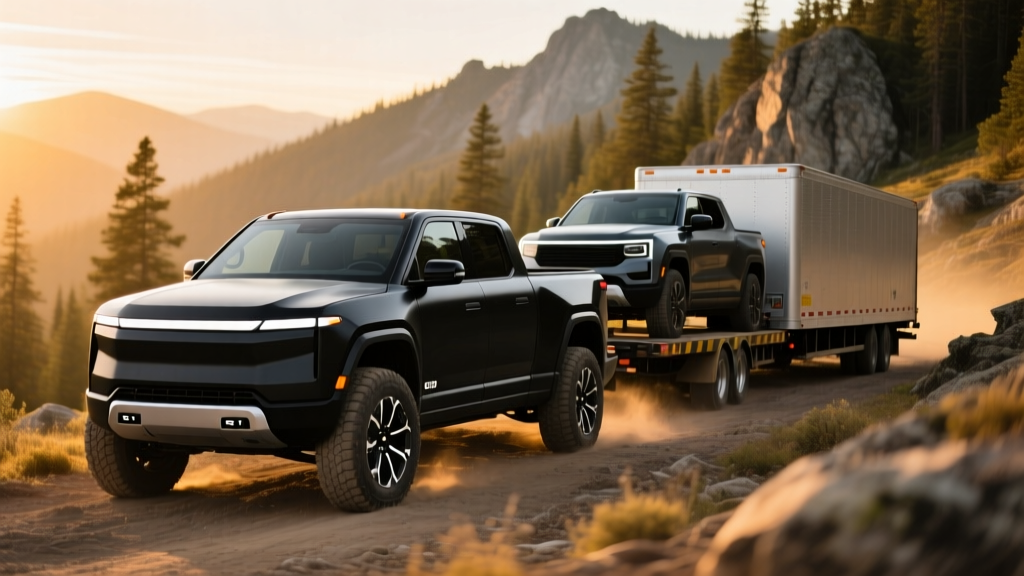
Rivian's R1T pickup and R1S SUV both carry a maximum rivian towing capacity rating of 7,700 pounds — a figure that positions them squarely against mid-size body-on-frame trucks like the Toyota Tacoma and Ford Ranger, while exceeding what most unibody crossovers can manage. But raw tow rating is only half the story. Towing at or near maximum capacity dramatically cuts real-world range, alters charging logistics on long hauls, and exposes the efficiency gap between electric and diesel trucks. This review breaks down exactly what Rivian's dual-motor and quad-motor platforms deliver when you hook up a trailer, what it costs your battery, and whether the math works for your use case.
EPA estimates are measured unladen. Expect 270–350 miles depending on battery pack and motor configuration when driving solo. Hitch up a 5,000-pound trailer and plan for roughly 50–60% of that range — meaning a 320-mile EPA truck may deliver only 160–190 miles before needing a charge. Cold weather (below 32°F) compounds this with an additional 15–25% reduction.
Rivian R1T and R1S: Platform Specs at a Glance
For 2025–2026, Rivian offers both the R1T and R1S across Dual-Motor, Performance Dual-Motor, and Quad-Motor configurations, with Standard (92 kWh usable), Large (109 kWh usable), and Max (141 kWh usable) battery packs. The Standard pack uses LFP (lithium iron phosphate) chemistry — heavier but more cycle-durable and tolerant of frequent 100% charges. Large and Max packs use NMC (nickel manganese cobalt) for higher energy density.
| Spec | Dual-Motor Standard | Dual-Motor Max | Quad-Motor Max |
|---|---|---|---|
| Battery (usable kWh) | 92 kWh (LFP) | 141 kWh (NMC) | 141 kWh (NMC) |
| EPA Range — R1T | 270 mi | 420 mi | 328 mi |
| EPA Range — R1S | 270 mi | 400 mi | 321 mi |
| Horsepower | 533 hp | 533 hp | 1,025 hp |
| Torque | 610 lb-ft | 610 lb-ft | 1,198 lb-ft |
| 0–60 mph | 4.5 sec | 4.5 sec | 2.6 sec |
| Towing Capacity | 7,700 lbs | 7,700 lbs | 7,700 lbs |
| Payload (R1T) | ~1,760 lbs | ~1,760 lbs | ~1,760 lbs |
| Drivetrain | AWD | AWD | AWD (4-motor) |
| Efficiency (R1T MPGe) | 70 MPGe combined | 73 MPGe combined | 70 MPGe combined |
Source: fueleconomy.gov and Rivian official specifications.
What Happens to Range When You Tow
The 7,700-pound rivian towing capacity is engineered and safety-rated, but physics doesn't negotiate. Pulling a trailer introduces aerodynamic drag (the dominant energy consumer above 55 mph) and rolling mass. In independent testing and owner-reported data, here's what range loss looks like across trailer weights:
- Light trailer (2,000–3,000 lbs, e.g., small boat or jet ski): ~25–35% range reduction. A 320-mile EPA truck delivers roughly 210–240 miles.
- Medium trailer (4,000–5,500 lbs, e.g., travel camper or car hauler): ~40–55% range reduction. Expect 145–190 miles from a 320-mile truck.
- Near-max trailer (6,500–7,700 lbs, e.g., large enclosed or loaded equipment trailer): ~55–65% range reduction. Plan on 110–145 miles between charges.
These figures assume flat-to-rolling terrain at 60–65 mph in moderate temperatures. Mountain grades, headwinds, and sub-freezing air will push losses toward the worse end of each bracket. Rivian's navigation system does factor trailer weight into route planning and charging stop estimates when you input trailer specs in the vehicle settings — a genuinely useful feature that many competitors still lack.
Charging Speed: Getting Back on the Road With a Trailer
Charging logistics define the towing experience more than any other factor. Rivian's Gen 2 platform (2025+ models) supports up to 220 kW peak DC fast charging on NMC packs and roughly 190 kW on LFP Standard packs. Here's the breakdown:
| Charging Level | Standard (92 kWh LFP) | Large (109 kWh NMC) | Max (141 kWh NMC) |
|---|---|---|---|
| Level 1 (120V, 12A) | ~3 mi/hr | ~3 mi/hr | ~3 mi/hr |
| Level 2 (240V, 48A / 11.5 kW) | ~25 mi/hr | ~25 mi/hr | ~25 mi/hr |
| DC Fast Charge (peak kW) | 190 kW | 220 kW | 220 kW |
| DC Fast 10–80% time | ~30 min | ~28 min | ~42 min |
The critical caveat: peak kW is not sustained kW. The charge curve tapers significantly above 60% state of charge, and above 80% it slows to a trickle. On a Max Pack, you'll absorb the bulk of your energy in the first 20–25 minutes, then spend another 15+ minutes filling the final 20%. When towing, the practical strategy is to charge from 10% to 65–70% and hit the road rather than wait for 80%.
Rivian uses the NACS (North American Charging Standard) connector natively on 2025+ models, granting direct access to the Tesla Supercharger network — now the most extensive and reliable DC fast-charging infrastructure in North America. This is a significant towing advantage over CCS-only vehicles that rely on Electrify America or other networks with sparser highway coverage.
Pricing, Trims, and Federal Tax Credit Eligibility
Rivian positions the R1T and R1S as premium adventure vehicles, and pricing reflects that. Here's where the 2025–2026 lineup lands before options and delivery fees:
| Configuration | R1T MSRP | R1S MSRP | §30D Credit Eligible? |
|---|---|---|---|
| Dual-Motor Standard Pack | $69,900 | $74,900 | Yes (below $80K truck / $80K SUV cap) |
| Dual-Motor Large Pack | $75,900 | $80,900 | R1T: Yes / R1S: No (exceeds $80K SUV cap) |
| Dual-Motor Max Pack | $84,900 | $89,900 | No (exceeds MSRP cap) |
| Quad-Motor Max Pack | $99,900 | $104,900 | No (exceeds MSRP cap) |
- MSRP cap: $80,000 for SUVs/vans/pickups (R1T qualifies as a pickup; R1S as an SUV).
- Buyer income cap: $150K single / $225K head of household / $300K joint (modified AGI).
- Battery sourcing: Critical minerals and battery components must meet phased-in domestic/free-trade sourcing thresholds per IRS §30D rules. Rivian has worked to qualify partial or full credits on eligible trims, but sourcing requirements tighten annually. Verify current eligibility at the point of sale.
- Point-of-sale transfer: Eligible buyers can transfer the credit to the dealer for an immediate price reduction rather than waiting for tax filing.
Tax credit eligibility is complex and changes frequently. Consult a tax professional and verify with your dealer at time of purchase.
Interior, Cargo, and Technology
The R1T's cabin seats five with 41.4 inches of front legroom and 36.6 inches rear — competitive with mid-size trucks but tighter than full-size crew cabs. Cargo space is where the R1T's skateboard platform shines:
- Bed: 4.5 feet (54 inches) with the partition open — short by traditional truck standards but compensated by the gear tunnel.
- Gear Tunnel: 11 cubic feet of lockable, pass-through storage between cab and bed — a signature Rivian feature perfect for skis, tools, or charging cables.
- Frunk (front trunk): 11 cubic feet, drainable and lockable — doubles as a cooler.
- R1S cargo: 104.7 cu ft total (seats folded), with a usable third row for smaller passengers (30.9 inches legroom).
On the technology front, Rivian runs its in-house infotainment system on a 15.6-inch center display. It's responsive and feature-rich, with native trail mapping, camping waypoints, and the trailer-profile integration mentioned earlier. The Driver+ ADAS suite provides highway lane-centering and adaptive cruise — this is SAE Level 2 driver assistance, meaning you must keep hands on or near the wheel and eyes on the road at all times. It is not autonomous driving.
Warranty and Ownership Costs
Rivian backs its vehicles with competitive warranty coverage:
- Battery & Drive Units: 8 years / 175,000 miles (whichever comes first), with a guaranteed minimum 70% capacity retention over that period.
- General Vehicle: 5 years / 60,000 miles bumper-to-bumper.
- Corrosion: 12 years unlimited miles.
The 175,000-mile battery warranty is notably generous — 75,000 miles longer than the federal minimum mandate and among the best in the EV truck segment. For towing-heavy owners, this extended coverage matters: frequent high-load, high-current discharge cycles (towing) can accelerate degradation if thermal management isn't robust. Rivian's active liquid-cooling system is designed to mitigate this, and real-world degradation data from early 2022 owners shows an average of 5–8% capacity loss over 50,000 miles — within expectations for NMC packs under varied use.
How Rivian Towing Capacity Stacks Up Against Competitors
| Vehicle | Max Tow Rating | EPA Range (Best Config) | Starting MSRP |
|---|---|---|---|
| Rivian R1T (Dual/Quad) | 7,700 lbs | 420 mi (Max Pack) | $69,900 |
| Ford F-150 Lightning | 10,000 lbs | 320 mi (Ext Range) | $54,995 |
| Chevrolet Silverado EV | 10,000 lbs | 440 mi (4WT) | $55,000 (work) / $78,000 (RST) |
| Tesla Cybertruck AWD | 11,000 lbs | 340 mi | $79,990 |
| GMC Hummer EV Pickup | 7,500 lbs | 329 mi | $98,545 |
The Rivian R1T sacrifices roughly 2,300–3,300 pounds of maximum tow rating versus the F-150 Lightning and Silverado EV. If you regularly pull a 9,000-pound horse trailer or a loaded 30-foot camper, Rivian is not your truck. But for the 80% of truck owners who tow under 6,000 pounds occasionally — boats, utility trailers, small campers — the 7,700-pound rivian towing capacity is ample, and the R1T delivers a driving refinement, build quality, and adventure-oriented design that full-size electric trucks can't match.
Pros
- 7,700-lb tow rating covers most recreational trailers
- Max Pack delivers 420 mi EPA (best-in-class for mid-size EV trucks)
- NACS native — direct Tesla Supercharger access
- Gear tunnel + frunk = best-in-class lockable storage
- 8-yr/175,000-mi battery warranty exceeds industry norm
- Quad-Motor offers absurd 1,025 hp and 2.6-sec 0–60
- Trailer-profile navigation integration
Cons
- Tow rating falls short of F-150 Lightning / Silverado EV
- Towing cuts range 40–65% — requires careful trip planning
- Premium pricing — eligible for §30D credit only on base trims
- 4.5-foot bed is short for traditional truck work
- Service center network still expanding in rural areas
- Insurance premiums run 15–25% above comparable gas trucks
Who Should Buy a Rivian for Towing?
Buy the R1T if: You tow a 3,000–5,500 lb boat, dirt-bike trailer, or compact camper a few times a year, want daily-driver comfort and efficiency when not towing, value the gear tunnel/frunk for outdoor gear, and have home Level 2 charging to wake up with a full battery every morning.
Look at the F-150 Lightning or Silverado EV if: You regularly tow above 7,000 lbs, need a full-size 6.5+ foot bed, depend on commercial-grade payload, or need a lower entry price with tax credit eligibility across more trims.
Skip electric trucks entirely if: You tow near-max loads daily in remote areas with no DC fast-charging infrastructure. Diesel remains the pragmatic choice for heavy commercial towing in charging deserts.
Frequently Asked Questions
What is the real-world range when towing with a Rivian?
With a 5,000-pound trailer at highway speeds, expect roughly 160–190 miles from a Dual-Motor Large Pack (320 mi EPA) and 210–250 miles from a Max Pack (420 mi EPA). Light trailers under 3,000 pounds yield 210–240 miles from the Large Pack. Cold weather reduces these figures by an additional 15–25%.
Does the Rivian R1S have the same towing capacity as the R1T?
Yes. Both the R1T pickup and R1S SUV share the same skateboard platform and carry the identical 7,700-pound maximum tow rating across all motor configurations.
Can I use a weight-distribution hitch with a Rivian?
Rivian has approved specific weight-distribution hitch setups for the R1T. Consult your owner's manual and a qualified hitch installer for compatible hardware, as improper hitch equipment can affect the air suspension system and void warranty coverage.
Does Rivian qualify for the $7,500 federal EV tax credit?
Only the Dual-Motor Standard Pack R1T (below the $80,000 pickup MSRP cap) and Dual-Motor Standard Pack R1S (below the $80,000 SUV cap) are potentially eligible. Buyer income must not exceed $150K single / $300K joint, and battery sourcing requirements must be met at time of purchase. Higher trims exceed MSRP caps and do not qualify. Always verify current eligibility via the IRS §30D page.
How does Rivian's towing compare to the Ford F-150 Lightning?
The F-150 Lightning tows up to 10,000 lbs with the Extended Range battery — 2,300 lbs more than Rivian. However, the R1T offers superior on-road refinement, more lockable storage (gear tunnel + frunk), and available Max Pack range that exceeds the Lightning's 320-mile ceiling. It's a trade-off between maximum tow rating and overall vehicle capability.
What charging connector does Rivian use?
2025 and newer Rivian vehicles ship with the NACS (North American Charging Standard) connector natively, providing direct access to Tesla Superchargers without an adapter. Older 2022–2024 models with CCS can be retrofitted with a Rivian-provided NACS adapter.