The Rivian TM-B: A New Chapter for the Brand
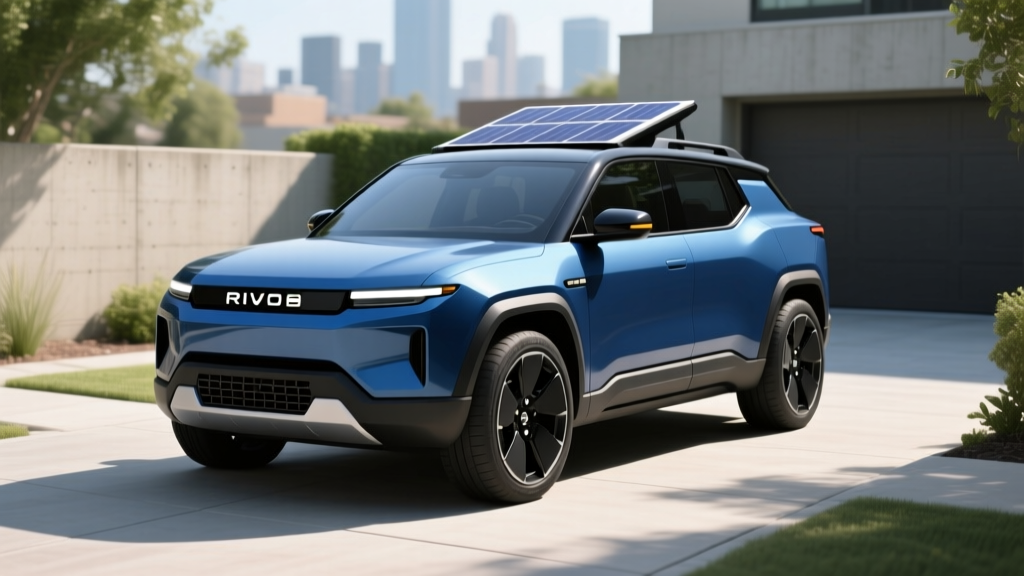
If you have been following Rivian's roadmap, you already know the R1T and R1S have established the brand as a serious player in the premium electric adventure space. But those vehicles start well above $70,000, putting them out of reach for many buyers. Enter the Rivian TM-B — a smaller, more affordable electric SUV built on Rivian's next-generation platform that promises to bring the brand's signature capability and design to a much wider audience.
As of early 2026, the Rivian TM-B remains an announced and upcoming model. Rivian has confirmed its development and shared preliminary details, but final specifications, pricing, and an exact on-sale date have not been locked in. What follows is a comprehensive breakdown of everything we know — and where we are making educated projections based on Rivian's engineering trajectory, supply-chain signals, and competitive positioning.
Projected Range, Battery, and Efficiency
Rivian's second-generation platform is designed around a more energy-dense and cost-effective battery architecture. While the company has not published a final kWh figure for the TM-B, industry reporting and Rivian's own commentary point toward a usable battery capacity in the 75–85 kWh range, likely using a mix of NMC (nickel manganese cobalt) chemistry for higher-energy trims and potentially LFP (lithium iron phosphate) for a base variant aimed at maximizing affordability and cycle life.
For context, LFP batteries are heavier and slightly less energy-dense than NMC, but they tolerate daily 100% charging better, degrade more slowly over thousands of cycles, and cost less to produce. If Rivian offers an LFP option on the TM-B, it would signal a strategic move to compete on total cost of ownership, not just sticker price.
| Specification | Projected / Preliminary |
|---|---|
| EPA Estimated Range | ~300–330 miles (target, not confirmed) |
| Battery Capacity (Usable) | ~75–85 kWh |
| Battery Chemistry | NMC (likely); LFP possible on base trim |
| Drivetrain | Dual-motor AWD (RWD single-motor rumored) |
| Horsepower | ~400–500 hp (dual-motor) |
| 0–60 mph | ~4.0–5.0 seconds (estimated) |
| Efficiency (Projected) | ~3.0–3.4 mi/kWh (~29–33 kWh/100mi) |
| MPGe (Projected) | ~100–115 MPGe combined |
| Towing Capacity | ~4,000–5,000 lbs (estimated) |
| Starting MSRP (Target) | ~$45,000–$52,000 |
Real-World Range Expectations
Rivian's target for the TM-B is an EPA range north of 300 miles, which would place it squarely in competition with the Tesla Model Y, Hyundai Ioniq 5, and Ford Mustang Mach-E extended-range variants. But EPA numbers are just a starting point.
Based on our testing of the current R1S and R1T — which typically deliver 85–90% of their EPA range in mixed real-world driving and drop to roughly 70–75% in sustained cold-weather highway use — we project the following for a 320-mile EPA TM-B:
- Mild-weather mixed driving: ~275–290 miles
- Highway-only at 75 mph: ~255–270 miles
- Cold-weather (below 30°F) highway: ~220–240 miles
Rivian's thermal management system on the Gen 2 platform is expected to include a heat pump, which should help mitigate winter range loss compared to the first-generation R1 vehicles. Preconditioning the battery before DC fast charging will also be critical for achieving peak charge speeds in cold conditions.
Charging Speed: DC Fast and Home Level 2
One of the biggest questions around the TM-B is how fast it will charge. Rivian's Gen 1 vehicles peaked at around 200 kW on DC fast chargers, which was respectable but trailed competitors like the Hyundai Ioniq 5 (peak ~240 kW on 800V architecture) and the Porsche Macan EV.
For the Gen 2 platform, Rivian has signaled meaningful charging improvements. We project the TM-B will support peak DC fast charging in the 200–250 kW range, with a 10–80% charge time of approximately 22–28 minutes depending on battery size and ambient conditions.
| Charging Level | Power (kW) | Speed / Time |
|---|---|---|
| Level 1 (120V household) | ~1.4 kW | ~4–5 miles per hour |
| Level 2 (240V home, 48A) | ~11.5 kW | ~32–38 miles per hour |
| DC Fast Charge (peak) | ~200–250 kW | 10–80% in ~22–28 minutes |
Understanding the Charge Curve
Peak kW numbers can be misleading. A vehicle that peaks at 250 kW will not sustain that rate for the entire session. Like most modern EVs, the TM-B's charge rate will taper significantly above 80% state of charge (SoC) to protect battery health. In practice, you will see the fastest charging between roughly 15% and 60% SoC, with a noticeable slowdown past 80%. For road trips, the most time-efficient strategy is to charge in short bursts from 10–80% rather than waiting for a full charge.
Home Charging Setup
For daily use, a home Level 2 charger is the most practical solution. At 11.5 kW (48 amps on a 60-amp circuit), the TM-B should add roughly 35 miles of range per hour of charging — enough to fully replenish the battery overnight. Expect to spend $500–$2,000 on a quality Level 2 home charger and professional installation, depending on whether your electrical panel needs an upgrade. Rivian's Wall Charger or a universal option like the ChargePoint Home Flex are both solid choices. Consult a licensed electrician for a site-specific assessment.
Performance, Drivetrain, and Capability
Rivian built its reputation on dual-motor and quad-motor performance, and the TM-B is expected to carry that DNA into a more compact package. The likely dual-motor AWD configuration should produce in the neighborhood of 400–500 horsepower, with a 0–60 mph time between 4.0 and 5.0 seconds — quick enough to satisfy most drivers without venturing into the diminishing-returns territory of 600+ hp performance SUVs.
There has been persistent speculation about a single-motor rear-wheel-drive (RWD) variant aimed at maximizing range and minimizing cost. If Rivian offers this, expect it to serve as the entry-level trim with a slightly lower MSRP and potentially the longest EPA range in the lineup.
Towing and Off-Road
Rivian's adventure positioning means the TM-B will almost certainly offer meaningful towing capability. We estimate 4,000–5,000 pounds of maximum towing capacity — less than the R1T's 11,000-pound rating, but competitive with compact and midsize electric SUVs. Keep in mind that towing any trailer will cut your effective range by 30–50%, depending on weight, aerodynamics, and speed.
Off-road, expect Rivian to offer selectable drive modes, adjustable ride height (if air suspension carries over), and the kind of ground clearance that has become a brand hallmark. The TM-B's smaller footprint could actually make it more nimble on tight trails than the larger R1 vehicles.
Interior, Cargo, and Technology
The TM-B will be smaller than the three-row R1S, likely slotting into the compact-to-midsize crossover segment with two rows of seating for five passengers. Rivian's design language emphasizes clean lines, sustainable materials, and a large central touchscreen, and we expect the TM-B to follow suit with a more cost-optimized interior that still feels premium.
Projected Cargo and Passenger Space
- Rear-seat legroom: ~38–40 inches (estimated)
- Cargo behind rear seats: ~28–32 cu ft (estimated)
- Cargo with rear seats folded: ~65–72 cu ft (estimated)
- Front trunk (frunk): Likely ~8–10 cu ft
For comparison, the Tesla Model Y offers about 30 cu ft behind the second row and 76 cu ft with seats folded. The TM-B will need to be in this ballpark to be competitive for family duty.
Driver Assistance and Infotainment
Rivian's current driver-assistance suite is a Level 2 system per SAE automation definitions — meaning it provides steering, acceleration, and braking support on highways, but the driver must remain fully engaged and attentive at all times. It is not a self-driving system. Expect the TM-B to ship with an evolved version of this ADAS stack, potentially with enhanced highway assist and improved parking automation.
The infotainment system will likely run Rivian's proprietary software on a large central display (15+ inches), with over-the-air updates, integrated navigation with route-based battery preconditioning, and connectivity features like a built-in Wi-Fi hotspot.
Pricing, Trims, and Federal Tax Credit Eligibility
Rivian has publicly stated that the TM-B is being engineered to reach a starting price around $45,000, though final MSRP by trim has not been confirmed. A realistic trim and pricing structure might look like this:
| Trim | Est. MSRP | Potential §30D Credit | Est. Net Price |
|---|---|---|---|
| Base (RWD or AWD) | ~$45,000 | Up to $7,500* | ~$37,500 |
| Mid (AWD, larger battery) | ~$50,000 | Up to $7,500* | ~$42,500 |
| Adventure (AWD, off-road pkg) | ~$55,000 | Up to $7,500* | ~$47,500 |
*Federal tax credit eligibility under IRS §30D is subject to multiple requirements that change frequently:
- MSRP cap: SUVs must be at or below $80,000 — the TM-B should clear this easily
- Buyer income cap: Adjusted gross income must not exceed $150,000 (single), $225,000 (head of household), or $300,000 (joint filers)
- Battery sourcing: Critical minerals and battery components must meet escalating domestic-sourcing thresholds that tighten each year — Rivian's North American manufacturing gives it an advantage, but final eligibility depends on the supply chain at time of delivery
- Point-of-sale transfer: As of 2024+, buyers can transfer the credit to the dealer at purchase for an upfront price reduction, rather than waiting to claim it on their tax return
Because these rules are complex and subject to change, we strongly recommend consulting a tax professional and checking the latest IRS guidance before making a purchase decision based on credit eligibility.
Warranty Coverage
Rivian's current vehicles come with a 5-year/60,000-mile limited vehicle warranty and an 8-year/175,000-mile battery and drive-unit warranty. For the TM-B, we expect Rivian to offer similar coverage, though the battery warranty threshold may be adjusted. The industry standard for EV battery warranties is 8 years/100,000 miles with a capacity retention guarantee of at least 70%. Rivian's 175,000-mile battery warranty on the R1 vehicles is among the most generous in the segment, and maintaining that on the TM-B would be a significant competitive advantage.
Who the Rivian TM-B Is For — And Who Should Look Elsewhere
- You want a compact electric SUV with genuine off-road and towing capability
- Rivian's design language and adventure brand ethos appeal to you
- You need a sub-$50,000 (after credits) EV that doesn't feel like a compromise
- You value OTA updates and a vertically integrated software experience
- You need three rows of seating (consider the R1S, Kia EV9, or Hyundai Ioniq 9)
- You want the absolute fastest DC charging available (Hyundai Ioniq 5 / Kia EV6 on 800V)
- You need a vehicle today — the TM-B is not yet available for purchase
- You prioritize the lowest possible price above all else (Chevrolet Equus EV, Nissan Ariya)
Pros and Cons
- Aggressive target pricing near $45,000
- Rivian's proven adventure capability and design
- Generous battery warranty expected (8-year)
- OTA-updatable platform with strong software
- Compact size ideal for city driving and tight trails
- Strong projected range (~300+ miles EPA target)
- Not yet available — production timeline uncertain
- Final specs, pricing, and tax credit eligibility unconfirmed
- Rivian's service center network is still expanding
- DC fast charging may not match 800V competitors
- Two-row layout limits family versatility vs. three-row rivals
- Insurance costs for Rivian vehicles have trended above segment average
Frequently Asked Questions
What is the real-world range of the Rivian TM-B?
Rivian is targeting an EPA range of roughly 300–330 miles. In real-world mixed driving, expect approximately 275–290 miles. On sustained highway driving at 75 mph, plan for 255–270 miles. In cold weather below 30°F, highway range could drop to 220–240 miles. These are projections based on Rivian's Gen 1 vehicle performance patterns and may change with final production specs.
How fast does the Rivian TM-B charge?
We project peak DC fast charging of 200–250 kW, with a 10–80% session taking approximately 22–28 minutes. At home on a Level 2 charger (240V, 48A), the TM-B should add roughly 32–38 miles of range per hour, fully replenishing overnight. Actual charge speeds depend on battery temperature, state of charge, and charger capability.
How much does the Rivian TM-B cost after tax credits?
The base trim is targeted at approximately $45,000 MSRP. If you qualify for the full $7,500 federal tax credit under IRS §30D (subject to income limits, MSRP caps, and battery-sourcing requirements), the effective price could drop to around $37,500. Eligibility is not guaranteed — consult a tax professional and check current IRS guidance before relying on the credit in your budget.
Is the Rivian TM-B worth buying vs. the Tesla Model Y or Hyundai Ioniq 5?
It depends on your priorities. If you value off-road capability, distinctive design, and Rivian's adventure ecosystem, the TM-B could be compelling — once available. If you need a vehicle now, the Tesla Model Y offers a mature Supercharger network and proven efficiency, while the Hyundai Ioniq 5 delivers class-leading 800V charging architecture. The TM-B's ultimate competitiveness will hinge on its final pricing, confirmed range, and real-world charging performance.
Does the Rivian TM-B qualify for the federal EV tax credit?
It is too early to confirm. The TM-B's expected MSRP falls well under the $80,000 SUV cap, which is one requirement. However, §30D eligibility also depends on your income, the battery's critical-mineral and component sourcing at the time of manufacture, and any regulatory changes between now and delivery. Rivian's US-based manufacturing in Normal, Illinois, positions it favorably, but final determination will be made per IRS rules in effect when the vehicle is delivered.
When will the Rivian TM-B be available?
Rivian has indicated that its next-generation, more affordable vehicle platform is targeting production in the 2026–2027 timeframe. An exact on-sale date has not been announced. We recommend monitoring Rivian's official channels for updates.