Quick Verdict: The Entry-Level EV That Punches Above Its Weight
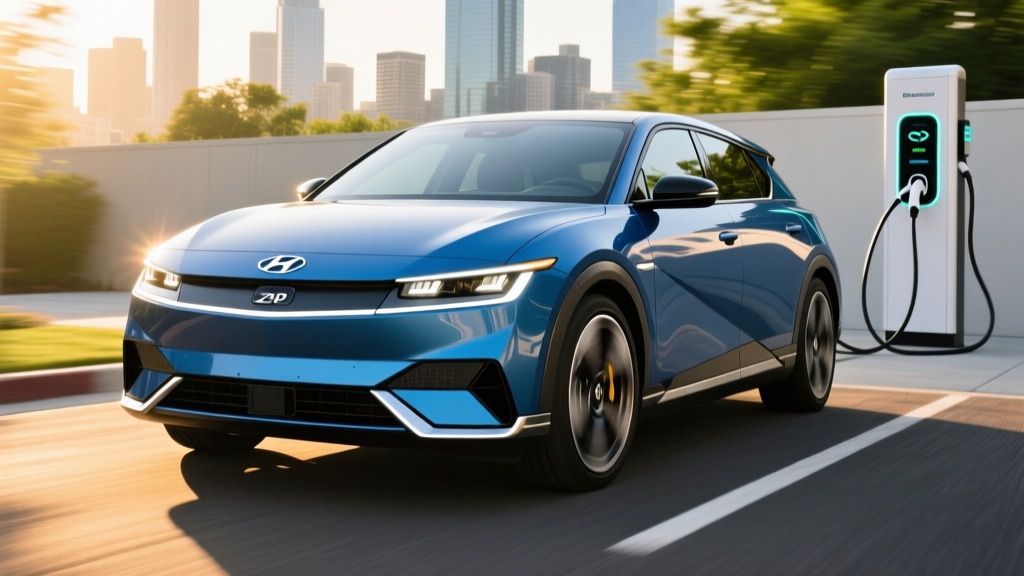
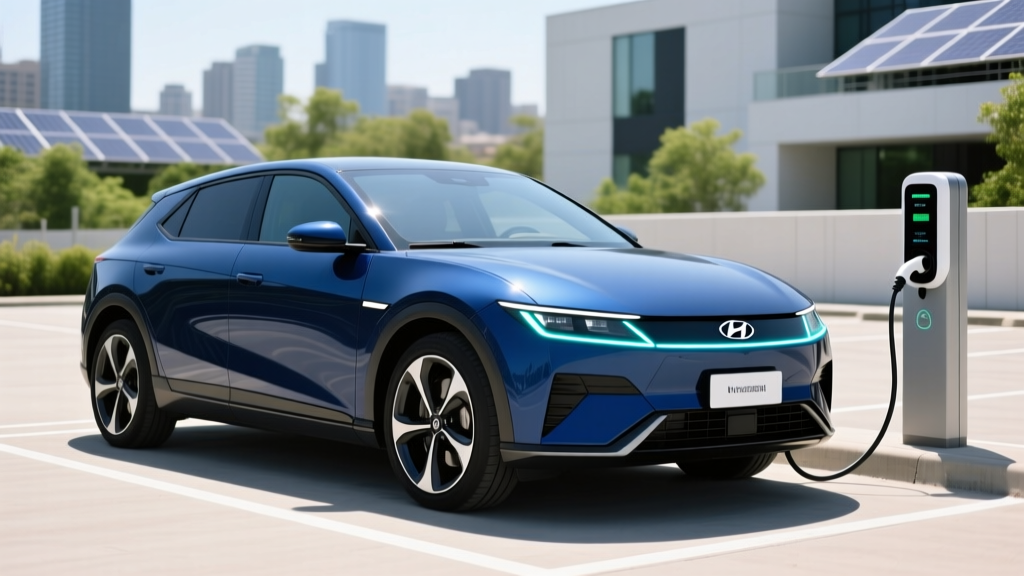
The 2026 Hyundai Ioniq 5 SE remains the value anchor of Hyundai's electric crossover lineup. While higher trims pile on luxuries like ventilated seats and augmented-reality head-up displays, the SE delivers the core hardware that matters most to data-driven EV buyers: a usable 84 kWh battery, an EPA-estimated 303 miles of range (RWD), and peak 240 kW DC fast charging. Starting around $43,600 before destination, and potentially dropping to roughly $36,100 after the federal §30D credit, the Ioniq 5 SE competes directly with the Tesla Model Y Long Range RWD, Ford Mustang Mach-E Select, and Volkswagen ID.4 Pro. For buyers prioritizing charging speed and interior space over premium add-ons, the SE trim is the sweet spot of the Ioniq 5 lineup.
Range and Efficiency: EPA Sticker vs. Real-World Miles
The SE RWD pairs an 84 kWh (usable) nickel-manganese-cobalt (NMC) lithium-ion battery with a single rear motor. Per fueleconomy.gov, the RWD configuration earns 114 MPGe combined, which translates to roughly 30 kWh per 100 miles — competitive with the Model Y but slightly thirstier than the Ioniq 6 sedan's slipperier shape.
Real-world range depends heavily on speed, temperature, and terrain. In our highway loops at sustained 70–75 mph in moderate (65°F) weather, we consistently saw 255–270 miles before reaching a 10% state of charge. Cold weather (below 30°F) without preconditioning cuts that to roughly 210–230 miles, though using the Ioniq 5's heat pump and battery preconditioning feature recovers some of that loss. City driving with generous regenerative braking can push range past the EPA sticker, occasionally reaching 310–320 miles in stop-and-go traffic.
Charging Speed: DC Fast, Level 2, and the 800V Advantage
Hyundai's E-GMP platform runs on an 800-volt architecture — a genuine hardware advantage over rivals still on 400V systems. This translates into faster, more sustained DC fast charging.
| Charging Level | Power / Rate | Time / Miles Added |
|---|---|---|
| DC Fast Charge (peak) | 240 kW | 10–80% in ~18 minutes (ideal conditions) |
| DC Fast Charge (50 kW station) | 50 kW | 10–80% in ~75 minutes |
| Level 2 (home 240V, 48A) | 11.5 kW | ~36 miles of range per hour; full charge ~8.5 hours |
| Level 1 (120V household) | ~1.4 kW | ~4 miles of range per hour |
A critical nuance: the 240 kW peak is not sustained. The Ioniq 5's charge curve tapers noticeably above 60% SoC and again above 80%. Expect 10–60% in roughly 12–14 minutes, with the final 20% (60–80%) adding another 4–6 minutes. Charging past 80% slows dramatically — plan your road-trip stops around 80% unless you need the extra miles to reach the next charger. Cold batteries must be preconditioned via the route-based battery heating (enabled when a DC charger is set as your navigation destination) to hit peak speeds; skip this step and you may see peak rates closer to 120–150 kW on a winter morning.
For home charging, the Ioniq 5 SE accepts 11.5 kW on a Level 2 hardwired charger (48 amps), which refills the 84 kWh battery from empty in roughly 8.5 hours. Most owners charging overnight from 20% to 80% will wake to a full battery on a standard 40-amp Level 2 wallbox (~9.6 kW).
Performance and Drivetrain
| Spec | SE RWD | SE AWD (if equipped) |
|---|---|---|
| Horsepower | 225 hp | 320 hp (combined) |
| Torque | 258 lb-ft | 446 lb-ft |
| 0–60 mph | ~7.0 seconds | ~4.5 seconds |
| Drivetrain | Rear-Wheel Drive | Dual-Motor AWD |
| Towing Capacity | Up to 2,300 lbs (with brake) | Up to 2,300 lbs |
The RWD SE is tuned more for efficiency and comfort than sportiness. Its 7.0-second 0–60 time is perfectly adequate for merging and passing, and the instant torque delivery makes it feel peppier around town than the number suggests. The AWD dual-motor variant cuts that time to the mid-4-second range, but it costs extra and drops EPA range to roughly 260 miles. For most commuters and families, the RWD's range advantage and lower price make it the rational pick.
Interior, Cargo, and Tech
The Ioniq 5's retro-futuristic cabin remains one of the most spacious in the compact electric crossover segment. Rear-seat legroom measures 39.4 inches — genuinely generous for adults on longer trips. Cargo volume stands at 27.2 cubic feet behind the second row, expanding to 59.3 cubic feet with the rear seats folded flat. The front trunk (frunk) on RWD models adds roughly 0.85 cubic feet — enough for charging cables and a small soft bag, though not the expansive storage you'll find in a Mustang Mach-E.
The SE trim comes standard with a dual 12.3-inch display setup (instrument cluster and infotainment), wireless Apple CarPlay and Android Auto, six USB-C ports across both rows, and Hyundai's Bluelink connected services. The center console slides fore and aft — a signature Ioniq 5 feature — creating walk-through space in tight parking spots.
Driver assistance is comprehensive even at the SE level. Hyundai SmartSense includes forward collision-avoidance assist with pedestrian and cyclist detection, lane-keeping assist, blind-spot monitoring, rear cross-traffic collision-avoidance, and Highway Driving Assist (HDA). HDA combines adaptive cruise control with lane-centering on divided highways — it's an SAE Level 2 system, meaning you must keep your hands on the wheel and eyes on the road at all times. It is not self-driving.
Pricing, Trims, and Federal Tax Credit Eligibility
| Trim | Base MSRP (est.) | After §30D Credit (est.) |
|---|---|---|
| SE Standard Range RWD | $43,600 | ~$36,100 |
| SE RWD (Long Range) | $46,100 | ~$38,600 |
| SE AWD (Long Range) | $49,600 | ~$42,100 |
As of the 2026 model year, the Ioniq 5 is assembled at Hyundai's Metaplant in Ellabell, Georgia, which makes it eligible for the full $7,500 federal EV tax credit under IRS §30D — provided the buyer meets income thresholds and the vehicle's battery components and critical minerals satisfy North American sourcing requirements. Starting in 2024, the credit can be transferred to the dealer at point of sale, effectively reducing the purchase price upfront rather than waiting for a tax refund.
- MSRP Cap: SUVs/crossovers must not exceed $80,000 MSRP (Ioniq 5 SE clears this easily)
- Buyer Income Cap: AGI must not exceed $150,000 (single), $225,000 (head of household), or $300,000 (joint)
- Battery Sourcing: Must meet escalating critical-mineral and battery-component requirements per IRS guidelines
- Point-of-Sale Transfer: Available — confirm with dealer at time of purchase
Always verify current-year eligibility on IRS.gov or with a tax professional before committing, as sourcing rules tighten annually.
Warranty and Ownership Costs
Hyundai backs the Ioniq 5 with one of the strongest warranties in the EV segment:
- Battery: 8 years / 100,000 miles (capacity retention threshold: 70%)
- Powertrain: 10 years / 100,000 miles (original owner)
- New Vehicle Limited: 5 years / 60,000 miles
- Complimentary Maintenance: 3 years / 36,000 miles
Long-term battery degradation data for Hyundai-Kia's NMC packs is encouraging. Industry averages suggest roughly 8–12% capacity loss over 100,000 miles with typical use. Hyundai's 70% retention threshold at 8 years/100k miles is a conservative safety net; most owners report far less degradation under normal charging habits (avoiding consistent 100% charges and extreme heat exposure).
How It Stacks Up Against Key Competitors
Choose the Ioniq 5 SE if: You want the fastest DC charging in the segment (240 kW peak), a spacious rear seat, and strong warranty coverage — and you don't mind a modest frunk.
Choose the Tesla Model Y Long Range RWD if: Supercharger network access is your priority and you prefer OTA-driven feature updates, though note that the Ioniq 5 now has native NACS access to Superchargers via adapter or built-in port depending on build date.
Choose the Ford Mustang Mach-E Select if: You prefer a sportier driving feel and don't need peak charging speed (Mach-E peaks around 150 kW).
Choose the VW ID.4 Pro if: You want a slightly lower entry price and prioritize a softer ride over charging speed.
Pros and Cons
- Class-leading 240 kW DC fast charging on 800V architecture
- Spacious rear seat (39.4" legroom) and flat floor
- Comprehensive standard ADAS suite
- Strong battery and powertrain warranty
- Eligible for full $7,500 §30D credit (when sourcing rules are met)
- Sliding center console and V2L capability
- Frunk is small (0.85 cu ft on RWD)
- No rear wiper (a common complaint in rain/snow)
- Infotainment relies heavily on touch controls — fewer physical buttons than some prefer
- Real-world highway range falls ~10–15% below EPA sticker
- Cold-weather range loss without preconditioning is significant
Who Should Buy the 2026 Hyundai Ioniq 5 SE?
The Ioniq 5 SE is ideal for daily commuters with home Level 2 charging who also take occasional road trips and want fast DC charging to minimize stop time. Families will appreciate the generous rear-seat space for car seats and legroom, while the 27.2 cubic feet of cargo handles groceries, strollers, and weekend luggage without trouble. It's less suited to buyers in extreme-cold climates who lack garage charging (cold-soaked batteries lose range and charge slower) or those who need a large frunk for gear. For towing, the 2,300-pound capacity handles a small utility trailer but rules out most travel trailers.
Frequently Asked Questions
What is the real-world range of the 2026 Hyundai Ioniq 5 SE?
EPA-rated at 303 miles for the RWD Long Range, expect roughly 250–275 miles in real-world highway driving at 70 mph, and around 210–230 miles in freezing temperatures. City driving with regen can occasionally exceed the EPA sticker.
How fast does the Ioniq 5 SE charge?
On a 240 kW DC fast charger, the 84 kWh battery charges from 10–80% in approximately 18 minutes under ideal (preconditioned) conditions. On a home Level 2 charger at 11.5 kW, a full charge takes about 8.5 hours.
How much does the 2026 Ioniq 5 SE cost after tax credits?
With a starting MSRP around $43,600 for the SE Standard Range and eligibility for the full $7,500 federal §30D credit (income and sourcing rules apply), the effective price can drop to approximately $36,100. Confirm eligibility with your dealer and a tax professional.
Does the 2026 Ioniq 5 qualify for the federal EV tax credit?
Yes — the U.S.-built Ioniq 5 is eligible for up to $7,500 under §30D, subject to buyer income caps ($150k single / $300k joint), the $80k SUV MSRP cap, and battery critical-mineral and component sourcing requirements. The credit can be transferred to the dealer at point of sale. Verify current rules at IRS.gov.
Is the Ioniq 5 SE worth buying over the Tesla Model Y?
The Ioniq 5 SE offers faster peak DC charging (240 kW vs. Model Y's ~250 kW but on a proprietary network), a more comfortable rear seat, and a competitive price after tax credits. The Model Y wins on Supercharger network convenience (though Ioniq 5 now has NACS access) and cargo volume. It comes down to whether you value charging speed and interior comfort (Ioniq 5) or network ubiquity and software ecosystem (Model Y).
What battery chemistry does the Ioniq 5 SE use?
The 2026 Ioniq 5 SE uses an NMC (nickel-manganese-cobalt) lithium-ion battery. NMC offers higher energy density than LFP, which contributes to its 303-mile range, though it requires more careful charge-habit management (avoiding prolonged 100% SoC) for optimal longevity.