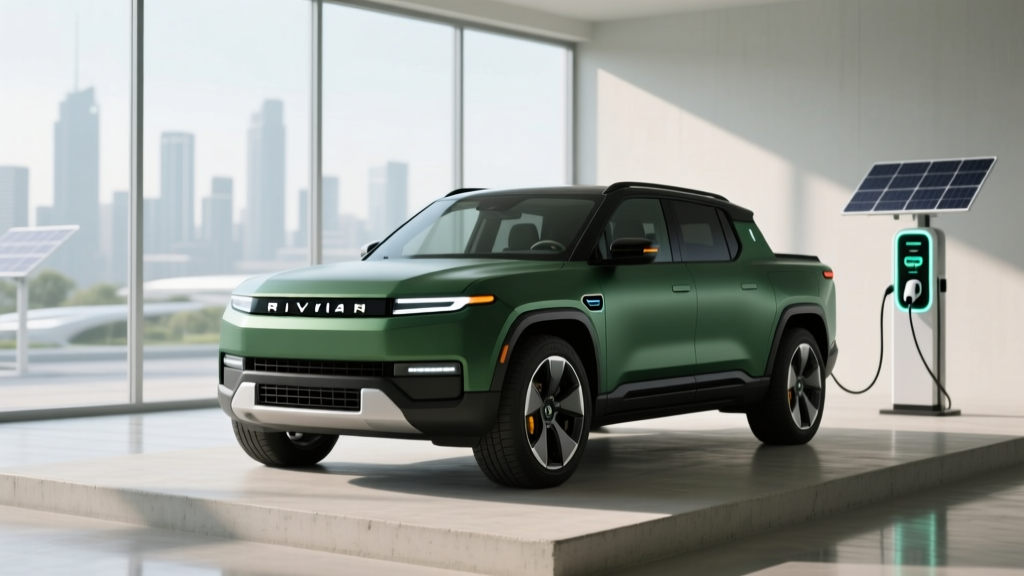
Financial headlines around the Rivian stock shareholder deadline September 30 have pulled attention back to the Irvine-based automaker, but for prospective EV buyers, the real question is simpler: Are Rivian's 2026 models worth your money right now? With the second-generation R1T pickup and R1S SUV delivering meaningful powertrain and software upgrades, the corporate governance calendar matters far less than what's on the showroom floor. Let's look at the numbers that actually determine whether a Rivian belongs in your driveway.
Rivian's 2026 Lineup at a Glance
Rivian currently sells two core vehicles in the U.S.: the R1T (a four-door electric pickup) and the R1S (a three-row electric SUV). Both share Rivian's Gen 2 skateboard platform, which debuted for the 2025 model year with a new electrical architecture, fewer moving parts, and upgraded battery chemistries. The Gen 2 platform eliminated the quad-motor option for most buyers, streamlining the lineup into Dual-Motor and Tri-Motor configurations that cover the vast majority of use cases.
| Spec | R1T Dual-Motor (Standard) | R1T Tri-Motor | R1S Dual-Motor |
|---|---|---|---|
| EPA Range | ~270–330 mi (battery dependent) | ~320–420 mi (Max Pack) | ~270–330 mi |
| Battery Capacity | ~92 kWh (Standard) / ~110 kWh (Large) | ~141 kWh (Max) | ~92–141 kWh |
| Chemistry | NMC (Large/Max); LFP (Standard on select trims) | NMC | NMC / LFP |
| Horsepower | 533 hp | 850 hp | 533 hp |
| 0–60 mph | ~4.5 sec | ~2.9 sec | ~4.5 sec |
| Drivetrain | AWD (dual-motor) | AWD (tri-motor) | AWD (dual-motor) |
| Towing Capacity | 11,000 lb | 11,000 lb | 7,700 lb |
| Base MSRP | ~$69,900 | ~$99,900 | ~$74,900 |
Real-World Range: What the EPA Sticker Doesn't Tell You
EPA Estimated Range (R1T Dual-Motor, Large Pack): 330 miles
Real-World Expectation: 260–290 miles at sustained highway speeds (70–80 mph); 200–240 miles in cold weather (below 30°F) with cabin heat active.
Rivian's EPA numbers assume a mix of city and highway driving under moderate temperatures. In practice, the R1T's boxy aerodynamics and 7,000+ lb curb weight punish highway efficiency. On a 300-mile road trip at 75 mph in 85°F weather, expect to consume roughly 48–52 kWh per 100 miles — well above the 38–42 kWh/100mi you might see in mixed suburban driving. Cold weather compounds this: battery preconditioning and resistive cabin heating can shave 20–30% off the EPA figure.
If your typical week involves a 40-mile round-trip commute with weekend errands, even the Standard Pack (~270 mi EPA) leaves a comfortable buffer. For road-trip-heavy owners or those towing, the Max Pack's 420-mile EPA rating provides genuine peace of mind — though towing a 5,000 lb trailer will cut that roughly in half.
Charging Speed: DC Fast Charging and Home Level 2
Rivian's Gen 2 platform brought a meaningful charging upgrade over the original 2022–2024 models. The Large and Max packs now support peak DC fast-charge rates up to 220 kW (up from ~200 kW on Gen 1), while the Standard pack peaks around 175 kW.
| Charge Method | Standard Pack (~92 kWh) | Large Pack (~110 kWh) | Max Pack (~141 kWh) |
|---|---|---|---|
| DC Fast Charge (peak kW) | ~175 kW | ~220 kW | ~220 kW |
| 10–80% DC Time | ~28 min | ~21 min | ~30 min |
| Level 2 Home (11.5 kW) | ~16 mi/hr added | ~19 mi/hr added | ~22 mi/hr added |
| Level 2 Home (0–100% time) | ~8.5 hr | ~10 hr | ~13 hr |
| Connector | NACS (native Tesla Supercharger compatible as of 2025+) | ||
A critical detail for buyers: Rivian switched to the NACS (North American Charging Standard) connector starting with Gen 2 vehicles, granting native access to Tesla's Supercharger network — currently the most reliable DC fast-charging infrastructure in North America. If you're buying a used Gen 1 Rivian (2022–2024), you'll need a CCS-to-NACS adapter for Supercharger access.
At home, the Rivian Wall Connector delivers up to 11.5 kW on a 48-amp circuit (requiring a 60-amp breaker). Most owners will wake up to a full battery every morning, which is where the real convenience advantage of EV ownership lives. Expect a home installation cost of $800–$2,500 depending on panel capacity and run length — budget for a potential 200-amp panel upgrade ($1,500–$3,000) if your home has older electrical service.
Pricing, Trims, and Federal Tax Credit Eligibility
| Configuration | Base MSRP | Federal §30D Credit | Effective Price |
|---|---|---|---|
| R1T Dual-Motor Standard | ~$69,900 | Up to $7,500* | ~$62,400 |
| R1T Dual-Motor Large | ~$75,900 | Up to $7,500* | ~$68,400 |
| R1T Tri-Motor Max | ~$99,900 | $0 (exceeds MSRP cap) | ~$99,900 |
| R1S Dual-Motor Standard | ~$74,900 | Up to $7,500* | ~$67,400 |
| R1S Tri-Motor Max | ~$104,900 | $0 (exceeds MSRP cap) | ~$104,900 |
*Eligibility depends on buyer income, battery component sourcing, and MSRP caps under IRS §30D. See IRS clean vehicle credit guidelines.
The §30D federal tax credit is not a blanket $7,500. Under current IRS rules, the R1T qualifies as a truck (MSRP cap: $80,000) and the R1S as an SUV (MSRP cap: $80,000). This means Tri-Motor and Max Pack configurations exceed the cap and are ineligible. Buyer income limits also apply: $300,000 joint / $225,000 head of household / $150,000 single filers. Additionally, battery component and critical mineral sourcing requirements must be met — Rivian has been working to domesticate its supply chain, but verify current-year eligibility at the point of sale or with your tax professional.
As of 2024, the §30D credit can be transferred to the dealer at point of sale, effectively reducing your purchase price on the spot rather than waiting for a tax refund. Confirm with your Rivian delivery advisor that this transfer is available for your specific configuration and delivery year.
Efficiency, Cargo Space, and Practical Ownership
Efficiency varies significantly by configuration. The R1T Dual-Motor with the Large Pack returns approximately 73 MPGe combined (~46 kWh/100mi) per fueleconomy.gov. The Tri-Motor drops to roughly 65 MPGe due to added weight and power. These are respectable numbers for a 7,000+ lb electric truck, but they're not Tesla Model Y territory — expect higher per-mile electricity costs than a smaller crossover EV.
Cargo practicality is where the R1T distinguishes itself:
- Bed length: 4'6" (54 inches) with tailgate up; ~6'8" with tailgate down
- Gear Tunnel: 11 cu ft lockable pass-through storage (unique to R1T)
- Frunk (front trunk): 11 cu ft, drainable — doubles as a cooler
- Total enclosed storage: ~33 cu ft (bed + tunnel + frunk combined with tonneau)
The R1S offers 104 cu ft of cargo volume behind the first row (seats folded) and approximately 20 cu ft behind the third row — adequate for groceries but tight for a family road trip with all three rows in use. Third-row legroom is 30.4 inches, best suited for children on longer drives.
Warranty, Software, and Driver Assistance
Rivian provides an 8-year/175,000-mile battery and drive unit warranty — one of the more generous powertrain warranties in the EV space, surpassing the federal minimum of 8yr/100,000mi. The bumper-to-bumper warranty covers 5 years or 60,000 miles. Rivian monitors battery State of Health (SoH) remotely and has been proactive about replacing modules that show anomalous degradation.
On the software side, Rivian's in-house developed infotainment stack runs on a 15.6-inch center display with responsive navigation, over-the-air updates, and a camp mode that maintains climate control overnight. The Rivian Driver+ system is a Level 2 SAE driver-assist suite combining adaptive cruise control and lane centering. It is not autonomous driving — the driver must remain attentive with hands on or near the wheel at all times. Rivian has been gradually expanding hands-free highway capability, but as of 2026, it does not yet match GM's Super Cruise or Ford's BlueCruise in terms of hands-free route coverage.
SAE Automation Level: Rivian Driver+ is Level 2 — a driver-assistance system, not self-driving. You are the driver. You are responsible. Eyes on the road, hands available to take over immediately.
Pros, Cons, and Who Should Buy
Pros
- Class-leading adventure capability — wading depth, air suspension, tank turns (Tri-Motor)
- NACS native — full Tesla Supercharger network access without adapters
- Unique storage solutions (Gear Tunnel, drainable frunk)
- 8yr/175,000mi battery warranty exceeds industry norm
- Strong OTA update cadence; software improves meaningfully year over year
- 11,000 lb towing capacity (R1T) is best-in-class for electric pickups
Cons
- Highway efficiency suffers at speed — real-world range drops significantly above 70 mph
- Tri-Motor and Max Pack configurations exceed $80K MSRP cap, eliminating tax credit
- Service center network still thin outside major metros — mobile service helps but can't fix everything
- Third-row R1S space is tight for adults
- Driver+ hands-free coverage lags Super Cruise and BlueCruise
- Insurance premiums run 15–25% above comparable ICE trucks
Who this EV suits best: The R1T is ideal for outdoor-active households who need genuine truck capability (towing boats, hauling gear, trail access) and want to eliminate fuel costs for daily commuting. The R1S fits families who want three rows, off-road credibility, and don't regularly fill all seven seats. Neither vehicle is the right pick for budget-first buyers or those whose driving is 100% highway commuting — a more aerodynamic sedan or crossover will deliver better efficiency.
The Shareholder Deadline Context: What It Means for Buyers
The Rivian stock shareholder deadline September 30 references corporate governance milestones — typically the record date for annual meeting voting or proxy statement deadlines tied to the company's fiscal calendar. For investors, these dates determine eligibility to vote on board seats, executive compensation, and capital allocation proposals (including the Volkswagen joint venture funding that has been critical to Rivian's cash runway).
For EV buyers, the relevance is indirect but real: a financially healthy Rivian means sustained software development, expanding service centers, and long-term parts availability. The VW investment — billions committed through a joint-venture technology platform — has significantly de-risked Rivian's balance sheet heading into 2026–2027. If you're evaluating whether to buy now or wait, the corporate stability picture is more favorable than it was in 2023, when production cash burn raised legitimate concerns about the company's longevity.
Bottom line: Don't time your EV purchase around a shareholder record date. Time it around your lease expiration, your household needs, and whether the current configuration meets your range and budget requirements.
Competitive Comparison: R1T vs. the Field
Choose the Rivian R1T if: You need real truck utility (11,000 lb tow, 4'6" bed, Gear Tunnel) combined with genuine off-road capability and want native Supercharger access.
Choose the Ford F-150 Lightning if: You want a lower entry price (~$55K), a larger bed (5'5"), and a more established dealer service network — but can accept slower DC charging (~150 kW peak) and a CCS connector.
Choose the Tesla Cybertruck if: You prioritize acceleration (2.6 sec 0–60 on Cyberbeast), stainless-steel novelty, and the largest Supercharger-native ecosystem — but can accept polarizing styling and a smaller service footprint.
Choose the Chevrolet Silverado EV if: You need maximum range (up to 450 mi EPA on certain trims) and a longer bed option, but can accept a larger vehicle footprint and limited trim availability.
Frequently Asked Questions
What is the real-world range of the Rivian R1T?
The EPA rates the R1T Dual-Motor Large Pack at approximately 330 miles. In real-world highway driving at 75 mph, expect 260–290 miles. In cold weather (below 30°F), plan for 200–240 miles. The Max Pack extends the EPA figure to ~420 miles, which translates to roughly 330–360 miles highway in temperate conditions.
How fast does the Rivian R1T charge at home and on the road?
On a DC fast charger, the Large Pack peaks at ~220 kW and charges 10–80% in approximately 21 minutes. At home on a Level 2 Rivian Wall Connector (11.5 kW), you'll add about 19 miles of range per hour, fully charging overnight in roughly 10 hours.
Does the Rivian R1T qualify for the $7,500 federal EV tax credit?
The Dual-Motor Standard and Large Pack R1T configurations (under the $80,000 truck MSRP cap) may qualify for up to $7,500 under IRS §30D, subject to buyer income limits ($150K single / $300K joint), battery sourcing requirements, and point-of-sale transfer availability. Tri-Motor and Max Pack configurations exceed the MSRP cap and are not eligible. Always verify current-year rules at irs.gov and with your tax professional.
Is the Rivian R1T worth buying over the Ford F-150 Lightning?
The R1T offers superior off-road capability, native NACS/Supercharger access, and a more premium interior. The F-150 Lightning provides a lower starting price, a bigger bed, and a far larger service network. If off-road adventure and charging convenience are priorities, the R1T wins. If budget and dealer proximity matter more, the Lightning has the edge.
How does the Rivian battery warranty compare?
Rivian covers the battery and drive unit for 8 years or 175,000 miles — 75,000 miles more than the federal minimum requirement of 8yr/100,000mi. This is competitive with Tesla's 8yr/150,000mi (Model S/X) and exceeds most mainstream EV warranties.
What is the Rivian stock shareholder deadline September 30?
This typically refers to a shareholder record date or proxy voting deadline tied to Rivian's corporate governance calendar. It determines which shareholders are eligible to vote at annual or special meetings. It has no direct impact on vehicle pricing, availability, or features for consumers.