Rivian's Referral Program Shifts — And Why the R1 Lineup Still Delivers
If you've been tracking Rivian referral program changes over the past year, you already know the automaker has been tightening how owners earn credits for bringing in new buyers. The original referral structure — which once handed out generous account credits and even limited-edition gear — has been dialed back significantly as Rivian matures from startup to volume manufacturer. But the real question for prospective buyers isn't what the referrer gets; it's whether the R1S SUV and R1T truck justify their price tags on pure product merit in 2026.
The short answer: yes, but with caveats around efficiency, charging infrastructure access, and total cost that every buyer should weigh before signing. Below is a full breakdown of what you're actually getting in the current R1 Dual-Motor and Tri-Motor configurations — range, charging, performance, pricing, and tax credit eligibility — so you can evaluate the vehicles independent of any referral incentive.
R1S and R1T at a Glance: 2026 Spec Table
| Spec | R1S Dual-Motor (Standard) | R1S Tri-Motor (Max Pack) | R1T Dual-Motor (Standard) |
|---|---|---|---|
| EPA Range | 270 miles | 420 miles | 270 miles |
| Battery (Usable) | 92 kWh (NMC) | 149 kWh (NMC, 2170 cells) | 92 kWh (NMC) |
| Horsepower | 533 hp | 850 hp | 533 hp |
| 0–60 mph | 4.5 sec | 2.9 sec | 4.5 sec |
| Drivetrain | AWD (Dual-Motor) | AWD (Tri-Motor) | AWD (Dual-Motor) |
| Max DC Fast Charge | 200 kW | 220 kW | 200 kW |
| 10–80% DC Time | ~30 min | ~42 min | ~30 min |
| Level 2 Home Rate | 11.5 kW (~25 mi/hr) | 11.5 kW (~25 mi/hr) | 11.5 kW (~25 mi/hr) |
| MPGe (Combined) | 73 MPGe | 70 MPGe | 73 MPGe |
| Base MSRP | $75,900 | $99,900 | $69,900 |
| Battery Warranty | 8 yr / 175,000 mi | 8 yr / 175,000 mi | 8 yr / 175,000 mi |
Real-World Range: What the EPA Number Doesn't Tell You
EPA Estimated: 270 miles
Real-World Highway (70 mph, 65°F): ~225–240 miles
Real-World Cold Weather (30°F, mixed driving): ~190–210 miles
Tri-Motor Max Pack (EPA 420 mi): Expect ~350–370 mi highway, ~300–320 mi in freezing temps
Rivian's boxy, adventure-oriented shapes create more aerodynamic drag than sleeker competitors like the Tesla Model X or Lucid Gravity. That drag penalty hits hardest at sustained highway speeds above 65 mph, where the R1S Dual-Motor typically delivers 83–89% of its EPA sticker. The 149 kWh Max Pack in the Tri-Motor configuration provides genuine cross-country capability — a Los Angeles to Las Vegas run is feasible with a single fast-charge stop — but the pack's weight (roughly 900 lbs for the battery alone) reduces efficiency to around 2.1–2.3 kWh/mile in mixed driving.
Cold weather compounds the issue. Without preconditioning the battery before a DC fast-charge session, you'll see charge rates limited to roughly 80–100 kW until the pack warms up, adding 10–15 minutes to your stop. Rivian's navigation-based preconditioning works well when you route through a charger, but if you pull into a station spontaneously in sub-40°F weather, expect a sluggish initial charge curve.
Charging Speed: DC Fast, Level 2, and the Curve Reality
Rivian uses the NACS connector on all 2026 models, granting native access to Tesla's Supercharger network — a significant advantage over CCS-only vehicles still dependent on Electrify America or EVgo reliability. Here's what charging actually looks like:
| Charging Level | Power (kW) | Miles Added per Hour | Typical Use Case |
|---|---|---|---|
| Level 1 (120V household) | 1.4 kW | ~3 mi/hr | Emergency / overnight trickle |
| Level 2 (240V home Wall Connector) | 11.5 kW | ~25 mi/hr | Daily overnight charging (full in ~8–10 hrs) |
| DC Fast (Standard Pack) | Peak 200 kW | ~180 mi in 15 min (10–60%) | Road trips; tapers sharply above 80% |
| DC Fast (Max Pack) | Peak 220 kW | ~200 mi in 20 min (10–60%) | Long-haul; 10–80% in ~42 min |
The charge curve is the part most spec sheets hide. The Standard 92 kWh pack holds near-peak 200 kW from roughly 10% to 45% State of Charge, then steps down to ~130 kW through 65%, and drops to under 50 kW past 85%. For road-trip planning, this means charging from 10–80% in about 30 minutes is realistic, but pushing past 80% to squeeze out extra range is painfully slow — plan your stops to arrive at chargers near 10% and leave by 75–80%.
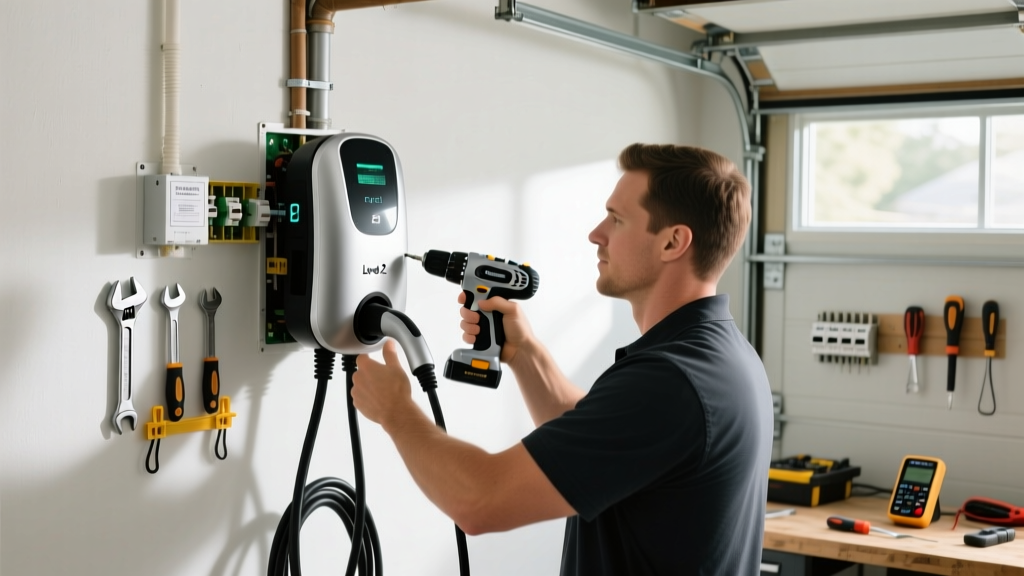
At home, the Rivian Wall Connector at 11.5 kW (48A on a 60A circuit) replenishes the Standard Pack overnight in roughly 8 hours. Max Pack owners should expect 12–13 hours for a full charge on Level 2, which means daily driving of 80–100 miles is easily covered but a full depletion requires planning.
Performance and Drivetrain: Dual-Motor vs. Tri-Motor
The Dual-Motor powertrain — one motor per axle, producing a combined 533 hp and 610 lb-ft of torque — is the volume seller for good reason. The 4.5-second 0–60 mph time outpaces most gas-powered SUVs and trucks in this price bracket, and the instant torque delivery makes highway merging and trail crawling equally effortless. AWD is standard with torque vectoring that can disconnect the front axle for efficiency during light-load cruising.
The Tri-Motor setup (one front, two rear) pushes output to 850 hp and 900+ lb-ft, dropping the R1S to a 2.9-second 0–60 time that rivals a Porsche Cayenne Turbo GT. But the Tri-Motor is a $20,000+ upcharge and adds roughly 300 lbs over the rear axle, which you feel in cornering transitions. Unless you're regularly towing near the 7,700-lb max (R1T) or need the extra regen capacity for mountain descents, the Dual-Motor is the smarter allocation of budget.
Ride quality benefits from Rivian's standard air suspension, which offers 6.5 inches of adjustable ride height — from a low Aero mode for highway efficiency to a Max mode with 14.9 inches of ground clearance for off-road use. The hydraulic roll control system eliminates the body roll you'd expect from a 7,000-lb vehicle in corners.
Interior Space, Cargo, and Daily Practicality
The R1S seats up to seven in three rows, though the third row is best suited for children or short-trip adults — legroom measures 30.4 inches back there versus 41.3 inches in the second row. Cargo volume behind the third row is limited to 10.4 cu ft, expanding to 46.7 cu ft with the third row folded and 91.6 cu ft with both rear rows down.
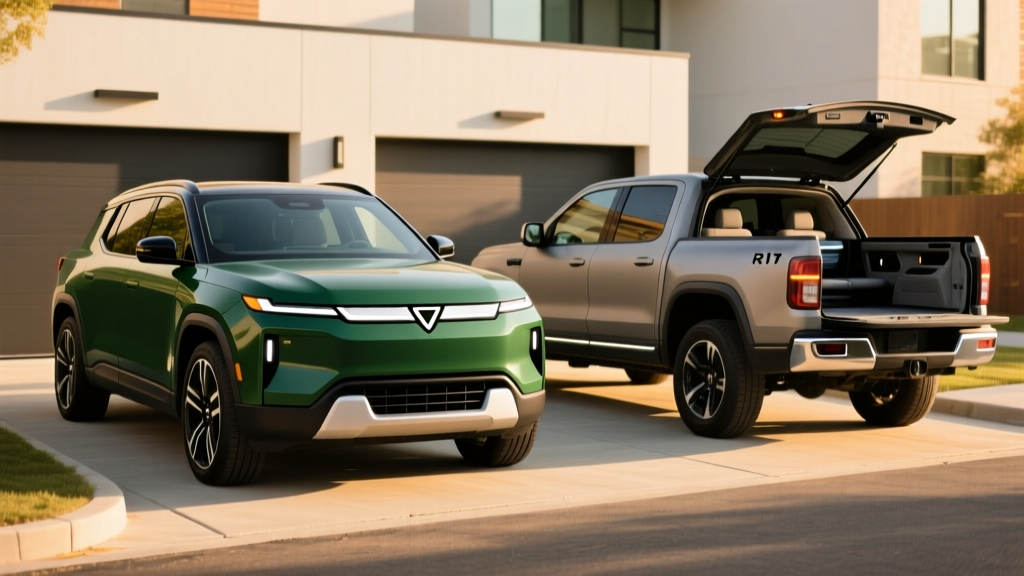
The R1T's 4.5-foot bed (extending to 6+ feet with the gear tunnel) is more practical for gear than any midsize truck bed in the segment, and the gear tunnel — a pass-through compartment behind the rear seats — adds 11.7 cu ft of lockable, weatherproof storage that's uniquely Rivian. The front trunk (frunk) provides an additional 11.1 cu ft on the R1T and 11.4 cu ft on the R1S.
Build quality on 2026 models has improved noticeably over early 2022–2023 production, with tighter panel gaps and more consistent interior trim fitment. The vegan leather and ash wood interior holds up well, though the gloss-black center console is a fingerprint magnet.
Pricing, Tax Credits, and What You'll Actually Pay
| Trim / Config | Base MSRP | §30D Credit Eligible? | Est. After Credit |
|---|---|---|---|
| R1T Dual-Motor Standard | $69,900 | Yes (under $80K truck cap) | ~$62,400* |
| R1S Dual-Motor Standard | $75,900 | Yes (under $80K SUV cap) | ~$68,400* |
| R1S Dual-Motor Large Pack | $82,900 | No (exceeds $80K SUV cap) | $82,900 |
| R1S Tri-Motor Max Pack | $99,900 | No (exceeds $80K SUV cap) | $99,900 |
*Assumes full $7,500 credit eligibility. Per IRS §30D rules, buyers must meet adjusted gross income limits ($300K joint / $150K single), and the vehicle must satisfy critical-mineral and battery-component sourcing requirements that shift annually. The credit can now be transferred to the dealer at point of sale as an instant discount. Always verify current-year eligibility with a tax professional before relying on this figure.
This is where the referral program context matters. With Rivian's referral credits reduced (currently offering modest account credits rather than the $1,000+ incentives of prior years), the effective discount gap between referred and non-referred buyers has narrowed to the point where it shouldn't drive your purchase decision. Focus on trim selection and tax credit eligibility instead.
The Large Pack and Max Pack configurations crossing the $80,000 MSRP cap for SUVs is the real financial sting — if you want 350+ miles of range in the R1S, you're paying full sticker. The R1T, classified as a truck with an $80,000 cap, qualifies in more configurations, making the Dual-Motor Standard a standout value at ~$62,400 after credit.
Technology, Driver Assists, and Ownership Experience
Rivian's 15.6-inch center touchscreen runs a proprietary OS that's responsive and well-organized, with native route planning that accounts for elevation, temperature, and charger availability. Over-the-air updates are frequent — Rivian pushed 15+ major updates in 2025 alone, adding features like improved one-pedal driving calibration and enhanced camp mode with climate and lighting presets.
The Driver+ system is a SAE Level 2 driver-assistance suite — it combines adaptive cruise control with lane-centering on divided highways but requires continuous driver supervision. Hands-on-wheel monitoring is enforced via torque sensing. It's competent for long highway stretches but does not match the hands-free confidence of GM's Super Cruise or Ford's BlueCruise on mapped roads. This is not a self-driving system, and Rivian has been cautious about overpromising on autonomy — a refreshing contrast to some competitors.
Standout tech includes the built-in air compressor (accessible via the bed on R1T or cargo area on R1S), the Camp Kitchen slide-out option for the R1T gear tunnel, and the vehicle-to-load (V2L) capability that can power devices up to 2.4 kW — enough to run a worksite or campsite without a generator.
Notable drawbacks: the lack of Apple CarPlay and Android Auto remains a dealbreaker for some buyers (Rivian insists its native system is sufficient, and for most EV-specific functions, it is). Insurance premiums run 15–25% higher than comparable ICE vehicles due to repair costs and aluminum body construction. And while Rivian's service network has expanded, owners in rural areas still face longer wait times for warranty work compared to legacy dealer networks.
Pros, Cons, and Who Should Buy
Pros
- Class-leading off-road capability with air suspension and 14.9" ground clearance
- Max Pack offers genuine 400+ mile range for road trips
- NACS native — full Supercharger network access
- Gear tunnel and frunk provide unmatched storage flexibility (R1T)
- Frequent OTA updates add real features post-purchase
- V2L capability for camping and job-site use
Cons
- Highway efficiency lags due to boxy aero — expect 225 mi real-world on Standard Pack
- Most desirable trims exceed $80K MSRP cap, losing $7,500 tax credit
- No Apple CarPlay / Android Auto
- Driver+ (Level 2) lags behind BlueCruise/Super Cruise for hands-free ease
- Insurance premiums 15–25% above segment average
- Max Pack adds ~900 lbs, affecting handling dynamics
Best for: Outdoor-oriented families and professionals who need genuine truck/SUV capability with electric running costs — towing a trailer to a trailhead, hauling gear for weekend adventures, or commuting 40–60 miles daily with home charging. The R1T is particularly compelling for buyers who want a daily-driver truck that also serves as a campsite power source.
Look elsewhere if: Your priority is maximum highway efficiency and lowest cost per mile (consider the Tesla Model Y or Hyundai Ioniq 5), you need hands-free highway driving (Ford F-150 Lightning with BlueCruise), or you want CarPlay integration without compromise.
Frequently Asked Questions
What is the real-world range of the Rivian R1S and R1T?
The Standard Pack's 270-mile EPA rating drops to roughly 225–240 miles at sustained highway speeds and 190–210 miles in freezing weather. The Tri-Motor Max Pack (420 EPA) delivers approximately 350–370 miles highway and 300–320 miles in cold conditions. Per fueleconomy.gov, efficiency ranges from 70–73 MPGe combined depending on configuration.
How fast does the Rivian R1 charge at home and on the road?
At home on a Level 2 Wall Connector (11.5 kW / 48A), expect ~25 miles of range per hour, fully replenishing the Standard Pack overnight in ~8 hours. On DC fast charging, the Standard Pack peaks at 200 kW (10–80% in ~30 min), while the Max Pack peaks at 220 kW but takes ~42 minutes for 10–80% due to the larger 149 kWh battery. NACS connectivity provides native Tesla Supercharger access.
Does the Rivian R1 qualify for the federal EV tax credit?
It depends on trim. The R1T Dual-Motor Standard ($69,900) and R1S Dual-Motor Standard ($75,900) fall under the $80,000 MSRP cap and are eligible, provided the buyer meets IRS §30D income limits and battery-sourcing requirements. Trims above $80,000 MSRP — including the Large Pack and Max Pack — do not qualify. The credit can be applied at point of sale.
Is the Rivian R1 worth buying versus the Tesla Model X or Ford F-150 Lightning?
For off-road capability, adventure utility (gear tunnel, V2L, air suspension), and build quality, the R1 line has no direct equal. The Model X offers better efficiency and Supercharger convenience but less ground clearance and cargo flexibility. The F-150 Lightning is more affordable and offers BlueCruise but trails on range and interior refinement. If your use case involves trails, towing, and outdoor living, the Rivian justifies its premium.
How have Rivian's referral program changes affected buyer incentives?
Rivian has significantly reduced referral rewards compared to the early years — moving from substantial account credits and exclusive merchandise to more modest incentives. The practical impact on your purchase decision is minimal: the referral discount is now small enough that trim selection, tax credit eligibility, and financing terms matter far more. Don't delay a purchase waiting for referral bonuses to increase.
What is the battery warranty on Rivian vehicles?
Rivian covers the battery and powertrain for 8 years or 175,000 miles, whichever comes first, with a capacity retention threshold of 70% over that period. The general vehicle warranty is 5 years / 60,000 miles. This battery warranty is competitive with Tesla (8 yr / 150,000 mi on Model X) and exceeds most legacy automakers.