The Compact Adventure EV the Market Has Been Waiting For
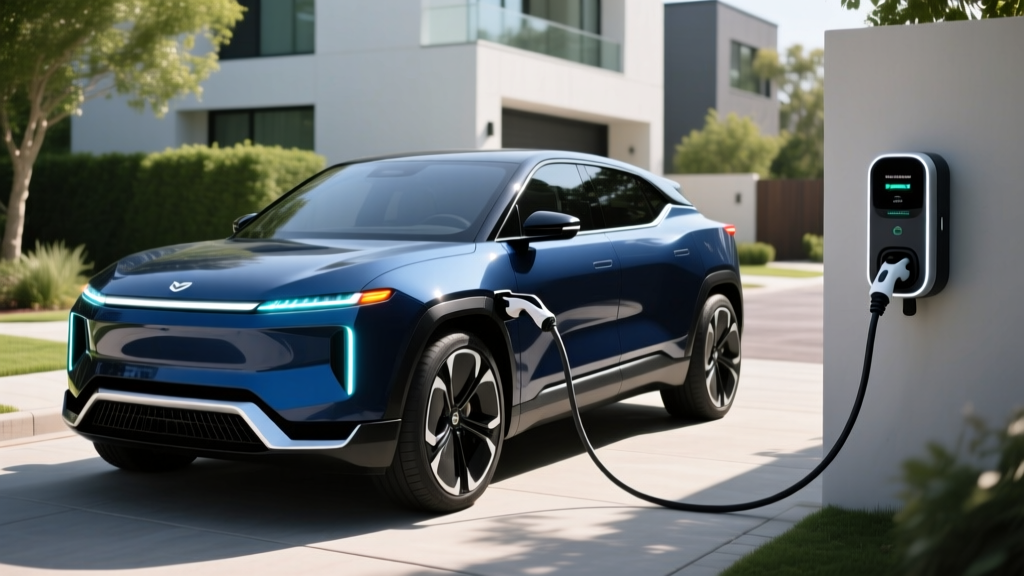
Rivian's R3X sits at the intersection of two massive demand signals: compact crossover practicality and off-road credibility. Unveiled alongside the R3 at Rivian's March 2024 event, the R3X is the performance-oriented, tri-motor variant of the brand's upcoming compact platform — positioned to undercut the Tesla Model Y, Hyundai Ioniq 5, and Ford Bronco Sport on price while delivering capability none of them can match on a dirt trail.
But here's the catch: as of early 2026, the Rivian R3X is not yet available for purchase. Production is slated to begin at Rivian's Normal, Illinois facility later in 2026, with customer deliveries likely pushing into early 2027. Everything below is based on Rivian's official disclosures, platform engineering details, and informed projections from the R1S/R1T architecture — all subject to final EPA certification and production validation.
Estimated Range, Battery, and Real-World Expectations
Rivian has confirmed the R3 platform will support multiple battery pack sizes, though exact kWh figures for the R3X trim remain unconfirmed. Based on the platform's 400V architecture and Rivian's stated range targets, here is what we can project with reasonable confidence:
| Attribute | Projected Value |
|---|---|
| EPA Estimated Range | 300+ miles (Standard); 350+ miles (Max pack option) |
| Battery Chemistry | NMC (nickel manganese cobalt) — expected |
| Usable Battery Capacity | ~75–95 kWh (depending on pack option) |
| Efficiency Target | ~3.0–3.5 mi/kWh (~29–33 kWh/100mi) |
| Drivetrain | Tri-motor AWD (one front, two rear) |
EPA range stickers are tested under controlled conditions. For the R3X, expect real-world highway driving at 70–75 mph to yield roughly 80–85% of the EPA sticker — so a 315-mile EPA rating likely translates to ~250–270 miles on a sustained interstate run. In cold weather (below 32°F), plan for an additional 15–25% range reduction due to battery heating demands and cabin climate use. Rivian's heat pump (confirmed for the R3 platform) should mitigate some of this loss compared to resistive heating, but physics is physics. If your commute is 90 miles round-trip in Minnesota winter, you'll want the Max pack option.
The R3X's tri-motor layout means higher energy consumption than a single-motor R3 variant, but it also enables torque vectoring across the rear axle — a feature that matters more off-road than at the grocery store. Buyers prioritizing maximum range over performance should consider the dual-motor R3 instead.
Charging Speed: DC Fast Charge and Home Level 2
Charging infrastructure access will define the R3X ownership experience. Here's what Rivian has disclosed and what we can project based on the platform's 400V electrical architecture (notably, Rivian did not adopt an 800V system for the R3 platform, unlike Hyundai/Kia's E-GMP):
| Charging Level | Power / Rate | Estimated Time / Notes |
|---|---|---|
| Level 1 (120V household) | ~1.4 kW | ~3–4 miles of range per hour |
| Level 2 (240V home) | ~11.5 kW (48A) | ~30–35 miles/hr; full charge in ~8–9 hours |
| DC Fast Charge (peak) | ~175–200 kW (projected) | 10–80% in ~25–30 minutes (estimated) |
A few practical notes on these projections:
- Peak kW is not sustained kW. A 200 kW peak rate typically holds only between 10–40% state of charge before tapering. Expect average charging power of ~130–150 kW across the full 10–80% session.
- 400V limitation. Without an 800V architecture, the R3X won't match the Hyundai Ioniq 5's blistering 10–80% in 18 minutes at 350 kW chargers. On a 30-minute DC fast charge stop, expect roughly 180–220 miles of range added.
- NACS connector. Rivian has confirmed the R3 platform will ship with the North American Charging Standard (NACS) connector, granting native access to Tesla's Supercharger network — currently the most reliable and extensive DC fast-charging network in the U.S. This is a significant advantage over CCS-equipped competitors relying on Electrify America or EVgo.
- Preconditioning. Rivian's software includes battery preconditioning when navigating to a charger. This warms the pack to optimal temperature before arrival, reducing taper and improving charge acceptance — especially critical in cold weather.
Performance: Tri-Motor AWD and Off-Road Credentials
The R3X is positioned as the performance and adventure variant of the R3 line. With a tri-motor configuration (one front motor, two rear motors enabling independent rear torque vectoring), Rivian targets the following performance envelope:
| Metric | Projected Value |
|---|---|
| Horsepower | ~500+ HP (tri-motor combined) |
| 0–60 mph | ~3.5 seconds (estimated) |
| Top Speed | ~125 mph (electronically limited) |
| Drivetrain | Tri-motor AWD w/ torque vectoring |
| Ground Clearance | ~8.5–9.5 inches (estimated) |
| Wading Depth | Confirmed — details pending |
| Towing Capacity | ~3,000–4,000 lbs (projected) |
Rivian's R1T and R1S have earned credibility on trails from Moab to the Rubicon. The R3X inherits that DNA in a smaller, lighter package. Independent rear motors mean the vehicle can send torque to individual wheels without brake-based traction control intervention — a meaningful advantage on loose surfaces. Expect Rivian's full suite of drive modes: All-Purpose, Sport, Snow, Off-Road, and a Soft Sand mode.
For context, a ~3.5-second 0–60 time would place the R3X ahead of the Tesla Model Y Performance (3.5s) and well ahead of the Hyundai Ioniq 5 AWD (5.1s) — though straight-line speed is secondary to trail capability for this vehicle's target buyer.
Pricing, Tax Credits, and Ownership Cost
Rivian CEO RJ Scaringe has publicly targeted a starting price around $45,000 for the R3 line, with the R3X commanding a premium as the performance/adventure trim. Based on Rivian's pricing strategy with the R1 platform and second-generation EDV2 updates, here is our projected pricing structure:
| Configuration | Projected MSRP | Est. Price After §30D Credit |
|---|---|---|
| R3X Standard Range | ~$45,000–$48,000 | ~$37,500–$40,500* |
| R3X Max Range | ~$52,000–$55,000 | ~$44,500–$47,500* |
| R3X Fully Loaded (Adventure pkg) | ~$58,000–$62,000 | ~$50,500–$54,500* |
*Federal tax credit estimates assume full $7,500 eligibility under IRS §30D rules. Actual credit amount depends on battery sourcing, critical minerals compliance, buyer income, and MSRP caps. See eligibility details below.
- MSRP Cap: Vehicle MSRP must not exceed $55,000 for SUVs/crossovers. A fully loaded R3X could exceed this cap — buyers should confirm final trim pricing against the threshold.
- Buyer Income Cap: Modified AGI must not exceed $150,000 (single), $225,000 (head of household), or $300,000 (joint). (Source: IRS §30D)
- Battery Sourcing: The $7,500 credit requires meeting BOTH critical minerals ($3,750) AND battery component ($3,750) sourcing thresholds. Rivian has been working to localize its supply chain, but final R3X cell sourcing is not yet confirmed.
- Point-of-Sale Transfer: Eligible buyers can transfer the credit to the dealer at purchase, reducing the out-of-pocket price immediately rather than waiting for a tax refund.
- FEOC Restriction: Battery components cannot be sourced from a Foreign Entity of Concern (primarily targeting Chinese manufacturers). This is an evolving rule — confirm at purchase.
Consult a tax professional before relying on credit eligibility. Rules are subject to legislative change.
Interior Space, Tech, and Driver Assistance
The R3X is a compact crossover — think Subaru Crosstrek size, not Ford Explorer. Rivian has emphasized efficient packaging, but buyers should calibrate expectations accordingly:
| Dimension | Projected Value |
|---|---|
| Seating | 5 passengers |
| Cargo (behind 2nd row) | ~25–30 cu ft (estimated) |
| Cargo (seats folded) | ~55–65 cu ft (estimated) |
| Front Trunk (Frunk) | Confirmed — capacity TBD |
| Length / Wheelbase | ~175–180 in / ~108–112 in (estimated) |
Infotainment & Connectivity: The R3X will run Rivian's latest software stack on a centrally mounted touchscreen (expected 15+ inches). Rivian's UI has been well-received in the R1 vehicles for its clean graphics, responsive inputs, and over-the-air update capability. Expect wireless Apple CarPlay/Android Auto, integrated navigation with charging route planning, and a companion app for remote preconditioning and charge monitoring.
Driver Assistance: Rivian's Driver+ system will carry over to the R3 platform, offering:
- Adaptive cruise control with stop-and-go
- Lane centering assist on divided highways
- Automatic emergency braking with pedestrian detection
- Blind-spot monitoring with rear cross-traffic alert
Rivian's Driver+ is an SAE Level 2 driver-assistance system. The driver must remain fully engaged — hands on or near the wheel, eyes on the road — at all times. This is not autonomous or self-driving technology. It reduces fatigue on long highway drives but does not replace driver attention. (Reference: SAE J3016)
Standout Features: Rivian has hinted at several R3X-specific adventure features, including integrated camp kitchen accessory compatibility (a signature R1 feature), a gear tunnel option, roof rack integration rated for rooftop tents, and underbody skid plates for off-road protection. The frunk (front trunk) adds weatherproof, lockable storage — useful for muddy gear or charging cables.
Warranty Coverage and Battery Longevity
Rivian's current warranty structure for the R1 platform provides a useful baseline for R3X expectations:
- Battery & Drive Unit Warranty: 8 years / 120,000 miles (projected for R3X, matching R1 coverage)
- Bumper-to-Bumper: 5 years / 60,000 miles
- Capacity Retention Threshold: Rivian typically warrants against degradation below 70% of original capacity during the warranty period
NMC chemistry (expected in the R3X) offers higher energy density than LFP but is historically more sensitive to repeated 100% charges and extreme heat. For long-term battery health, Rivian's software allows owners to set a daily charge limit (80–90% recommended for routine use), reserving 100% for road trips. Expect typical NMC degradation of 8–12% over the first 100,000 miles based on industry data from similar packs — meaning a 315-mile EPA range might settle around 280–290 miles after several years of normal use.
How the R3X Stacks Up Against Competitors
The compact adventure-EV segment is still thin, but the R3X will face cross-shopping pressure from several established models:
| Vehicle | EPA Range | 0–60 mph | DC Fast Charge | Base MSRP | Off-Road? |
|---|---|---|---|---|---|
| Rivian R3X (projected) | 300–350 mi | ~3.5s | ~175–200 kW | ~$45,000 | Yes (serious) |
| Tesla Model Y LR AWD | 311 mi (EPA) | 4.8s | 250 kW | ~$44,990 | Light trails only |
| Hyundai Ioniq 5 AWD | 290 mi | 5.1s | 350 kW (800V) | ~$49,500 | No |
| Ford Bronco Sport (ICE) | N/A (gas) | ~7.5s | N/A | ~$32,000 | Yes (moderate) |
- You need genuine off-road capability in an EV
- You want Supercharger access via native NACS
- You value adventure-ready features (frunk, gear tunnel, roof rack)
- You want tri-motor performance under $50K
- You can wait for 2026–2027 production
- You need a vehicle now (not available until late 2026/early 2027)
- Fastest possible DC charging is your priority (800V competitors charge faster)
- You need 3-row seating or 70+ cu ft cargo space
- Your budget is firm under $40K
- You don't need AWD or off-road capability
Reservations, Production Timeline, and How to Prepare
Rivian opened reservations for the R3 and R3X shortly after the March 2024 reveal, with a refundable deposit (historically $1,000 for Rivian reservations). Production order is expected to follow deposit queue priority, though Rivian may prioritize the standard R3 before the R3X variant.
Key timeline milestones to watch:
- Mid-2026: Final EPA certification and official range/efficiency figures published on fueleconomy.gov
- Q3–Q4 2026: Production begins at Normal, Illinois plant
- Late 2026–Early 2027: First customer deliveries
- 2027+: Georgia plant (under construction) may add R3 production capacity
If you're planning to buy, start preparing now:
- Home charging: Get a quote for a Level 2 (240V/48A) home charger installation. Budget $800–$2,500 depending on panel capacity and conduit run. A NEMA 14-50 outlet is the minimum; a hardwired wall connector is preferred for reliability.
- Tax situation: Review your projected AGI for the purchase year against §30D income caps.
- Insurance: EV insurance premiums run 15–25% higher than comparable ICE vehicles. Get preliminary quotes before committing.
- Test drive alternatives: If you haven't driven an EV, test a Model Y, Ioniq 5, or R1S to calibrate expectations for regen braking, instant torque, and one-pedal driving.
Frequently Asked Questions
What is the real-world range of the Rivian R3X?
Based on projected EPA estimates of 300–350 miles, expect 250–290 miles in real-world mixed driving. Highway-heavy trips at 75 mph will yield roughly 80–85% of the EPA sticker. Cold weather (below freezing) can reduce range an additional 15–25%. The Max pack option is strongly recommended for buyers in northern climates or those who regularly drive 200+ miles between charges.
How fast does the R3X charge at home and on the road?
At home on a Level 2 (240V/48A) charger, expect roughly 30–35 miles of range per hour, or a full overnight charge in 8–9 hours. On DC fast chargers, the projected peak rate of 175–200 kW should deliver a 10–80% charge in approximately 25–30 minutes. Real-world average charging speed across that session will be closer to 130–150 kW due to charge-curve taper above 50% state of charge.
Does the Rivian R3X qualify for the $7,500 federal EV tax credit?
Potentially — but eligibility depends on multiple factors. The R3X must have an MSRP at or below $55,000 (the SUV cap under §30D), the buyer must meet income limits ($150K single / $300K joint), and the battery must meet critical minerals and component sourcing thresholds. A fully loaded R3X could exceed the MSRP cap. Battery sourcing compliance will not be confirmed until closer to production. Always verify eligibility at irs.gov and consult a tax professional before purchase.
Is the R3X worth waiting for vs. buying a Model Y or Ioniq 5 now?
If you need a vehicle today, the Tesla Model Y and Hyundai Ioniq 5 are proven, available, and in many cases tax-credit-eligible now. The R3X is worth waiting for if off-road capability, Rivian's adventure ecosystem, and tri-motor performance at a sub-$50K price point matter to you — and if you can tolerate a late-2026 or early-2027 delivery window. The NACS connector and Supercharger access are also significant long-term infrastructure advantages.
Will the R3X have a front trunk (frunk)?
Yes. Rivian has confirmed the R3 platform includes a front trunk, though exact cargo volume has not been disclosed. Expect 5–10 cubic feet of weatherproof, lockable front storage — useful for charging cables, wet gear, or small bags.
What battery chemistry will the R3X use?
Rivian has not officially confirmed the R3X battery chemistry, but NMC (nickel manganese cobalt) is the expected choice for the performance-oriented R3X trim due to its higher energy density. LFP (lithium iron phosphate) may be offered on lower-priced R3 variants for its longer cycle life and lower cost, but at a range penalty. NMC batteries benefit from daily charge limits of 80–90% for longevity.