Quick Verdict: A Compact Adventure EV Worth the Wait
Rivian's upcoming R3X — the performance-oriented variant of the R3 compact crossover platform — targets buyers who want a sub-$50,000 electric SUV with genuine off-road capability, a thoughtfully designed cabin, and DC fast-charging speeds that rival vehicles costing twice as much. While Rivian has not yet released final EPA certifications, the R3X is expected to deliver over 300 miles of range, a dual-motor AWD drivetrain, and an interior that punches well above its price class in material quality and space utilization.
This profile covers everything confirmed and estimated about the R3X, with clear labeling of preliminary vs. finalized specs. Production is targeted for late 2026 at Rivian's Normal, Illinois facility, with first deliveries likely in early 2027.
Rivian R3X Spec Table (Preliminary)
| Spec | R3X (Estimated) |
|---|---|
| EPA Range | ~300+ miles (est.) |
| Battery Capacity | ~75–85 kWh usable (est.) |
| Battery Chemistry | LFP (Standard) / NMC (Max) — est. |
| Max DC Fast Charge | ~300 kW (peak, est.) |
| 10–80% DC Charge Time | ~20 minutes (est.) |
| Level 2 Home Charge Rate | ~11.5 kW (~30 mi/hr) |
| 0–60 mph | ~4.5 seconds (dual-motor, est.) |
| Horsepower | ~400+ hp (dual-motor, est.) |
| Drivetrain | Dual-motor AWD |
| Base MSRP | ~$45,000–$48,000 (est.) |
| Battery Warranty | 8 years / 100,000 miles (est.) |
| MPGe | ~110–120 MPGe combined (est.) |
Note: All specs are preliminary estimates based on Rivian announcements and platform analysis. Final EPA-certified figures will be confirmed closer to production. Source: Rivian R3 announcement.
Rivian R3X Interior: Space, Materials, and Design
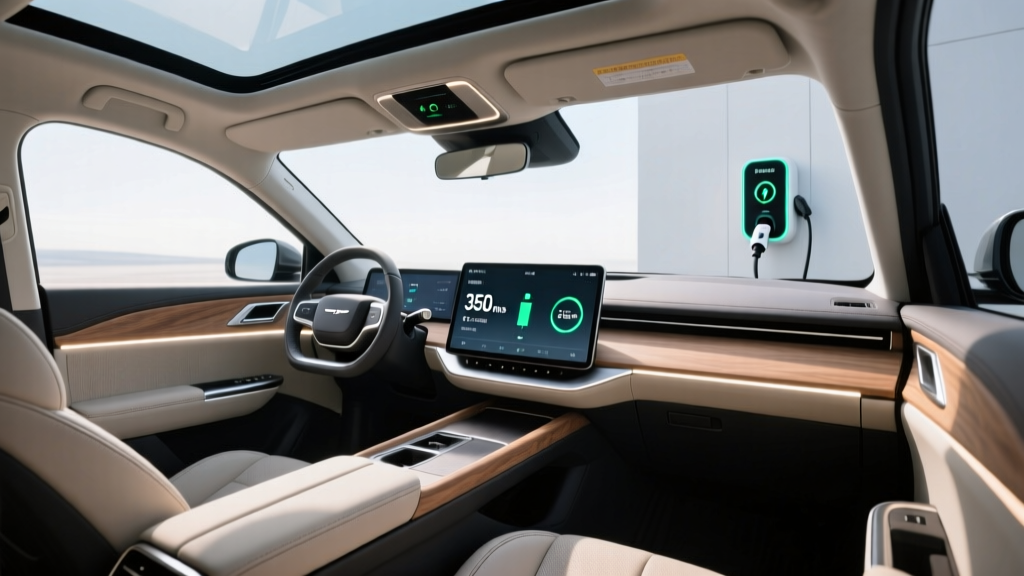
The R3X interior is where Rivian's design team has focused heavily on differentiating this compact crossover from the Tesla Model Y, Volvo EX30, and Hyundai Ioniq 5. Based on preview images and Rivian's design language established in the R1S and R2, here is what we know and can reasonably project.
Cabin Layout and Dimensions
The R3X rides on a dedicated EV skateboard platform with a flat floor, maximizing interior volume. Estimated interior dimensions:
- Front headroom: ~40 inches
- Rear legroom: ~36–38 inches
- Cargo volume (rear seats up): ~25–28 cu ft
- Cargo volume (rear seats folded): ~55–60 cu ft
- Frunk (front trunk): ~5–7 cu ft
For context, the Tesla Model Y offers 30.2 cu ft behind the second row and 76.2 cu ft total. The R3X will be slightly smaller overall, but Rivian's packaging — including a usable frunk and a flat load floor — should keep it competitive for weekend gear hauling.
Materials and Build Quality
Rivian has committed to sustainable, animal-free interiors across its lineup. Expect the R3X to feature:
- Vegan leather upholstery (standard), with premium textile options
- Recycled and bio-based dashboard and door panel materials
- Open-pore wood or aluminum accent trim depending on trim level
- A minimalist center console with wireless charging pad and configurable storage
The R1S and R1T interiors have drawn praise for feeling more premium than their price suggests. The R3X will likely follow suit, though cost constraints at a ~$45K starting price may mean more hard plastics in lower-contact areas compared to the R1 series.
Infotainment and Tech
Rivian runs its own vertically integrated software stack — no CarPlay or Android Auto, a decision that has drawn mixed reactions. The R3X is expected to feature:
- A ~15.6-inch landscape center touchscreen
- A compact digital instrument cluster or head-up display
- Over-the-air (OTA) update capability
- Rivian's Driver+ ADAS suite (SAE Level 2 — requires driver supervision at all times)
- Integrated navigation with charging-route preconditioning
Range, Efficiency, and Real-World Expectations
Real-World Expectation: Plan for ~250–270 miles in mixed highway driving at 70+ mph. In cold weather (below 30°F), expect a 15–25% reduction, bringing effective range to ~225–255 miles depending on cabin heating demands and terrain.
Rivian has stated the R3 platform will offer "over 300 miles" of range on a full charge. This likely refers to the Max battery variant, which is expected to use an NMC (nickel manganese cobalt) chemistry pack with higher energy density. The Standard battery, likely LFP (lithium iron phosphate), may come in closer to 250–270 miles EPA.
LFP vs. NMC: What It Means for the R3X
| Factor | LFP (Standard, est.) | NMC (Max, est.) |
|---|---|---|
| Energy Density | Lower (~250–270 mi range) | Higher (~300+ mi range) |
| Cycle Life | Longer (3,000+ cycles) | Shorter (~1,500–2,000 cycles) |
| Charging to 100% | Recommended regularly for calibration | Best kept below 80–90% daily |
| Cold-Weather Performance | Slightly more range loss | Better cold-weather retention |
| Cost | Lower (enables lower MSRP) | Higher (adds ~$3K–$5K to pack cost) |
If daily commuting is your primary use case and you can charge at home, the LFP Standard battery is likely the smarter long-term buy — lower degradation, lower cost, and no anxiety about charging to 100%. Reserve the NMC Max pack for frequent road-trippers who need the extra range buffer.
Efficiency
Projected efficiency sits around 110–120 MPGe combined (roughly 28–30 kWh per 100 miles). This is competitive with the Hyundai Ioniq 5 (114 MPGe combined for AWD) but trails the Tesla Model Y Long Range (122 MPGe). The R3X's boxier, adventure-oriented shape creates more aerodynamic drag than sleeker crossovers, which will show most at sustained highway speeds.
Charging Speed: DC Fast and Home Level 2
| Charging Level | Power (kW) | Speed | Notes |
|---|---|---|---|
| Level 1 (120V outlet) | ~1.4 kW | ~4 mi/hr | Emergency/top-up only |
| Level 2 (240V home) | ~11.5 kW | ~30 mi/hr | Full charge in ~7–8 hours |
| DC Fast Charge (peak) | ~300 kW | 10–80% in ~20 min | Peak rate; sustained rate lower |
Understanding the Charge Curve
A 300 kW peak DC fast-charge rate is impressive on paper, but real-world charging is governed by the charge curve — the battery management system (BMS) ramps power up as the pack warms, holds peak briefly, then tapers aggressively above ~50–60% state of charge (SoC) to protect cell health. Expect the R3X to sustain 250+ kW only between roughly 10–40% SoC, tapering to ~100–120 kW by 70%, and dropping below 50 kW above 85%.
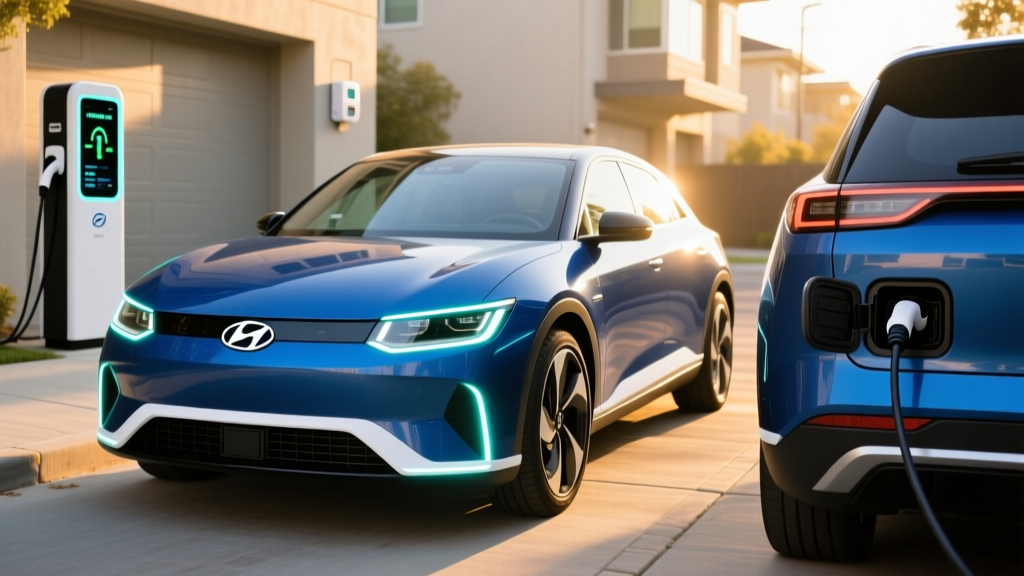
This means a 10–80% session at a 350 kW Electrify America or Tesla Supercharger station should take approximately 20 minutes in ideal conditions (preconditioned battery, moderate ambient temperature). In cold weather without adequate preconditioning, add 5–10 minutes.
Home Charging Setup
For Level 2 home charging at 11.5 kW, you will need a 60-amp dedicated circuit (48-amp continuous draw) with a NEMA 14-60 outlet or hardwired wall connector. Installation costs typically range from $800–$2,500 depending on panel capacity, conduit run length, and local permitting. If your home has a 100-amp main panel, a $1,500–$3,000 panel upgrade to 200 amps may be necessary. Always get a quote from a licensed electrician before purchasing equipment.
Performance and Drivetrain
The R3X is positioned as the performance variant of the R3 lineup. Based on Rivian's dual-motor architecture (similar in concept to the R1T/R1S but scaled for a lighter, smaller vehicle), expect:
- 0–60 mph: ~4.5 seconds
- Horsepower: ~400+ hp combined
- Torque: ~450+ lb-ft
- Drivetrain: Dual-motor AWD with torque vectoring
- Ground clearance: ~8.5+ inches (est., with adjustable air suspension on higher trims)
- Towing capacity: ~3,500 lbs (est.)
The R3X should be genuinely capable off-road — Rivian's brand identity is built on adventure, and even the compact R3 platform is expected to offer meaningful approach/departure angles, underbody protection, and software-driven terrain modes (sand, snow, rock). This is a key differentiator versus the Model Y and Ioniq 5, which are strictly pavement-oriented.
Pricing, Trims, and Federal Tax Credit Eligibility
| Trim (Est.) | MSRP (Est.) | After §30D Credit (Est.) |
|---|---|---|
| R3 Standard | ~$40,000 | ~$32,500 (if eligible) |
| R3X Dual-Motor | ~$45,000–$48,000 | ~$37,500–$40,500 (if eligible) |
| R3X Max Battery | ~$52,000–$55,000 | ~$44,500–$47,500 (if eligible) |
Federal Tax Credit Rules (IRS §30D — 2026)
The $7,500 federal EV tax credit is not guaranteed for every buyer or every vehicle. Under current IRS §30D rules, eligibility requires:
- MSRP cap: Vehicle base price must be ≤$55,000 for SUVs/crossovers
- Buyer income cap: AGI ≤$150,000 (single) / $300,000 (joint)
- Battery sourcing: Critical minerals and battery components must meet escalating domestic/free-trade-partner thresholds (these tighten annually)
- Point-of-sale transfer: Eligible buyers can apply the credit as a down-payment reduction at the dealer, rather than waiting for a tax refund
The R3X base and dual-motor trims should fall under the $55,000 SUV cap. The Max Battery variant may push close to or above it — watch for final MSRP announcements. Battery sourcing compliance is the biggest unknown; Rivian's supply chain has been evolving, and fueleconomy.gov will list confirmed credit eligibility once the vehicle is certified. Consult a tax professional before assuming credit eligibility.
Who the R3X Is For — and Who Should Look Elsewhere
- You want a compact EV with real off-road capability and ground clearance
- You value distinctive design and sustainable interior materials over brand prestige
- You need a ~300-mile range buffer for road trips but primarily commute under 50 miles/day
- You want Rivian's software ecosystem and OTA updates without paying R1S/R1T prices
- You need third-row seating or maximum cargo volume (consider the R1S or Kia EV9)
- You require Apple CarPlay/Android Auto (Rivian does not offer either)
- You cannot wait — the R3X is not yet in production; consider the Hyundai Ioniq 5 or Tesla Model Y now
- You live in an area with limited DC fast-charging infrastructure and need the widest network compatibility today
Pros and Cons
- Projected 300+ mile range with competitive DC fast-charging speed
- Genuine off-road capability in a compact EV footprint
- Sustainable, well-designed interior with premium feel for the price
- Over-the-air updates and vertically integrated software
- Likely eligible for $7,500 federal tax credit on base/dual-motor trims
- Not yet in production — deliveries likely early 2027
- No Apple CarPlay or Android Auto
- Final EPA range, pricing, and tax credit eligibility not yet confirmed
- Boxy shape may reduce highway efficiency vs. sleeker competitors
- Rivian's service center network is still expanding in many regions
Frequently Asked Questions
What is the real-world range of the Rivian R3X?
Rivian targets over 300 miles EPA for the Max battery R3X. In real-world highway driving at 70+ mph, expect ~250–270 miles. In cold weather (below 30°F), range may drop to ~225–255 miles. These are estimates pending final EPA certification.
How fast does the R3X charge?
Estimated peak DC fast-charge rate is ~300 kW, enabling a 10–80% charge in approximately 20 minutes under ideal conditions. Home Level 2 charging at 11.5 kW adds roughly 30 miles of range per hour, fully replenishing the battery overnight.
How much does the R3X cost after tax credits?
The R3X dual-motor is estimated at $45,000–$48,000 MSRP. If eligible for the full $7,500 §30D credit, the effective price drops to ~$37,500–$40,500. Eligibility depends on your income, the vehicle's battery sourcing, and MSRP cap compliance. Verify on fueleconomy.gov before purchasing.
Is the R3X worth waiting for vs. competitors?
If you want off-road capability, a distinctive interior, and Rivian's software ecosystem in a compact, sub-$50K package, the R3X is worth the wait. If you need an EV now, the Hyundai Ioniq 5 (303 mi range, $42,600 base) and Tesla Model Y (310 mi, ~$44,000) are proven alternatives — though neither offers meaningful off-road chops.
Does the Rivian R3X qualify for the federal EV tax credit?
Likely yes for the base and dual-motor trims (under the $55,000 SUV MSRP cap), but eligibility depends on your AGI (≤$150K single / ≤$300K joint), battery critical-mineral sourcing compliance, and final IRS certification. The Max Battery trim may exceed the MSRP cap. Always check IRS §30D guidance and consult a tax professional.
When will the R3X be available?
Rivian has targeted production start for late 2026, with first deliveries likely in early 2027. Reservations may open in advance of production. Check rivian.com for updates.