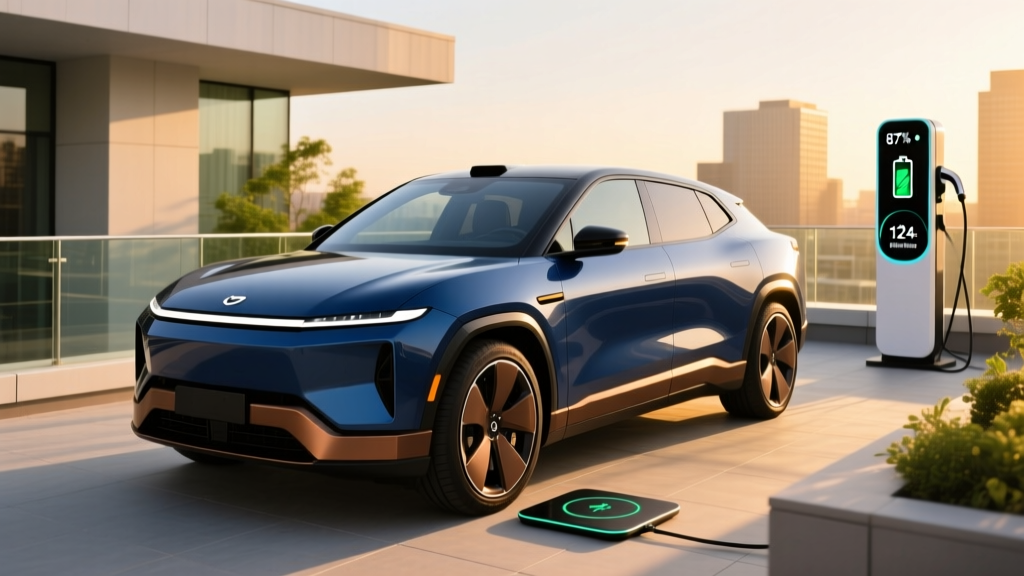
The Rivian R3 is the automaker's most anticipated vehicle: a compact electric crossover positioned below the R1S and R1T, aimed squarely at the mainstream EV market. First revealed in early 2024 with a target starting price around $45,000, the R3 is slated to enter production at Rivian's Normal, Illinois facility beginning in the first half of 2026. As deliveries approach, here is a comprehensive look at the Rivian R3 specifications we know so far, what remains preliminary, and how this compact EV stacks up against established rivals like the Tesla Model Y, Hyundai IONIQ 5, and Ford Mustang Mach-E.
Estimated Range and Battery Specifications
Rivian has confirmed the R3 will launch with multiple battery options, though final EPA certification numbers are still pending as of early 2026. Based on preliminary manufacturer data and the architecture shared with the R2 platform, here is what we expect:
| Specification | Standard Range (Est.) | Max Range (Est.) |
|---|---|---|
| EPA Range | ~270 miles | ~330+ miles |
| Battery Capacity (Usable) | ~68 kWh (preliminary) | ~90 kWh (preliminary) |
| Chemistry | LFP (Lithium Iron Phosphate) | NMC (Nickel Manganese Cobalt) |
| Estimated Efficiency | ~120 MPGe / 28 kWh/100mi | ~115 MPGe / 29 kWh/100mi |
Chemistry matters. The Standard Range model is expected to use LFP cells, which trade some energy density for superior cycle life and the ability to charge routinely to 100% without accelerated degradation. The Max Range variant will likely use NMC chemistry for higher energy density and longer single-charge distance, but owners should follow the 80% daily charge recommendation for long-term battery health.
Real-World Range Expectations
EPA estimates are a starting point, not a guarantee. Based on real-world testing patterns observed with the R1S and R1T — and the aerodynamic profile of the compact crossover segment — buyers should calibrate expectations:
- Highway driving (70-80 mph): Expect roughly 15-20% less than the EPA sticker. A 330-mile Max Range R3 would deliver approximately 265-280 miles at sustained highway speeds.
- Cold weather (below 32°F): Range reduction of 20-30% is typical for EVs without aggressive preconditioning. Rivian's heat pump system should help mitigate this, but plan for ~230 miles from the Max Range variant in deep winter conditions.
- City/stop-and-go: This is where EVs shine. Regenerative braking recaptures energy, and you may meet or slightly exceed EPA numbers in urban driving.
Charging Speed and Infrastructure
Charging speed is where compact EV buyers often feel the most anxiety. The R3 will ship with a NACS (North American Charging Standard) port natively, giving it direct access to Tesla's Supercharger network without an adapter — a significant advantage over CCS-equipped competitors that still rely on adapters for Supercharger access in 2026.
| Charging Level | Power / Rate | Speed (Miles Added) | Notes |
|---|---|---|---|
| Level 1 (120V) | 1.4 kW | ~3-4 mi/hr | Emergency/trickle only |
| Level 2 (240V Home) | 11.5 kW (48A) | ~34-38 mi/hr | Full charge overnight (~9 hrs for Max Range) |
| DC Fast Charge | ~175 kW peak (preliminary) | 10-80% in ~28 min (est.) | Charge curve tapers significantly above 80% |
Charging curve reality check: Peak kW is a headline number, not a sustained rate. Expect the R3 to hold near its peak rate between roughly 10-50% State of Charge (SoC), then progressively taper. The 10-80% time of approximately 28 minutes is competitive with the segment but not class-leading — the Hyundai IONIQ 5's 800V architecture still manages 10-80% in roughly 18 minutes. For road trippers, plan stops around the 25-30 minute mark to keep charging sessions efficient.
At home on a Level 2 wall connector, most owners will wake up to a full battery every morning. A 48-amp circuit on a 60-amp breaker is recommended; budget $800-$2,000 for professional installation depending on your panel capacity and run length. If your home has a 100-amp main panel, a panel upgrade to 200 amps could add $1,500-$3,000.
Performance and Drivetrain
Rivian has built its brand on capable, adventure-ready electric vehicles, and the R3 inherits that DNA in a smaller package. The automaker has confirmed multiple drivetrain configurations:
| Configuration | Drivetrain | Horsepower (Est.) | 0-60 mph (Est.) |
|---|---|---|---|
| Single Motor | RWD | ~250 hp | ~6.5 sec |
| Dual Motor | AWD | ~450 hp | ~4.5 sec |
| Performance (if offered) | AWD | ~550+ hp | ~3.5 sec |
The Dual Motor AWD variant is the sweet spot for most buyers — it provides genuine all-weather capability, enough power for confident highway merging, and the off-road credibility that Rivian's brand promises. The R3 is expected to offer a tow rating of approximately 3,000-3,500 pounds when properly equipped, sufficient for a small utility trailer or a pair of dirt bikes but not a full-size camper.
Dimensions, Cargo, and Interior Space
The R3 occupies the compact crossover segment, slotting below the midsize R1S in Rivian's lineup. Based on preliminary dimensions released by the manufacturer:
- Overall length: ~178 inches (similar footprint to the Subaru Crosstrek)
- Wheelbase: ~110 inches
- Cargo volume (behind rear seats): ~25 cu ft (estimated)
- Cargo volume (rear seats folded): ~55 cu ft (estimated)
- Front trunk (frunk): Yes — expected ~5-7 cu ft, useful for charging cables and groceries
- Rear legroom: ~37 inches (estimated, competitive for the segment)
The compact exterior footprint makes the R3 urban-friendly and easy to park, while the flat-floor EV skateboard architecture maximizes interior volume. Rivian's signature gear tunnel — a pass-through storage compartment between the rear wheels — may be adapted for the R3 in a smaller form, though this has not been confirmed for all trims.
Pricing, Trim Levels, and Federal Tax Credit
Rivian has positioned the R3 to undercut the R1S significantly, targeting the high-volume compact EV crossover market. Here is the anticipated pricing structure for the 2026 model year:
| Trim | Est. MSRP | After §30D Credit (Est.) | Key Features |
|---|---|---|---|
| Standard Range | ~$45,000 | ~$37,500* | Single motor RWD, LFP battery, base tech |
| Dual Motor | ~$52,000 | ~$44,500* | AWD, Standard or Max battery options |
| Max Range / Adventure | ~$58,000+ | ~$50,500* | NMC battery, premium interior, off-road pkg |
*Tax credit estimates assume full $7,500 eligibility under IRS §30D rules. Eligibility is NOT guaranteed and depends on multiple factors outlined below.
Federal Tax Credit Eligibility (§30D) — Critical Details
The Rivian R3 is expected to qualify for the federal clean vehicle credit, but buyers must navigate several requirements:
- MSRP cap: The R3, as an SUV/crossover, falls under the $80,000 MSRP cap. All announced trims clear this threshold.
- Buyer income limits (2026 tax year): Modified Adjusted Gross Income (MAGI) must not exceed $150,000 (single filers), $225,000 (head of household), or $300,000 (married filing jointly).
- Battery sourcing requirements: The §30D credit is split into two $3,750 halves — one for critical minerals sourcing and one for battery component manufacturing. Rivian has been working to localize its supply chain, but final sourcing determinations for the R3 are pending. Some trims may qualify for the full $7,500, while others may only receive $3,750 or potentially $0 if sourcing thresholds aren't met.
- Point-of-sale transfer: As of 2024, eligible buyers can transfer the credit to the dealer at purchase, reducing the upfront price rather than waiting for a tax refund. Rivian's direct-sales model supports this.
Bottom line: Do not assume you will receive $7,500. Consult a tax professional and check the latest fueleconomy.gov listings once the R3 receives final EPA certification.
Technology, Safety, and Driver Assistance
Rivian vehicles have consistently featured large, responsive infotainment screens with over-the-air update capability. The R3 is expected to include:
- Infotainment: 15.4-inch center touchscreen running Rivian's in-house operating system, wireless Apple CarPlay and Android Auto, integrated navigation with route-based battery preconditioning
- Driver display: Compact digital instrument cluster behind the steering wheel
- Driver assistance (Rivian Driver+): Adaptive cruise control, lane centering, automatic emergency braking, blind-spot monitoring. This is an SAE Level 2 system — the driver must remain engaged and hands on or near the wheel at all times.
- Highway assist: Hands-on lane centering on divided highways (similar to Ford BlueCruise's supervised mode). Not autonomous driving.
- Camera system: 360-degree surround view with trail camera mode for off-road use
- Over-the-air updates: Continuous feature additions and performance improvements post-purchase
Warranty and Ownership Considerations
Rivian's warranty coverage for the R1 series has been competitive with the EV segment, and the R3 is expected to follow a similar structure:
- Battery warranty: 8 years / 100,000 miles (minimum 70% capacity retention guaranteed)
- Powertrain warranty: 8 years / 100,000 miles
- Bumper-to-bumper: 5 years / 60,000 miles
- Roadside assistance: 5 years / 60,000 miles
The 70% capacity retention threshold is industry-standard (matching Tesla and Hyundai/Kia). In practice, modern LFP and NMC batteries with active thermal management tend to degrade far less than 30% over the warranty period. Real-world data from R1T and R1S owners suggests approximately 5-8% degradation over the first 50,000 miles, though long-term R3-specific data does not yet exist.
Insurance costs: Compact EVs generally carry slightly higher insurance premiums than equivalent gas vehicles due to repair costs and parts pricing. Expect quotes in the range of $1,600-$2,200 annually for a dual-motor R3, depending on your driving record, location, and coverage level. Always get quotes before purchasing.
How the R3 Compares to Key Rivals
| Spec | Rivian R3 (Est.) | Tesla Model Y | Hyundai IONIQ 5 |
|---|---|---|---|
| Starting MSRP | ~$45,000 | ~$44,990 | ~$42,600 |
| Max EPA Range | ~330 mi | 320 mi | 305 mi |
| DC Fast Charge (10-80%) | ~28 min | ~25 min | ~18 min |
| Native Charging Port | NACS | NACS | CCS1 (NACS adapter avail.) |
| AWD Available | Yes (Dual Motor) | Yes | Yes |
| Frunk | Yes (~5-7 cu ft) | Yes (~4 cu ft) | Yes (~2 cu ft) |
The R3 enters a crowded and competitive segment. Its key differentiators are Rivian's adventure brand positioning, native NACS Supercharger access, and the availability of an LFP battery option for buyers who prioritize longevity over maximum range. Its main vulnerability is that these are still preliminary specifications — production realities may shift numbers, and Rivian's manufacturing ramp-up history with the R1T and R1S suggests early delivery timelines could slip.
Who Should Buy the Rivian R3?
- You want a compact EV crossover with genuine off-road and adventure capability
- You value native Tesla Supercharger access without adapters
- You prefer an LFP battery option for daily charging to 100% without degradation worry
- You want a sub-$45,000 EV that doesn't feel like a budget compromise
- You're willing to wait for a new-production vehicle and accept early-build variability
- You need a vehicle immediately — the R3 is still ramping production in 2026
- Fastest possible DC charging is your top priority (IONIQ 5 wins here)
- You need three rows of seating (consider the R1S or Kia EV9)
- You want a proven long-term reliability track record from an established automaker
Frequently Asked Questions
What is the real-world range of the Rivian R3?
Based on preliminary estimates, the Max Range R3 should deliver approximately 265-280 miles at highway speeds (70-80 mph) and around 230 miles in cold winter conditions. The Standard Range model will likely achieve 220-240 miles in real-world mixed driving. Final EPA numbers are pending certification.
How fast does the R3 charge at home and on the road?
At home on a Level 2 (240V, 48A) charger, the R3 adds roughly 34-38 miles of range per hour — enough for a full overnight charge. On DC fast chargers, it peaks at approximately 175 kW and can charge from 10-80% in about 28 minutes, though charging slows significantly above 80% SoC.
How much does the Rivian R3 cost after the federal tax credit?
If you qualify for the full $7,500 §30D credit, the Standard Range R3 could effectively cost around $37,500. However, eligibility depends on your income, the vehicle's battery sourcing compliance, and MSRP caps. Not all buyers will qualify for the full amount — some may receive $3,750 or nothing at all. Always verify with a tax professional.
Does the Rivian R3 qualify for the federal EV tax credit?
The R3 is expected to qualify, but final determination depends on battery component and critical mineral sourcing rules under IRS §30D. Rivian has been localizing its supply chain, but official certification for each trim's credit amount will be confirmed closer to delivery. Check IRS.gov for the latest eligibility details.
Is the Rivian R3 worth buying vs. the Tesla Model Y or Hyundai IONIQ 5?
The R3 offers a compelling alternative for buyers who want something different from the ubiquitous Model Y and value adventure-oriented design. The IONIQ 5 charges faster, and the Model Y has a more mature Supercharger ecosystem (though the R3 has native access). The R3's LFP battery option is a genuine longevity advantage. If you can wait for production ramp-up and want a distinctive compact EV, it's worth serious consideration.
When will the Rivian R3 be available for delivery?
Rivian has targeted production start in the first half of 2026 at its Normal, Illinois factory. Reservation holders will receive priority, with general availability following as production scales. Early delivery timelines for new orders placed in 2026 may extend into late 2026 or early 2027.
Note: All specifications in this article are based on manufacturer announcements and preliminary data as of early 2026. Final EPA range, efficiency, and pricing figures are subject to change upon official certification. Always verify with Rivian's official channels and fueleconomy.gov before making a purchase decision.