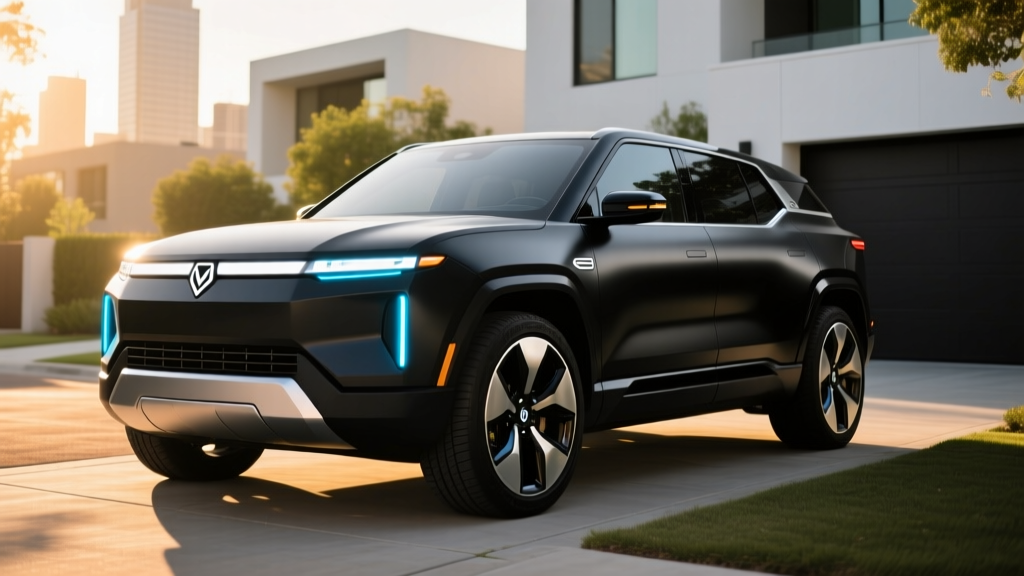
The compact electric crossover segment is about to get a serious shake-up. The R3 Rivian — the automaker's smallest and most affordable model to date — represents a deliberate move downmarket from the R1T truck and R1S SUV into territory currently dominated by the Volvo EX30, Hyundai Kona Electric, and upcoming Tesla Model Q. After Rivian CEO RJ Scaringe confirmed the R3's production timeline and teased key specifications, we now have enough detail to build a comprehensive preview of what buyers can expect when this EV arrives.
This preview synthesizes confirmed Rivian disclosures, supply-chain reporting, and platform engineering details from the R2 (which shares the R3's mid-size architecture) to project realistic specs. Where figures are preliminary, we flag them clearly. If you're cross-shopping sub-$50,000 electric crossovers, the R3 demands a spot on your shortlist.
2026 Rivian R3 Quick Verdict
The R3 is Rivian's answer to the question: Can a startup automaker build a compelling, profitable compact EV that undercuts the Tesla Model Y while delivering the brand's signature design and software polish? Based on what Rivian has confirmed about its next-generation electrical architecture, the answer looks promising. The R3 will ride on a shortened version of the R2 platform, adopt NACS for native Supercharger access, and target a starting price that — combined with the federal tax credit — could make it one of the most accessible premium EVs on the market.
Who the R3 suits best: Urban and suburban buyers who want a compact electric crossover with distinctive design, strong software, and real road-trip capability via the Tesla Supercharger network. It's ideal for two-person households, young families, and commuters who want premium tech without the R1S's $75,000+ price tag.
Estimated Range, Battery, and Efficiency
Rivian has not published a final EPA range certification for the R3 as of early 2026, but the company has confirmed the vehicle will use a next-generation battery pack built on its mid-size platform. Based on R2 engineering disclosures and industry reporting, here's what we project:
| Specification | Projected Figure | Status |
|---|---|---|
| Battery Capacity (usable) | ~75 kWh | Estimated |
| Battery Chemistry | LFP (Lithium Iron Phosphate) | Likely (based on R2 strategy) |
| EPA Estimated Range | ~300 miles (Standard Range) | Preliminary |
| Efficiency | ~28 kWh/100 mi (est. ~120 MPGe) | Estimated |
| Drivetrain | RWD standard; Dual-Motor AWD available | Confirmed |
The EPA sticker may read ~300 miles, but plan your road trips around 250–270 miles at sustained highway speeds (70–80 mph). In cold weather (below 30°F), expect a 20–30% reduction, bringing effective range to roughly 210–240 miles. LFP chemistry is more resilient to daily 100% charging than NMC, so Rivian will likely recommend charging to full regularly — a practical advantage for commuters who need every available mile each morning.
The decision to likely adopt LFP chemistry for the standard-range R3 is significant. LFP cells are less energy-dense than NMC but cost less, degrade more slowly over thousands of cycles, and eliminate cobalt from the supply chain. For a compact crossover where weight and packaging are less extreme than a full-size truck, LFP is the pragmatic choice — and it positions the R3 for strong long-term battery health.
Charging Speed: DC Fast, Level 2, and NACS Access
Charging infrastructure access is often the deciding factor for EV buyers, and the R3 arrives with a major structural advantage: native NACS (North American Charging Standard). Unlike CCS-equipped rivals that require adapters for Tesla Supercharger access, the R3 plugs directly into the largest fast-charging network in the United States.
| Charging Level | Power / Rate | Estimated Speed |
|---|---|---|
| Level 1 (120V household) | ~1.4 kW | ~4–5 miles per hour |
| Level 2 (240V home / public) | ~11.5 kW (48A) | ~33–37 miles per hour |
| DC Fast Charging (peak) | ~175–200 kW | 10–80% in ~25–30 minutes |
Understanding the charge curve: Peak DC fast-charge rates (the ~200 kW headline number) are only sustained at low states of charge, typically between 10–40% SoC. As the battery fills, the vehicle's battery management system tapers power to protect cell health. Expect the R3 to charge from 10–50% very quickly (roughly 12–15 minutes), then slow progressively through the 50–80% window. This is normal physics for all lithium-ion packs, not a Rivian-specific limitation.
For home charging, a 48-amp Level 2 wall connector on a 60-amp dedicated circuit will replenish the R3's ~75 kWh pack from empty to full in roughly 7–8 hours — easily enough for overnight top-ups. Most R3 owners will arrive home at 40–60% SoC and wake up fully charged every morning. Installation costs for a Level 2 home setup typically range from $500 (simple NEMA 14-50 outlet near the panel) to $2,500+ (long conduit runs, panel upgrades). Always consult a licensed electrician for final specifications.
Performance and Drivetrain
Rivian has confirmed the R3 will offer both single-motor rear-wheel drive and dual-motor all-wheel drive configurations. The dual-motor variant is expected to deliver the brand's characteristic instant torque and confident all-weather traction, scaled appropriately for a compact crossover's weight and dimensions.
| Metric | RWD (Base) | Dual-Motor AWD |
|---|---|---|
| Horsepower | ~250 hp | ~400 hp |
| 0–60 mph | ~6.5 seconds | ~4.5 seconds |
| Top Speed | ~120 mph | ~125 mph |
| Towing Capacity | ~1,500 lbs (est.) | ~2,500 lbs (est.) |
These figures are projections based on the R2 platform's engineering targets. The R3's shorter wheelbase and lighter curb weight (estimated ~4,200–4,500 lbs for AWD) should give it nimble handling characteristics that differentiate it from taller, heavier competitors. Rivian's software-defined torque vectoring — which independently manages front and rear motor output — is expected to carry over, providing confident cornering and traction management without traditional mechanical differentials.
Pricing, Trims, and Federal Tax Credit Eligibility
Rivian CEO RJ Scaringe has repeatedly stated the R3 will be the brand's most accessible vehicle, targeting a starting price well below the R1S and R2. Here's our projected pricing structure and tax-credit analysis:
| Trim | Est. MSRP | Fed. Credit (§30D) | Effective Price |
|---|---|---|---|
| Standard Range RWD | ~$42,000 | Up to $7,500* | ~$34,500 |
| Standard Range AWD | ~$47,000 | Up to $7,500* | ~$39,500 |
| Extended Range AWD | ~$52,000 | Up to $7,500* | ~$44,500 |
*Federal tax credit (§30D) eligibility is not guaranteed for all buyers. Under current IRS rules, the full $7,500 credit requires meeting ALL of the following:
- MSRP cap: The vehicle's base MSRP must not exceed $55,000 for SUVs/crossovers (the R3 is expected to qualify under this threshold for most trims).
- Buyer income limits: Modified adjusted gross income must not exceed $150,000 (single), $225,000 (head of household), or $300,000 (joint filers).
- Battery component sourcing: A percentage of battery components must be manufactured or assembled in North America, and critical minerals must be sourced from the U.S. or FTA partners — thresholds that tighten annually through 2032.
- Point-of-sale transfer: Eligible buyers can transfer the credit to the dealer at purchase, reducing the out-of-pocket price immediately rather than waiting for a tax refund.
Rivian's U.S. manufacturing (Normal, Illinois) and its battery supply chain partnerships position the R3 favorably for §30D compliance, but final eligibility depends on the specific model year's sourcing percentages. Always verify current-year rules with a tax professional before relying on the credit in your purchase decision.
Interior Space, Cargo, and Practicality
As a compact crossover, the R3 won't match the R1S's three-row capacity, but Rivian's skateboard-style platform — with its flat floor and compact motor packaging — should maximize interior volume relative to the vehicle's exterior footprint.
| Dimension | Projected |
|---|---|
| Seating Capacity | 5 passengers |
| Front Legroom | ~41 inches |
| Rear Legroom | ~37 inches |
| Cargo (behind rear seats) | ~24 cu ft |
| Cargo (rear seats folded) | ~55 cu ft |
| Front Trunk (frunk) | ~5 cu ft |
The frunk — a Rivian signature feature — adds meaningful sealed storage for charging cables, groceries, or gear you want separated from the main cabin. Combined cargo capacity of roughly 60 cubic feet (seats folded + frunk) positions the R3 competitively against the Volvo EX30 and ahead of several subcompact electric rivals.
Technology, Driver Assistance, and Software
Rivian's software stack is one of its strongest differentiators. The R3 is expected to feature:
- 15.6-inch center touchscreen running Rivian's proprietary infotainment OS with over-the-air updates, integrated navigation with route-based battery preconditioning, and wireless Apple CarPlay/Android Auto.
- Rivian Driver+ (Level 2): Adaptive cruise control with lane-centering, automatic emergency braking, blind-spot monitoring, and highway assist. This is a SAE Level 2 system — the driver must remain engaged with hands on the wheel and eyes on the road at all times.
- Digital driver display and available head-up display for speed, range, and navigation prompts.
- Phone-as-key functionality with Bluetooth Low Energy proximity unlock and drive-away.
- Vehicle-to-load (V2L) capability, allowing the R3's battery to power external devices (camping gear, power tools, emergency backup) via integrated 120V outlets.
Rivian Driver+ is a SAE Level 2 driver-assistance system. It can manage steering, acceleration, and braking on highways under driver supervision, but it cannot handle all driving scenarios, does not replace an attentive driver, and is not autonomous. Only Level 4 services like Waymo operate without a human driver — and those are limited to specific geofenced areas.
Route-based battery preconditioning deserves special attention: when you navigate to a DC fast charger, the R3 will warm or cool the battery pack to its optimal temperature before you arrive, enabling faster charging from the moment you plug in. This feature meaningfully reduces 10–80% charge times, especially in cold weather, and is a capability not all competitors offer.
Warranty and Ownership Costs
| Coverage Area | Expected Term |
|---|---|
| Limited Vehicle Warranty | 5 years / 60,000 miles |
| Battery & Drive Unit | 8 years / 100,000 miles (min. 70% capacity retention) |
| Roadside Assistance | 5 years / 60,000 miles |
| OTA Software Updates | Included for vehicle lifetime |
The 8-year/100,000-mile battery warranty is the industry-standard baseline, but the critical detail is the capacity retention threshold. Rivian guarantees the pack will retain at least 70% of its original capacity during the warranty period. LFP chemistry's slower degradation curve means most R3 owners will likely never approach this threshold under normal use — a meaningful long-term ownership advantage over NMC packs that degrade faster in the first 2–3 years before leveling off.
For a projected 5-year total cost of ownership, the R3's lower MSRP, reduced fuel cost (electricity at $0.13/kWh vs. gasoline at $3.50/gallon), and minimal drivetrain maintenance (no oil changes, fewer moving parts) should deliver substantial savings versus a comparably priced gas crossover — even accounting for typically higher EV insurance premiums (budget 10–20% more than an equivalent ICE vehicle).
Rivian R3 vs. Key Competitors
| Spec | Rivian R3 (AWD est.) | Volvo EX30 | Hyundai Kona Electric |
|---|---|---|---|
| Base MSRP | ~$47,000 | $44,900 | $34,000 |
| EPA Range | ~300 mi | 265 mi | 261 mi |
| Battery (usable) | ~75 kWh | 69 kWh | 65 kWh |
| DC Fast Charge | ~200 kW | 153 kW | 100 kW |
| 0–60 mph | ~4.5 sec | 3.4 sec (Twin Motor) | 7.6 sec |
| NACS Native | Yes | No (adapter) | No (adapter) |
| Frunk | Yes | No | No |
The R3's projected advantages are clear: more range, faster DC charging, native Supercharger access, and a frunk. The Volvo EX30 counters with a lower starting price and blistering Twin Motor acceleration. The Hyundai Kona Electric undercuts all rivals on price but sacrifices charging speed and range. Your choice depends on which trade-offs matter most for your driving patterns.
Choose the Rivian R3 if: You want the longest range in the segment, native Supercharger access for road trips, distinctive design, and a frunk — and you're willing to pay a premium over the Kona Electric.
Choose the Volvo EX30 if: Acceleration and Scandinavian design matter most, and you primarily charge at home or on Electrify America.
Choose the Hyundai Kona Electric if: Budget is the primary constraint and your daily commute is under 50 miles with home charging.
Biggest Pros and Cons
- Projected ~300-mile EPA range leads the compact segment
- Native NACS for direct Tesla Supercharger access
- LFP battery for long-term durability and daily 100% charging
- Rivian's proven software stack with OTA updates
- Frunk adds practical sealed storage
- Strong projected §30D tax credit eligibility
- Distinctive design stands out in a sea of generic crossovers
- Not yet available for purchase (production expected late 2026)
- Higher starting price than Kona Electric and Chevrolet Equinox EV
- Rivian's production ramp history suggests potential delivery delays
- Compact rear seat may feel tight for tall passengers on long trips
- Towing capacity limited vs. R1T/R1S
- Service center network still expanding outside major metros
Frequently Asked Questions
What is the real-world range of the Rivian R3?
The R3 is projected to achieve approximately 300 miles EPA, but real-world highway driving at 70–80 mph will likely yield 250–270 miles. In cold weather below 30°F, plan for 210–240 miles. LFP chemistry allows daily 100% charging, so you can start each morning with the full available range.
How fast does the R3 charge at home and on the road?
On a 48-amp Level 2 home charger, expect ~33–37 miles of range added per hour, or a full overnight charge in 7–8 hours. DC fast charging peaks at approximately 175–200 kW, reaching 10–80% in roughly 25–30 minutes with battery preconditioning active.
How much does the Rivian R3 cost after the federal tax credit?
The base Standard Range RWD is projected at ~$42,000 MSRP. If you qualify for the full $7,500 §30D credit (meeting income, MSRP, and sourcing requirements), the effective price drops to approximately $34,500. The AWD Extended Range at ~$52,000 would come to ~$44,500 after credit. Verify your personal eligibility with a tax professional before purchasing.
Does the Rivian R3 qualify for the $7,500 federal EV tax credit?
Rivian's U.S. manufacturing and battery supply chain investments position the R3 favorably, but eligibility depends on current-year IRS §30D sourcing thresholds, your income, and the specific trim's MSRP. The credit is available as a point-of-sale transfer, reducing your purchase price immediately. Rules tighten annually — verify the year you plan to buy.
Is the Rivian R3 worth buying over the Volvo EX30 or Hyundai Kona Electric?
If range, charging speed, and Supercharger access are your priorities, the R3 offers the strongest overall package. The EX30 wins on acceleration and luxury feel; the Kona Electric wins on price. Test-drive all three when the R3 becomes available and compare how each fits your daily commute and road-trip needs.
When can I actually buy the Rivian R3?
Rivian has indicated the R3 will enter production following the R2 launch, with deliveries expected to begin in late 2026 or early 2027. Reservations are expected to open ahead of production. All specifications in this preview are subject to change until Rivian publishes final EPA certifications and MSRP.
Sources: Rivian official disclosures, fueleconomy.gov for segment efficiency benchmarks, and IRS §30D guidelines. All R3 specifications are projected based on confirmed platform details and are subject to change prior to production.