The Rivian R2X at a Glance: A Compact EV SUV for the Masses
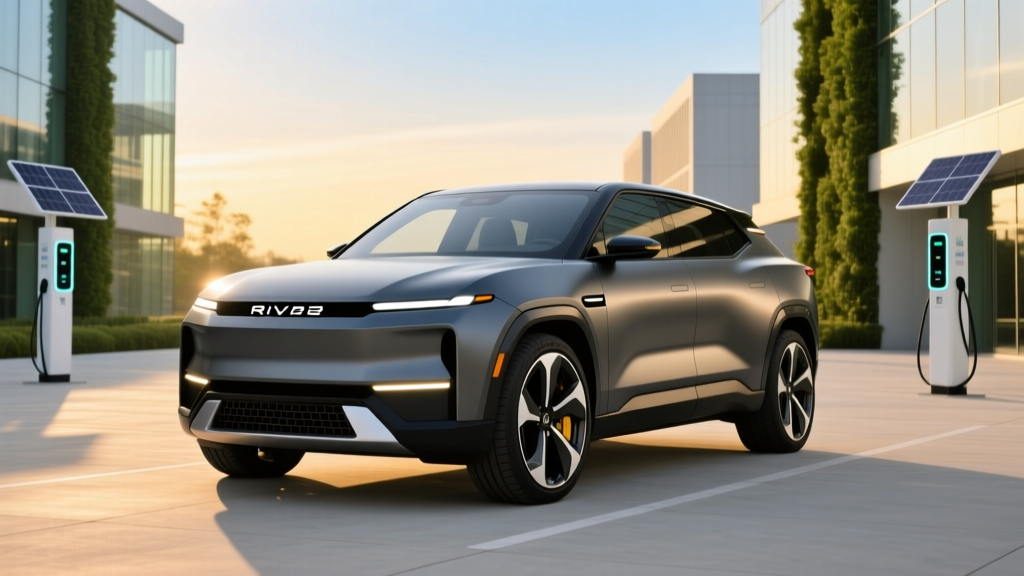
The Rivian R2X is the smaller, more affordable sibling of the R1S, positioned to compete directly in the high-volume compact electric SUV segment against the Tesla Model Y, Ford Mustang Mach-E, and Hyundai Ioniq 5. Announced as part of Rivian's mid-size platform strategy, the R2X is expected to begin production at Rivian's Normal, Illinois facility, with pricing targeting a sub-$45,000 starting point before incentives. As of early 2026, the R2X remains in announced/pre-production status — Rivian has shared preliminary specifications, but final EPA certification, trim-level pricing, and delivery timelines are subject to change. Everything below reflects the most current data Rivian has published or confirmed, cross-referenced with industry reporting and regulatory filings.
This preview breaks down what prospective buyers need to evaluate: real-world range expectations, charging infrastructure compatibility, total cost after federal incentives, and whether the R2X justifies a reservation deposit versus established competitors that are shipping today.
Preliminary Specs: Battery, Range, and Efficiency
| Attribute | Estimated / Confirmed Value |
|---|---|
| Battery Capacity (usable) | ~75–85 kWh (final TBD) |
| Battery Chemistry | NMC (nickel-manganese-cobalt); LFP variant rumored for base trim |
| EPA-Estimated Range | ~300–330 miles (target, pending certification) |
| Efficiency (est.) | ~28–31 kWh/100 mi (~108–120 MPGe combined) |
| Drivetrain | Dual-motor AWD (standard); single-motor RWD possible for base |
| Horsepower | ~350–450 hp (AWD dual-motor, est.) |
| 0–60 mph | ~4.5–5.5 seconds (AWD, est.) |
| Towing Capacity | ~3,500–4,500 lbs (est.) |
| Ground Clearance | ~8.0–8.5 inches (est.) |
| Cargo Volume (behind 2nd row) | ~30–35 cu ft (est.) |
| Base MSRP (target) | ~$45,000 |
Rivian has targeted an EPA range of approximately 300–330 miles for the R2X dual-motor AWD configuration, depending on battery pack selection. If Rivian offers a smaller standard-range pack, expect an EPA figure closer to 250–270 miles. These numbers are preliminary — official EPA certification typically arrives weeks before first deliveries.
If the R2X achieves a 320-mile EPA sticker, plan for approximately 260–285 miles on sustained highway driving at 70–75 mph. In cold-weather conditions (below 30°F), expect a 15–25% range reduction, bringing usable range to roughly 240–270 miles depending on cabin heating demand and whether the R2X includes a heat pump (strongly expected given Rivian's R1 platform architecture). City driving with regenerative braking will closely match or slightly exceed the EPA number. This is consistent with real-world EV efficiency physics — the EPA cycle is weighted toward lower-speed urban driving where EVs are most efficient.
Charging Performance: DC Fast, Level 2, and Connector Details
Charging speed is where Rivian's mid-size platform needs to deliver to stay competitive. Based on Rivian's published platform architecture details and the 800V-capable electrical system the company has referenced, the R2X is expected to support DC fast charging at up to ~200–250 kW peak, with a 10–80% charge time in approximately 22–28 minutes under optimal conditions.
| Charging Level | Power / Rate | Estimated Time or Miles Added |
|---|---|---|
| Level 1 (120V household) | ~1.4 kW | ~3–4 miles per hour |
| Level 2 (240V home, 48A) | ~11.5 kW | ~30–35 miles per hour; full charge ~8–10 hrs |
| DC Fast Charge (peak) | ~200–250 kW | 10–80% in ~22–28 min (est.) |
| DC Fast Charge (sustained avg.) | ~150–180 kW avg | Real-world avg accounts for charge-curve taper above 80% |
Charge-curve reality: Peak kW is not sustained kW. The R2X will likely hit its maximum charge rate between 10–40% state of charge, then progressively taper. Above 80% SoC, charging slows significantly to protect battery longevity — this is universal across NMC lithium-ion packs. For road trips, the practical strategy is to charge from 10–80% and skip the final 20% unless necessary, as that last segment can add 15–20 minutes for relatively few miles gained.
The R2X is expected to ship with a NACS (North American Charging Standard) charge port natively, aligning with Rivian's existing commitment to the Tesla-originated connector standard and granting access to the Tesla Supercharger network — the most extensive and reliable DC fast-charging network in North America. This is a significant competitive advantage over CCS-equipped vehicles that rely on Electrify America or EVgo, where uptime and connector reliability remain inconsistent.
Performance and Drivetrain Architecture
Rivian has built its reputation on dual-motor AWD performance, and the R2X is expected to continue this tradition. The dual-motor AWD variant should produce in the neighborhood of 350–450 horsepower, with a 0–60 mph time of approximately 4.5–5.5 seconds. A single-motor RWD variant could follow, offering lower cost and slightly higher range at the expense of all-weather traction and acceleration.
Rivian's drive system uses independent motors on each axle — no mechanical linkage — enabling precise torque vectoring and traction control. Expect multiple drive modes (All-Purpose, Sport, Snow, Off-Road) similar to the R1S/R1T, though the R2X will likely sit on a unibody crossover platform rather than the R1's body-on-frame skateboard, trading extreme off-road capability for on-road efficiency and interior space optimization.
Towing capacity is estimated at 3,500–4,500 pounds, sufficient for a small camper, utility trailer, or pair of dirt bikes. Keep in mind that towing cuts range dramatically — expect a 40–50% range reduction when towing near maximum capacity at highway speeds.
Interior, Cargo, and Technology
The R2X is positioned as a five-passenger compact SUV, roughly comparable in footprint to the Tesla Model Y but with Rivian's design DNA — think adventure-oriented storage solutions, a flat load floor, and the brand's signature minimalist-yet-warm interior aesthetic.
- Passenger space: Expect ~40 inches of front legroom and ~37–38 inches of rear legroom (competitive with Model Y and Ioniq 5).
- Cargo (behind 2nd row): ~30–35 cu ft, expanding to ~65–70 cu ft with rear seats folded.
- Front trunk (frunk): Likely included, ~5–8 cu ft — useful for charging cables and gear.
- Infotainment: Rivian's proprietary OS on a ~15-inch center display, with wireless Apple CarPlay and Android Auto expected. Over-the-air updates are standard across the Rivian fleet.
- Driver assistance: Rivian's Driver+ system (SAE Level 2) with adaptive cruise, lane centering, and highway assist. This is not autonomous driving — the driver must remain attentive and hands-on or eyes-on at all times.
Rivian Driver+ is a Level 2 driver-assistance system per SAE International's J3016 framework. The system manages steering and acceleration/braking under certain conditions, but the driver is responsible for monitoring the environment and must be prepared to take over immediately. This is the same automation tier as Tesla Autopilot, Ford BlueCruise, and GM Super Cruise — none of these are "self-driving."
Pricing, Trims, and Federal Tax Credit Eligibility
Rivian has publicly targeted a starting MSRP of approximately $45,000 for the R2X, though final trim-level pricing has not been confirmed. Based on Rivian's current pricing architecture for the R1S, expect two or three tiers:
| Trim (Est.) | MSRP (Target) | Potential §30D Credit | Effective Price |
|---|---|---|---|
| Base (Standard Range, RWD/AWD) | ~$45,000 | Up to $7,500* | ~$37,500 |
| Mid (Extended Range, AWD) | ~$50,000–$52,000 | Up to $7,500* | ~$42,500–$44,500 |
| Adventure / Performance | ~$55,000+ | Up to $7,500* | ~$47,500+ |
*Federal tax credit (IRS §30D) eligibility depends on multiple requirements that must all be met simultaneously:
- MSRP cap: SUVs must have an MSRP at or below $80,000 — the R2X clears this easily.
- Buyer income cap: Modified adjusted gross income must not exceed $150,000 (single), $225,000 (head of household), or $300,000 (joint filers).
- Battery component sourcing: A percentage of battery components must be manufactured or assembled in North America (threshold increases annually). As of 2026, this requirement is strict — see IRS guidance on clean vehicle credits.
- Critical minerals: A percentage of critical minerals in the battery must be sourced from the U.S. or free-trade-agreement countries (threshold also increases annually).
- Point-of-sale transfer: Buyers can elect to transfer the credit to the dealer at purchase, reducing the purchase price directly rather than waiting for a tax refund.
- Foreign entity of concern (FEOC) exclusion: Vehicles with battery components or critical minerals from certain foreign entities are disqualified — this is a key variable for any automaker with complex supply chains.
The R2X's Illinois production and Rivian's ongoing effort to localize its battery supply chain position it favorably for §30D eligibility, but the exact credit amount ($0, $3,750, or $7,500) will depend on the battery sourcing at time of delivery. Always verify current eligibility on the IRS website or with a tax professional before committing to a purchase.
Warranty and Long-Term Ownership
Rivian's current vehicles carry an 8-year / 175,000-mile battery and drive unit warranty, which is among the most generous in the industry and exceeds the federal minimum of 8 years / 100,000 miles. The R2X is expected to carry similar coverage:
- Battery & drive unit: 8 years / 175,000 miles (est., based on R1 platform)
- Bumper-to-bumper: 5 years / 60,000 miles (est.)
- Capacity retention guarantee: Typically 70% of original capacity over the warranty period — consistent with industry norms.
Battery replacement cost, should it ever be needed out of warranty, is the most common long-term ownership concern. For a pack in the 75–85 kWh range, out-of-warranty replacement would likely cost $12,000–$18,000 including labor, though prices are expected to decline as battery manufacturing scales. In practice, modern NMC and LFP packs are demonstrating far slower degradation than early-generation EVs, with most retaining 85–92% capacity after 100,000 miles based on fleet data from similar platforms.
Competitive Comparison: R2X vs. the Compact EV SUV Field
| Attribute | Rivian R2X (est.) | Tesla Model Y LR AWD | Hyundai Ioniq 5 LR AWD | Ford Mustang Mach-E ER AWD |
|---|---|---|---|---|
| EPA Range | ~300–330 mi | 311 mi | 290 mi | 290 mi |
| Battery (usable) | ~75–85 kWh | 75 kWh | 77.4 kWh | 88 kWh |
| Peak DC Charge | ~200–250 kW | 250 kW | 240 kW | 150 kW |
| 10–80% DC Time | ~22–28 min | ~22 min | ~18 min | ~38 min |
| 0–60 mph | ~4.5–5.5 sec | 4.8 sec | 5.1 sec | 5.1 sec |
| Base MSRP (AWD) | ~$45,000 | ~$48,000 | ~$50,000 | ~$48,000 |
| NACS Native | Yes (expected) | Yes | Adapter required | Adapter required |
| Towing | ~3,500–4,500 lbs | 3,500 lbs | 2,300 lbs | 3,300 lbs |
The R2X slots into a competitive sweet spot: undercutting the Model Y on price while matching or exceeding its range and towing, and offering native NACS access that Hyundai and Ford owners still need adapters for. The risk is availability — the Model Y, Ioniq 5, and Mach-E are all purchasable today with known reliability track records, while the R2X remains in pre-production.
- Reserve the R2X if: You want native NACS + Supercharger access, need more towing than an Ioniq 5, value Rivian's adventure-oriented design and over-the-air improvement track record, and can wait for production ramp.
- Buy a Model Y if: You want the lowest-risk option with proven Supercharger integration, the widest service center network, and immediate availability.
- Buy an Ioniq 5 if: Fastest DC charging speed (18 min 10–80%) is your top priority and you don't mind carrying a NACS adapter for Supercharger access.
- Buy a Mach-E if: You prefer Ford's dealer network for service and want a sporty driving feel, accepting slower DC charging.
Pros, Cons, and Final Assessment
- Targeted ~300–330 mi EPA range at a ~$45K starting price is segment-competitive
- Native NACS port and Supercharger network access from day one
- Dual-motor AWD with strong estimated performance (~4.5–5.5 sec 0–60)
- Rivian's over-the-air update track record and 8-yr/175K-mi battery warranty (est.)
- Likely eligible for up to $7,500 federal tax credit (pending sourcing confirmation)
- Adventure-oriented design with strong towing capacity for the class
- Not yet available — production timeline and final specs remain unconfirmed
- Rivian's service center network is still expanding; coverage varies by region
- Exact §30D tax credit amount depends on battery sourcing at time of delivery
- No third-row option — strictly a five-passenger SUV
- DC fast-charge speed, while competitive, may not match Ioniq 5's 18-min benchmark
- New platform means first-year build quality is an unknown variable
The Rivian R2X represents a credible attempt to bring Rivian's design philosophy and technology stack to a price point that reaches mainstream EV buyers. If Rivian executes on its production timeline and achieves the targeted pricing and range, the R2X will be one of the strongest entries in the compact electric SUV segment. The critical variables to watch between now and first deliveries are final EPA certification numbers, confirmed battery chemistry and sourcing (which determines tax credit eligibility), and whether Rivian can ramp production without the quality-control challenges that affected early R1T and R1S builds.
Frequently Asked Questions
What is the real-world range of the Rivian R2X?
Based on Rivian's targeted EPA estimate of 300–330 miles, expect approximately 260–285 miles during sustained highway driving and 240–270 miles in cold weather (below 30°F). City driving with regenerative braking should closely match the EPA sticker. These figures assume a heat pump is included, which is strongly expected.
How fast does the R2X charge on DC fast chargers and at home?
The R2X is expected to peak at approximately 200–250 kW on DC fast chargers, achieving a 10–80% charge in roughly 22–28 minutes. At home on a 240V Level 2 charger (48 amps / ~11.5 kW), expect roughly 30–35 miles of range added per hour, with a full charge taking approximately 8–10 hours.
How much does the Rivian R2X cost after the federal EV tax credit?
If the base MSRP lands near $45,000 and the vehicle qualifies for the full $7,500 §30D credit (subject to battery sourcing, buyer income, and MSRP cap requirements), the effective price could be as low as ~$37,500. Higher trims at $50,000–$55,000 would drop to approximately $42,500–$47,500. Always confirm eligibility on the IRS clean vehicle credits page before purchasing.
Does the Rivian R2X qualify for the federal EV tax credit?
The R2X is expected to qualify, but the exact amount ($3,750 or $7,500) depends on battery component sourcing and critical minerals requirements at the time of delivery. The MSRP is well below the $80,000 SUV cap, and buyer income limits apply ($150K single / $300K joint). Point-of-sale transfer is available, reducing the purchase price directly.
Is the Rivian R2X worth buying vs. the Tesla Model Y or Hyundai Ioniq 5?
The R2X offers competitive range, native NACS/Supercharger access, strong towing, and Rivian's adventure-oriented design at a lower target price than the Model Y. However, the Model Y and Ioniq 5 are available now with proven reliability, while the R2X carries first-year production risk. If you can wait and Rivian delivers on specs, the R2X is a compelling choice. If you need an EV today, buy what's available.
What connector does the Rivian R2X use?
The R2X is expected to use a native NACS (North American Charging Standard) port, providing direct access to the Tesla Supercharger network without an adapter. This is the industry-standard direction for North American EVs.
When will the Rivian R2X be available for delivery?
Rivian has targeted production beginning in the 2026 timeframe at its Normal, Illinois facility. Exact delivery dates depend on production ramp, supply chain readiness, and reservation priority. Rivian has not published a firm calendar date as of early 2026.