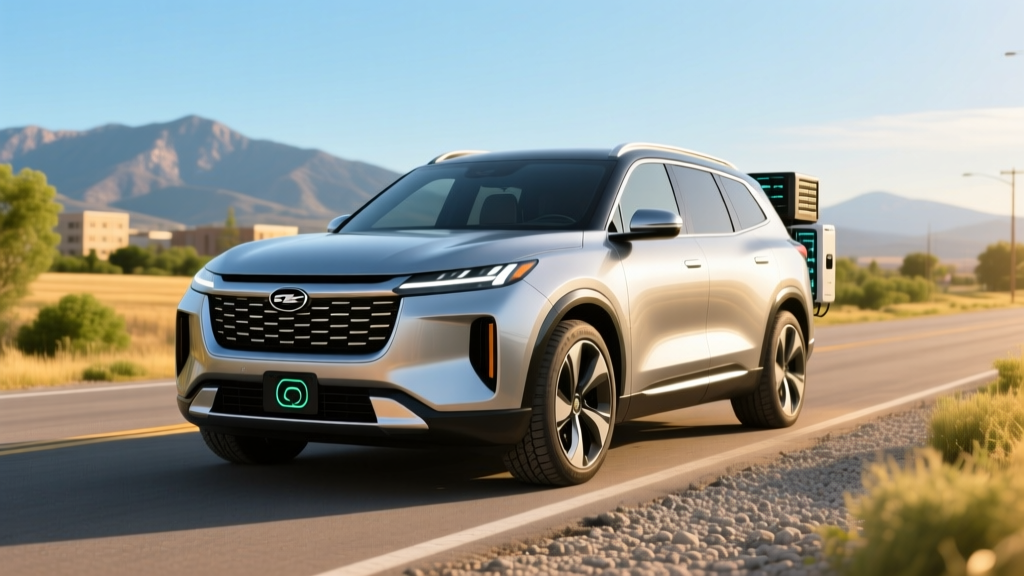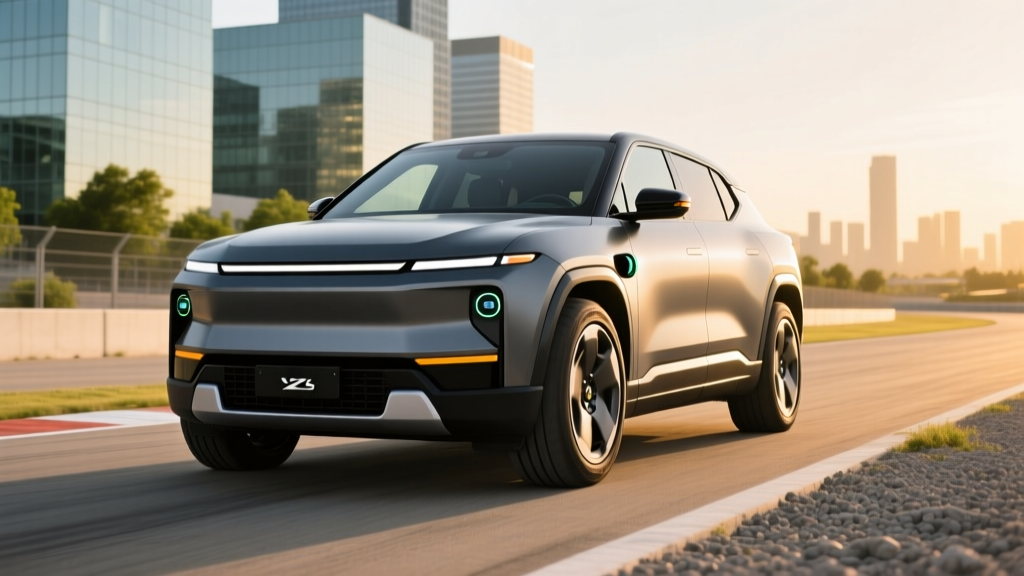
Rivian R2S Final Validation: Engineering Sign-Off Before Production
The Rivian R2 — the automaker's compact electric SUV aimed squarely at the Tesla Model Y and Ford Mustang Mach-E — is deep into its final validation phase as of early 2026. With production targeted for the first half of 2026 at Rivian's Normal, Illinois facility, pre-production prototypes are logging millions of test miles across extreme climates. For buyers who've placed a reservation (or are considering one), the final validation stage is where preliminary specs either hold up or get revised. Here's a data-driven breakdown of everything confirmed, estimated, and still in flux.
Status: The Rivian R2 (sometimes referenced in enthusiast circles as "R2S" for the standard SUV variant) is announced and in final validation testing. It is not yet available for purchase or delivery. All specifications below are based on Rivian's published targets, pre-production testing disclosures, and industry analysis. Final EPA-certified figures may differ at launch.
Range, Battery, and Efficiency Targets
Rivian has confirmed the R2 will launch with multiple battery pack options. The headline pack, targeted for the Long Range dual-motor variant, aims for an EPA-estimated range of 330+ miles. A Standard Range variant is expected to deliver approximately 270 miles EPA.
EPA 330+ mi (Long Range target). Expect approximately 275–295 miles on sustained highway driving at 70–75 mph. In cold weather (below 32°F), plan for a 20–30% reduction, putting real-world winter highway range around 210–250 miles. The Standard Range variant (~270 mi EPA) will likely deliver 220–240 mi highway, and roughly 175–200 mi in freezing conditions. These estimates are based on observed R1S/R1T real-world degradation patterns and industry testing of similar-class EVs.
| Specification | Standard Range | Long Range |
|---|---|---|
| Battery Capacity (usable) | ~65 kWh (est.) | ~85 kWh (est.) |
| Chemistry | LFP (Lithium Iron Phosphate) | NMC (Nickel Manganese Cobalt) |
| EPA Range Target | ~270 mi | 330+ mi |
| Efficiency Target | ~26 kWh/100 mi | ~25 kWh/100 mi (~135 MPGe est.) |
| Thermal Management | Active liquid cooling + heat pump | Active liquid cooling + heat pump |
The LFP chemistry choice for the Standard Range pack is significant. LFP batteries trade some energy density for longer cycle life, lower cost, and reduced fire risk. They also tolerate regular 100% charging better than NMC, which is ideal for daily commuters. The Long Range NMC pack offers higher energy density for road-trip range but benefits from charging to 80–90% for daily use to maximize longevity.
Rivian's inclusion of a heat pump across all trims is a welcome efficiency decision — it significantly reduces cabin-heating energy draw in cold weather compared to resistive heating, preserving range.
Charging Speed: DC Fast and Home Level 2
Charging speed remains one of the most scrutinized metrics for any new EV, and the R2's final validation testing is paying particular attention to charge-curve optimization.
| Charging Level | Specification | Detail |
|---|---|---|
| DC Fast Charge (Peak) | ~200+ kW | Long Range variant target |
| DC Fast 10–80% Time | ~25–30 minutes (target) | At compatible 200+ kW station |
| Charge Port | NACS (native) | Direct Tesla Supercharger access |
| Level 2 Home Charging | ~11.5 kW / 48A | ~25–30 mi/hr of range added |
| Level 1 (120V) | ~1.4 kW | ~3–4 mi/hr (emergency/trickle) |
A critical detail: peak kW is not sustained kW. The R2's ~200+ kW peak will likely hold from roughly 10–50% State of Charge (SoC), then taper progressively. Expect average charging power of approximately 140–160 kW across the full 10–80% session. This is typical for the segment and means the 25–30 minute target is realistic at a properly rated station.
The native NACS connector is a major practical advantage. Rivian owners already have access to the Tesla Supercharger network via adapter on R1 vehicles, but the R2 will have NACS built in — no adapter needed. This opens access to 20,000+ Supercharger stalls nationwide, currently the most reliable DC fast-charging network in the U.S.
For home charging, a 48-amp Level 2 wall connector on a 60-amp circuit will replenish the Long Range pack from 10–100% overnight in roughly 9–10 hours. Installation costs for a Level 2 home setup typically range from $500–$2,500 depending on panel capacity and wiring distance — consult a licensed electrician for a site-specific quote.
Performance and Drivetrain
Rivian has confirmed the R2 will offer multiple drivetrain configurations, continuing the brand's dual-motor AWD focus while adding a more accessible single-motor option.
| Variant | Drivetrain | Horsepower | 0–60 mph |
|---|---|---|---|
| Single Motor | RWD | ~275 hp (est.) | ~6.5 sec (est.) |
| Dual Motor | AWD | ~450 hp (est.) | ~4.5 sec (est.) |
| Dual Motor Performance | AWD | ~550+ hp (est.) | ~3.5 sec (est.) |
Rivian's dual-motor torque-vectoring system, refined on the R1 platform, is expected to carry over to the R2 in an evolved form. The system can independently manage torque to each axle, providing confident traction in rain, snow, and light off-road conditions. While the R2 isn't positioned as a hardcore off-roader like the R1S, Rivian has indicated it will retain meaningful ground clearance (~8+ inches) and water fording capability.
Towing capacity is targeted at 3,300+ pounds for AWD variants — sufficient for a small camper trailer, a pair of dirt bikes, or a light boat. This is competitive with the Model Y's 3,500-lb rating.
Pricing, Trims, and Federal Tax Credit Eligibility
The R2's pricing strategy is central to Rivian's growth plan. The company has consistently targeted a starting MSRP of approximately $45,000 for the base single-motor Standard Range variant, with higher trims scaling up from there.
| Trim | Est. MSRP | After Potential §30D Credit |
|---|---|---|
| Standard Range (Single Motor) | ~$45,000 | ~$37,500 (if eligible) |
| Long Range (Dual Motor) | ~$52,000–$55,000 | ~$44,500–$47,500 (if eligible) |
| Dual Motor Performance | ~$58,000+ | ~$50,500+ (if eligible) |
Federal Tax Credit (§30D) Eligibility — Critical Caveats:
- MSRP Cap: SUVs must have an MSRP at or below $80,000 to qualify. All announced R2 trims fall well under this cap.
- Income Cap: Buyer's adjusted gross income must not exceed $150,000 (single), $225,000 (head of household), or $300,000 (joint).
- Battery Sourcing: The full $7,500 credit requires meeting both critical minerals and battery component requirements under current IRS rules. Rivian's supply chain for the R2 has been structured to pursue compliance, but final sourcing determinations are made per the IRS §30D guidelines at time of delivery.
- Point-of-Sale Transfer: Eligible buyers can transfer the credit to the dealer at purchase, reducing the upfront price rather than waiting for a tax refund.
Because battery sourcing rules have tightened annually since 2024, the R2's final credit eligibility — whether it qualifies for the full $7,500, a partial $3,750, or none — will depend on the specific battery pack supplier and mineral sourcing at the time of your delivery. Consult a tax professional and check the latest IRS clean vehicle credit page before finalizing your purchase.
Interior Space, Cargo, and Practicality
The R2 slots below the three-row R1S in Rivian's lineup as a compact-to-midsize two-row SUV. Dimensionally, it's aimed at the Model Y, Mach-E, and Hyundai Ioniq 5 segment.
| Dimension | R2 Target | Segment Context |
|---|---|---|
| Cargo Volume (rear seats up) | ~30–34 cu ft (est.) | Model Y: 30 cu ft |
| Cargo Volume (rear seats folded) | ~65–72 cu ft (est.) | Model Y: 72 cu ft |
| Front Headroom | ~40+ in (est.) | Class-competitive |
| Rear Legroom | ~38+ in (est.) | Model Y: 41.8 in |
| Front Trunk (Frunk) | Yes, ~5–7 cu ft (est.) | Dedicated sealed storage |
| Seating | 5 passengers (2 rows) | No third-row option |
Rivian has teased a flexible interior with modular storage solutions, including a configurable center console and a rear seat that may fold flat or offer a pass-through for long cargo. The frunk (front trunk) is confirmed — a practical feature for groceries or charging cables that many competitors in this segment still lack.
Technology, Driver Assistance, and Software
The R2 will debut Rivian's next-generation software architecture, built on a more powerful centralized compute platform. Key tech highlights confirmed or strongly indicated during validation:
- Infotainment: Large central touchscreen (15+ inches estimated), wireless Apple CarPlay/Android Auto, over-the-air updates, and Rivian's custom OS with integrated trip planning and charging navigation.
- Driver Assistance: Rivian's Driver+ system will be standard, offering adaptive cruise control, lane-centering, and automated lane changes on divided highways. This is an SAE Level 2 system — the driver must remain attentive and keep hands on or near the wheel at all times.
- Sensors: Multiple cameras, radar, and ultrasonic sensors. Rivian has not confirmed LiDAR on the R2 at launch.
- Phone-as-Key: Bluetooth-based phone key with NFC backup, continuing Rivian's keyless approach.
- Vehicle-to-Load (V2L): Expected but not confirmed — would allow powering external devices from the traction battery.
Rivian Driver+ is an SAE Level 2 driver-assistance system. It is not self-driving. The driver is legally and operationally responsible for the vehicle at all times. Do not expect hands-off or eyes-off operation. Only Level 4 services like Waymo operate without a human driver — and those are geofenced robotaxis, not consumer vehicles.
Warranty Coverage
Rivian's warranty for the R2 is expected to mirror or slightly improve upon the R1 coverage:
| Coverage | Term |
|---|---|
| Battery Pack | 8 years / 100,000 miles (min. 70% capacity retention) |
| Drive Unit(s) | 8 years / 100,000 miles |
| Vehicle (Bumper-to-Bumper) | 5 years / 60,000 miles |
| Corrosion | Expected 5+ years |
The 70% capacity retention threshold over 8 years is standard for the industry and aligns with federal requirements for battery warranty reporting. In practice, most modern LFP and NMC packs with active thermal management retain 85–92% capacity at the 100,000-mile mark, based on data tracked by fueleconomy.gov and independent fleet studies.
Who the Rivian R2 Is For
- You want a compact electric SUV with genuine all-weather and light-trail capability, not just pavement manners.
- Native NACS charging and Supercharger access without an adapter is a priority.
- You value a frunk, flexible cargo solutions, and a more outdoorsy brand identity.
- You're willing to be an early adopter of a new model from a startup — accepting potential first-year software quirks and service-center buildout.
- You need a proven service network in a rural area today — Rivian's mobile service and service center footprint is still expanding.
- Maximum rear-seat space is critical (the Model Y and Ioniq 5 offer generous rear legroom benchmarks).
- You want a third row — the R1S or Kia EV9 are better fits for larger families.
- You need to buy immediately — the R2 is still in validation and won't reach driveways until mid-to-late 2026.
Rivian R2 vs. Key Competitors
The R2 enters one of the most competitive EV segments in 2026. Here's how preliminary specs stack up against established rivals:
| Attribute | Rivian R2 (LR AWD) | Tesla Model Y LR | Ford Mach-E ER AWD | Hyundai Ioniq 5 LR AWD |
|---|---|---|---|---|
| EPA Range | 330+ mi (target) | 320 mi | 312 mi | 290 mi |
| Battery (usable) | ~85 kWh | ~75 kWh | ~88 kWh | ~77.4 kWh |
| DC Fast Charge Peak | ~200+ kW | 250 kW | 150 kW | 240 kW |
| 10–80% DC Time | ~25–30 min | ~25 min | ~45 min | ~18 min |
| 0–60 mph | ~4.5 sec | 4.8 sec | 4.8 sec | 5.1 sec |
| Base MSRP (AWD LR) | ~$52,000–$55,000 | ~$48,000 | ~$53,000 | ~$53,500 |
| Native NACS | Yes | Yes | No (CCS) | No (CCS) |
| Frunk | Yes | Yes | Yes | No |
The R2's competitive edge hinges on its combination of range, native Supercharger access, all-weather capability, and the Rivian brand experience. Its main risk is launching into a segment where the Model Y is deeply established, the Ioniq 5 charges faster, and the Mach-E has years of dealer-service infrastructure behind it.
- 330+ mile range target is segment-leading
- Native NACS / Supercharger access from day one
- Heat pump standard across all trims
- LFP option for daily-charging longevity
- Frunk + flexible cargo system
- Meaningful ground clearance for light off-road
- Competitive pricing at $45K starting MSRP
- Not yet available — delivery expected mid-to-late 2026
- Final EPA numbers unconfirmed; may shift during validation
- Rivian service network still growing in many regions
- First model-year risk (software bugs, production ramp delays)
- DC fast-charge speed (~200 kW) trails Ioniq 5's ~240 kW
- Tax credit eligibility depends on evolving battery-sourcing rules
Frequently Asked Questions
What is the real-world range of the Rivian R2?
The Long Range AWD variant targets 330+ miles EPA. In real-world highway driving at 70–75 mph, expect approximately 275–295 miles. In freezing weather, plan for 210–250 miles of usable range. The Standard Range variant should deliver roughly 220–240 miles highway, dropping to 175–200 miles in cold conditions. These are estimates based on Rivian's R1 platform data and segment benchmarks — final EPA certification will provide definitive numbers closer to launch.
How fast does the Rivian R2 charge?
The Long Range R2 targets a peak DC fast-charge rate of approximately 200+ kW, with a 10–80% session taking roughly 25–30 minutes at a compatible station. At home on a 48-amp Level 2 charger (~11.5 kW), a full charge takes about 9–10 hours for the Long Range pack. Note that peak kW is only sustained at lower states of charge — the charge curve tapers significantly above 60–70% SoC, which is normal and protects battery health.
How much does the Rivian R2 cost after tax credits?
The base Standard Range model is targeted at approximately $45,000 MSRP. If you qualify for the full $7,500 federal §30D credit (meeting income caps, MSRP caps, and battery-sourcing requirements), the effective price could drop to roughly $37,500. The Long Range Dual Motor at ~$52,000–$55,000 could fall to ~$44,500–$47,500. Eligibility is not guaranteed — it depends on your income, the specific battery sourcing at time of delivery, and current IRS rules. Always verify with the IRS clean vehicle credit page and a tax professional.
Is the Rivian R2 worth buying vs. the Tesla Model Y or Hyundai Ioniq 5?
It depends on your priorities. The R2 offers a compelling combination of range, native NACS charging, all-weather capability, and a differentiated brand experience. However, the Model Y has a mature Supercharger ecosystem, established service network, and proven reliability data. The Ioniq 5 charges faster on DC (~240 kW peak) and has a more mature dealer network. If you value Rivian's outdoorsy identity, light off-road capability, and are comfortable with first-model-year risk, the R2 is worth serious consideration. If you want maximum proven reliability and service access today, the Model Y or Ioniq 5 are safer bets.
Does the Rivian R2 qualify for the federal EV tax credit?
The R2's MSRP (all trims under $80,000) clears the SUV price cap. Your personal eligibility depends on income (≤$150K single / $300K joint) and whether the R2's battery meets the critical minerals and component sourcing requirements at time of delivery. Rivian has structured its supply chain to pursue compliance, but the IRS makes final determinations. The credit can be applied at point of sale if eligible. Check current rules at irs.gov.
When can I actually buy the Rivian R2?
Rivian targets production start in the first half of 2026 at its Normal, Illinois plant. First deliveries are expected mid-to-late 2026. Reservations are open, but final configurations and firm pricing will be announced closer to production. As with any new-model launch, early production timelines can shift.