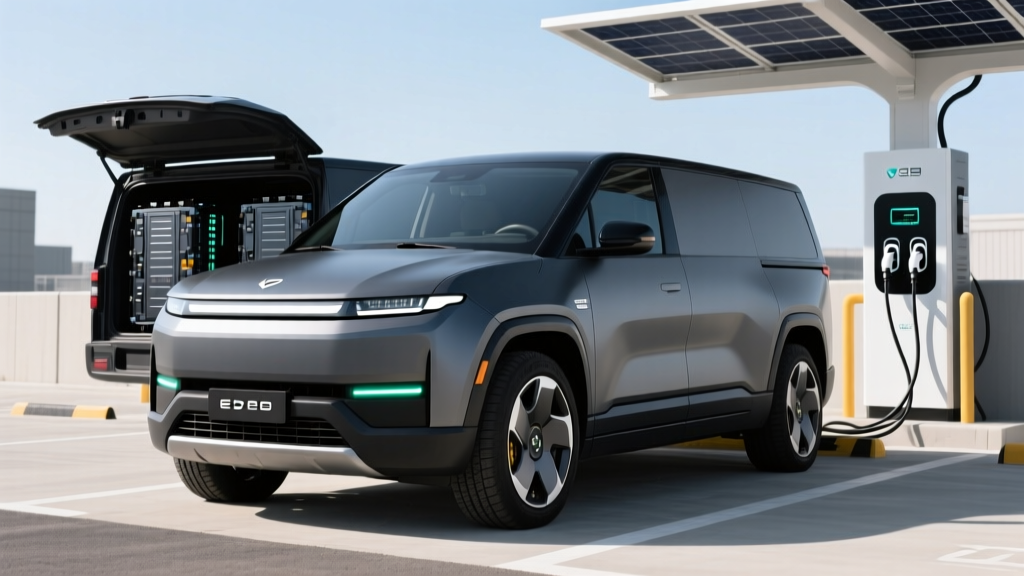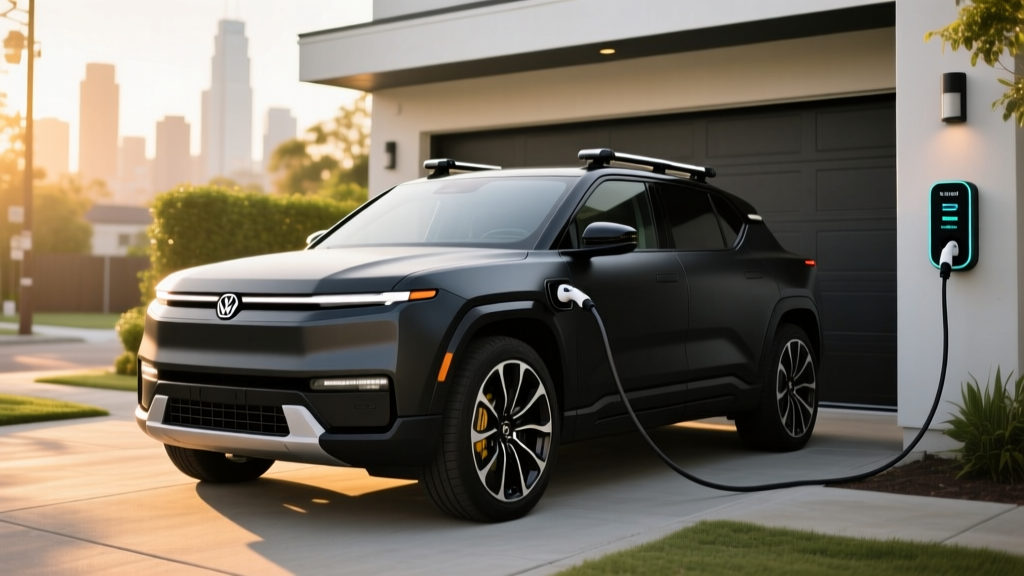
The compact electric SUV segment just got a heavyweight contender. The 2026 Rivian R2 rolls off the new Normal, Illinois production line with a mission: undercut the Tesla Model Y on price while matching it on range and tech. But what makes the R2 particularly interesting to industry watchers is the Rivian Volkswagen Group technologies partnership — a $5.8 billion investment by VW Group that has shaped the R2's electrical architecture, software stack, and manufacturing approach. After spending time with the specs, the charging curves, and the real-world implications of this joint venture, here is everything you need to know before putting down a deposit.
What the Rivian Volkswagen Group Technologies Deal Means for Buyers
In June 2024, Volkswagen Group committed up to $5.8 billion in Rivian, forming a joint venture to co-develop electrical architecture and software-defined vehicle (SDV) technology. The R2 is the first vehicle to benefit materially from this partnership, though it is crucial to understand the timeline. The R2's core platform — its battery pack, motors, and structural design — is Rivian's proprietary work. The VW Group influence surfaces primarily in the zonal electrical architecture and the software integration layer that will scale across both brands' future vehicles.
For buyers, this matters in practical ways: fewer wiring harnesses mean lower weight and fewer failure points. The zonal architecture consolidates dozens of electronic control units (ECUs) into a handful of powerful zone controllers, which translates to faster over-the-air (OTA) updates, more reliable software, and reduced manufacturing cost — savings Rivian has passed on in the R2's pricing. VW Group plans to deploy this same architecture in future Porsche, Audi, and VW-brand EVs, meaning the R2's software backbone will receive long-term support and development investment.
Rivian R2 Specifications at a Glance
| Spec | Standard Range | Large Battery (AWD) | Performance AWD |
|---|---|---|---|
| EPA Est. Range | ~275 mi | ~340 mi | ~310 mi |
| Battery Capacity (usable) | ~72 kWh | ~95 kWh | ~95 kWh |
| Battery Chemistry | LFP (est.) | NMC | NMC |
| Drivetrain | RWD (single motor) | AWD (dual motor) | AWD (dual motor) |
| Horsepower | ~335 hp | ~450 hp | ~550 hp |
| 0–60 mph | ~6.0 sec | ~4.5 sec | ~3.5 sec |
| Max DC Fast Charge | ~200 kW | ~220 kW | ~220 kW |
| 10–80% DC Charge Time | ~24 min | ~22 min | ~22 min |
| Level 2 Home Charge Rate | 11.5 kW (~37 mi/hr) | 11.5 kW (~37 mi/hr) | 11.5 kW (~37 mi/hr) |
| Base MSRP | $45,000 | $52,000 | $58,000 |
Note: Rivian has confirmed the $45,000 starting price for the Standard trim. AWD Large Battery and Performance figures are based on Rivian's preliminary announcements and may shift slightly at final EPA certification. Always verify with the EPA fueleconomy.gov database once listings go live.
Real-World Range: What the EPA Sticker Doesn't Tell You
EPA Estimated: ~340 miles
Expected Highway (70 mph, 75°F): ~285–305 miles
Expected Cold Weather (30°F, mixed driving): ~240–270 miles
Expected Towing (light trailer, ~2,500 lbs): ~180–210 miles
The R2's ~340-mile EPA figure (Large Battery AWD) is competitive with the best in class, but EPA range is tested under controlled conditions that rarely match real-world highway driving. At sustained 70–75 mph speeds, aerodynamic drag dominates energy consumption, and most compact SUVs lose 10–15% versus their sticker. Cold weather compounds this: battery chemistry slows ion transfer, cabin heating draws significant power (the R2 uses a heat pump, which mitigates some loss), and tire rolling resistance increases. Expect roughly a 20–25% range reduction in sub-freezing conditions.
The R2's LFP-equipped Standard Range model will see less cold-weather degradation — LFP cells are more resilient at low temperatures — but you sacrifice roughly 65 miles of EPA range to gain that durability and a lower purchase price. If your daily commute is under 80 miles round-trip and you charge at home nightly, the Standard Range is the pragmatic choice.
Charging Speed and Infrastructure Access
Rivian has equipped the R2 with an 800-volt electrical architecture, a significant upgrade over the R1S/R1T's 400V system and a direct beneficiary of the engineering efficiencies the VW partnership has encouraged. Higher voltage means lower current for the same power output, reducing heat generation and enabling faster sustained charging.
| Charging Level | Power | Miles Added per Hour | Notes |
|---|---|---|---|
| Level 1 (120V household) | ~1.4 kW | ~4–5 mi/hr | Emergency/trickle only |
| Level 2 (240V, 48A) | 11.5 kW | ~37 mi/hr | Full charge overnight (~9 hrs for Large Battery) |
| DC Fast Charge (peak) | ~220 kW | ~150+ mi in 10 min | 10–80% in ~22 min; tapers sharply above 80% |
The ~220 kW peak DC charge rate is strong but not class-leading — the Hyundai Ioniq 5 peaks around 240 kW and the Lucid Gravity exceeds 300 kW. However, peak kW is only part of the story. The charge curve — how long the vehicle sustains near-peak power before tapering — matters more for actual road-trip stops. Rivian's thermal management system (a liquid-cooled pack with active preconditioning) is designed to hold high charge rates through the 10–60% SoC window before tapering to protect cell longevity. Expect the final 60–80% portion to add roughly 6–8 minutes to your stop.
On the connector front, the R2 ships with the NACS (North American Charging Standard) port natively, granting access to Tesla's Supercharger network — currently the largest and most reliable DC fast-charging network in North America — without an adapter. For CCS-equipped Electrify America or EVgo stations, Rivian includes a CCS-to-NACS adapter.
Performance, Drivetrain, and Efficiency
The R2 offers three powertrain configurations. The base RWD single-motor model targets affordability and efficiency, while the dual-motor AWD variants prioritize traction, acceleration, and all-weather capability. The Performance AWD's ~3.5-second 0–60 time puts it in sports-sedan territory despite its compact-SUV form factor.
Efficiency figures (MPGe and kWh/100mi) are pending final EPA certification, but based on the R2's weight (~4,700 lbs for the Large Battery AWD) and its aerodynamic profile, expect roughly 110–120 MPGe combined (approximately 28–31 kWh/100mi) for the AWD models. The RWD Standard Range should push closer to 125 MPGe thanks to lower mass and a single motor's reduced drivetrain losses.
Rivian's torque-vectoring AWD system can independently control front and rear motor output, which benefits both on-road handling and light off-road use. The R2 includes Rivian's established drive modes (All-Purpose, Sport, Snow, Off-Road) and a camp mode that powers accessories from the traction battery.
Interior Space, Cargo, and Practicality
The R2 is dimensionally smaller than the R1S, targeting the compact luxury SUV segment occupied by the Tesla Model Y, BMW iX3, and upcoming Porsche Macan EV. Key interior measurements:
- Cargo volume (rear seats up): ~28 cu ft
- Cargo volume (rear seats folded): ~63 cu ft
- Front trunk (frunk): ~11 cu ft — sealed and drainable, usable as a cooler
- Rear legroom: ~38 inches
- Seating: 5-passenger standard; no third-row option
The frunk is a standout practicality feature. Rivian has also designed the rear seats to fold completely flat, and the cargo floor includes integrated tie-downs and a 120V outlet for campsite or job-site use. The glass roof is fixed (no shade), which some buyers may find increases cabin heat in summer — a common complaint in glass-roof EVs.
Pricing, Trims, and Federal Tax Credit Eligibility
| Trim | Base MSRP | Est. As-Tested (with options) | §30D Credit Potential | Est. Net Price |
|---|---|---|---|---|
| Standard Range RWD | $45,000 | $47,000–$49,000 | Up to $7,500* | ~$37,500–$41,500 |
| Large Battery AWD | $52,000 | $55,000–$59,000 | Up to $7,500* | ~$44,500–$51,500 |
| Performance AWD | $58,000 | $62,000–$66,000 | Up to $7,500* | ~$50,500–$58,500 |
*Federal tax credit caveats (IRS §30D, 2026 rules): The full $7,500 credit requires meeting both critical-mineral sourcing and battery-component manufacturing thresholds. The R2's battery is manufactured in the U.S. at Rivian's Normal, Illinois facility, which positions it well for the domestic-assembly requirement. However, critical-mineral sourcing rules tighten annually — verify current-year eligibility at IRS.gov §30D guidance before purchase. Additionally:
- MSRP cap: SUVs must not exceed $80,000 MSRP — all R2 trims clear this easily.
- Buyer income cap: Modified AGI must not exceed $150,000 (single) / $300,000 (joint). Buyers above these thresholds are ineligible.
- Point-of-sale transfer: As of 2024, qualifying buyers can transfer the credit to the dealer for an immediate price reduction at purchase rather than waiting to claim it on their tax return. Confirm your dealer participates.
Technology, ADAS, and the VW Software Advantage
The R2's infotainment system runs on Rivian's proprietary software, but the underlying zonal architecture — the product of the VW Group joint venture — enables a level of hardware abstraction that most competitors cannot match. In plain terms: Rivian can push OTA updates that modify vehicle behavior (suspension tuning, regen profiles, thermal management) without requiring hardware-specific firmware rewrites for each component.
Key tech features include:
- 15.6-inch center touchscreen with integrated navigation, streaming, and vehicle controls
- Rivian Driver+ (Level 2 ADAS): Adaptive cruise, lane-centering, automatic lane changes on highways — requires hands-on-wheel supervision at all times
- Highway Assist: Hands-on, eyes-on system with driver monitoring camera (not hands-free like GM's Super Cruise or Ford's BlueCruise)
- Digital key via phone with NFC backup card
- Vehicle-to-load (V2L): Power external devices from the traction battery via cargo-area outlets
One notable drawback: Rivian's ADAS has historically trailed Tesla's Autopilot and GM's Super Cruise in highway lane-centering smoothness. The R2's new sensor suite (upgraded cameras and radar) should close this gap, but early reviews will be critical. The absence of a hands-free highway mode puts Rivian behind Ford and GM in this specific feature category.
Pros, Cons, and Who Should Buy the R2
Pros
- Class-leading frunk + cargo versatility
- NACS native — full Supercharger access
- 800V architecture with competitive ~22-min 10–80% charging
- $45,000 starting price undercuts most AWD competitors
- VW-backed software architecture promises long-term OTA support
- LFP option on Standard Range for longevity-focused buyers
Cons
- No hands-free highway driving mode (behind BlueCruise/Super Cruise)
- Glass roof lacks retractable shade
- RWD base model may limit appeal in snow-belt states
- Initial production ramp risk — Rivian's history of delivery delays
- No third-row seating option
- Performance trim pushes $60K+, eroding value proposition
Who the R2 suits best:
- Adventure-oriented commuters who want frunk storage for gear, light off-road capability, and a ~340-mile range for weekend road trips without range anxiety.
- Families of 4 or fewer who need cargo space but don't require a third row. The flat-fold rear seats and ~63 cu ft of cargo room handle strollers, bikes, and Costco runs.
- Tax-credit-maximizing buyers whose income falls under the §30D caps and who want to apply the $7,500 credit at point-of-sale to bring a $45,000 EV down to ~$37,500.
- Tech-forward buyers who value OTA-upgradable architecture and the long-term software investment that VW Group's backing provides.
How the R2 Stacks Up Against Key Competitors
The R2 enters a crowded segment. Here is how it compares on paper to its most direct rivals:
- Tesla Model Y (Long Range AWD): ~320 mi EPA, ~$48,000 MSRP, ~250 kW peak charging, Supercharger native. The benchmark the R2 must beat on build quality and interior materials.
- Hyundai Ioniq 5 (Long Range AWD): ~290 mi EPA, ~$52,000 MSRP, ~240 kW peak charging (800V). Strong value but smaller cargo area and no frunk.
- Ford Mustang Mach-E (Extended Range AWD): ~312 mi EPA, ~$51,000 MSRP, ~150 kW peak charging (slower DC). BlueCruise hands-free is a tech advantage over Rivian's hands-on system.
The R2's combination of NACS-native charging, 800V speed, strong range, and a sub-$45K entry point is difficult to match. Its primary risk is execution: Rivian must ramp production without the quality-control stumbles that plagued early R1T deliveries.
Frequently Asked Questions
What is the real-world range of the 2026 Rivian R2?
The Large Battery AWD carries a ~340-mile EPA estimate. In real-world highway driving at 70–75 mph in moderate temperatures, expect 285–305 miles. Cold weather (below freezing) drops that to roughly 240–270 miles. The Standard Range RWD model (~275 mi EPA) is best suited for daily commutes under 80 miles with home charging.
How fast does the R2 charge at home and on the road?
At home on a 240V Level 2 charger (48A), the R2 accepts 11.5 kW, adding roughly 37 miles of range per hour — a full Large Battery charge takes about 9 hours overnight. On DC fast chargers, the R2 peaks at ~220 kW (800V architecture) and charges from 10–80% in approximately 22 minutes, though the curve tapers noticeably above 80% SoC.
Does the Rivian R2 qualify for the $7,500 federal EV tax credit?
The R2 is a strong candidate for the full §30D credit given its U.S. battery manufacturing in Normal, Illinois. However, eligibility depends on your income (under $150K single / $300K joint), the vehicle's MSRP (under $80K for SUVs — all trims qualify), and the current year's critical-mineral sourcing thresholds. Always verify at IRS.gov and confirm with your tax professional before purchase.
Is the R2 worth buying over the Tesla Model Y?
If you prioritize interior material quality, cargo versatility (frunk + flat-fold rear), and a less ubiquitous design, the R2 makes a compelling case. The Model Y still leads in charging infrastructure density (though the R2's native NACS port closes that gap), software polish, and proven production scale. Buyers who value hands-free highway driving should note that neither vehicle currently matches GM's Super Cruise or Ford's BlueCruise for that specific feature.
What are the biggest risks of buying the R2?
Production ramp delays are Rivian's historical weakness — early reservation holders may face longer waits than projected. The R2's ADAS suite needs to prove it can match the smoothness of competitors' systems. And while the VW Group partnership adds long-term software credibility, the joint venture's technology is new and untested at scale in consumer vehicles.
Warranty Coverage and Long-Term Ownership
Rivian provides the following warranty coverage for the R2:
- Battery pack: 8 years / 100,000 miles (minimum 70% capacity retention)
- Powertrain (motors, reducers): 8 years / 100,000 miles
- Bumper-to-bumper: 5 years / 60,000 miles
- Corrosion: 12 years / unlimited miles
The 8-year/100,000-mile battery warranty is industry-standard and aligns with federal requirements. Rivian's 70% capacity retention threshold is typical — if your pack degrades below 70% of original capacity within the warranty period, Rivian will repair or replace it. For LFP-equipped Standard Range models, real-world degradation is expected to be slower than NMC, as LFP cells tolerate higher cycle counts and daily 100% charging without accelerated wear. If you plan to keep the R2 for 10+ years, the LFP Standard Range trim is the longevity play, even if you sacrifice ~65 miles of range.
The Rivian Volkswagen Group technologies partnership has produced a compelling first product. The R2 is not without risk — production ramp, ADAS refinement, and a competitive segment are real challenges. But on paper, it delivers a rare combination: sub-$45K entry pricing, 800V fast charging, NACS-native Supercharger access, and a software architecture backed by one of the world's largest automakers. If Rivian can execute on delivery timelines and build quality, the R2 could redefine what buyers expect from a compact electric SUV.