The Rivian R2 has transitioned from a distant concept to tangible metal. Recent Rivian R2 validation build photos circulating from the company's Normal, Illinois plant confirm that pre-production units are rolling off the line ahead of the expected mid-2026 production start. For buyers who have held deposits or watched from the sidelines, these validation builds are the clearest signal yet that Rivian's compact electric SUV is on track — and they give us our best look at final proportions, interior materials, and hardware integration before customer deliveries begin.
Below, we break down everything confirmed or strongly indicated by the validation builds and Rivian's published specifications, from battery chemistry and range to charging architecture, pricing, and federal tax credit eligibility under current IRS §30D rules.
What the Rivian R2 Validation Build Photos Reveal
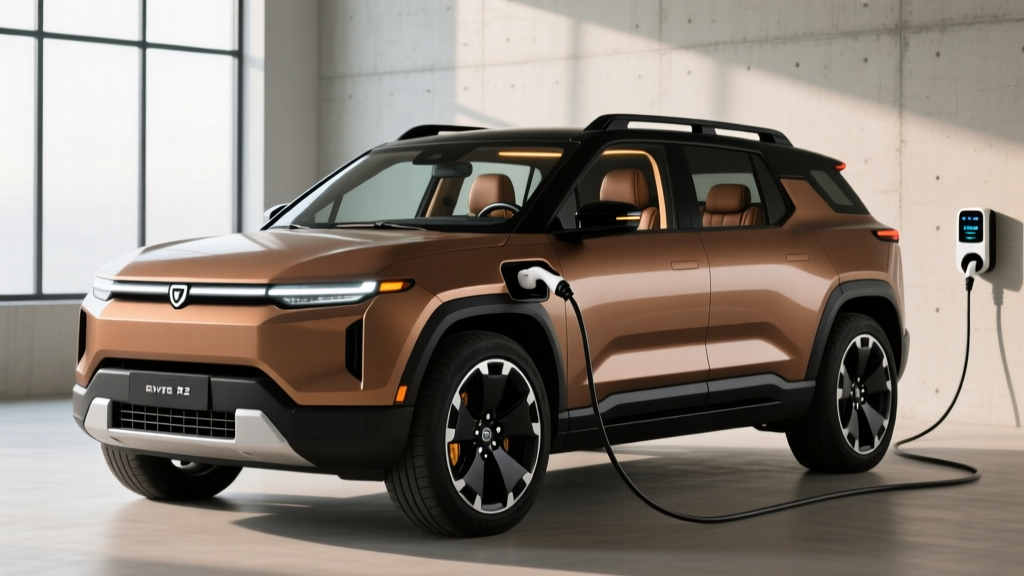
Validation builds are not prototypes in the traditional sense. They are near-final vehicles assembled on or near the production line using production-intent tooling and supplier parts. Their purpose is to verify manufacturing processes, fit-and-finish, and system integration before full-rate production begins. The R2 validation build photos shared by Rivian and observed by industry watchers reveal several key details:
- Exterior proportions: The R2 sits noticeably shorter and narrower than the R1S, with a wheelbase that appears optimized for interior space rather than off-road overhang. The signature Rivian stadium headlights and shield grille carry over, but the overall silhouette is more crossover than truck-based SUV.
- Charge port placement: Validation units show the charge port on the driver-side rear quarter panel, consistent with Rivian's current architecture and compatible with NACS (Tesla Supercharger) connectors.
- Interior layout: Photos confirm a minimalist dashboard with a large central touchscreen, a flat floor (enabled by the skateboard-style battery pack), and a two-row seating configuration. A front trunk (frunk) is visible under the hood.
- Sensor suite: Roof-mounted and fender-integrated camera housings suggest the R2 will ship with Rivian's latest ADAS hardware, expected to support a Level 2 driver-assistance system at launch.
These builds are the last major milestone before Job 1. Rivian has stated that customer deliveries are targeted for the second half of 2026, with the base rear-wheel-drive model following later.
Rivian R2 Specs at a Glance
| Specification | Rivian R2 (2026 Preliminary) |
|---|---|
| EPA Est. Range (AWD, Standard) | ~330 miles |
| Battery Capacity (Usable) | ~85 kWh (est.) |
| Battery Chemistry | LFP (Lithium Iron Phosphate) — base/standard; NMC possible on Long Range |
| Max DC Fast Charge Rate | ~200 kW (peak) |
| 10–80% DC Fast Charge Time | ~25–30 minutes (est.) |
| Level 2 Home Charging (240V) | ~11.5 kW / ~25 miles per hour |
| Drivetrain | Dual-Motor AWD (launch); RWD (later) |
| Horsepower (AWD) | ~400 hp (est.) |
| 0–60 mph | ~5.0 seconds (AWD, est.) |
| Base MSRP (AWD Launch Edition) | ~$52,000 |
| Base MSRP (Standard RWD, later) | ~$45,000 |
| Battery/Powertrain Warranty | 8 years / 100,000 miles (est., based on R1 precedent) |
Note: Rivian has not published final EPA certification numbers. Figures above are based on company statements, industry analysis, and R1 platform precedent. Final specs may vary at production start.
Range and Real-World Efficiency
Real-World Expectation: ~270–290 miles at sustained highway speeds (70–75 mph); ~230–260 miles in sub-freezing winter conditions with cabin heating.
Rivian has targeted approximately 330 miles of EPA-estimated range for the dual-motor AWD variant, a figure that would place the R2 squarely in competition with the Tesla Model Y Long Range and the Hyundai Ioniq 5. However, EPA range is measured under controlled laboratory conditions that do not fully capture highway-speed aerodynamic drag or cold-weather battery performance.
Based on real-world testing of similarly sized electric SUVs, buyers should plan for roughly 15–20% range reduction during sustained highway driving at 70+ mph, and 20–30% reduction in winter conditions below 32°F — particularly for LFP batteries, which are more sensitive to cold-temperature internal resistance. Rivian's thermal management system and available heat pump (expected on the R2, confirmed on the R1S Gen 2) will mitigate some of this loss, but physics remains physics.
The LFP chemistry choice for the standard pack is strategic: LFP cells are less expensive, offer longer cycle life (often 3,000+ cycles vs. ~1,500 for NMC), and tolerate daily 100% charging without accelerated degradation. The trade-off is lower energy density, which means a slightly heavier pack for the same kWh capacity, and reduced cold-weather performance compared to NMC.
Charging Speed and Infrastructure
| Charging Level | Power | Miles Added per Hour | Notes |
|---|---|---|---|
| Level 1 (120V) | ~1.4 kW | ~3–4 miles/hr | Emergency/trickle only |
| Level 2 (240V, 48A) | ~11.5 kW | ~25 miles/hr | Full charge overnight (~10 hrs from 10%) |
| DC Fast Charge | ~200 kW peak | ~650+ miles/hr (peak) | 10–80% in ~25–30 min; tapers above 80% |
The R2 is expected to peak at approximately 200 kW on a DC fast charger, a competitive figure that aligns with the Hyundai Ioniq 5 (240 kW peak on its 800V architecture) and the Tesla Model Y (~250 kW peak on V3 Superchargers). However, peak rate is only part of the story. The charge curve — how quickly the battery tapers as state of charge rises — determines actual stop duration.
Based on LFP charge-curve characteristics and Rivian's R1 platform behavior, expect the R2 to sustain near-peak charging rates from roughly 10% to 50% SoC, then taper progressively through 80%, with a significant slowdown above 80%. A 10–80% session should take approximately 25–30 minutes at a capable 350 kW charger (such as Electrify America or Tesla Supercharger V4 stations). Charging above 80% is best reserved for destination charging or overnight Level 2 sessions.
The R2 will ship with a NACS charge port, granting native access to Tesla's Supercharger network — currently the most reliable and expansive DC fast-charging infrastructure in the U.S. CCS adapter compatibility is expected for non-Tesla networks.
Performance and Driving Dynamics
The launch variant of the R2 will be a dual-motor all-wheel-drive configuration producing an estimated 400 horsepower, with a 0–60 mph time in the vicinity of 5.0 seconds. This positions the R2 as a quick, capable crossover rather than a performance flagship — a deliberate choice to prioritize efficiency and cost for the volume-selling compact SUV segment.
A rear-wheel-drive base model, expected to follow the AWD by several months, will likely produce in the range of 280–320 hp with a 0–60 time around 6.5–7.0 seconds. The RWD variant will carry the $45,000 base MSRP and will be the primary candidate for maximum range and federal tax credit eligibility.
Rivian's skateboard architecture places the battery pack low in the chassis, contributing to a low center of gravity and responsive handling. Ground clearance is expected to be in the 7.5–8.5 inch range, adequate for light trail use and snow but not intended for serious off-roading like the R1S or R1T. Approach and departure angles will be more crossover-typical than truck-typical.
Pricing, Trims, and Federal Tax Credit Eligibility
| Trim / Variant | Base MSRP | Est. After §30D Credit | Credit Eligibility |
|---|---|---|---|
| R2 AWD (Launch) | ~$52,000 | ~$44,500 (if eligible) | Subject to MSRP cap, income limits, battery sourcing |
| R2 Standard (RWD, later) | ~$45,000 | ~$37,500 (if eligible) | Most likely to qualify — under $52,500 MSRP cap for SUVs |
| R2 Long Range (if offered) | ~$55,000+ | Varies | May exceed MSRP cap depending on final pricing |
Federal tax credit eligibility under IRS §30D is one of the most consequential factors for R2 buyers. The credit offers up to $7,500, but qualification depends on three interlocking requirements:
- MSRP Cap: SUVs must have a manufacturer's suggested retail price at or below $80,000. Both the $45,000 RWD and $52,000 AWD variants clear this threshold comfortably.
- Buyer Income Limits: Modified adjusted gross income (MAGI) must not exceed $150,000 (single), $225,000 (head of household), or $300,000 (joint filers). These are current-year thresholds and may be adjusted.
- Battery Sourcing Requirements: At least a specified percentage of critical minerals must be sourced from the U.S. or a free-trade-agreement partner, and battery components must be manufactured or assembled in North America. These percentages increase annually. Rivian's LFP supply chain — historically reliant on Chinese cell manufacturers — is the variable most likely to affect eligibility. Rivian has indicated it is working to qualify LFP cells from FTA-partner sources, but final §30D compliance will depend on the specific cells in each production batch.
As of 2026, the §30D credit can be transferred to the dealer at point of sale, reducing the purchase price directly rather than requiring the buyer to claim it on their tax return. Buyers should confirm eligibility with their tax professional and verify the specific vehicle's VIN against the IRS qualifying vehicle list before finalizing a purchase.
Interior, Cargo, and Technology
The R2's interior is designed around a flat-floor skateboard platform, which enables generous cabin volume relative to its exterior footprint. Expected dimensions include:
- Cargo (behind 2nd row): ~30–33 cu ft
- Cargo (2nd row folded): ~65–70 cu ft
- Frunk: ~8–10 cu ft (weather-sealed, drainable — a Rivian hallmark)
- Rear legroom: ~38–40 inches
The frunk is a standout feature for this segment. Rivian pioneered the drainable, lockable front trunk on the R1T and R1S, and its inclusion on the R2 provides secure, weatherproof storage for gear, groceries, or charging cables — a practical advantage over the Tesla Model Y's smaller, non-drainable frunk.
On the technology front, the R2 is expected to feature:
- A 15+ inch central touchscreen running Rivian's proprietary infotainment OS
- Wireless Apple CarPlay and Android Auto
- Over-the-air (OTA) software updates for vehicle systems, navigation, and ADAS
- Rivian's Driver+ system (Level 2 SAE automation) with lane-centering, adaptive cruise, and highway assist — not self-driving; driver supervision is required at all times
- Integrated camp kitchen and gear tunnel options are unlikely to carry over from the R1T due to packaging constraints, but Rivian's modular accessory system is expected to offer R2-specific solutions
Pros, Cons, and the Competition
Pros
- LFP battery offers long cycle life and daily 100% charging without degradation concerns
- Native NACS port = full Tesla Supercharger network access from day one
- Drainable frunk adds genuine utility missing from most competitors
- ~$45,000 RWD base price undercuts Model Y Long Range and Ioniq 5 AWD
- Rivian's software platform and OTA update track record are strong
Cons
- LFP cold-weather performance is measurably weaker than NMC in sub-freezing temps
- Production timeline has slipped before; mid-2026 delivery is a target, not a guarantee
- Federal tax credit eligibility uncertain until battery sourcing is finalized per IRS rules
- No third-row option — families needing 3 rows must look at the R1S or Kia EV9
- ~200 kW peak DC charge rate trails the Ioniq 5's 800V/240 kW architecture
The R2's most direct competitors are the Tesla Model Y (the segment's volume leader, with ~330 miles of range and extensive Supercharger access), the Hyundai Ioniq 5 (faster DC charging via 800V architecture, strong value), and the Ford Mustang Mach-E (established, with competitive range and pricing). The R2 differentiates on build quality reputation, frunk utility, and Rivian's adventure-oriented brand identity, but must deliver on production timing and pricing to capture share.
Who the Rivian R2 Is For
Choose the R2 if: You want a compact electric SUV with genuine utility (frunk, flat floor, camping-ready accessories), value build quality and software polish, and plan to charge primarily at home with occasional Supercharger road trips. The LFP battery is ideal if you prefer to charge to 100% daily without worrying about long-term degradation.
Look elsewhere if: You need three rows of seating (consider the R1S or EV9), you live in a consistently sub-freezing climate where NMC cold-weather performance matters more (consider the Model Y Long Range), or you need the fastest possible DC charging for high-mileage road-trip use (the Ioniq 5's 800V architecture charges meaningfully faster above 50% SoC).
Frequently Asked Questions
What is the real-world range of the Rivian R2?
Rivian targets approximately 330 miles of EPA-estimated range for the AWD variant. In real-world highway driving at 70–75 mph, expect roughly 270–290 miles. In winter conditions below 32°F, range may drop to 230–260 miles due to LFP cold-weather characteristics and cabin heating demands. Preconditioning the battery before fast charging and using seat heaters instead of cabin air heating can recover some of this loss.
How fast does the R2 charge at home and on the road?
At home on a 240V Level 2 charger (48 amps), the R2 adds approximately 25 miles of range per hour, achieving a full charge from 10% in roughly 10 hours. On a DC fast charger, it peaks at approximately 200 kW and should complete a 10–80% session in 25–30 minutes, with charging speed tapering significantly above 80% SoC. Always precondition the battery via the vehicle's navigation system before arriving at a fast charger to optimize charge speed.
Does the Rivian R2 qualify for the $7,500 federal EV tax credit?
The R2's MSRP ($45,000–$52,000) falls well under the $80,000 SUV cap, clearing the first hurdle. However, full eligibility under IRS §30D depends on the buyer's income (MAGI limits apply) and the battery's critical-mineral sourcing and North American component manufacturing requirements. Rivian's LFP supply chain is the variable to watch. Confirm eligibility via the IRS qualifying vehicle list and consult a tax professional before purchase. The credit can be applied at point of sale via dealer transfer.
Is the Rivian R2 worth buying vs. the Tesla Model Y or Hyundai Ioniq 5?
The R2 is competitive on range, price, and utility. It offers a more premium interior feel than the Model Y, a drainable frunk neither competitor provides, and native Supercharger access. The Ioniq 5 charges faster on non-Tesla DC networks due to its 800V architecture. If brand trust in Rivian's build quality and software matters to you, and you value the frunk and adventure-ready accessories, the R2 is a strong choice. If you need the absolute fastest DC charging or the lowest possible price today, the Ioniq 5 and Model Y remain compelling.
When can I actually buy the Rivian R2?
Rivian has targeted the second half of 2026 for initial customer deliveries, starting with the dual-motor AWD variant. The base rear-wheel-drive model at $45,000 is expected to follow, potentially in late 2026 or early 2027. Reservation holders will receive priority. The validation build photos confirm the program is in its final pre-production phase, but as with any new vehicle launch, timeline adjustments are possible.
What is the battery warranty on the R2?
Rivian has not published final R2 warranty terms, but based on the R1S and R1T precedent, expect an 8-year / 100,000-mile battery and powertrain warranty with a capacity retention threshold (typically 70% of original capacity). LFP chemistry should experience slower degradation than NMC over the same cycle count, meaning most owners will retain well above the warranty threshold even at high mileage.
Sources: Rivian official specifications and investor communications; fueleconomy.gov for comparable EV efficiency data; IRS §30D Clean Vehicle Credit guidelines. All specifications are preliminary and subject to change prior to production start.