Quick Verdict: Can the Rivian R2 Challenge the Model Y?
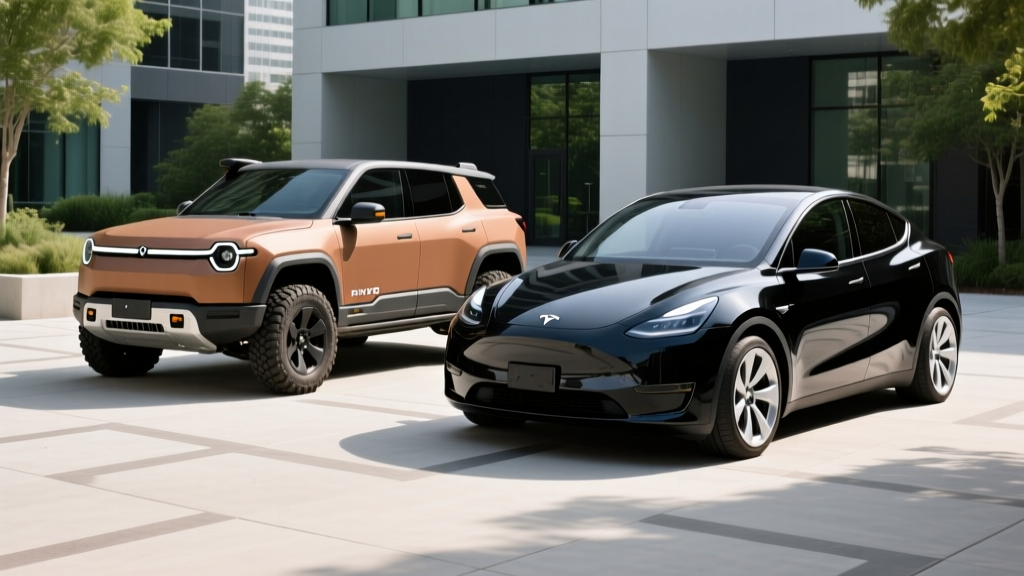
The 2026 Rivian R2 is the most anticipated compact electric SUV since the Tesla Model Y redefined the segment. Positioned as a premium, adventure-oriented alternative, the R2 targets buyers who want the utility and efficiency of a midsize electric crossover but crave more rugged capability, distinctive design, and a less ubiquitous badge. With production beginning in early 2026 at Rivian's Normal, Illinois plant, the R2 enters a market where the Model Y remains the sales benchmark.
But specs tell the real story. Below, we break down every critical metric — range, charging, pricing, cargo, and tax credit eligibility — to determine whether the R2 earns its place as a legitimate Rivian R2 Tesla Model Y competitor or simply a niche alternative.
Range, Battery, and Efficiency: The Numbers That Matter
Rivian has confirmed the R2 will launch with a Standard battery pack and later offer a Large pack. The Standard pack targets an EPA-estimated 300+ miles of range, while the Large pack is expected to push past 330 miles. Rivian has historically used NMC (nickel manganese cobalt) chemistry across its R1 lineup, and the R2 is expected to follow suit for the Large pack. The Standard pack may use LFP (lithium iron phosphate) cells for cost optimization, though Rivian has not confirmed chemistry details for every trim as of early 2026.
The EPA sticker is a starting point, not a guarantee. Based on Rivian's R1S/R1T real-world performance and the R2's lighter, more aerodynamic platform:
- Standard pack (est. 300 mi EPA): Expect ~250–270 miles in mixed highway driving at 70 mph; ~210–230 miles in sub-30°F cold weather without preconditioning.
- Large pack (est. 330 mi EPA): Expect ~280–300 miles highway; ~240–260 miles in cold conditions.
Highway efficiency matters: the R2's more upright, SUV-shaped profile will cost it 5–10% range compared to the Model Y's sleeker fastback shape at sustained highway speeds.
| Spec | Rivian R2 (Standard) | Tesla Model Y Long Range AWD |
|---|---|---|
| EPA Range | ~300 mi (est.) | 320 mi |
| Battery Capacity | ~75 kWh usable (est.) | 75 kWh usable |
| Battery Chemistry | NMC (LFP possible on base) | NMC (LFP on RWD) |
| Efficiency | ~25 kWh/100 mi (est.) | 27 kWh/100 mi |
| MPGe | ~130 MPGe (est.) | 122 MPGe |
| Drivetrain | Dual-motor AWD | Dual-motor AWD |
| 0–60 mph | ~4.5 sec (est.) | 4.8 sec |
| Horsepower | ~450 hp (est.) | 384 hp |
| Towing Capacity | ~3,300 lbs (est.) | 3,500 lbs |
| Base MSRP | $45,000 | $44,990 |
On efficiency, the Model Y's years of iterative refinement give it an edge. Tesla's heat pump, motor design, and aerodynamic optimization yield a slightly lower kWh/100mi figure. The R2's boxier adventure-oriented shape trades some efficiency for interior headroom and a more commanding driving position.
Charging Speed: DC Fast Charge and Home Level 2
Charging speed remains the number-one concern for EV buyers making the switch from gas. The R2 will use the NACS (North American Charging Standard) connector natively, giving it direct access to Tesla's Supercharger network — the most reliable and expansive DC fast-charging infrastructure in North America.
| Charging Level | Rivian R2 | Tesla Model Y |
|---|---|---|
| Level 1 (120V) | ~3 mi/hr | ~3 mi/hr |
| Level 2 (240V, 48A) | 11.5 kW / ~35 mi/hr | 11.5 kW / ~37 mi/hr |
| DC Fast Charge (peak) | ~200 kW (est.) | 250 kW |
| 10–80% DCFC Time | ~28 min (est.) | ~22 min |
| Connector | NACS (native) | NACS (native) |
Charging-curve reality check: Peak kW is not sustained kW. Both vehicles will taper charge speed significantly above 80% State of Charge (SoC) to protect battery health. The Model Y's 250 kW peak at V3 Superchargers is well-documented, but sustained rates typically average 150–170 kW across the 10–80% window. The R2's estimated 200 kW peak should yield a ~28-minute 10–80% session — competitive, but roughly 5–6 minutes slower than the Model Y on a good day.
For home Level 2 charging, both vehicles support 11.5 kW (48 amps on a 60-amp circuit). A full overnight charge from 20% to 100% takes roughly 7–8 hours for either vehicle — more than adequate for daily driving needs. Installation costs for a 240V/60A circuit typically run $800–$2,500 depending on panel proximity and local permitting, according to Energy.gov.
Pricing, Trims, and Federal Tax Credit Eligibility
Rivian has announced the R2 starting at $45,000 MSRP for the Standard-range dual-motor AWD. A Large-battery variant is expected to start around $51,000–$53,000. Additional trims (Adventure, Performance) will push the as-tested price toward $58,000–$62,000 fully loaded.
The R2's eligibility for the $7,500 federal tax credit depends on several factors that change annually. As of 2026, per IRS guidelines:
- MSRP cap: SUVs must be priced at or below $80,000 — the R2 qualifies on all announced trims.
- Buyer income cap: Modified AGI must not exceed $150,000 (single) / $300,000 (joint).
- Battery sourcing: Critical minerals and battery components must meet escalating domestic-content thresholds. Rivian's supply chain is still scaling; confirm eligibility at purchase via the IRS clean vehicle report.
- Point-of-sale transfer: Eligible buyers can apply the $7,500 credit as a down-payment reduction at the dealer, rather than waiting for tax filing.
Always verify eligibility with a tax professional and the official IRS clean vehicle listing before purchase. Rules and qualifying vehicles change.
| Trim | MSRP | Est. After $7,500 Credit |
|---|---|---|
| Standard AWD | $45,000 | ~$37,500 |
| Large AWD | $52,000 | ~$44,500 |
| Adventure / Performance | $58,000–$62,000 | ~$50,500–$54,500 |
The Model Y Long Range AWD starts at $44,990 and has consistently qualified for the full $7,500 credit, making its effective price roughly $37,490. This puts both vehicles in a nearly identical price bracket post-credit, meaning the buying decision comes down to feature preferences, not cost.
Interior, Cargo, and Technology
The R2 is slightly smaller than the R1S but designed to maximize interior volume on a purpose-built EV platform. Key dimensions (estimated based on Rivian disclosures and segment positioning):
- Cargo volume (behind rear seats): ~32 cu ft (R2) vs 30 cu ft (Model Y)
- Cargo volume (rear seats folded): ~68 cu ft (R2) vs 72 cu ft (Model Y)
- Rear legroom: ~38 in (R2) vs 41.6 in (Model Y)
- Front trunk (frunk): Yes, ~3 cu ft (R2); Model Y has a small frunk (~4 cu ft)
The Model Y wins on total cargo volume with seats folded, thanks to its fastback roofline. The R2 offers a more upright, truck-inspired cabin with better outward visibility and a more traditional SUV seating position.
Technology highlights on the R2:
- 15.6-inch center touchscreen with Rivian's in-house OS
- Standard Rivian Driver+ (Level 2 ADAS with highway assist and lane-centering)
- Over-the-air updates for performance, range, and feature unlocks
- Available camp kitchen, gear tunnel (R1 legacy features adapted for R2 scale)
- Native NACS charging with Supercharger integration
Rivian Driver+ and Tesla Autopilot/FSD (Supervised) are both SAE Level 2 driver-assistance systems. The driver must remain fully engaged, hands on or near the wheel, and eyes on the road at all times. Neither system is self-driving. See SAE International's automation levels for the full framework.
Pros, Cons, and Who Should Buy the R2
- Adventure-ready design with genuine off-road capability
- Native NACS / Supercharger access from day one
- Distinctive styling — not another crossover clone
- Rivian's build quality and customer satisfaction track record
- Eligible for full $7,500 tax credit (verify sourcing at purchase)
- Strong estimated performance (dual-motor AWD, ~4.5 sec 0–60)
- Slightly less range and efficiency than Model Y
- Slower DC fast-charge rate (~200 kW vs 250 kW)
- Less rear legroom than Model Y
- New platform — first-year production risks remain
- Rivian's service center network is still expanding
- No confirmed LFP option for maximum battery longevity on base trim
- Adventure-oriented families who want genuine light off-road capability, camping features, and a vehicle that stands apart from the Tesla-dominated school lot.
- Outdoor commuters who need AWD, cargo flexibility, and NACS Supercharger access for road trips without adapters.
- Rivian loyalists stepping down from the R1S/R1T who want the brand's design language and software experience at a lower price point.
Who should stick with the Model Y: Buyers who prioritize maximum range-per-dollar, the fastest charging, the most mature service network, and the highest resale value in the EV segment.
Warranty and Long-Term Ownership
Rivian covers the R2 with the same warranty framework as its R1 vehicles:
- Battery & powertrain: 8 years / 100,000 miles (capacity retention threshold: 70%)
- Bumper-to-bumper: 5 years / 60,000 miles
- Roadside assistance: 5 years / unlimited miles
Tesla offers a comparable 8-year/120,000-mile battery warranty on the Model Y Long Range, with a similar 70% retention guarantee. Both warranties are industry-standard for the segment. One consideration: Rivian's service network, while growing, is far smaller than Tesla's mobile ranger and service center footprint. Buyers in rural areas should confirm proximity to a Rivian service point before committing.
Frequently Asked Questions
What is the real-world range of the Rivian R2?
The R2 Standard pack targets an EPA estimate of ~300 miles. In real-world mixed highway driving at 70 mph, expect 250–270 miles. In cold weather (below 30°F), plan for 210–230 miles without battery preconditioning. The Large pack adds roughly 30 miles to each of these figures.
How fast does the Rivian R2 charge at home and on the road?
At home on a 240V Level 2 charger (48A), the R2 adds roughly 35 miles of range per hour — a full overnight charge covers daily needs easily. On DC fast chargers, the estimated peak rate is 200 kW, achieving a 10–80% charge in approximately 28 minutes. The NACS connector gives it native access to Tesla Superchargers.
How much does the R2 cost after the federal tax credit?
The base Standard AWD starts at $45,000 MSRP. If you qualify for the full $7,500 §30D credit (income under $150K single / $300K joint, vehicle meets battery-sourcing requirements), the effective price drops to roughly $37,500. Always confirm eligibility on the IRS clean vehicle listing and with a tax professional before purchase.
Is the Rivian R2 worth buying over the Tesla Model Y?
If you value distinctive design, off-road capability, and Rivian's adventure-oriented brand ethos — and can accept slightly less range and a slower charge rate — the R2 is a compelling alternative. If you want the most proven, efficient, and fastest-charging option with the largest service network, the Model Y remains the benchmark. Both qualify for the federal credit, making the effective price nearly identical at base trim.
What are the biggest drawbacks of the Rivian R2?
The R2's main trade-offs vs the Model Y are ~20 fewer miles of EPA range, a ~6-minute longer 10–80% DC fast-charge session, less rear legroom, and a smaller service network. First-year production vehicles also carry higher risk of build-quality issues than a mature platform like the Model Y.
Does the Rivian R2 qualify for the $7,500 federal EV tax credit?
The R2's MSRP is well under the $80,000 SUV cap. Eligibility for the full $7,500 credit depends on your income (under $150K single / $300K joint) and whether the specific vehicle's battery meets 2026 critical-mineral and component-sourcing thresholds. Check the IRS clean vehicle credit page and confirm with your dealer at the time of purchase.