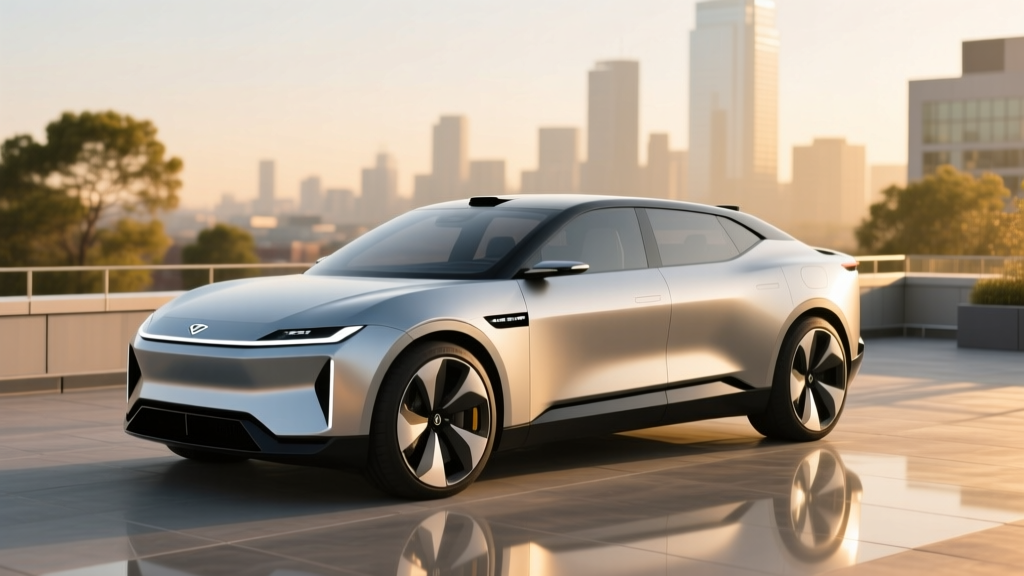
The Rivian R2 has been the most anticipated compact electric SUV since Tesla first teased the Model Y. Smaller, lighter, and significantly cheaper than the R1S, the R2 targets the mainstream buyer who wants Rivian's adventure-oriented DNA without the $75,000+ price tag. But anticipation only matters if the vehicle actually arrives. Here is the most current, data-grounded breakdown of the Rivian R2 status heading into the 2026 model year — what's confirmed, what's estimated, and what buyers should watch before committing.
Quick Verdict: Where the Rivian R2 Stands Right Now
Rivian officially unveiled the R2 in March 2024 and confirmed production will begin at its Normal, Illinois facility in the first half of 2026. The company has since accelerated plans, with CEO RJ Scaringe indicating that initial customer deliveries are targeted for mid-2026. Pre-orders (refundable $100 deposits) have been open since the reveal, and Rivian reports strong reservation conversion interest. However, as of early 2026, the R2 is not yet available for purchase or test drives. Final EPA certification, pricing, and trim configurations remain subject to last-mile adjustments before the first units roll off the line.
Estimated Range, Battery, and Efficiency
Rivian has targeted a 330-mile EPA-estimated range for the dual-motor AWD launch configuration, sitting on a usable battery capacity estimated at approximately 85 kWh. The company has not publicly confirmed the cell chemistry for all trims, but industry reporting and Rivian's supply-chain disclosures point toward an NMC (nickel manganese cobalt) chemistry for the longer-range configurations, optimized for energy density and cold-weather performance. A potential LFP (lithium iron phosphate) variant for a lower-priced Standard trim has been discussed but not confirmed for the initial launch window.
| Spec | Dual-Motor AWD (Launch) |
|---|---|
| EPA Range (est.) | ~330 miles |
| Battery Capacity (usable) | ~85 kWh |
| Cell Chemistry | NMC (confirmed for long-range); LFP TBD |
| Efficiency (est.) | ~110 MPGe / ~30 kWh/100 mi |
| Drivetrain | Dual-Motor AWD |
| Horsepower | ~450 hp (est.) |
| 0–60 mph | ~4.5 seconds (est.) |
| Towing Capacity | TBD (likely 3,500–4,500 lbs) |
Charging Speed: 800V Architecture and What It Means
One of the R2's most significant technical upgrades over the first-generation R1 platform is the move to an 800-volt electrical architecture. This enables substantially faster DC fast-charging rates and thinner, lighter wiring harnesses that reduce vehicle weight. Rivian has stated the R2 will support peak DC fast-charging rates of approximately 220–250 kW, with a targeted 10–80% charge time of roughly 20–25 minutes at compatible chargers.
Here is what that looks like across charging levels:
| Charging Level | Power / Rate | Estimated Speed |
|---|---|---|
| Level 1 (120V) | ~1.4 kW | ~4–5 miles per hour |
| Level 2 (240V, 48A) | ~11.5 kW | ~33–38 miles per hour |
| DC Fast Charge (peak) | ~220–250 kW | 10–80% in ~20–25 min |
Charging-curve reality check: Peak kW figures are never sustained across the full session. Expect the R2 to hold near-peak rates between roughly 10–50% state of charge, then taper progressively through the 50–80% window. This is standard behavior for NMC cells managed by a battery management system prioritizing longevity. Preconditioning the battery via the navigation system before arriving at a DC fast charger will be essential to achieving advertised charge speeds, particularly in cold weather.
The R2 will ship with a NACS (North American Charging Standard) port natively, giving it seamless access to Tesla's Supercharger network — currently the most reliable and extensive DC fast-charging infrastructure in the U.S. This is a meaningful advantage over CCS-equipped competitors that still require adapters for Supercharger access.
Pricing, Trims, and Federal Tax Credit Eligibility
Rivian has targeted a starting MSRP of approximately $45,000 for the base dual-motor AWD configuration. A single-motor RWD variant priced closer to $40,000 has been discussed for a later production phase but is not expected at initial launch. Higher-content trims (Adventure, potentially an Ascend or Performance tier) will push the as-tested price into the $52,000–$58,000 range depending on options.
| Trim (Preliminary) | Est. MSRP | After Max §30D Credit |
|---|---|---|
| Dual-Motor AWD (Base) | ~$45,000 | ~$37,500 |
| Adventure / Mid-Trim | ~$50,000 | ~$42,500 |
| Fully Loaded | ~$55,000–$58,000 | ~$47,500–$50,500 |
Does the R2 Qualify for the §30D Federal Tax Credit?
This is where the details matter. Under current IRS §30D rules, the R2 must satisfy several criteria to qualify for the full $7,500 credit:
- MSRP Cap: SUVs must have an MSRP at or below $80,000. All announced R2 trims clear this easily.
- Buyer Income Cap: Modified adjusted gross income must not exceed $150,000 (single), $225,000 (head of household), or $300,000 (joint). This is a buyer-level constraint, not a vehicle constraint.
- Battery Sourcing & Critical Minerals: A percentage of battery components must be manufactured or assembled in North America, and a percentage of critical minerals must be sourced from the U.S. or free-trade-agreement countries. These thresholds increase annually. Rivian's U.S.-based manufacturing in Normal, IL, is a strong advantage, but cell-level sourcing depends on supplier contracts that have not been fully disclosed.
- Point-of-Sale Transfer: Eligible buyers can transfer the credit to the dealer at purchase, reducing the upfront price rather than waiting for a tax refund. This is available under current rules.
- FEOC Restriction: Vehicles with battery components from a Foreign Entity of Concern (e.g., certain Chinese suppliers) are disqualified. Rivian's supply-chain transparency will be critical here.
Bottom line: The R2 is structurally well-positioned for the credit given U.S. assembly, but final eligibility depends on cell-level sourcing disclosures that Rivian has not yet published. Buyers should verify eligibility at the time of purchase against the latest IRS guidance and consult a tax professional for individual circumstances.
Performance, Dimensions, and Cargo
The R2 rides on an entirely new, smaller platform — roughly 183 inches long, sitting on a wheelbase around 113 inches. That makes it approximately 10 inches shorter than the R1S and positions it directly against the Tesla Model Y, Hyundai Ioniq 5, and Ford Mustang Mach-E in the compact electric crossover segment.
Rivian has targeted a dual-motor AWD output of roughly 450 horsepower with a 0–60 mph time around 4.5 seconds. A future tri-motor performance variant could push output above 600 hp, but that is not part of the launch lineup.
| Dimension | R2 (Est.) | R1S (Reference) |
|---|---|---|
| Overall Length | ~183 in | ~197 in |
| Wheelbase | ~113 in | ~121 in |
| Cargo (behind 2nd row) | ~28–32 cu ft | ~47 cu ft |
| Cargo (seats folded) | ~60–65 cu ft | ~92 cu ft |
| Front Trunk (Frunk) | Yes, size TBD | 11 cu ft |
| Seating | 5 passengers (2 rows) | 7 passengers (3 rows) |
The R2 is strictly a five-seat, two-row vehicle — no third-row option. The frunk returns, though likely smaller than the R1S's generous 11-cubic-foot compartment. Rivian has also teased a segment-first feature: the rear glass lifts independently of the tailgate (similar to a hatch-within-a-hatch), improving access for loading gear without opening the full liftgate.
Tech, Driver Assistance, and Standout Features
The R2 inherits Rivian's vertically integrated software stack, which has been one of the brand's strongest differentiators. Expect the following:
- 15.6-inch center touchscreen with Rivian's in-house OS (no Apple CarPlay/Android Auto — Rivian handles integration natively).
- Digital driver display and available head-up display.
- Rivian Driver+ — the brand's SAE Level 2 driver-assistance suite including adaptive cruise, lane-centering, and hands-on-wheel monitoring. This is not a self-driving system; the driver must remain engaged at all times.
- Over-the-air updates covering powertrain calibration, infotainment, and driver-assist feature expansion.
- Adventure Network integration — Rivian's proprietary trip-planning tool that routes through its growing network of destination chargers at trailheads, parks, and resorts.
- Vehicle-to-load (V2L) capability, allowing the R2 to power external devices (camping equipment, tools, tailgate setups) from the traction battery.
Warranty Coverage
Rivian's current warranty structure for the R1 series provides a useful baseline for what R2 buyers can expect:
- Battery & Drive Units: 8 years / 175,000 miles (whichever comes first), with a capacity retention threshold of 70% — meaning Rivian will repair or replace the pack if it degrades below 70% of original capacity within the warranty window.
- Vehicle Limited Warranty: 5 years / 60,000 miles bumper-to-bumper.
- Roadside Assistance: 5 years / 60,000 miles.
The 175,000-mile battery warranty is among the most generous in the segment, exceeding the federal minimum requirement of 8 years / 100,000 miles. Rivian has not yet published R2-specific warranty terms, but a reduction from R1 levels would be a significant competitive misstep given the R2's mainstream positioning.
Who the R2 Is For — And Who Should Look Elsewhere
✅ Choose the Rivian R2 if:
- You want a compact electric SUV with genuine outdoor/adventure capability and don't need a third row.
- You value native NACS charging and direct Supercharger access without adapters.
- You prefer Rivian's software ecosystem and adventure-trip planning tools over third-party integrations.
- You want a sub-$50,000 (after credit) EV that doesn't look or feel like a budget compromise.
❌ Look elsewhere if:
- You need three rows of seating — the R1S, Kia EV9, or Hyundai Ioniq 9 are better fits.
- You can't wait — the Tesla Model Y, Hyundai Ioniq 5, and Ford Mustang Mach-E are available now with known specs and pricing.
- You require Apple CarPlay or Android Auto — Rivian does not offer either.
- You need maximum towing capacity — the R1S and Ford F-150 Lightning significantly out-tow the R2's expected rating.
R2 vs. the Competition: How It Stacks Up
| Spec | Rivian R2 (Est.) | Tesla Model Y LR | Hyundai Ioniq 5 LR | Ford Mach-E ER AWD |
|---|---|---|---|---|
| EPA Range | ~330 mi | 320 mi | 310 mi | 290 mi |
| Battery | ~85 kWh | ~78 kWh | 77.4 kWh | 91 kWh |
| DC Fast Charge (peak) | ~250 kW | 250 kW | 240 kW | 150 kW |
| 10–80% DC Time | ~22 min | ~20 min | ~18 min | ~38 min |
| 0–60 mph | ~4.5s | 4.8s | 5.1s | 5.1s |
| Base MSRP | ~$45,000 | ~$44,990 | ~$46,650 | ~$48,995 |
| Native NACS Port | Yes | Yes | Yes (2025+) | Yes (2025+) |
The R2 slots into an extremely competitive price and range bracket. Its key differentiation lies in the adventure-oriented brand identity, the frunk-plus-hatch utility, Rivian's trip-planning ecosystem, and potentially superior build quality and materials compared to Tesla's minimalist approach. However, it enters a segment where the Model Y is the best-selling vehicle in the world, the Ioniq 5 offers the fastest charging via its own 800V architecture, and the Mach-E has years of real-world ownership data behind it.
Frequently Asked Questions
When can I actually buy the Rivian R2?
Rivian targets first customer deliveries in mid-2026 from its Normal, Illinois plant. Reservations (refundable $100 deposits) are open now, and existing reservation holders will receive priority configuration windows. Walk-up purchases without a reservation will depend on production ramp speed, which is historically unpredictable for new vehicle launches.
What is the real-world range of the Rivian R2?
Based on the preliminary 330-mile EPA target and typical real-world adjustments for a compact NMC-equipped AWD crossover, expect approximately 280–300 miles on highway-heavy trips at 70+ mph, and 230–260 miles in winter conditions below freezing. City driving with heavy regenerative braking use will trend closer to or slightly above the EPA combined figure.
How fast does the R2 charge at home and on the road?
On a Level 2 home charger at 48 amps (240V), the R2 should add roughly 33–38 miles of range per hour, meaning a full overnight charge from 10–90% in about 7–8 hours. On a DC fast charger at peak rate (~250 kW), a 10–80% session should take approximately 20–25 minutes, with tapering above 80% extending a full-charge session considerably.
How much does the R2 cost after tax credits?
If the base dual-motor AWD model starts around $45,000 MSRP and qualifies for the full $7,500 §30D credit (subject to buyer income, battery sourcing, and MSRP rules), the effective price drops to approximately $37,500. Point-of-sale transfer allows this reduction at purchase rather than as a year-end tax refund. Always verify current-year eligibility on IRS.gov.
Is the Rivian R2 worth waiting for versus buying a Model Y or Ioniq 5 now?
If you need a vehicle immediately, the Model Y and Ioniq 5 are proven, available, and well-reviewed. If your timeline extends into mid-to-late 2026 and you value Rivian's adventure ecosystem, build quality reputation, and frunk utility, the R2 is worth the wait — but go in with eyes open about the production-ramp risks that have affected every new EV launch. Reserving now costs only a refundable $100 and preserves your configuration priority.
Does the R2 have a third row or seat more than five?
No. The R2 is strictly a two-row, five-passenger vehicle. Buyers needing three rows should look at the Rivian R1S, Kia EV9, or the upcoming Hyundai Ioniq 9.