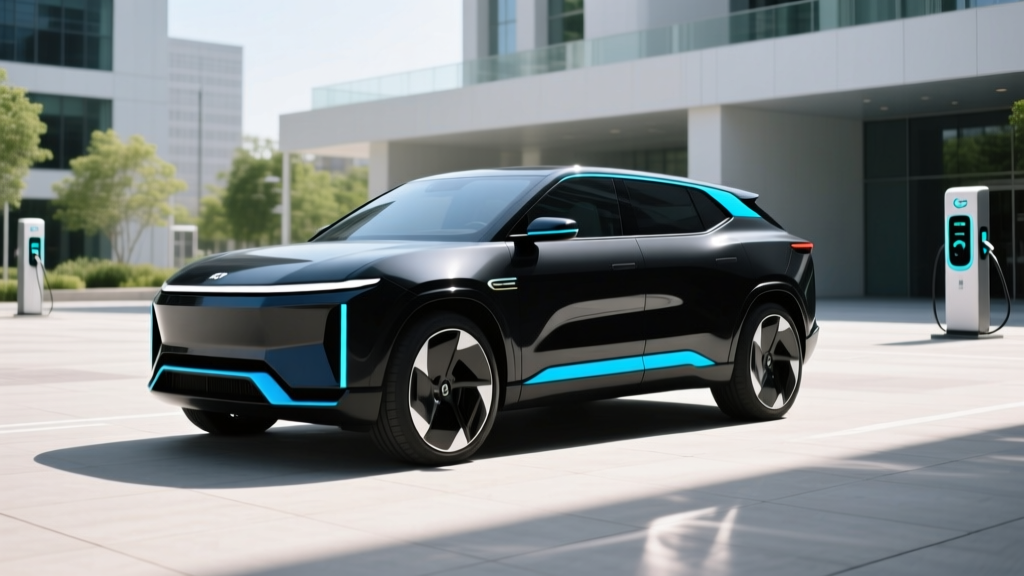
Rivian's R2 is no longer a concept — it's rolling off the Normal, Illinois assembly line and into driveways. The midsize electric SUV, positioned below the R1S in both size and price, has become one of the most anticipated EVs of the decade. As of early 2026, Rivian R2 reservation numbers have surpassed 100,000, according to CEO RJ Scaringe's public statements, making it one of the largest EV waitlists in the industry. But reservation counts only matter if the vehicle delivers. Here's a data-driven breakdown of what the 2026 Rivian R2 actually offers — from real-world range to federal tax credit eligibility — so you can decide whether to hold your reservation or explore alternatives.
Rivian R2 at a Glance: Core Specifications
| Attribute | Value |
|---|---|
| EPA Est. Range | 330 miles (Standard AWD) |
| Battery Capacity | ~85 kWh usable, LFP chemistry |
| Max DC Fast Charge | 200 kW peak |
| 10–80% DC Charge Time | ~25 minutes (estimated) |
| Level 2 Home Charging | 11.5 kW (~33 mi/hr) |
| 0–60 mph | ~5.0 seconds (Dual-Motor AWD) |
| Horsepower | ~350 hp (Dual-Motor AWD) |
| Drivetrain | Dual-Motor AWD standard; Performance trim available |
| Efficiency | ~3.0 kWh/mi (~112 MPGe est.) |
| Cargo Volume | ~28 cu ft (rear seats up); ~65 cu ft (seats folded) |
| Base MSRP | $45,000 (Standard AWD) |
| Battery/Powertrain Warranty | 8 years / 100,000 miles |
Note: The Rivian R2 began production in early 2026. Some specifications remain preliminary pending final EPA certification. Always verify with fueleconomy.gov for official figures before purchasing.
Range and Efficiency: What to Expect Beyond the EPA Sticker
Real-World Expectation: ~270–290 miles at sustained highway speeds (70–80 mph); ~230–260 miles in sub-30°F cold weather without preconditioning.
The R2's 330-mile EPA estimate positions it competitively against the Tesla Model Y Long Range (320 miles) and the Hyundai Ioniq 5 (305 miles with the larger battery). Rivian achieves this with an ~85 kWh usable lithium iron phosphate (LFP) battery pack — a deliberate chemistry choice that prioritizes longevity and safety over maximum energy density.
Why LFP matters for R2 buyers: LFP cells tolerate repeated charging to 100% without the accelerated degradation that NMC (nickel manganese cobalt) chemistries experience. This means you can charge to full daily without the "80% rule" anxiety. The tradeoff is slightly lower energy density, which is why Rivian needed a larger physical pack to hit 330 miles compared to NMC competitors running smaller kWh packs.
In real-world driving, efficiency averages around 3.0 kWh per mile — translating to roughly 112 MPGe combined. Highway driving at 75+ mph will push consumption closer to 3.3–3.5 kWh/mi, cutting range to the 270–290 mile window. Cold weather compounds this: without active battery preconditioning, expect a 15–25% range reduction in freezing conditions, landing around 230–260 miles. The R2's standard heat pump helps mitigate cabin energy draw in winter, but battery chemistry physics remain unavoidable.
Charging Speed: DC Fast and Home Level 2 Breakdown
| Charging Level | Power / Rate | Miles Added | Notes |
|---|---|---|---|
| Level 1 (120V) | ~1.4 kW | ~4 mi/hr | Emergency/trickle only |
| Level 2 (240V, 48A) | 11.5 kW | ~33 mi/hr | Full charge in ~8 hours |
| DC Fast Charge | 200 kW peak | ~150 mi in 15 min | 10–80% in ~25 min |
The R2's 200 kW peak DC fast-charging rate is respectable but not class-leading. For context, the Hyundai Ioniq 5 peaks at 240 kW on 800V architecture, while the Tesla Model Y peaks around 250 kW on V3 Superchargers. The R2's 10–80% charge time of approximately 25 minutes means a typical road-trip stop adds roughly 150 miles of range — adequate for the 200–250 mile driving segments most EV road trippers plan between stops.
Charging curve reality check: Peak 200 kW is sustained only between roughly 10–40% state of charge (SoC). Above 60%, the rate tapers significantly — expect 80–100 kW through the 60–80% window. This is standard behavior for LFP packs, which have a flatter voltage curve that makes precise SoC estimation harder at mid-range and requires more conservative charging management near full. Plan road-trip charging stops around the 10–70% sweet spot for the fastest throughput.
At home, the 11.5 kW Level 2 rate (requiring a 240V/60A circuit with a 48A charger) replenishes the full pack in about 8 hours — perfect for overnight charging. Most R2 owners will rarely need DC fast charging for daily use. Rivian's NACS (North American Charging Standard) port gives R2 owners native access to the Tesla Supercharger network, the most reliable and expansive DC fast-charging infrastructure in the US.
Performance and Driving Dynamics
The dual-motor AWD R2 produces approximately 350 horsepower and hits 0–60 mph in around 5.0 seconds. That puts it in line with the Tesla Model Y Long Range AWD (5.0 seconds, 384 hp) and quicker than the Ford Mustang Mach-E Select AWD (5.1 seconds, 312 hp). A Performance variant is expected to drop 0–60 into the low 4-second range.
Rivian has built its reputation on adventure capability, and the R2 inherits key off-road DNA from the R1S and R1T: selectable drive modes including Snow, Sand, and All-Terrain, plus over 8 inches of ground clearance. It's not a hardcore rock crawler, but it handles fire roads, snowy mountain passes, and campsite access better than most crossover competitors. The electric skateboard platform keeps the center of gravity low, and the single-speed reduction gear delivers instant torque without transmission lag.
Towing capacity is rated at approximately 3,300 pounds — enough for a small utility trailer, a pair of jet skis, or a light pop-up camper, but not a full-size boat or travel trailer. If you need 5,000+ pound towing, the R1S remains the better Rivian choice.
Pricing, Trims, and Federal Tax Credit Eligibility
| Trim | Base MSRP | Est. After §30D Credit* | Key Features |
|---|---|---|---|
| Standard AWD | $45,000 | ~$37,500 | 330-mi range, dual-motor, LFP pack, 11.5 kW L2 |
| Premium AWD | $52,000 | ~$44,500 | Upgraded interior, premium audio, enhanced ADAS |
| Performance | $58,000 (est.) | ~$50,500 | Quicker 0–60, sport suspension, larger wheels |
*Federal tax credit caveat: The IRS §30D Clean Vehicle Credit offers up to $7,500, but eligibility depends on three factors that change frequently:
- MSRP Cap: SUVs must be priced at or below $80,000 — all R2 trims qualify.
- Buyer Income Cap: Adjusted gross income must not exceed $150,000 (single), $225,000 (head of household), or $300,000 (joint filers).
- Battery Sourcing Requirements: Critical minerals and battery components must meet escalating domestic/free-trade-partner sourcing thresholds. LFP cells, predominantly manufactured in China, face the strictest scrutiny. Rivian has stated the R2's pack uses cells sourced to comply with 2026 thresholds, but final IRS determinations are made per VIN at point of sale.
The credit can now be transferred to the dealer at point of sale under §30D(g), reducing your purchase price directly rather than waiting for a tax refund. Always confirm eligibility with your tax professional and verify the vehicle's VIN against the IRS's official eligibility tool before signing.
Interior, Cargo, and Technology
The R2 is smaller than the three-row R1S but still offers practical family utility. Rear legroom measures approximately 38 inches — adequate for adults on longer trips — and cargo space behind the second row is roughly 28 cubic feet, expanding to about 65 cubic feet with the 60/40 rear seats folded. A front trunk (frunk) adds another ~4 cubic feet for charging cables or a small bag.
Technology highlights include:
- 15.6-inch center touchscreen running Rivian's proprietary infotainment OS with native navigation, streaming apps, and over-the-air (OTA) update capability.
- Rivian Driver+ — a Level 2 driver-assistance suite (SAE Level 2, not self-driving) offering adaptive cruise control, lane-centering, and automatic lane changes on divided highways. The driver must remain engaged at all times.
- Digital instrument cluster with range prediction, navigation overlay, and energy-flow visualization.
- Vehicle-to-load (V2L) capability via bed-style outlets, allowing the R2 to power camping equipment, tools, or serve as emergency backup power.
Notable drawbacks include the absence of Apple CarPlay and Android Auto — Rivian insists its native software is sufficient, but many buyers prefer phone projection. The panoramic glass roof, while visually striking, can increase cabin heat load in summer, requiring more A/C energy and slightly reducing range.
Pros and Cons: The Honest Assessment
Pros
- 330-mile EPA range with durable LFP battery you can charge to 100% daily
- Native NACS port — full Tesla Supercharger access without adapters
- Competitive $45,000 starting price with potential $7,500 federal credit
- Genuine off-road capability rare in the compact EV SUV segment
- OTA updates continuously improve software and add features
- V2L capability for camping and emergency power
Cons
- 200 kW peak DC charge rate trails Hyundai/Kia 800V competitors
- No Apple CarPlay or Android Auto
- LFP battery sourcing may complicate federal tax credit eligibility — verify per VIN
- Reservation backlog of 100,000+ may mean 6–12 month delivery wait
- 3,300-lb towing capacity limits utility compared to R1S or truck-based EVs
- Panoramic glass roof increases solar heat gain in hot climates
Who the Rivian R2 Is Built For
The R2 is best suited for:
- Active families who need a practical daily driver with weekend adventure capability — ski trips, camping, trailhead access — without stepping up to the larger, pricier R1S.
- Commuters with home charging who want 300+ miles of range for the work week plus a DC fast-charge option for occasional road trips.
- Tesla-curious buyers who want Supercharger access via NACS but prefer Rivian's build quality, design language, and outdoor-oriented features over the Model Y.
The R2 is not ideal for heavy towers (look at the R1S, Ford F-150 Lightning, or Chevy Silverado EV), rideshare drivers who need maximum rear-seat space, or buyers in areas with limited public DC charging infrastructure who can't install Level 2 at home.
Is the Rivian R2 Worth the Wait? Decision Framework
- You want a sub-$50K electric SUV with 300+ mile range and real off-road chops
- You value LFP battery longevity and can charge to 100% without degradation worry
- You're willing to wait 6–12 months for delivery given current reservation volumes
- NACS Supercharger access is a priority for your road-trip planning
- You need the fastest possible DC charging — Hyundai Ioniq 5 (240 kW, 800V)
- You need three rows — Kia EV9 or Rivian R1S
- You need immediate delivery — Tesla Model Y is in stock now
- You require Apple CarPlay — nearly every competitor offers it
Frequently Asked Questions
How many Rivian R2 reservations are there in 2026?
As of early 2026, Rivian has reported over 100,000 R2 reservations. The company began production in the first half of 2026 at its Normal, Illinois facility, with deliveries ramping throughout the year. Reservation holders are being fulfilled in order, and new reservations may face a 6–12 month delivery window.
What is the real-world range of the Rivian R2?
The EPA estimates 330 miles for the Standard AWD trim. In real-world highway driving at 70–80 mph, expect 270–290 miles. In freezing temperatures without preconditioning, range can drop to 230–260 miles. The LFP battery's tolerance for 100% daily charging partially offsets this by giving you access to the full 330 miles every morning.
Does the Rivian R2 qualify for the $7,500 federal EV tax credit?
The R2 meets the MSRP cap ($80,000 for SUVs) and most buyers will meet income requirements. However, the battery sourcing requirement is the variable — LFP cells have faced scrutiny under critical-mineral and component sourcing rules. Rivian has structured its supply chain to meet 2026 thresholds, but eligibility is determined per VIN at point of sale. Confirm with the IRS tool and your tax professional before purchasing.
How fast does the Rivian R2 charge?
On a DC fast charger, the R2 peaks at 200 kW, achieving a 10–80% charge in approximately 25 minutes. At home on a Level 2 (240V, 48A) charger, it adds about 33 miles of range per hour, fully recharging in roughly 8 hours. The NACS port provides native Tesla Supercharger access.
Is the Rivian R2 better than the Tesla Model Y?
It depends on priorities. The R2 offers more off-road capability, a more premium interior, LFP battery longevity, and V2L functionality. The Model Y has faster DC charging, a more mature Supercharger network track record, available third-row seating (though cramped), and immediate availability. Both use NACS and have similar EPA range. The R2 is the better adventure vehicle; the Model Y is the safer bet for buyers who want proven, immediate delivery.
What is the Rivian R2's battery warranty?
Rivian covers the R2's battery pack and electric powertrain for 8 years or 100,000 miles, whichever comes first. The warranty guarantees a minimum capacity retention threshold (typically 70% of original capacity), consistent with industry standards. LFP chemistry's slower degradation curve suggests most R2 packs will retain well above this threshold under normal use.