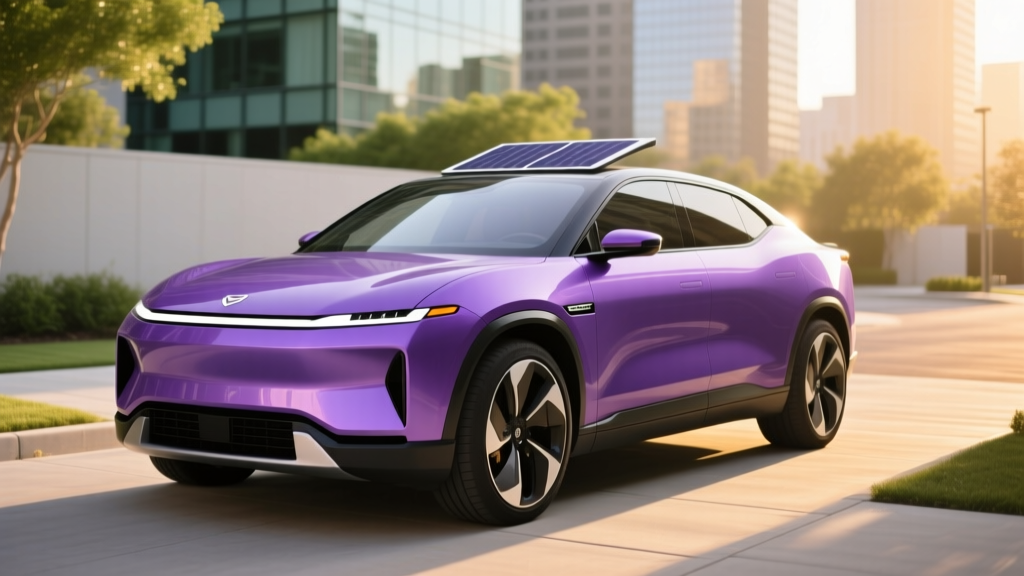
Rivian's midsize R2 SUV is one of the most anticipated electric vehicles of the decade, and the Rivian R2 Purple — the launch-edition colorway that debuted alongside the vehicle's reveal — has become a shorthand for the entire R2 lineup. With a targeted base price near $45,000, a dual-motor AWD powertrain, and a promised 300+ mile EPA range, the R2 aims to slot between the Tesla Model Y and the larger R1S in a segment where no mainstream electric SUV currently dominates. Production is expected to begin at Rivian's Normal, Illinois plant in the first half of 2026, with the Purple launch edition likely among the first vehicles delivered.
Because the R2 has not yet entered customer hands, the figures below reflect Rivian's most recent published specifications and industry-standard projections. We'll flag where numbers are preliminary and update this profile as EPA certification data becomes available on fueleconomy.gov.
Rivian R2 Purple: Preliminary Specifications at a Glance
| Spec | Figure (Estimated) |
|---|---|
| EPA-estimated range | ~300 mi (dual-motor); ~330 mi (single-motor RWD, later trim) |
| Battery capacity (usable) | ~85 kWh (projected), NMC chemistry |
| DC fast-charge peak rate | ~175–190 kW (target 10–80% in ~25 min) |
| Level 2 home charging | 11.5 kW onboard charger (~33 mi/hr) |
| Drivetrain | Dual-motor AWD (launch); RWD single-motor later |
| Horsepower | ~450 hp (dual-motor, estimated) |
| 0–60 mph | ~4.5 seconds (dual-motor, estimated) |
| Efficiency | ~3.5–3.8 kWh/mi (~105 MPGe target) |
| Cargo volume (rear seats up) | ~34 cu ft (projected) |
| Cargo volume (rear seats folded) | ~70 cu ft (projected) |
| Base MSRP (Purple launch ed.) | ~$52,000–$55,000 (launch edition); base R2 ~$45,000 (2027) |
| Battery / powertrain warranty | 8 yr / 100,000 mi (expected, matches R1S/R1T) |
Real-World Range: What to Expect Beyond the EPA Sticker
Rivian has engineered the R2 on a new, smaller platform that sheds weight versus the R1S, which should help efficiency. The single-motor RWD variant, expected later in the production run (likely model year 2027), targets over 330 miles EPA — a compelling option for buyers in milder climates who don't need AWD traction. Until the EPA posts official certification numbers, treat these as well-informed projections based on Rivian's stated targets and the physics of the platform's mass and frontal area.
Charging Speed: DC Fast, Level 2, and the Charge Curve
Charging speed is where midsize EVs live or die for road-trip viability. The R2 is expected to support a peak DC fast-charge rate in the 175–190 kW range, using the NACS connector (native Tesla Supercharger compatibility, no adapter required). Rivian has confirmed that R2 vehicles will have access to the Tesla Supercharger network from launch.
| Charging Level | Power / Rate | Miles Added per Hour | Typical Use Case |
|---|---|---|---|
| Level 1 (120V household) | ~1.4 kW | ~3–4 mi/hr | Emergency / overnight trickle |
| Level 2 (240V home, 48A) | 11.5 kW | ~33 mi/hr | Daily home charging, full overnight refill |
| DC Fast Charge (peak) | ~175–190 kW | ~650+ mi/hr (peak) | Road trips; 10–80% in ~25 min (projected) |
Understanding the charge curve: The "10–80% in ~25 minutes" figure assumes optimal battery preconditioning (the R2's navigation system will warm the battery when a charger is set as your destination). Peak kW is only sustained roughly between 10–50% state of charge; above 80%, the rate tapers significantly to protect battery longevity. For road-trip planning, budget 25–30 minutes per stop at a 150+ kW charger, and plan stops around the 20–80% window where charging is fastest.
At home on a Level 2 wall connector (240V, 48-amp circuit, requiring a 60-amp breaker), a full overnight charge adds roughly 33 miles per hour of charging — more than enough to replenish a day's driving in 2–3 hours. Installation costs for a home Level 2 setup typically run $800–$2,500 depending on panel capacity and wiring distance; consult a licensed electrician for your specific situation.
Performance, Drivetrain, and Efficiency
The launch-edition R2 Purple is expected to feature Rivian's dual-motor all-wheel-drive system, producing an estimated 450 horsepower and reaching 0–60 mph in roughly 4.5 seconds. That's brisk for a family SUV and roughly on par with the Tesla Model Y Long Range AWD. Rivian's torque-vectoring AWD system, proven on the R1 platform, should deliver confident traction in rain, snow, and light off-road conditions — a core brand differentiator versus crossovers that prioritize on-road efficiency over capability.
Efficiency is projected at approximately 3.5–3.8 kWh per mile, translating to roughly 105 MPGe combined. That's competitive with the Model Y (~122 MPGe for the Long Range AWD, per fueleconomy.gov) but slightly less efficient due to the R2's boxier, more rugged design and greater ground clearance. For context, at a national average electricity price of $0.16/kWh, the R2 would cost roughly $0.056–$0.061 per mile to charge at home — compared to $0.12–$0.14/mi for a 25 MPG gas SUV at $3.50/gallon.
Pricing, Trims, and Federal Tax Credit Eligibility
The Rivian R2 Purple is a launch-edition colorway and is expected to carry a premium over the eventual base R2 price. Here's the projected pricing structure:
| Trim / Edition | Estimated MSRP | §30D Credit Eligibility | Effective Price (if eligible) |
|---|---|---|---|
| R2 Launch Edition (Purple) | ~$52,000–$55,000 | Eligible (under $80K SUV cap); subject to income + sourcing rules | ~$44,500–$47,500 |
| R2 Dual-Motor (standard) | ~$47,500–$50,000 | Eligible (under $80K SUV cap) | ~$40,000–$42,500 |
| R2 Single-Motor RWD (2027) | ~$45,000 | Eligible (under $80K SUV cap) | ~$37,500 |
Federal tax credit (§30D) caveats: The R2 should qualify as an SUV under the IRS vehicle classification, meaning the MSRP cap is $80,000 — well above even the launch edition price. However, eligibility for the full $7,500 credit depends on several buyer- and vehicle-specific factors per current IRS rules:
- Income caps: Modified adjusted gross income must not exceed $150,000 (single), $225,000 (head of household), or $300,000 (joint filers).
- Battery sourcing: A percentage of critical minerals and battery components must be sourced from the U.S. or free-trade-agreement countries. These thresholds tighten annually, and Rivian's supply chain compliance for 2026 deliveries will determine whether buyers receive the full $7,500, a partial $3,750, or no credit.
- Point-of-sale transfer: Under current rules, buyers can transfer the credit to the dealer at purchase, reducing the out-of-pocket price immediately rather than waiting for a tax refund.
Consult a tax professional before relying on credit eligibility, as rules are subject to legislative change and individual circumstances vary.
Interior, Cargo, Tech, and Daily Usability
The R2 is a five-passenger midsize SUV, smaller than the three-row R1S but designed to offer generous interior volume for its footprint. Projected cargo capacity is approximately 34 cubic feet behind the rear seats and 70 cubic feet with the rear seats folded — competitive with the Model Y and significantly more usable than many gas-powered compact SUVs thanks to the flat floor and available front trunk (frunk).
Expected technology highlights include:
- 15-inch center touchscreen running Rivian's latest software interface, with wireless Apple CarPlay and Android Auto.
- Rivian Driver+ (Level 2 ADAS): Highway assist with lane-centering and adaptive cruise, plus hands-on-wheel monitoring. This is a driver-assistance system, not autonomous driving — the driver must remain engaged at all times.
- Over-the-air updates for performance, features, and UI improvements.
- Vehicle-to-load (V2L) capability (expected), allowing the R2 to power campsite equipment or tools from its traction battery.
- Adventure-oriented features: Gear tunnel (if retained from R1 platform), integrated air compressor, and water-resistant interior materials on adventure trims.
Notable potential drawbacks: The R2's boxy silhouette may generate more wind noise at highway speeds than sleeker competitors. The launch-edition pricing pushes it into R1S territory for early adopters, and the single-motor, lower-priced variant won't arrive until later. Rivian's service center network, while expanding, still has gaps in rural and less-populated states compared to legacy automakers.
R2 Purple vs. the Competition: Where It Fits
The R2 doesn't exist in a vacuum. Here's how it stacks up against the midsize electric SUVs it will compete with in 2026–2027:
| Vehicle | EPA Range | Peak DC Charge | 0–60 mph | Base MSRP |
|---|---|---|---|---|
| Rivian R2 Dual-Motor (proj.) | ~300 mi | ~185 kW | ~4.5 sec | ~$47,500 |
| Tesla Model Y Long Range AWD | 308 mi | 250 kW | 4.8 sec | $48,990 |
| Hyundai Ioniq 5 (Long Range AWD) | 290 mi | 240 kW | 5.1 sec | $49,850 |
| Ford Mustang Mach-E (ER AWD) | 290 mi | 150 kW | 5.1 sec | $48,995 |
The R2's differentiators are its adventure capability (ground clearance, AWD sophistication, expected V2L), Rivian's brand cachet, and native NACS/Supercharger access. Where it may trail: the Model Y charges faster (250 kW peak), the Ioniq 5 offers 800V ultra-fast charging architecture, and both have established service networks. The R2 is best understood as the option for buyers who want a Tesla-competitive EV with genuine outdoor credibility and don't mind paying a launch-edition premium to be early adopters.
Who Should Buy the Rivian R2 Purple?
Consider alternatives if: You prioritize the lowest possible price (wait for the ~$45,000 single-motor RWD in 2027), need the fastest possible DC charging (Model Y or Ioniq 5), or live in an area without a nearby Rivian service center.
Frequently Asked Questions
What is the real-world range of the Rivian R2?
The R2 dual-motor targets ~300 miles EPA. In real-world mixed driving, expect 260–285 miles in mild weather, 230–260 on sustained highway trips, and 210–240 miles in freezing conditions. The heat pump and preconditioning system should help minimize cold-weather losses relative to competitors without active thermal management.
How fast does the Rivian R2 charge?
Projected peak DC fast-charge rate is 175–190 kW, with a 10–80% charge in approximately 25 minutes under optimal conditions (preconditioned battery, 150+ kW charger). At home on a Level 2 wall connector (11.5 kW), expect roughly 33 miles of range added per hour — a full charge overnight for most daily driving needs.
How much does the Rivian R2 cost after tax credits?
The launch-edition Purple is estimated at $52,000–$55,000 MSRP. If you qualify for the full $7,500 federal §30D credit (subject to income caps and battery-sourcing requirements), the effective price drops to approximately $44,500–$47,500. The standard dual-motor R2 is expected around $47,500–$50,000, and the future single-motor RWD at ~$45,000. Always verify current eligibility on IRS.gov and consult a tax professional.
Does the Rivian R2 qualify for the federal EV tax credit?
Based on current rules, the R2 should qualify as an SUV (MSRP cap of $80,000), and its pricing falls well below that threshold. However, the full $7,500 credit also depends on your income (caps apply), the battery's critical-mineral and component sourcing percentages (which tighten each year), and whether you transfer the credit at point of sale or claim it on your tax return. Rivian has not yet published 2026 battery-sourcing compliance details for the R2.
Is the Rivian R2 worth buying vs. the Tesla Model Y?
It depends on your priorities. The Model Y charges faster (250 kW peak), has a more mature service network, and offers slightly higher EPA efficiency. The R2 offers a more adventure-capable platform, distinctive design, native NACS/Supercharger access, and a brand identity that resonates with outdoor-oriented buyers. If the launch-edition premium doesn't deter you and you value capability over pure efficiency, the R2 is a compelling alternative. Budget-focused buyers should wait for the $45,000 RWD variant or consider the Model Y.
What are the biggest pros and cons of the Rivian R2?
- ~300 mi range with AWD (projected)
- Native NACS / Supercharger access
- Genuine off-road / adventure capability
- Expected V2L for camping and tools
- Distinctive design; Purple launch colorway
- OTA software updates
- Launch-edition pricing near $55K
- DC charging slower than Model Y / Ioniq 5
- Rivian service network still expanding
- New platform — first-year risk
- Boxy shape may mean more highway wind noise
- Single-motor / $45K variant delayed to 2027
Note: The Rivian R2 is an announced vehicle expected to begin production in 2026. All specifications in this profile are preliminary and based on Rivian's published targets and industry analysis. Final EPA-certified range, efficiency, and pricing will be confirmed closer to delivery. This article will be updated as official data becomes available.