The Rivian R2 arrives in the first half of 2026 as the brand's bid to crack the high-volume compact electric SUV segment — the same battleground occupied by the Tesla Model Y, Ford Mustang Mach-E, and Hyundai IONIQ 5. But the question dominating buyer searches isn't just about specs; it's about Rivian R2 pricing and whether the numbers actually pencil out once you factor in federal incentives, trim creep, and real-world efficiency.
Rivian has confirmed a starting MSRP of $45,000 for the base Standard trim with a single-motor rear-wheel-drive layout. However, the version most buyers will actually configure — a Dual-Motor AWD with the Larger battery — pushes closer to $52,000–$55,000 before destination. Below, we break down every confirmed and projected figure, reconcile EPA range with real-world expectations, and map out exactly who qualifies for the §30D federal tax credit under current IRS rules.
Rivian R2 Core Specifications (2026 Model Year)
| Specification | Standard (RWD) | Dual-Motor AWD | Performance AWD |
|---|---|---|---|
| Base MSRP | $45,000 | $52,000 | $55,000 (est.) |
| EPA Range (Larger Battery) | ~330 mi | ~315 mi | ~295 mi (est.) |
| Battery (Usable) | ~85 kWh (LFP, Larger pack); ~72 kWh (Standard pack) | ||
| 0–60 mph | ~6.5 sec | ~4.5 sec | ~3.5 sec (est.) |
| Horsepower | ~335 hp | ~450 hp | ~550 hp (est.) |
| Max DC Fast Charge | ~210 kW peak (Larger pack) | ||
| 10–80% DCFC Time | ~25 minutes (projected) | ||
| Level 2 Home Charge | 11.5 kW (~33 mi/hr) | ||
| Drivetrain | Single Motor RWD | Dual Motor AWD | Dual Motor Perf AWD |
| Battery/Powertrain Warranty | 8 years / 100,000 miles | ||
Source: Rivian official announcements and preliminary filings. Final EPA certification pending closer to launch. Visit Rivian R2 official page for updates.
Rivian R2 Pricing by Trim and Configuration
Rivian's pricing ladder mirrors the strategy it used with the R1S and R1T but compressed into a more accessible bracket. Here's how the lineup stacks up at launch:
- Standard ($45,000): Single-motor RWD, Standard battery (~72 kWh usable), ~270 miles EPA range. Cloth interior, 15-inch center display, basic driver-assist suite. This is the headline price, but production volume at launch will be limited — expect long wait times.
- Dual-Motor AWD with Larger Battery (~$52,000): The volume seller. Dual-motor all-wheel drive, ~85 kWh LFP pack, ~315 miles EPA range. Adds premium interior materials, adaptive air suspension, and the full Driver+ assist package.
- Performance AWD (~$55,000 est.): Upgraded drive unit tuning for ~550 hp, sport-tuned suspension, larger brakes. Range dips to ~295 miles. Launch timing TBD.
Destination charges add approximately $1,800. Fully loaded Dual-Motor configurations with the Adventure package (off-road tires, underbody protection, Camp Kitchen accessory) can push the as-tested price past $62,000.
Estimated Out-of-Pocket Cost After Federal Tax Credit
| Configuration | MSRP + Dest. | §30D Credit | Effective Price |
|---|---|---|---|
| Standard RWD | $46,800 | Up to $7,500 | ~$39,300 |
| Dual-Motor AWD (Larger) | $53,800 | Up to $7,500 | ~$46,300 |
| Performance AWD | $56,800 | Up to $7,500 | ~$49,300 |
Credit eligibility depends on buyer income, battery sourcing, and MSRP caps. See tax credit section below.
Real-World Range: What the EPA Sticker Doesn't Tell You
EPA Estimated Range: Up to 330 miles (Standard RWD, Larger Battery)
Real-World Expectation: Plan for 270–295 miles in mixed highway driving at 70–75 mph. In cold weather (below 32°F), expect a further 15–25% reduction, bringing effective range down to 215–250 miles for AWD models.
The R2's LFP (lithium iron phosphate) chemistry in the Larger battery pack offers excellent cycle life and thermal stability, but LFP cells typically have lower energy density than NMC (nickel manganese cobalt) alternatives. That means Rivian is trading some range-per-kilogram for long-term durability and lower cost. In practice, this means:
- Highway efficiency: Expect roughly 3.0–3.3 kWh/mile at 70 mph, translating to ~280 miles from the 85 kWh usable pack on a flat, temperate interstate run.
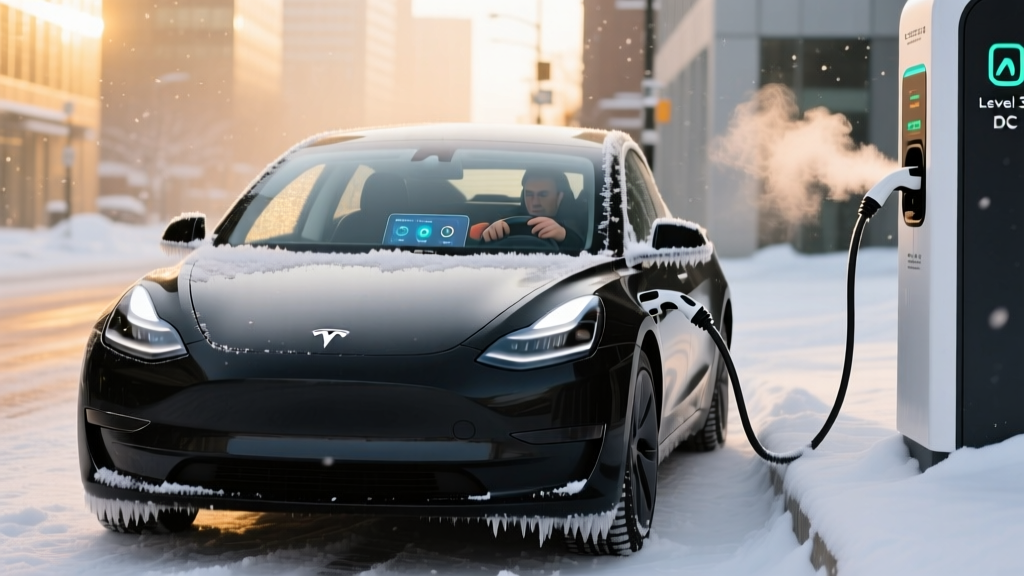
- Cold-weather impact: LFP packs are more sensitive to low temperatures during charging. Rivian's heat pump and battery preconditioning system mitigate this, but range loss in sub-freezing conditions is real and unavoidable — budget 20% less range in January than in July.
- City driving advantage: Regenerative braking in stop-and-go traffic can push efficiency to 2.5 kWh/mile, potentially exceeding the EPA sticker in urban commutes.
For the latest certified figures once available, check fueleconomy.gov.
Charging Speed: DC Fast Charge and Home Level 2
| Charging Level | Power | Speed / Time | Use Case |
|---|---|---|---|
| Level 1 (120V) | ~1.4 kW | ~4 mi/hr | Emergency / trickle |
| Level 2 (240V, 48A) | 11.5 kW | ~33 mi/hr (full charge ~8 hrs) | Home daily charging |
| DC Fast Charge | ~210 kW peak | 10–80% in ~25 min | Road trips, public stations |
The R2 uses the NACS (North American Charging Standard) connector natively, giving it direct access to Tesla's Supercharger network — a significant advantage over CCS-equipped competitors that still require adapters. At peak, the Larger battery pack should accept up to 210 kW on a V3 or V4 Supercharger or equivalent Electrify America station.
Charging curve reality check: That 210 kW peak is not sustained. Expect the R2 to hold peak rate from roughly 10% to 40% State of Charge, then taper progressively. The 10–80% time of ~25 minutes assumes optimal battery temperature (preconditioning enabled) and a charger capable of delivering sustained power. On a hot day at a crowded charging plaza with shared power cabinets, add 5–8 minutes.
For home charging, Rivian recommends a 60-amp dedicated circuit with a 48-amp Wall Charger, delivering 11.5 kW. That translates to roughly 33 miles of range per hour of charging — enough to replenish a full day's driving overnight. Installation costs for a Level 2 home setup typically range from $800 to $2,500 depending on panel capacity and run length from your electrical panel to the garage.
Performance and Drivetrain
The R2 lineup offers three performance tiers:
- Standard RWD: A single rear motor producing approximately 335 hp. The 0–60 mph time sits around 6.5 seconds — brisk for daily driving but not sports-car territory. This is the efficiency-optimized pick.
- Dual-Motor AWD: Front and rear motors combine for ~450 hp, dropping the 0–60 time to approximately 4.5 seconds. Torque vectoring across both axles provides confident all-weather traction and light off-road capability.
- Performance AWD: Rivian's upgraded drive units push output to an estimated 550 hp with a 0–60 time near 3.5 seconds. This variant sacrifices roughly 20 miles of range for acceleration bragging rights.
All trims feature Rivian's quad-motor-ready architecture (though the R2 launches with single- and dual-motor configurations only). Ground clearance on the air suspension-equipped AWD trims reaches up to 8.9 inches, and the R2 retains a modest tow rating of approximately 3,300 lbs — adequate for a small utility trailer or a pair of dirt bikes but not a camper.
Interior Space, Cargo, and Technology
The R2 is dimensionally smaller than the R1S but larger than subcompact competitors. Key interior measurements (projected):
- Cargo volume (rear seats up): ~30 cu ft
- Cargo volume (rear seats folded): ~68 cu ft
- Front trunk (frunk): ~11 cu ft — a genuine differentiator for gear storage
- Rear legroom: ~38 inches, sufficient for adults on longer trips
The cabin centers around a 15-inch landscape-oriented touchscreen running Rivian's proprietary infotainment OS. Apple CarPlay and Android Auto are not confirmed at launch — Rivian has historically developed its own interface — but the system includes native navigation with route-based battery preconditioning, over-the-air updates, and a built-in camp mode that maintains climate control overnight.
Driver assistance: The R2 ships with Rivian's Driver+ suite, a Level 2 SAE system offering adaptive cruise control, lane-centering, and hands-on-wheel monitoring. This is not an autonomous driving system — the driver must remain engaged at all times. A more advanced hands-off highway assist feature is expected via OTA update later in the production cycle, but Rivian has not committed to a timeline.
ADAS Limitation Notice: Rivian Driver+ is an SAE Level 2 driver-assistance system. It requires continuous driver supervision, hands on the steering wheel, and eyes on the road. It does not make the R2 a self-driving vehicle.
Federal Tax Credit Eligibility (§30D)
Under current IRS §30D rules, the Rivian R2 may qualify for up to $7,500 in federal tax credits — but eligibility is not automatic. Here's the checklist:
- MSRP Cap: SUVs must have an MSRP at or below $80,000. All R2 trims clear this threshold comfortably.
- Buyer Income Cap: Modified adjusted gross income must not exceed $150,000 (single), $225,000 (head of household), or $300,000 (joint filers).
- Battery Sourcing: The $7,500 credit splits into two halves — $3,750 for critical minerals and $3,750 for battery component sourcing. Both must meet escalating domestic-content thresholds. Rivian's LFP cell sourcing will determine whether buyers receive the full $7,500 or only $3,750. This is the single biggest variable.
- Point-of-Sale Transfer: Buyers can elect to transfer the credit to the dealer at purchase, reducing the upfront cost rather than waiting for a tax refund.
- Assembly: The R2 will be assembled at Rivian's Normal, Illinois facility, satisfying the North American final assembly requirement.
Critical caveat: LFP battery cells are predominantly manufactured in China. If Rivian sources LFP cells from a "foreign entity of concern" (FEOC), the battery component half of the credit ($3,750) may be disallowed. Rivian has indicated it is working to secure compliant supply chains, but buyers should verify credit eligibility at point of purchase — do not assume the full $7,500 applies until confirmed. Consult a tax professional for your specific situation.
Rivian R2 vs. Key Competitors: Is It Worth Buying?
| Attribute | Rivian R2 (Dual-Motor) | Tesla Model Y LR AWD | Hyundai IONIQ 5 AWD |
|---|---|---|---|
| Starting Price (AWD) | ~$52,000 | ~$48,000 | ~$50,500 |
| EPA Range | ~315 mi | ~320 mi | ~290 mi |
| DC Fast Charge (Peak) | ~210 kW | ~250 kW | ~240 kW |
| 10–80% Time | ~25 min | ~20 min | ~18 min |
| Cargo (behind rear seats) | ~30 cu ft | ~30 cu ft | ~27 cu ft |
| Frunk | ~11 cu ft | ~4 cu ft | ~0.85 cu ft |
| NACS Native | Yes | Yes | No (CCS/adapter) |
| Tow Rating | ~3,300 lbs | ~3,500 lbs | ~2,300 lbs |
Choose the Rivian R2 if: You want a frunk large enough for real gear, value outdoor/adventure styling, prefer a newer platform with LFP battery longevity, and plan to use Tesla Superchargers natively without an adapter.
Choose the Tesla Model Y if: You want the fastest charging speeds, the most mature Supercharger network access (though this gap is closing), and proven long-term software support — and you don't mind the aging interior design.
Choose the Hyundai IONIQ 5 if: You want the fastest 10–80% charging in the segment (800V architecture), a more aggressive price point, and don't mind using a NACS adapter for Supercharger access.
Warranty and Long-Term Ownership
Rivian covers the R2's battery and powertrain with an 8-year / 100,000-mile warranty, matching the industry standard for EV traction components. The battery warranty guarantees a minimum of 70% capacity retention over the warranty period — consistent with competitors.
The LFP chemistry in the Larger battery pack should offer superior long-term degradation characteristics compared to NMC packs, with published research suggesting LFP cells can sustain 2,000+ full charge cycles before reaching 80% State of Health. In practical terms, that translates to well over 200,000 miles of use before meaningful range loss.
Bumper-to-bumper coverage is expected at 5 years / 60,000 miles. Rivian's service model relies on a combination of its own service centers and mobile service vans — coverage in rural areas remains a concern compared to legacy automaker dealer networks.
Pros
- Native NACS connector — no adapter needed for Superchargers
- Class-leading frunk at ~11 cu ft
- LFP battery chemistry for long-term durability
- Competitive starting price under $45K for base trim
- Adventure-oriented features (air suspension, camp mode, gear tunnel)
- Eligible for up to $7,500 federal tax credit (sourcing-dependent)
Cons
- DC fast-charge speed (~210 kW) trails Hyundai/Kia 800V platforms
- LFP cold-weather charging limitations require preconditioning discipline
- Production ramp-up delays likely — early reservation holders may wait 12+ months
- Service network still expanding; rural owners may face longer repair times
- Full §30D credit uncertain due to LFP cell sourcing
Who the Rivian R2 Is For
The R2 is engineered for buyers who want a compact electric SUV that can handle weekday commuting and weekend adventure without compromise. The combination of a spacious frunk, air suspension, and genuine off-road capability (on AWD trims) positions it squarely at the outdoor-active demographic that Rivian has cultivated with the R1T and R1S.
- Commuters: The Standard RWD at ~270 miles range is ideal for round-trip commutes under 80 miles with home charging. Low operating cost (~3.0 kWh/mi) keeps fueling expenses minimal.
- Young families: 68 cu ft of total cargo space, rear-facing child seat compatibility, and the frunk for stroller storage make this a practical family hauler.
- Road trippers: NACS Supercharger access and ~315 miles of EPA range mean fewer charging stops on long drives, though charge speed is slightly slower than the IONIQ 5 or Model Y.
- Light towing: The 3,300-lb tow rating handles bike racks, small utility trailers, and pop-up campers — but not full-size travel trailers.
Frequently Asked Questions
What is the real-world range of the Rivian R2?
The EPA estimates up to 330 miles for the Standard RWD with the Larger battery. In real-world highway driving at 70–75 mph, expect 270–295 miles. Cold weather (below freezing) can reduce range by 15–25%, bringing effective winter range to approximately 215–250 miles for AWD models.
How fast does the Rivian R2 charge?
On a DC fast charger, the R2 peaks at approximately 210 kW, achieving a 10–80% charge in about 25 minutes under optimal conditions. At home on a Level 2 (240V, 48A) charger, it adds roughly 33 miles of range per hour, fully replenishing overnight.
How much does the Rivian R2 cost after tax credits?
The base Standard RWD starts at $45,000 (+ ~$1,800 destination). With the full $7,500 §30D federal tax credit, the effective price drops to approximately $39,300. However, the credit amount depends on battery sourcing compliance and buyer income limits — the full $7,500 is not guaranteed.
Is the Rivian R2 worth buying vs. the Tesla Model Y or Hyundai IONIQ 5?
The R2 offers a unique combination of frunk space, adventure features, native NACS charging, and LFP battery longevity. However, the Model Y charges faster and has a more established service network, while the IONIQ 5 offers 800V ultra-fast charging at a slightly lower price. Your choice depends on whether you value outdoor utility (R2), charging speed (IONIQ 5), or ecosystem maturity (Model Y).
Does the Rivian R2 qualify for the federal EV tax credit?
It is expected to qualify for at least $3,750 and potentially the full $7,500 under IRS §30D rules. The R2's MSRP is well under the $80,000 SUV cap, and it is assembled in Illinois. The determining factor is battery cell and critical-mineral sourcing — LFP cells from Chinese manufacturers may disqualify the $3,750 battery-component half. Verify eligibility at point of sale.
When will the Rivian R2 be available to order?
Rivian has confirmed production begins in the first half of 2026 at its Normal, Illinois factory. Reservation holders from the original 2024 announcement will receive priority. General orders will open closer to production start, but expect initial delivery wait times of 6–12 months as the factory ramps up.
Note: The Rivian R2 is an announced vehicle with preliminary specifications. Final EPA certification, pricing, and tax credit eligibility will be confirmed closer to the production launch. All figures in this article reflect Rivian's published projections and industry analysis as of early 2026. Always verify current details at rivian.com and irs.gov before making a purchase decision.