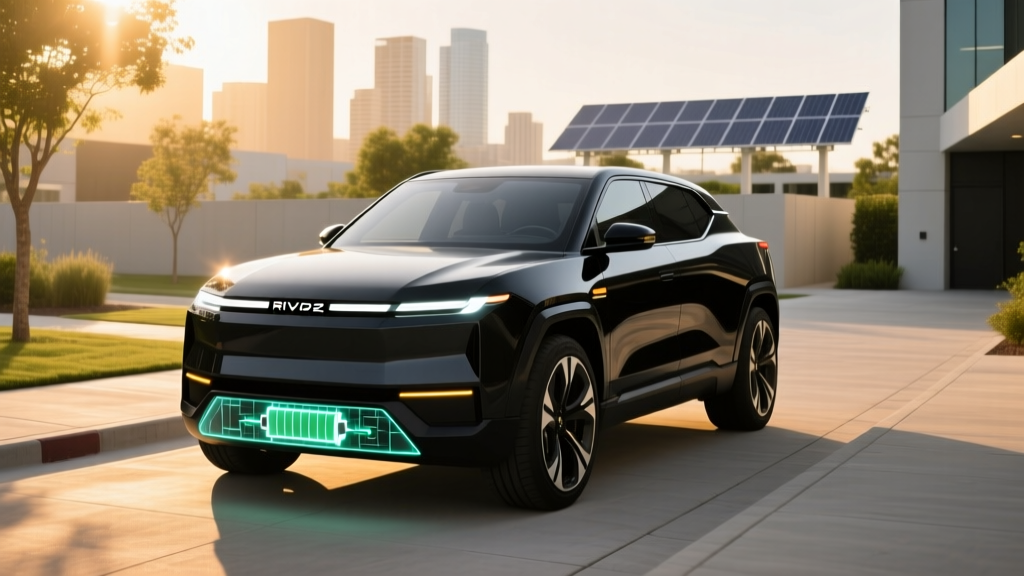
The Rivian R2 is the midsize electric SUV that promises to bring the adventure-ready ethos of the R1S and R1T to a more accessible price point. With production ramping at Rivian's Normal, Illinois facility and first deliveries arriving in the first half of 2026, buyers are asking one question above all: how much is a Rivian R2 once you factor in trims, options, and the federal EV tax credit?
Below, we break down every confirmed figure — MSRP by trim, EPA-estimated range, charging performance, battery chemistry, and §30D tax credit eligibility — along with the real-world ownership nuances that spec sheets leave out. All pricing and specifications reflect Rivian's most current announcements as of early 2026.
Rivian R2 Pricing: Base MSRP, Trims, and Tax Credit Math
The 2026 Rivian R2 launches with three trim tiers, all built on a new midsize platform with a single-motor rear-wheel-drive base configuration and available dual-motor all-wheel drive.
| Trim | Drivetrain | Base MSRP | Est. §30D Credit | Effective Price |
|---|---|---|---|---|
| R2 Standard (RWD) | Single-motor RWD | $45,000 | Up to $7,500* | ~$37,500 |
| R2 Premium (AWD) | Dual-motor AWD | $52,000 | Up to $7,500* | ~$44,500 |
| R2 Adventure (AWD) | Dual-motor AWD | $57,500 | Up to $7,500* | ~$50,000 |
*Federal §30D credit eligibility depends on buyer income limits (AGI caps: $150K single / $300K joint), MSRP caps ($80,000 for SUVs), and battery critical-mineral and component sourcing requirements that shift annually. The point-of-sale transfer option lets qualified buyers apply the credit at purchase. Always confirm your eligibility via the IRS clean vehicle credit page and consult a tax professional before committing.
§30D Federal Tax Credit Checklist for the R2
- MSRP cap: $80,000 for SUVs — all R2 trims clear this threshold.
- Buyler AGI limits: $150,000 (single), $225,000 (head of household), $300,000 (joint).
- Battery sourcing: Critical minerals and battery components must meet escalating domestic-content percentages. Rivian has indicated supply-chain compliance for launch vehicles, but verify at point of sale.
- Assembly: Final assembly must occur in North America — the R2 is built in Normal, IL.
- Point-of-sale transfer: Available through registered dealers, reducing your out-of-pocket at delivery.
Range, Battery Chemistry, and Real-World Expectations
The R2 Standard (RWD) targets an EPA-estimated 330 miles of range from an estimated 85 kWh usable battery pack. The dual-motor AWD variants carry the same pack but trade roughly 15–20 miles of range for the traction and performance gains of all-wheel drive, landing at an estimated 310–315 miles EPA.
Rivian has confirmed that the R2 will use a mix of NMC (nickel manganese cobalt) and LFP (lithium iron phosphate) cells depending on trim and supply agreements, with the higher-range variants leaning toward NMC for its superior energy density, and base configurations potentially adopting LFP for cost and longevity benefits.
Real-World Range vs. EPA Sticker
EPA estimate: 330 mi (RWD) / 310 mi (AWD)
Highway driving (70–80 mph, sustained): Expect ~265–285 mi (RWD), ~250–270 mi (AWD). Aerodynamic drag dominates at speed.
Cold weather (below 32°F): Anticipate a 20–30% reduction — roughly 230–265 mi depending on cabin heat usage and whether you precondition. The R2's heat pump (standard) helps mitigate this compared to resistive heating systems.
Combined real-world expectation: 270–300 mi for typical mixed driving in moderate climates.
| Spec | R2 Standard (RWD) | R2 Premium / Adventure (AWD) |
|---|---|---|
| EPA Range (est.) | 330 mi | 310–315 mi |
| Battery Capacity (usable) | ~85 kWh | ~85 kWh |
| Battery Chemistry | NMC / LFP (trim-dependent) | NMC |
| Efficiency | ~28 kWh/100 mi (~120 MPGe) | ~30 kWh/100 mi (~112 MPGe) |
| Horsepower | ~285 hp | ~500 hp (dual-motor) |
| 0–60 mph | ~6.5 sec | ~4.5 sec |
| Drivetrain | Single-motor RWD | Dual-motor AWD |
| Towing Capacity | TBD (est. 3,300 lb) | TBD (est. 4,500 lb) |
| Cargo (rear seats up) | ~34 cu ft | ~34 cu ft |
| Cargo (rear seats folded) | ~72 cu ft | ~72 cu ft |
| Front Trunk (Frunk) | ~11 cu ft | ~11 cu ft |
Charging Speed: DC Fast Charging and Home Level 2
Charging speed is where the R2's new platform architecture matters most. Rivian has confirmed the R2 supports a peak DC fast-charge rate of approximately 200 kW on NACS-equipped chargers (the R2 ships with a native NACS charge port, granting access to Tesla Superchargers without an adapter).
| Charge Level | Power / Rate | Speed (mi/hr added) | Notes |
|---|---|---|---|
| Level 1 (120V household) | ~1.4 kW | ~4 mi/hr | Emergency/top-up only |
| Level 2 (240V, 48A home) | ~11.5 kW | ~34 mi/hr | Full charge in ~8–9 hours |
| Level 2 (240V, 32A portable) | ~7.7 kW | ~23 mi/hr | Included mobile charger |
| DC Fast Charge (peak) | ~200 kW | — | 10–80% in ~25 min |
| DC Fast Charge (sustained avg.) | ~150 kW | — | Charge curve tapers above 80% |
Charging curve reality check: The 200 kW peak occurs at a low state of charge (roughly 10–25% SoC) and tapers progressively. From 10–80%, expect an average rate closer to 150 kW, which is why Rivian quotes approximately 25 minutes for a 10–80% session. Above 80%, charging slows significantly to protect battery health — plan to charge to 80% on road trips and move on rather than waiting for a full top-off.
Preconditioning matters. The R2's navigation system will automatically precondition the battery when you route to a DC fast charger, warming the pack to optimal temperature for maximum charge acceptance. Skipping preconditioning — or arriving at a charger with a cold-soaked battery — can reduce peak charge rates by 30% or more.
Performance, Drivetrain, and Driving Dynamics
The dual-motor AWD R2 produces an estimated 500 horsepower, launching from 0–60 mph in roughly 4.5 seconds. That positions it squarely against the Tesla Model Y Performance and Hyundai Ioniq 5 AWD in terms of straight-line punch, though Rivian's tuning prioritizes low-end torque for trail and towing duty over track performance.
The single-motor RWD variant delivers approximately 285 hp with a 0–60 time of about 6.5 seconds — adequate for daily commuting and highway merging, and the clear efficiency champion of the lineup.
Rivian's quad-motor tank-turn capability from the R1 platform is not available on the R2 — the midsize platform uses a simpler, lighter architecture. However, the AWD models retain Rivian's software-defined torque vectoring and multiple drive modes (including snow, sand, and a ground-clearance-adjustable air suspension on the Adventure trim).
Interior, Cargo, and Technology
The R2 seats five adults on a flat-floor skateboard architecture. Rear legroom measures an estimated 38 inches, competitive with the Model Y and Ioniq 5. The squared-off roofline and upright tailgate deliver approximately 34 cubic feet of cargo space behind the rear seats and 72 cubic feet with the 60/40 split seats folded — enough for camping gear, bikes (with a front-wheel removed), or a week of family luggage.
The 11-cubic-foot frunk is a genuine differentiator in the midsize segment, offering secure, weatherproof storage for charging cables, groceries, or a soft-sided cooler.
Infotainment: A 15.6-inch center touchscreen runs Rivian's proprietary OS with native navigation, over-the-air updates, and integrated trip planning that accounts for charging stops, elevation changes, and weather. Wireless Apple CarPlay and Android Auto are standard.
Driver assistance: The R2 ships with Rivian Driver+, a Level 2 SAE driver-assist system offering adaptive cruise control, lane-centering, and automatic lane changes on divided highways. This is not autonomous driving — the driver must remain engaged with hands on the wheel and eyes on the road at all times. Rivian has signaled a future hands-free highway assist feature, but it will not be available at launch.
ADAS Limitation Notice
Rivian Driver+ is an SAE Level 2 system. It provides steering and acceleration support but requires full driver supervision. It does not make the R2 self-driving. You are legally and operationally responsible for the vehicle at all times.
Warranty, Battery Longevity, and Ownership Costs
Rivian is expected to carry forward its proven warranty structure from the R1 platform:
- Battery & powertrain: 8 years / 175,000 miles (whichever comes first), with a capacity retention threshold of 70% during the warranty period.
- Vehicle limited warranty: 5 years / 60,000 miles bumper-to-bumper.
- Roadside assistance: 5 years / unlimited miles.
The battery warranty's 70% retention floor is standard for the industry. Real-world degradation data from R1S and R1T owners suggests NMC packs lose approximately 8–12% capacity over the first 100,000 miles, with the curve flattening significantly thereafter. LFP-equipped R2 variants may show even slower degradation, as LFP chemistry typically supports more charge cycles with less capacity loss — though at the cost of lower energy density and heavier pack weight.
Insurance note: EV insurance premiums for midsize SUVs run 10–20% higher than equivalent ICE vehicles due to battery replacement costs and specialized repair requirements. Expect annual premiums in the $1,800–$2,400 range depending on your state, driving record, and coverage level. Get a quote before ordering.
Rivian R2 vs. Key Competitors: Is It Worth Buying?
At $45,000–$57,500 before credits, the R2 lands in the most competitive segment in the EV market. Here's how it stacks up:
| Attribute | Rivian R2 AWD | Tesla Model Y LR AWD | Hyundai Ioniq 5 AWD |
|---|---|---|---|
| Base MSRP | ~$52,000 | ~$48,000 | ~$50,500 |
| EPA Range | ~310 mi | ~320 mi | ~290 mi |
| Peak DC Charge | ~200 kW | ~250 kW | ~240 kW |
| 10–80% DCFC | ~25 min | ~20 min | ~18 min |
| Cargo (seats up) | ~34 cu ft | ~30 cu ft | ~27 cu ft |
| Frunk | 11 cu ft | 4 cu ft | 0.85 cu ft |
| Native NACS Port | Yes | Yes | No (CCS1) |
| Off-Road Capability | High | Low | Low |
Pros
- Class-leading cargo + frunk space for outdoor gear
- Native NACS — full Supercharger network access
- Genuine off-road capability (Adventure trim w/ air suspension)
- Strong §30D tax credit eligibility across all trims
- Distinctive design — doesn't look like every other crossover
Cons
- Charging speed trails Ioniq 5 and Model Y (~25 min vs ~18 min, 10–80%)
- First-year production risk — Rivian's ramp history with R1 was rocky
- No hands-free highway driving at launch
- Insurance costs likely above segment average
- Single-motor RWD may feel underpowered when loaded or towing
Who Should Buy the Rivian R2?
Choose the R2 if: You want a midsize EV SUV that can genuinely handle back-country roads, carry serious gear (bikes, kayaks, camping equipment), and still deliver 300+ miles of daily range. The Adventure trim with air suspension is the most off-road-capable EV in its class.
Look at the Model Y or Ioniq 5 if: You prioritize the fastest possible DC charging, the lowest purchase price, or the most mature Supercharger/charging ecosystem. The Model Y remains the efficiency and charging-speed benchmark; the Ioniq 5 offers the quickest 10–80% charge times in the segment.
Frequently Asked Questions
How much is a Rivian R2 after the federal tax credit?
The base R2 Standard (RWD) starts at $45,000 MSRP. If you qualify for the full $7,500 §30D credit — based on income, battery sourcing, and MSRP requirements — your effective price drops to approximately $37,500. The AWD Premium trim falls to roughly $44,500 after credit. Always verify eligibility through the IRS and your tax advisor before relying on the credit.
What is the real-world range of the Rivian R2?
The EPA-estimated range is 330 miles (RWD) and 310–315 miles (AWD). In real-world mixed driving, expect 270–300 miles. Sustained highway driving at 75+ mph drops that to 250–285 miles, and cold weather (below freezing) can reduce range by 20–30% depending on preconditioning and cabin heat use.
How fast does the Rivian R2 charge?
On a DC fast charger, the R2 peaks at approximately 200 kW and achieves a 10–80% charge in about 25 minutes. On a 48-amp Level 2 home charger (240V), it adds roughly 34 miles of range per hour, fully charging overnight in 8–9 hours.
Does the Rivian R2 qualify for the $7,500 federal EV tax credit?
All R2 trims fall under the $80,000 SUV MSRP cap and are assembled in North America (Normal, IL), meeting two key §30D requirements. However, full credit eligibility also depends on your adjusted gross income (AGI caps apply) and the battery's critical-mineral and component sourcing, which must meet annual thresholds. Confirm at point of sale and consult the IRS clean vehicle credits page.
Is the Rivian R2 worth buying over the Tesla Model Y?
It depends on your priorities. The R2 offers more cargo space (including a far larger frunk), genuine off-road capability, and a more distinctive design. The Model Y counters with faster DC charging, slightly higher range, a lower starting price, and Tesla's mature Supercharger network. If outdoor adventure and cargo versatility matter to you, the R2 is the stronger pick. If efficiency and charging speed are paramount, the Model Y still leads.
When can I actually buy a Rivian R2?
Rivian began production of the R2 in the first half of 2026, with deliveries to reservation holders starting in mid-2026. Availability expands through the second half of the year. Check Rivian's official R2 page for current delivery timelines and reservation status.
What battery chemistry does the R2 use?
The R2 uses NMC (nickel manganese cobalt) cells in higher-range AWD trims, offering greater energy density. Some base configurations may use LFP (lithium iron phosphate), which sacrifices some range for longer cycle life, lower cost, and reduced reliance on cobalt. Rivian has not published a complete chemistry breakdown by trim — expect confirmation closer to delivery.