Quick Verdict: Does the Model Y Warranty Hold Up?
The 2026 Tesla Model Y remains the best-selling electric vehicle in the United States for good reason: it balances range, charging infrastructure access, cargo utility, and software integration in a package that no competitor has fully matched. But as the EV market matures, buyers are looking past the spec sheet and asking harder questions — particularly about long-term reliability and what the Tesla Model Y warranty actually covers when things go wrong.
This review dissects the Model Y's warranty structure alongside its real-world range, charging performance, efficiency, and ownership costs so you can evaluate whether it's the right EV for your garage.
2026 Tesla Model Y Specs at a Glance
| Spec | Value |
|---|---|
| EPA Range | 320 miles |
| Battery Capacity | ~75 kWh usable (NMC lithium-ion) |
| Drivetrain | Dual-motor AWD |
| Horsepower | 384 hp combined |
| 0–60 mph | 4.8 seconds |
| Max DC Fast Charge | 250 kW (peak) |
| 10–80% DC Charge Time | ~27 minutes |
| Level 2 Home Charge Rate | 11.5 kW (~44 mi/hr) |
| EPA Efficiency | 111 MPGe combined / 29 kWh/100mi |
| Cargo Volume (rear seats up) | 30.2 cu ft |
| Cargo Volume (rear seats folded) | 72.1 cu ft |
| Rear Legroom | 38.4 inches |
| Base MSRP (Long Range AWD) | $46,630 |
| Performance Trim MSRP | $51,630 |
| Battery & Drive Unit Warranty | 8 years / 120,000 miles |
| Basic Vehicle Warranty | 4 years / 50,000 miles |
Real-World Range vs. EPA Estimates
Real-World Expectation: ~260–290 miles on mixed highway driving at 70–75 mph; ~220–250 miles in sub-30°F winter conditions with cabin heating active. City driving with regenerative braking can match or slightly exceed the EPA figure.
The Model Y Long Range AWD carries a 320-mile EPA rating for 2026, which is competitive with the Hyundai Ioniq 5 (305 mi) and Ford Mustang Mach-E Extended Range (312 mi). However, EPA testing cycles favor stop-and-go driving where regenerative braking recovers energy. On sustained highway runs — the scenario that triggers the most range anxiety — expect to use roughly 300–320 Wh/mile, which nets around 260–280 miles before you'll want to stop.
Cold weather compounds this. In temperatures below freezing, the battery's internal resistance increases and cabin heating draws significant energy. Owners in northern climates consistently report 20–30% range reduction in January and February. Tesla's heat pump, standard on all 2026 Model Y trims, mitigates this somewhat compared to resistive heating systems, but physics still wins. Preconditioning the battery while plugged in before departure is essential for preserving both range and fast-charging speed.
The rear-wheel-drive base trim (if available in your market) uses an LFP (lithium iron phosphate) battery pack. LFP chemistry sacrifices some energy density — yielding roughly 260–270 miles EPA — but offers longer cycle life and tolerates regular 100% charging without the degradation concerns of NMC packs. If your commute is under 200 miles round-trip and you want maximum battery longevity, the LFP variant is worth considering.
Charging Speed: DC Fast Charge and Home Level 2
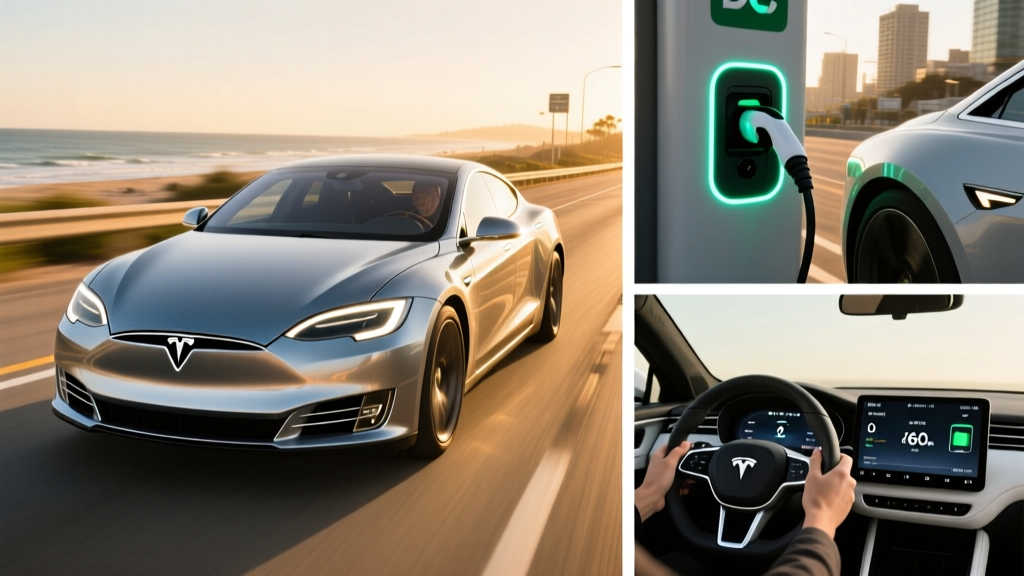
Charging speed is where Tesla's Supercharger network advantage becomes tangible. The 2026 Model Y Long Range supports a peak DC fast-charge rate of 250 kW on V3 Superchargers, though the sustained rate across the full session tells the real story.
| Charging Level | Power (kW) | Speed (mi/hr added) | Notes |
|---|---|---|---|
| Level 1 (120V outlet) | ~1.4 kW | ~4–5 mi/hr | Emergency/trickle only |
| Level 2 (240V, 48A) | 11.5 kW | ~44 mi/hr | Full overnight charge in ~7 hours |
| DC Fast (Tesla V3 Supercharger) | 250 kW peak | ~162 mi in 15 min | Tapers significantly above 80% SoC |
| DC Fast (CCS adapter, non-Tesla) | ~150–175 kW typical | Varies by station | Requires Tesla CCS adapter |
The 10–80% charge time lands around 27 minutes at a V3 Supercharger. The charge curve peaks near 250 kW up to roughly 40% state of charge, then steps down progressively — dropping to around 100 kW by 60% and tapering further past 80%. This is normal lithium-ion behavior managed by the battery management system to protect cell health, but it means planning road-trip stops to charge only to 80% is both faster and better for long-term battery health.
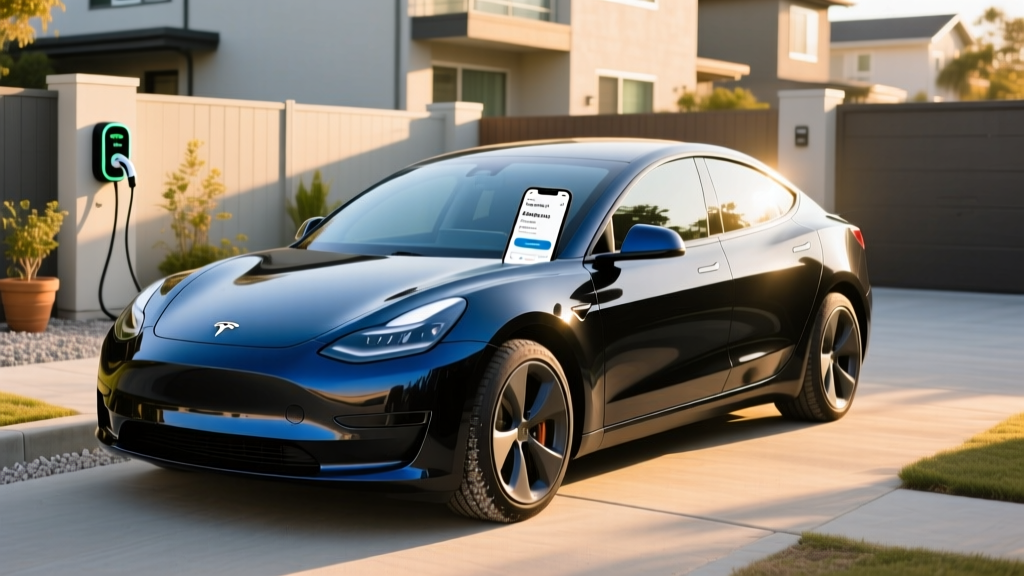
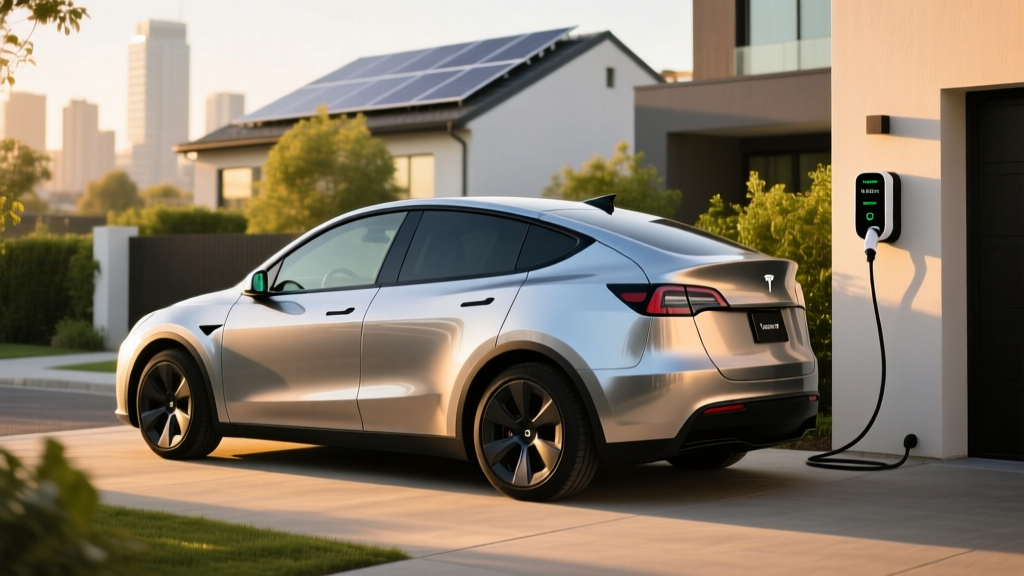
At home, an 11.5 kW Level 2 wall connector on a 60-amp circuit adds roughly 44 miles of range per hour. A full charge from 10% takes about 7 hours — easily handled overnight. Installation costs for a dedicated 240V/60A circuit typically run $800–$2,000 depending on panel proximity and whether your home's electrical panel needs an upgrade to 200 amps. Always get a quote from a licensed electrician before committing.
Tesla Model Y Warranty Coverage Explained
The Tesla Model Y warranty is split into three tiers, and understanding the boundaries between them is critical for ownership planning:
Basic Vehicle Limited Warranty: 4 years or 50,000 miles, whichever comes first. This covers most vehicle components including the touchscreen, power windows, HVAC system, suspension, and interior trim. It does not cover wear items like tires, wiper blades, or brake pads.
Battery and Drive Unit Warranty: 8 years or 120,000 miles (Long Range AWD and Performance trims). For the RWD trim with LFP chemistry, coverage is 8 years or 100,000 miles. Tesla warrants that the battery will retain at least 70% of its original capacity during this period. If degradation drops below that threshold, Tesla will repair or replace the battery pack to bring it back to 70% minimum retention — not necessarily to new condition.
What this means in practice: Independent fleet data and owner surveys from sources like Recurrent Auto show that Tesla battery packs typically retain 85–92% capacity at 100,000 miles. Hitting the 70% threshold within the warranty period is uncommon under normal use. However, the 70% floor is less generous than some competitors — Hyundai warrants the Ioniq 5 battery at 70% retention for 10 years/100,000 miles, and Rivian offers 8 years/175,000 miles on the R1S.
Notable warranty exclusions: damage from flooding, fire, or improper charging equipment is not covered. Modifications to the powertrain or battery system void coverage. Tesla's mobile service and Service Center network handles warranty claims, though wait times at high-volume locations can stretch to several weeks for non-critical repairs.
Pricing, Trims, and Federal Tax Credit Eligibility
| Trim | Base MSRP | Est. After §30D Credit* | Destination Fee |
|---|---|---|---|
| Long Range AWD | $46,630 | ~$39,130 | $1,390 (included in MSRP) |
| Performance AWD | $51,630 | ~$44,130 | Included |
*Federal tax credit estimates assume full eligibility under IRS §30D rules. Actual credit amount depends on battery sourcing, critical mineral requirements, buyer income, and MSRP caps. Always verify current eligibility at irs.gov or with a tax professional.
The Model Y qualifies for the federal clean vehicle credit under §30D, currently up to $7,500, which can be applied as a point-of-sale reduction at participating dealers. However, eligibility is not automatic. Key requirements include:
- MSRP Cap: The vehicle must have an MSRP at or below $80,000 for SUVs (the Model Y qualifies comfortably).
- Buyer Income Cap: Modified adjusted gross income must not exceed $150,000 (single), $225,000 (head of household), or $300,000 (joint filing).
- Battery Sourcing: A percentage of critical minerals and battery components must be sourced from the U.S. or free-trade-agreement countries. Tesla's shifting supply chain means the exact credit amount ($3,750 or $7,500) can change month to month.
- North American Assembly: Final assembly must occur in North America. The Model Y is assembled in Fremont, CA, and Austin, TX, satisfying this requirement.
Before purchasing, confirm the current credit status on the DOE's fueleconomy.gov tax credit page, as battery-sourcing compliance is updated periodically.
Performance, Efficiency, and Daily Drivability
The Long Range AWD delivers 384 combined horsepower from its dual-motor setup, launching to 60 mph in 4.8 seconds. That's brisk enough for confident highway merging and passing, though the Performance trim cuts that to 3.5 seconds for enthusiasts willing to sacrifice roughly 15 miles of EPA range.
Efficiency is where the Model Y distinguishes itself. At 111 MPGe combined (29 kWh/100mi), it extracts more miles per kilowatt-hour than most competing electric SUVs. The Ford Mustang Mach-E AWD Extended Range returns 101 MPGe; the Ioniq 5 AWD lands at 110 MPGe. This efficiency advantage compounds over years of ownership — every kWh you pay for goes further.
The cabin seats five adults, though the rear middle seat is narrow and best for children on longer trips. Rear legroom at 38.4 inches is adequate but not generous compared to the Ioniq 5's 39.4 inches. Cargo space is the Model Y's party trick: 30.2 cubic feet behind the rear seats expands to 72.1 cubic feet with the 60/40 split folded flat. The front trunk (frunk) adds 4.1 cubic feet for charging cables or a small bag.
Tech highlights include Tesla's 15.4-inch center touchscreen running the proprietary infotainment OS, which handles navigation, media, climate, and vehicle settings without physical buttons. Apple CarPlay and Android Auto are still not natively supported — a persistent drawback for buyers accustomed to phone projection. Autopilot, Tesla's SAE Level 2 driver-assistance system, is standard and includes adaptive cruise control and lane-keeping. Full Self-Driving (Supervised) is an optional upgrade but remains a Level 2 system requiring continuous driver attention despite its name.
Pros and Cons
Pros
- Best-in-class Supercharger network reliability
- Top-tier efficiency (111 MPGe combined)
- Class-leading cargo volume (72.1 cu ft)
- Over-the-air updates add features post-purchase
- Strong battery capacity retention data at high mileage
Cons
- No Apple CarPlay or Android Auto
- Basic warranty only 4yr/50k — shorter than most rivals
- 70% battery retention threshold is below some competitors
- Rear middle seat is cramped for adults
- Service Center wait times in metro areas can be lengthy
- FSD naming creates confusion about actual capability
Who Should Buy the 2026 Model Y?
The Model Y is the default recommendation for buyers who need one vehicle to handle commuting, family duty, and road trips without compromise. The Supercharger network removes the public-charging reliability gamble that still plagues non-Tesla EVs on cross-country drives. If you lack home charging access, the Supercharger advantage becomes even more decisive.
Choose the Model Y if you prioritize charging infrastructure, cargo versatility, and proven efficiency. Look at the Hyundai Ioniq 5 if you prefer faster 800V charging architecture (10–80% in ~18 minutes at compatible stations), a more spacious rear seat, and CarPlay support. The Ford Mustang Mach-E is worth a test drive if you want a more traditional driving feel and dealer-based service.
Frequently Asked Questions
What does the Tesla Model Y battery warranty actually cover?
The battery and drive unit warranty covers defects and excessive capacity loss for 8 years or 120,000 miles (Long Range/Performance). "Excessive" is defined as dropping below 70% of original capacity. If this occurs, Tesla repairs or replaces the pack to meet the 70% threshold. Normal degradation above 70% is expected and not warrantable.
How much does it cost to charge a Model Y at home versus Superchargers?
At the U.S. average residential electricity rate of ~$0.17/kWh, a full 75 kWh charge costs roughly $12.75 and provides around 300 miles of real-world range — about 4.3 cents per mile. Supercharger pricing varies by location and time of day but typically runs $0.25–$0.40/kWh, making road-trip charging roughly 8–12 cents per mile. For comparison, a 25 MPG gas vehicle at $3.50/gallon costs 14 cents per mile.
Does the 2026 Model Y qualify for the full $7,500 federal tax credit?
It can, but eligibility depends on current battery-sourcing compliance, your income level, and the MSRP cap (which the Model Y satisfies). The credit can be transferred to the dealer at point of sale as a purchase-price reduction. Verify current eligibility on irs.gov before finalizing your order, as sourcing requirements shift periodically.
Is the Model Y's basic 4-year warranty a dealbreaker?
It's a legitimate drawback compared to Hyundai's 5-year/60,000-mile basic warranty or Rivian's 5-year/60,000-mile coverage. The powertrain and battery are well covered at 8 years, but components like the touchscreen, suspension, and HVAC fall outside warranty after 50,000 miles. If you plan to keep the vehicle past 50,000 miles, budgeting for an extended warranty or out-of-pocket repairs is prudent.
How does cold weather affect the Model Y's range?
In sub-freezing temperatures, expect a 20–30% reduction from the EPA-rated 320 miles, yielding roughly 220–250 real-world miles. The standard heat pump helps, but battery preconditioning while plugged in before departure is essential to minimize range loss and maintain fast-charging speeds. Garage parking in winter months makes a measurable difference.