Quick Verdict: What the R2 Maximus Drive Unit Means for Buyers
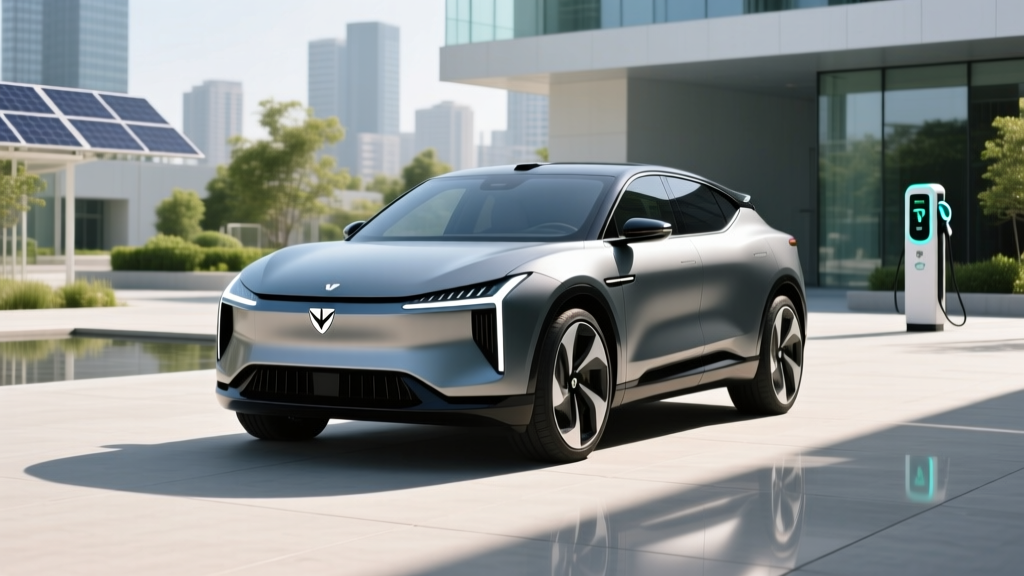
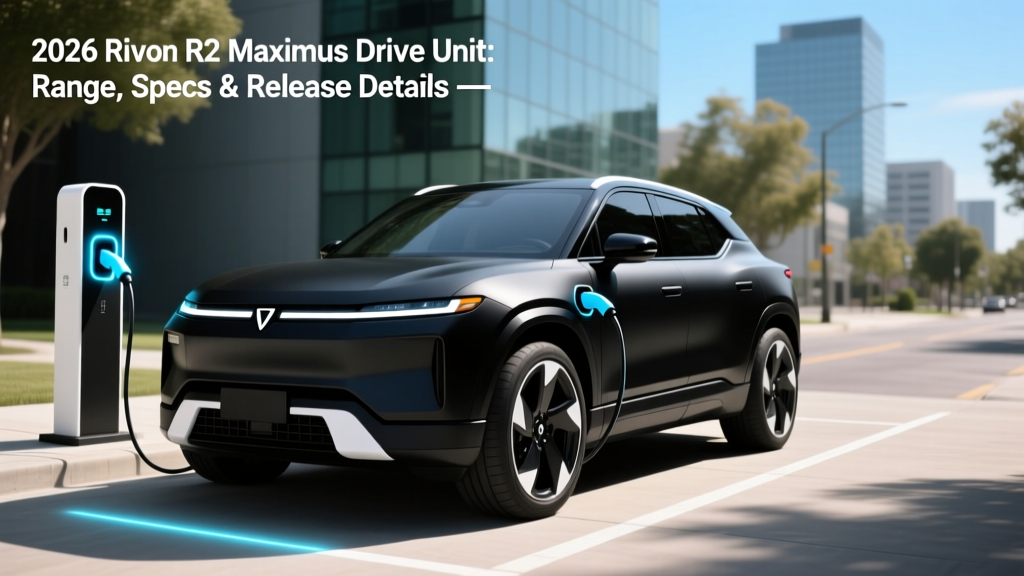
The Rivian R2 is the automaker's bid to bring its electric-adventure formula to a mainstream price point, and the Rivian R2 Maximus Drive Unit is the engineering centerpiece of that effort. Rivian's in-house "Maximus" drive unit replaces the earlier Bosch-sourced motors found in the R1 platform with a more compact, more powerful, and more cost-efficient electric motor assembly. For the R2 compact SUV — expected to start production in the first half of 2026 at Rivian's Normal, Illinois plant — the Maximus unit is the key to hitting aggressive performance and efficiency targets while keeping the vehicle's MSRP closer to $45,000 than $75,000.
Because the R2 has not yet entered full customer delivery as of early 2026, the specifications below are drawn from Rivian's official announcements, engineering presentations, and preliminary EPA filings. Treat all figures as preliminary estimates until the window sticker is finalized. What is certain: the Maximus Drive Unit architecture will define the R2's driving character, charging behavior, and long-term serviceability for years to come.
What Is the Rivian R2 Maximus Drive Unit?
The Maximus Drive Unit is Rivian's next-generation, in-house-developed electric motor and reduction-gearbox assembly. Where the R1T and R1S rely on Bosch-supplied permanent-magnet motors, the R2 platform shifts to Rivian's proprietary design to reduce cost, improve packaging, and increase power density. The Maximus unit integrates the motor, inverter, and single-speed reduction gear into a single compact housing — a trend increasingly adopted across the industry (similar to Tesla's integrated drive units and Hyundai's E-GMP motor assemblies).
Rivian has confirmed the R2 will offer multiple drivetrain configurations built around the Maximus architecture:
- Single-Motor RWD: One rear-mounted Maximus unit for maximum range and lowest price.
- Dual-Motor AWD: Front and rear Maximus units for all-weather traction and stronger acceleration.
- Performance Dual-Motor AWD (Tri-Motor possible): Higher-output variants of the Maximus unit tuned for 0-60 times in the low 3-second range.
The single-motor RWD variant is expected to produce roughly 335 horsepower, while the dual-motor AWD configuration targets approximately 500 horsepower. These figures place the R2 squarely against the Tesla Model Y, Ford Mustang Mach-E, and upcoming Hyundai Ioniq 5-based SUVs in the compact electric SUV segment.
Range, Battery, and Efficiency
The R2's battery pack is the other half of the range equation. Rivian has confirmed the R2 will use a ~85 kWh usable battery pack with a structural cell-to-pack architecture. Chemistry details remain partially under wraps, but industry sourcing reports and Rivian's supply-chain disclosures point to NMC (nickel manganese cobalt) cells from Samsung SDI for initial production, with a potential LFP (lithium iron phosphate) option for the base RWD trim later in the production run. The LFP variant would trade some energy density for lower cost and greater cycle life — a trade-off we've seen Tesla and Ford employ for their entry-level trims.
Real-World Range Expectations
EPA Estimated Range (preliminary): ~330 miles (RWD single-motor) / ~300 miles (AWD dual-motor)
Real-world highway (70 mph, moderate temps): Expect ~270–290 miles for RWD, ~250–270 miles for AWD.
Cold-weather (below 32°F, highway): Plan for 20–30% range reduction, yielding roughly 210–240 miles for RWD and 190–220 miles for AWD. A heat pump is standard, which mitigates some cabin-heating energy draw.
Efficiency targets land around 110 MPGe combined (approximately 30–32 kWh/100 mi) for the RWD variant, competitive with the Model Y Long Range's 122 MPGe. The boxier, more adventure-oriented shape of the R2 will cost it a few MPGe versus sleeker crossovers, but the trade-off yields superior cargo volume and ground clearance.
| Spec | Single-Motor RWD | Dual-Motor AWD |
|---|---|---|
| Drivetrain | Rear-Wheel Drive | All-Wheel Drive |
| Horsepower | ~335 hp | ~500 hp |
| 0-60 mph | ~6.0 sec | ~3.5 sec |
| Battery (usable) | ~85 kWh (NMC) | ~85 kWh (NMC) |
| EPA Range (est.) | ~330 mi | ~300 mi |
| Efficiency (est.) | ~110 MPGe / 31 kWh/100mi | ~100 MPGe / 34 kWh/100mi |
| Towing Capacity | ~3,500 lbs | ~4,500 lbs |
Charging Speed: DC Fast Charge and Home Level 2
Charging speed is where the Maximus Drive Unit's thermal management integration matters most. Rivian has engineered the R2's battery pack and drive unit cooling loops to work in concert, enabling sustained high-power DC charging without rapid taper. The R2 is expected to support a peak DC fast-charge rate of approximately 200–220 kW on NACS-equipped chargers (the R2 launches with the Tesla-style NACS port natively, giving it access to the Supercharger network from day one).
| Charging Level | Power / Rate | Speed / Time |
|---|---|---|
| Level 1 (120V household) | ~1.4 kW | ~4 miles per hour |
| Level 2 (240V, 48A home charger) | ~11.5 kW | ~35 miles per hour / ~9 hrs (10–100%) |
| DC Fast Charge (peak) | ~220 kW (NACS) | 10–80% in ~22 minutes |
| DC Fast Charge (sustained avg.) | ~150–170 kW | 80–100% taper adds ~15 min |
Charge curve reality check: The "220 kW peak" figure applies only at low state-of-charge (roughly 10–30% SoC) and optimal battery temperature. Above 60% SoC, expect the rate to taper to ~120 kW, and above 80%, it drops further to ~50–70 kW. This is standard behavior for NMC chemistry — if you road-trip frequently, plan your stops around 10–80% charges to minimize time at the charger. Preconditioning the battery via the navigation system (setting a DC charger as your destination) is essential for hitting peak rates in cold weather.
Interior, Cargo, and Practicality
The R2 slots below the R1S in size but targets the same adventure-ready ethos. Think of it as Rivian's answer to the Model Y's practicality with more rugged design cues. Preliminary dimensions suggest:
- Seating: 5 passengers (no third row — that's R1S territory)
- Rear legroom: ~38 inches (competitive with Model Y's 37.4 inches)
- Cargo volume (behind rear seats): ~30 cu ft
- Cargo volume (rear seats folded): ~65 cu ft
- Front trunk (frunk): ~5 cu ft — a lockable, drainable space suitable for muddy gear or groceries
- Ground clearance: ~8.5 inches (with available air suspension)
The cabin design follows the R1's minimalist-but-functional approach: a large central touchscreen (expected 15.4 inches), a compact digital instrument cluster, and physical controls for climate and drive modes — a welcome departure from the touchscreen-only approach of some competitors. Rivian's software platform, built on a custom Android-based stack, supports over-the-air updates, and the R2 will launch with the latest generation of Rivian's ADAS suite (detailed below).
Pricing, Trims, and Federal Tax Credit Eligibility
Rivian has targeted a starting MSRP in the mid-$40,000s for the R2, making it one of the most significant mainstream EV launches of 2026. Here is the preliminary trim and pricing breakdown:
| Trim | Est. MSRP | Est. After §30D Credit |
|---|---|---|
| R2 Standard (RWD) | ~$45,000 | ~$37,500 (if eligible) |
| R2 Premium (AWD) | ~$52,000 | ~$44,500 (if eligible) |
| R2 Performance (AWD) | ~$58,000 | ~$50,500 (if eligible) |
Federal §30D Tax Credit: Key Eligibility Rules (2026)
The R2 is designed to qualify for the up to $7,500 federal EV tax credit, but eligibility depends on several factors that buyers must verify before purchase:
- MSRP cap: SUVs must have an MSRP at or below $80,000. All R2 trims clear this threshold comfortably.
- Buyer income cap: Modified adjusted gross income (MAGI) must not exceed $150,000 (single), $225,000 (head of household), or $300,000 (joint filers).
- Battery sourcing: A portion of the credit ($3,750) requires critical minerals from the US or FTA partners; the other $3,750 requires battery components manufactured or assembled in North America. These thresholds tighten annually. Rivian's Samsung SDI cells and North American assembly position the R2 well, but final eligibility depends on the specific model year's sourcing percentages.
- Point-of-sale transfer: Under current IRS rules, you can transfer the credit to the dealer at purchase, reducing your out-of-pocket cost immediately rather than waiting for a tax refund. Confirm with your tax professional (IRS §30D details).
Performance, Tech, and Driver Assistance
The Maximus Drive Unit enables more than straight-line speed. Rivian's torque-vectoring software (on dual-motor variants) can independently manage front and rear axle torque distribution, improving traction on loose surfaces and cornering stability on pavement. The R2 is expected to offer multiple drive modes — including All-Purpose, Sport, Snow, and an Off-Road mode with adjustable ride height via the available air suspension.
Driver assistance: The R2 launches with Rivian's latest ADAS platform, expected to include adaptive cruise control, lane-centering assist, automatic emergency braking, blind-spot monitoring, and a hands-on-wheel highway assist system. This is a SAE Level 2 driver-assist system — meaning the driver must remain engaged and supervise at all times. It is not autonomous driving. Rivian has not announced plans for a Level 3 or Level 4 system in the R2 at launch.
ADAS Limitation Notice
Rivian's driver-assist features are SAE Level 2. You must keep your hands on the wheel and eyes on the road. The system does not handle construction zones, unmapped roads, or severe weather autonomously. Treat it as a fatigue-reduction tool, not a replacement for attentive driving.
Notable tech features:
- Native NACS port — full Supercharger network access without adapters
- Vehicle-to-load (V2L) capability — power campsite equipment or tools from the R2's battery
- Over-the-air software updates for powertrain, infotainment, and ADAS
- Integrated trail-mapping and off-road telemetry (GPS breadcrumb trails, pitch/roll indicators)
- Phone-as-key with NFC backup
Warranty and Long-Term Ownership
Rivian's warranty coverage for the R1 platform provides a reasonable baseline for R2 expectations:
- Battery & Drive Unit: 8 years / 100,000 miles (minimum capacity retention threshold: 70%)
- Vehicle (bumper-to-bumper): 5 years / 60,000 miles
- Corrosion: Expected to match R1 at 8 years / unlimited miles
The Maximus Drive Unit's in-house design gives Rivian greater control over service parts and long-term availability — a meaningful advantage over vehicles that rely on third-party motor suppliers. However, as with any first-year platform launch, early-production R2s may carry higher risk of teething issues. Buyers prioritizing reliability may want to wait for the second model year.
Pros, Cons, and Who Should Buy the R2
Pros
- Native NACS port with full Supercharger access from day one
- Strong off-road capability in a compact SUV footprint
- Frunk + generous cargo volume for the segment
- In-house Maximus Drive Unit reduces supplier dependency
- V2L capability for camping and job-site use
- Competitive pricing if §30D credit applies
Cons
- First-year production risk — Rivian's ramp history with R1 was rocky
- No third-row seating option
- Real-world highway range will fall notably below EPA sticker
- Air suspension adds cost and potential long-term maintenance
- ADAS is Level 2 only — no hands-free highway driving at launch
- Final §30D eligibility depends on battery sourcing rules at time of purchase
Who the R2 Maximus Drive Unit Suits Best
Buy it if: You want a compact electric SUV that can genuinely handle dirt roads and winter conditions, you value Supercharger network access without adapters, and your household has home Level 2 charging. The R2 is ideal for outdoor-active buyers who find the Model Y too car-like and the R1S too large and expensive.
Look elsewhere if: You need a third row, you prioritize hands-free highway driving (GM's Super Cruise or Ford's BlueCruise offer hands-free operation on mapped highways), or you cannot install home charging and rely entirely on public infrastructure in an area with limited DC fast chargers.
Frequently Asked Questions
What is the real-world range of the Rivian R2?
With an estimated EPA range of ~330 miles (RWD), expect roughly 270–290 miles in real-world highway driving at moderate temperatures. Cold weather (below 32°F) will reduce that to approximately 210–240 miles. The AWD dual-motor variant will deliver ~20–30 fewer miles in each scenario.
How fast does the R2 charge at home and on the road?
On a 48-amp Level 2 home charger, the R2 adds approximately 35 miles of range per hour, fully charging overnight in about 9 hours. On a DC fast charger, expect a 10–80% charge in roughly 22 minutes at peak rates (~220 kW), though sustained average rates will be closer to 150–170 kW.
How much does the R2 cost after the federal tax credit?
If you qualify for the full $7,500 §30D credit (income and sourcing requirements met), the base RWD R2 could drop from ~$45,000 to ~$37,500. However, eligibility is not guaranteed for every buyer — verify your income, the vehicle's battery sourcing status at time of purchase, and the current IRS rules before counting on the credit.
Is the Rivian R2 worth buying versus the Tesla Model Y or Ford Mach-E?
The R2 competes on off-road capability, adventure-oriented design, native NACS access, and V2L functionality — areas where neither the Model Y nor Mach-E match it. However, the Model Y currently leads in charging infrastructure reliability (Superchargers), efficiency, and proven production scale. If off-road and outdoor utility matter to you, the R2 is the stronger pick. If efficiency and lowest cost per mile are your priority, the Model Y remains the benchmark. See fueleconomy.gov for finalized efficiency data once the R2 receives its official EPA certification.
Does the R2 qualify for the $7,500 federal EV tax credit?
Rivian has designed the R2 to qualify, and its North American assembly and pricing (well under the $80,000 SUV cap) position it favorably. However, the battery-component and critical-minerals sourcing requirements under §30D tighten annually. Confirm the specific model year's eligibility on irs.gov before purchase.
When can I actually buy the Rivian R2?
Rivian has targeted production start in the first half of 2026 at its Normal, Illinois facility. Reservation holders will receive deliveries first, with general retail availability expected later in 2026 or early 2027 depending on production ramp speed. Rivian's R1 ramp took longer than initially projected, so build in some buffer for delays.